- About
- Mission Statement
Education. Evidence. Regrowth.
- Education.
Prioritize knowledge. Make better choices.
- Evidence.
Sort good studies from the bad.
- Regrowth.
Get bigger hair gains.
Team MembersPhD's, resarchers, & consumer advocates.
- Rob English
Founder, researcher, & consumer advocate
- Research Team
Our team of PhD’s, researchers, & more
Editorial PolicyDiscover how we conduct our research.
ContactHave questions? Contact us.
Before-Afters- Transformation Photos
Our library of before-after photos.
- — Jenna, 31, U.S.A.
I have attached my before and afters of my progress since joining this group...
- — Tom, 30, U.K.
I’m convinced I’ve recovered to probably the hairline I had 3 years ago. Super stoked…
- — Rabih, 30’s, U.S.A.
My friends actually told me, “Your hairline improved. Your hair looks thicker...
- — RDB, 35, New York, U.S.A.
I also feel my hair has a different texture to it now…
- — Aayush, 20’s, Boston, MA
Firstly thank you for your work in this field. I am immensely grateful that...
- — Ben M., U.S.A
I just wanted to thank you for all your research, for introducing me to this method...
- — Raul, 50, Spain
To be honest I am having fun with all this and I still don’t know how much...
- — Lisa, 52, U.S.
I see a massive amount of regrowth that is all less than about 8 cm long...
Client Testimonials150+ member experiences.
 Scroll DownPopular Treatments
- Treatments
Popular treatments. But do they work?
- Finasteride
- Oral
- Topical
- Dutasteride
- Oral
- Topical
- Mesotherapy
- Minoxidil
- Oral
- Topical
- Ketoconazole
- Shampoo
- Topical
- Low-Level Laser Therapy
- Therapy
- Microneedling
- Therapy
- Platelet-Rich Plasma Therapy (PRP)
- Therapy
- Scalp Massages
- Therapy
 More
More
IngredientsTop-selling ingredients, quantified.
- Saw Palmetto
- Redensyl
- Melatonin
- Caffeine
- Biotin
- Rosemary Oil
- Lilac Stem Cells
- Hydrolyzed Wheat Protein
- Sodium Lauryl Sulfate
 More
More
ProductsThe truth about hair loss "best sellers".
- Minoxidil Tablets
Xyon Health
- Finasteride
Strut Health
- Hair Growth Supplements
Happy Head
- REVITA Tablets for Hair Growth Support
DS Laboratories
- FoliGROWTH Ultimate Hair Neutraceutical
Advanced Trichology
- Enhance Hair Density Serum
Fully Vital
- Topical Finasteride and Minoxidil
Xyon Health
- HairOmega Foaming Hair Growth Serum
DrFormulas
- Bio-Cleansing Shampoo
Revivogen MD
- more
Key MetricsStandardized rubrics to evaluate all treatments.
- Evidence Quality
Is this treatment well studied?
- Regrowth Potential
How much regrowth can you expect?
- Long-Term Viability
Is this treatment safe & sustainable?
Free Research- Free Resources
Apps, tools, guides, freebies, & more.
- Free CalculatorTopical Finasteride Calculator
- Free Interactive GuideInteractive Guide: What Causes Hair Loss?
- Free ResourceFree Guide: Standardized Scalp Massages
- Free Course7-Day Hair Loss Email Course
- Free DatabaseIngredients Database
- Free Interactive GuideInteractive Guide: Hair Loss Disorders
- Free DatabaseTreatment Guides
- Free Lab TestsProduct Lab Tests: Purity & Potency
- Free Video & Write-upEvidence Quality Masterclass
- Free Interactive GuideDermatology Appointment Guide
- More
Articles100+ free articles.
-
Sublingual Minoxidil: More Hair Growth, Less Sides?
-
Happy Head Review: 5 Concerns With The Brand
-
Can a Blood DHT Test Tell You Whether You Have AGA?
-
ABS-201: Can Blocking the Prolactin Receptor Regrow Hair?
-
Best Topical Finasteride: 5 Top Products of 2026
-
Best Topical Dutasteride: 8 Choices for 2026
-
2.5mg Dutasteride: Before and After Photos [2026]
-
Best Minoxidil for Women: Top 7 Brands of 2026
PublicationsOur team’s peer-reviewed studies.
- Microneedling and Its Use in Hair Loss Disorders: A Systematic Review
- Use of Botulinum Toxin for Androgenic Alopecia: A Systematic Review
- Conflicting Reports Regarding the Histopathological Features of Androgenic Alopecia
- Self-Assessments of Standardized Scalp Massages for Androgenic Alopecia: Survey Results
- A Hypothetical Pathogenesis Model For Androgenic Alopecia:Clarifying The Dihydrotestosterone Paradox And Rate-Limiting Recovery Factors
Menu- AboutAbout
- Mission Statement
Education. Evidence. Regrowth.
- Team Members
PhD's, resarchers, & consumer advocates.
- Editorial Policy
Discover how we conduct our research.
- Contact
Have questions? Contact us.
- Before-Afters
Before-Afters- Transformation Photos
Our library of before-after photos.
- Client Testimonials
Read the experiences of members
Before-Afters/ Client Testimonials- Popular Treatments
-
Articles
Anavar is the brand name for the synthetic anabolic-androgenic steroid (AAS), oxandrolone. It is used clinically to promote weight gain and preserve body mass in catabolic disorders (where body tissues are excessively broken down for energy, causing rapid weight loss), such as severe burns, chronic illnesses, or neuromuscular disorders.[1]Orr, R., Fiatarone Singh, M. (2004). The Anabolic Androgenic Steroid Oxandrolone in the Treatment of Wasting and Catabolic Disorders: Review of Efficacy and Safety. Drugs. 64(7). 725–750. Available … Continue reading
AAS, including anavar, are structurally modified versions of either testosterone or dihydrotestosterone (DHT). They induce responses in tissues by binding to an androgen receptor, resulting in increased muscle protein synthesis.
Androgenic alopecia (AGA) is a condition characterized by the activation of the androgen receptor, whereby the growth phase of the hair growth cycle shortens, resulting in the progressive miniaturization of susceptible hair follicles and hair loss.[2]Ho, C.H., Sood, T., Zito, P.M., (2024), Androgenetic Alopecia. Available at: https://www.ncbi.nlm.nih.gov/books/NBK430924/ (Accessed: 07 January 2026)
Anavar is often described as a mild AAS; however, any introduction of systemic, exogenous steroids (i.e., steroids introduced to the body from external sources which act on the whole body) can result in the steroids activating androgen receptors on susceptible scalp follicles and the acceleration of AGA.
In this article, we will discuss the effect that AAS have on hair loss, whether there is any evidence for Anavar-specific hair loss, and potential risk management strategies while using Anavar.
Interested in Oral Finasteride?
Oral finasteride & minoxidil available, if prescribed*
Take the next step in your hair regrowth journey. Get started today with a provider who can prescribe a topical solution tailored for you.
*Only available in the U.S. Prescriptions not guaranteed. Restrictions apply. Off-label products are not endorsed by the FDA.
Exogenous Androgens and AGA: What the Science Actually Shows
Androgens are steroid sex hormones; those produced within the body are known as endogenous, whereas those produced outside the body are known as exogenous. AAS are androgens used (or misused) for performance-enhancing effects.
How Does Endogenous Testosterone Contribute to Hair Loss?
Endogenous testosterone is produced by the body as a crucial androgen promoting the development and maintenance of male characteristics.
The importance of testosterone in hair loss was originally suggested by James Hamilton. He demonstrated that castrated men did not develop AGA unless they received testosterone supplementation.[3]Hamilton, J.B. (1942). Male Hormone Stimulation Is a Prerequisite and Incitant in Common Baldness. Journal of Investigative Dermatology. 5(6). 473–474. Available at: … Continue reading
Testosterone contributes to AGA primarily through its conversion to DHT, a more potent androgen that plays a central role in hair loss. Testosterone itself is not inherently harmful to hair follicles, but its downstream metabolism into DHT and the sensitivity of hair follicles determine its effect on AGA.
In the scalp, testosterone is converted to DHT by the enzyme 5-alpha reductase (5AR), which is highly expressed in hair follicles of the frontal and vertex scalp (areas typically affected in AGA).[4]Sawaya, M.E., Price, V.H. (1997). Different Levels of 5alpha-Reductase Type I and II, Aromatase, and Androgen Receptor in Hair Follicles of Women and Men with Androgenetic Alopecia. Journal of … Continue reading The hair follicles in these areas of the scalp also contain a higher number of androgen receptors, increasing their vulnerability to the action of androgens, such as DHT.[5]Hibberts, N.A., Howell, A.E., Randall, V.A. (1998). Balding Hair Follicle Dermal Papilla Cells Contain Higher Levels of Androgen Receptors than Those from Non-Balding Scalp. Journal of Endocrinology. … Continue reading
DHT binds to the androgen receptor with significantly greater strength than testosterone. This leads to DHT preferentially binding the androgen receptor, resulting in stronger and longer activation of the cell, and greater effects on cell function.
The binding of DHT to androgen receptors in susceptible hair follicles disrupts the hair growth cycle, resulting in follicle miniaturization. This is caused by the disruption of the different phases of the hair cycle. Specifically, the growth phase of the hair follicle (anagen) shortens, and the resting phase (telogen) stays the same or increases, altering the ratio of growth to rest from 12:1 to 5:1.[6]Ho, C.H., Sood, T., Zito, P.M., (2024), Androgenetic Alopecia. Available at: https://www.ncbi.nlm.nih.gov/books/NBK430924/ (Accessed: 07 January 2026)
Consequently, the hair follicle shrinks with each cycle, resulting in the replacement of regular hair with short terminal hairs (hairs that lack pigmentation and won’t grow any more than a few inches). Over time, the growth phase becomes so short that the hair fails to penetrate the surface of the skin, causing a bald patch.[7]Asfour, L., Cranwell, W., Sinclair, R. (2000). Male Androgenetic Alopecia. Endotext. Available at: http://www.ncbi.nlm.nih.gov/books/NBK278957/
Males lacking the 5AR enzyme to convert testosterone to DHT have never been reported as developing hair loss.[8]Imperato-McGinley, J., Zhu, Y.S. (2002). Androgens and Male Physiology: The Syndrome of 5alpha-Reductase-2 Deficiency. Molecular and Cellular Endocrinology. 198(1–2). 51–59. Available at: … Continue reading The binding of testosterone-derived DHT to androgen receptors is therefore a key step in hair loss.
What Effect Do Exogenous Androgens Have on Hair Loss?
Testosterone
The administration of exogenous testosterone causes serum levels of testosterone to rise systemically (throughout the body). This provides an increased concentration of testosterone for the 5AR enzymes to convert into DHT. In individuals susceptible to AGA, this can accelerate the onset or progression of hair loss.
Clinical Evidence
Hair loss is a relatively common side effect of taking exogenous testosterone. Studies investigating the use of testosterone in athletes or others taking it for muscle-building purposes have demonstrated the onset of AGA after use.[9]Tawanwongsri, W., Desai, D.D., Nohria, A., Shapiro, J., Lo Sicco, K.I. (2025). Hair Loss in Athletic Testosterone Use in Males: A Narrative Review. International Journal of Dermatology. 64(4). … Continue reading,[10]Griggs, J., Almohanna, H., Ahmed, A., Tosti, A. (2018). New-Onset Androgenic Alopecia following Human Chorionic Gonadotropic Diet and Testosterone Pellet Implantation. International Journal of … Continue reading
In addition, a study researching long-term use of testosterone therapy in trans men has found that 31% of their cohort developed moderate to severe AGA (although this was a very small study, so any conclusions should be used cautiously).[11]Wierckx, K., Van de Peer, F., Verhaeghe, E., et al. (2014). Short- and Long-Term Clinical Skin Effects of Testosterone Treatment in Trans Men. Journal of Sexual Medicine. 11(1). 222–229. Available … Continue reading
AAS
AAS are often derivatives of either testosterone or DHT (i.e., synthetic compounds which are chemically modified versions of testosterone/DHT), sharing the same mechanism of action as endogenous testosterone in initiating or progressing hair loss. However, AAS expose hair follicles to androgen stimulation well beyond normal levels.[12]Bond, P., Smit, D.L., de Ronde, W. (2022). Anabolic–Androgenic Steroids: How Do They Work and What Are the Risks? Frontiers in Endocrinology (Lausanne). 13. Available at: … Continue reading
The high levels of androgen stimulation can occur in different ways depending on the AAS used:
- AAS that are similar in structure to testosterone can be converted to DHT or similar molecules using the 5AR enzyme. These DHT products can bind to and activate the androgen receptors with high affinity (strength).
- AAS that are similar in structure to DHT can act directly on androgen receptors, bypassing the need for conversion using the 5AR enzyme.
The presence of these androgen-inducing AAS in the scalp at levels well beyond normal testosterone and DHT levels results in the increased activation of androgen receptors and the subsequent disruption of the hair cycle, follicle miniaturization, and hair loss in susceptible individuals.[13]Stojko, M., Nocoń, J., Piłat, P., et al. (2023). Innovative Reports on the Effects of Anabolic Androgenic Steroid Abuse—How to Lose Your Mind for the Love of Sport. Medicina (Kaunas). 59(8). … Continue reading
Evidence in Humans
- An investigation into AGA use by 541 gym-goers in Saudi Arabia found that 14.2% experienced hair loss as a side effect. However, this study was not carried out under clinical conditions, and all results were self-reported, so it cannot be said for certain whether the AAS were causing hair loss.[14]Albaker, W., Alkhars, A., Elamin, Y., Jatoi, N., Boumarah, D., Al-Hariri, M. (2021). Anabolic–Androgenic Steroid Abuse among Gym Users, Eastern Province, Saudi Arabia. Medicina (Kaunas). 57(7). … Continue reading
- An investigation into AGA use in 104 bodybuilders in Brazil found that 23.7% of AAS users experienced hair loss as a side effect. This study was also not carried out under clinical conditions and used self-reported results.[15]dos Santos, J.C., de Souza, E., Meneses-Santos, D., et al. (2024). The Use of Anabolic Steroids by Bodybuilders in the State of Sergipe, Brazil. European Journal of Investigation in Health, … Continue reading
- The HAARLEM study investigated AAS abuse in a cohort of 100 strength athletes. They found that self-reported alopecia increased from 2% at the start of the study to 12% after a year. The study was limited by using only self-reported results, and multiple participants used other drugs at the same time, making it impossible to prove that the hair loss was from AAS use alone.[16]Smit, D.L., Buijs, M.M., de Hon, O., den Heijer, M., de Ronde, W. (2021). Positive and Negative Side Effects of Androgen Abuse. The HAARLEM Study: A One-Year Prospective Cohort Study in 100 Men. … Continue reading
While the underlying science supporting a potential role of AAS in AGA is thought to be sound, there is minimal evidence from human studies. Although there are a multitude of anecdotal reports supporting the evidence for AGA on AAS use, there are no rigorous clinical trials demonstrating these effects.
Why Are Some People More Susceptible to Hair Loss?
You may have noticed that throughout this blog so far, we have often used the word ‘susceptible’ when referring to hair follicles or people experiencing AGA. This is because AGA and follicular sensitivity are highly determined by genetic factors, meaning that not everyone is susceptible to AGA.
Approximately 80% of men will ultimately experience AGA by the age of 70.[17]Ho, C.H., Sood, T., Zito, P.M. (2024), Androgenetic Alopecia. Available at: https://www.ncbi.nlm.nih.gov/books/NBK430924/ (Accessed: 07 January 2026) This is largely controlled by genetics, although environmental and lifestyle factors (such as smoking, obesity, and nutritional status) can also contribute to the development of AGA.
One study found that men whose fathers had AGA had a 2.5-fold increased risk of developing AGA compared to those whose fathers did not experience hair loss.[18]Chumlea, W.C., Rhodes, T., Girman, C.J., et al. (2004). Family History and Risk of Hair Loss. Dermatology. 209(1). 33–39. Available at: https://doi.org/10.1159/000078584 Women experiencing female pattern hair loss also often report other family members with the same condition.[19]Ramos, P.M., Miot, H.A. (2015). Female Pattern Hair Loss: A Clinical and Pathophysiological Review. Anais Brasileiros de Dermatologia. 90(4). 529–543. Available at: … Continue reading
Genetic variants, particularly of the androgen receptor, contribute substantially to susceptibility and can also influence how individuals respond to treatment (see our article on genetic tests for personalized hair loss treatments to find out more). There is no one gene involved in AGA; hair loss is likely to be a polygenic disorder, meaning that variants in multiple genes are involved in enhanced susceptibility.
It is thought that a person’s genetics is responsible for influencing how strongly scalp follicles respond to androgen signaling. In susceptible persons, the follicles in the scalp have enhanced sensitivity (even to normal levels of androgens) and so are more likely to miniaturize when exposed to DHT.[20]Kaufman, K.D. (2002). Androgens and Alopecia. Molecular and Cellular Endocrinology. 198(1). 89–95. Available at: https://doi.org/10.1016/S0303-7207(02)00372-6
Susceptibility to AAS-Induced Hair Loss
The use of AAS does not increase an individual’s susceptibility to AGA, but is thought to contribute to accelerating and unmasking hair loss in those already genetically predisposed to hair loss.
Under normal conditions, the AGA process of hair loss occurs slowly, potentially only reaching a noticeable level after years. However, the introduction into the body of AAS is thought to cause a dramatic rise in androgen levels.
Genetically vulnerable follicles are potentially subjected to intense and sustained androgen receptor activation from the AAS testosterone or DHT derivatives, which may bind to the receptors with similar or greater strength than natural DHT. The enhanced activation of the androgen receptors then causes follicle miniaturization and hair loss.[21]Stojko, M., Nocoń, J., Piłat, P., et al. (2023). Innovative Reports on the Effects of Anabolic Androgenic Steroid Abuse—How to Lose Your Mind for the Love of Sport. Medicina (Kaunas). 59(8). … Continue reading
Individuals who lack a genetic predisposition to hair loss may tolerate even high levels of androgen exposure without experiencing hair loss.
Limitations
While the theory of AAS-accelerated AGA makes sense and is consistent with what is known about the DHT-induced method of follicle miniaturization, the scientific evidence supporting the theory is surprisingly limited. Much of the basis of this theory comes from assumptions and extrapolation (extension) of the collective current knowledge of follicle miniaturization.
Any studies that do exist tend to be based on self-reported outcomes of AAS use and lack the controls necessary for true clinical conclusions to be drawn.
How Does Anavar Contribute to Hair Loss?
Anavar (or oxandrolone) is an AAS used clinically to restore weight loss after severe trauma, major surgery, or malnutrition, and has also been studied in HIV-related wasting, neuromuscular conditions, and in severe burns patients.[22]Orr, R., Fiatarone Singh, M. (2004). The Anabolic Androgenic Steroid Oxandrolone in the Treatment of Wasting and Catabolic Disorders: Review of Efficacy and Safety. Drugs. 64(7). 725–750. Available … Continue reading,[23]Fenichel, G.M., Griggs, R.C., Kissel, J., et al. (2001). A Randomized Efficacy and Safety Trial of Oxandrolone in the Treatment of Duchenne Dystrophy. Neurology. 56(8). 1075–1079. Available at: … Continue reading,[24]Jeschke, M.G., Finnerty, C.C., Suman, O.E., Kulp, G., Mlcak, R.P., Herndon, D.N. (2007). The Effect of Oxandrolone on the Endocrinologic, Inflammatory, and Hypermetabolic Responses During the Acute … Continue reading Anavar’s clinical use requires a prescription, and it is carefully controlled due to its established effect on the liver and potential effect on cardiovascular health and hormones.[25]Orr, R., Fiatarone Singh, M. (2004). The Anabolic Androgenic Steroid Oxandrolone in the Treatment of Wasting and Catabolic Disorders: Review of Efficacy and Safety. Drugs. 64(7). 725–750. Available … Continue reading,[26]van Amsterdam, J., Opperhuizen, A., Hartgens, F. (2010). Adverse Health Effects of Anabolic-Androgenic Steroids. Regulatory Toxicology and Pharmacology. 57(1). 117–123. Available at: … Continue reading
Anavar has been described as having a favourable ratio of muscle-building effect to androgenic effect, meaning that it is thought to be less likely to cause severe androgenic side effects compared to other AAS.[27]Wu, C., Kovac, J.R. (2016). Novel Uses for the Anabolic Androgenic Steroids Nandrolone and Oxandrolone in the Management of Male Health. Current Urology Reports. 17(10). 72. Available at: … Continue reading As such, it is often considered ‘mild’. However, it must be recognized that this is in reference to other AAS and does not mean that it is safe.
A misunderstanding of the mildness of Anavar has resulted in its relatively popular recreational misuse. Bodybuilders and athletes have been known to use it for promoting muscle growth and increasing strength without large amounts of water retention. Despite many considering it mild, Anavar is not safe when misused.
How Does Anavar Compare to Other AAS?
As discussed above, our understanding of exactly how the use of AAS contributes to hair loss is severely limited. However, we can speculate (based on our knowledge of the DHT-induced mechanism of hair loss) how different AAS may differentially affect hair loss.
The impact on hair loss of AAS use is predicted to vary depending on which AAS is taken. AAS differ in how strongly they activate androgen receptors in different tissues. The structure of the androgen is very important to androgen receptor activation; AAS may be DHT-derived or testosterone-derived, with the ability to convert into DHT or a DHT-like molecule using the 5AR enzyme.
Anavar is a DHT-derived AAS; as such, it cannot be converted into a more potent androgen receptor binder using the 5AR enzyme. It has been suggested to bind to the androgen receptor less strongly than testosterone, and so could be predicted to have a lesser effect on hair loss mechanisms than endogenous testosterone/DHT or other AAS.[28]Knuth, C.M., Auger, C., Jeschke, M.G. (2021). Burn-Induced Hypermetabolism and Skeletal Muscle Dysfunction. American Journal of Physiology – Cell Physiology. 321(1). C58–C71. Available at: … Continue reading However, it does still have an androgenic effect, meaning that it will likely still have a harmful effect on hair loss.[29]Church, J.A., (2004). Oxandrolone Treatment of Childhood Hereditary Angioedema. Annals of Allergy, Asthma & Immunology. 92(3). 377–378. Available at: … Continue reading
It should be noted that the conclusions drawn here on the effects of Anaver on hair loss are primarily speculation and have not been demonstrated in clinical trials or other scientific research.
Risk Management While Using Anavar
Anavar should only be used when prescribed by your medical practitioner and should never be used recreationally due to the associated risks. However, if you are using Anavar and are concerned about the effects on hair loss, the following may be points to consider to reduce hair loss risk.
1. Using DHT Reducers
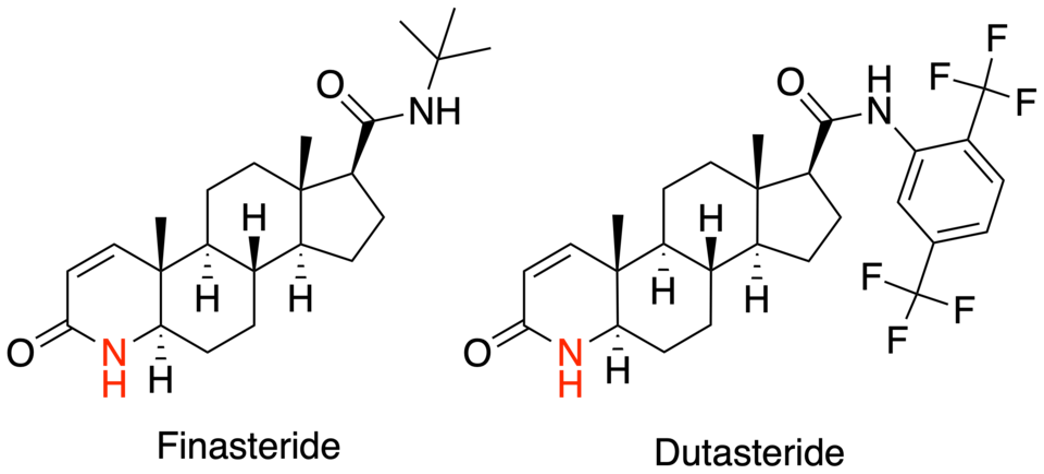
Finasteride and dutasteride are prescription medications that treat hair loss through their DHT-reducing action. They work by targeting the 5AR enzyme, blocking the conversion of testosterone to DHT, thereby reducing DHT in the scalp and enhancing hair growth (for more information on finasteride and dutasteride, see our ultimate guide).[30]Asfour, L., Cranwell, W., Sinclair, R. (2000). Male Androgenetic Alopecia. Endotext. Available at: http://www.ncbi.nlm.nih.gov/books/NBK278957/
While finasteride and dutasteride are often effective for normal AGA, they will only be partially effective when using Anavar.
Anavar is a DHT-derivative and cannot be converted using the 5AR enzyme, so it activates the scalp androgen receptors directly. Finasteride/dutasteride target the 5AR enzyme and consequently play no role in preventing Anavar from binding to the androgen receptors and initiating follicle miniaturization, and so will not prevent Anavar-induced hair loss.
Taking finasteride or dutasteride will reduce the baseline level of hair loss caused by endogenous testosterone (i.e., any hair loss that would be occurring regardless of whether AAS have been taken), potentially mildly reducing your total hair loss.
2. Changing Anavar Formulation
Anavar has only been formulated and approved for use in oral form. The application of a topical preparation (such as crushed tablets) is untested and potentially unsafe.
Topical AAS do exist and may be prescribed for conditions such as hypogonadism to provide relatively steady-state delivery of the drug (i.e., the drug is administered in a way where the amount of drug in the body stays stable over time).
While you may think that applying the AAS topically will prevent hair loss – as the drug may only have its effect on the area where it is applied – this is untrue. Topically applied AAS will enter the bloodstream and end up acting systemically (throughout the body).
For example, case studies have shown instances of topical AAS acting systemically:
- One woman who applied a cellulite cream containing DHT to her legs started to develop a deeper voice due to virilization (development of male physical characteristics) caused by the AAS.[31]Wollina, U., Pabst, F., Schönlebe, J., et al. (2007). Side-Effects of Topical Androgenic and Anabolic Substances and Steroids. A Short Review. Acta Dermatovenerologica Alpina, Pannonica et … Continue reading
- A different woman applying an androgen cream containing testosterone to her legs developed dark male-like hair on her legs and mild excessive hair growth on her upper lip.[32]Wollina, U., Pabst, F., Schönlebe, J., et al. (2007). Side-Effects of Topical Androgenic and Anabolic Substances and Steroids. A Short Review. Acta Dermatovenerologica Alpina, Pannonica et … Continue reading
3. Brand Switching
AAS must only be used under the guidance of your medical practitioner. They will know the brand or type of AAS that you should be on based on your medical issue, meaning that it may not be possible to switch.
When comparing types of AAS for the ability to cause hair loss, Anavar is predicted to be low down the list due to its relatively low androgenic potential. As such, if you are on Anavar, then that has the potential to be the least likely to cause hair loss.
Other AAS predicted to have low hair loss potential are low doses of Turinabol or Nandrolone, which are also thought to have relatively low androgenic potential.[33]Kam, P.C.A., Yarrow, M. (2005). Anabolic Steroid Abuse: Physiological and Anaesthetic Considerations. Anaesthesia. 60(7). 685–692. Available at: https://doi.org/10.1111/j.1365-2044.2005.04218.x,[34]Bond, P., Smit, D.L., de Ronde, W. (2022). Anabolic–Androgenic Steroids: How Do They Work and What Are the Risks? Frontiers in Endocrinology (Lausanne). 13. Available at: … Continue reading
4. Avoiding Exogenous Androgens Entirely
The best way to avoid AAS-induced hair loss is to avoid taking any AAS. In certain situations, they may be medically necessary, in which case you should do what your medical practitioner perceives to be best. Taking AAS recreationally puts you at risk of several serious side effects.
If you are looking to boost your testosterone naturally, you could consider:
- Losing weight
- Resistance and HIIT exercise
- Sleep optimization
- Stress reduction
- Changes to your diet
- Reducing alcohol intake
Final Thoughts
Anavar is unlikely to be completely hair safe. As a DHT-derived compound, it can directly activate androgen receptors in the scalp and contribute to the miniaturization of susceptible hair follicles. While Anavar is often described as a “mild” anabolic steroid, this is relative to other AAS and should not be interpreted as an absence of any androgenic effects on the scalp.
Some users may use AAS without experiencing noticeable hair loss, but this is largely due to genetics rather than the specific steroid used. In those who are genetically susceptible to hair loss, the use of AAS is thought to accelerate or unmask an underlying hair loss process rather than initiating a new one.
It is important to recognize the limitations of available evidence linking AAS and hair loss. Although hair loss is frequently reported anecdotally, controlled clinical trials are lacking, and most available data come from observational studies relying on self-reported outcomes.
As a result, much of our current understanding of AAS-induced hair loss is based on extrapolation from the well-established mechanisms of DHT-mediated follicle miniaturization, which unfortunately limits the strength of any conclusions.
References[+]
References ↑1, ↑22, ↑25 Orr, R., Fiatarone Singh, M. (2004). The Anabolic Androgenic Steroid Oxandrolone in the Treatment of Wasting and Catabolic Disorders: Review of Efficacy and Safety. Drugs. 64(7). 725–750. Available at: https://doi.org/10.2165/00003495-200464070-00004 ↑2, ↑6 Ho, C.H., Sood, T., Zito, P.M., (2024), Androgenetic Alopecia. Available at: https://www.ncbi.nlm.nih.gov/books/NBK430924/ (Accessed: 07 January 2026) ↑3 Hamilton, J.B. (1942). Male Hormone Stimulation Is a Prerequisite and Incitant in Common Baldness. Journal of Investigative Dermatology. 5(6). 473–474. Available at: https://doi.org/10.1038/jid.1942.62 ↑4 Sawaya, M.E., Price, V.H. (1997). Different Levels of 5alpha-Reductase Type I and II, Aromatase, and Androgen Receptor in Hair Follicles of Women and Men with Androgenetic Alopecia. Journal of Investigative Dermatology. 109(3). 296–300. Available at: https://doi.org/10.1111/1523-1747.ep12335779 ↑5 Hibberts, N.A., Howell, A.E., Randall, V.A. (1998). Balding Hair Follicle Dermal Papilla Cells Contain Higher Levels of Androgen Receptors than Those from Non-Balding Scalp. Journal of Endocrinology. 156(1). 59–65. Available at: https://doi.org/10.1677/joe.0.1560059 ↑7 Asfour, L., Cranwell, W., Sinclair, R. (2000). Male Androgenetic Alopecia. Endotext. Available at: http://www.ncbi.nlm.nih.gov/books/NBK278957/ ↑8 Imperato-McGinley, J., Zhu, Y.S. (2002). Androgens and Male Physiology: The Syndrome of 5alpha-Reductase-2 Deficiency. Molecular and Cellular Endocrinology. 198(1–2). 51–59. Available at: https://doi.org/10.1016/S0303-7207(02)00368-4 ↑9 Tawanwongsri, W., Desai, D.D., Nohria, A., Shapiro, J., Lo Sicco, K.I. (2025). Hair Loss in Athletic Testosterone Use in Males: A Narrative Review. International Journal of Dermatology. 64(4). 654–658. Available at: https://doi.org/10.1111/ijd.17567 ↑10 Griggs, J., Almohanna, H., Ahmed, A., Tosti, A. (2018). New-Onset Androgenic Alopecia following Human Chorionic Gonadotropic Diet and Testosterone Pellet Implantation. International Journal of Trichology. 10(6). 284–285. Available at: https://doi.org/10.4103/ijt.ijt_75_18 ↑11 Wierckx, K., Van de Peer, F., Verhaeghe, E., et al. (2014). Short- and Long-Term Clinical Skin Effects of Testosterone Treatment in Trans Men. Journal of Sexual Medicine. 11(1). 222–229. Available at: https://doi.org/10.1111/jsm.12366 ↑12 Bond, P., Smit, D.L., de Ronde, W. (2022). Anabolic–Androgenic Steroids: How Do They Work and What Are the Risks? Frontiers in Endocrinology (Lausanne). 13. Available at: https://doi.org/10.3389/fendo.2022.1059473 ↑13, ↑21 Stojko, M., Nocoń, J., Piłat, P., et al. (2023). Innovative Reports on the Effects of Anabolic Androgenic Steroid Abuse—How to Lose Your Mind for the Love of Sport. Medicina (Kaunas). 59(8). 1439. Available at: https://doi.org/10.3390/medicina59081439 ↑14 Albaker, W., Alkhars, A., Elamin, Y., Jatoi, N., Boumarah, D., Al-Hariri, M. (2021). Anabolic–Androgenic Steroid Abuse among Gym Users, Eastern Province, Saudi Arabia. Medicina (Kaunas). 57(7). 703. Available at: https://doi.org/10.3390/medicina57070703 ↑15 dos Santos, J.C., de Souza, E., Meneses-Santos, D., et al. (2024). The Use of Anabolic Steroids by Bodybuilders in the State of Sergipe, Brazil. European Journal of Investigation in Health, Psychology and Education. 14(5). 1451–1469. Available at: https://doi.org/10.3390/ejihpe14050096 ↑16 Smit, D.L., Buijs, M.M., de Hon, O., den Heijer, M., de Ronde, W. (2021). Positive and Negative Side Effects of Androgen Abuse. The HAARLEM Study: A One-Year Prospective Cohort Study in 100 Men. Scandinavian Journal of Medicine & Science in Sports. 31(2). 427–438. Available at: https://doi.org/10.1111/sms.13843 ↑17 Ho, C.H., Sood, T., Zito, P.M. (2024), Androgenetic Alopecia. Available at: https://www.ncbi.nlm.nih.gov/books/NBK430924/ (Accessed: 07 January 2026) ↑18 Chumlea, W.C., Rhodes, T., Girman, C.J., et al. (2004). Family History and Risk of Hair Loss. Dermatology. 209(1). 33–39. Available at: https://doi.org/10.1159/000078584 ↑19 Ramos, P.M., Miot, H.A. (2015). Female Pattern Hair Loss: A Clinical and Pathophysiological Review. Anais Brasileiros de Dermatologia. 90(4). 529–543. Available at: https://pubmed.ncbi.nlm.nih.gov/26375223/ ↑20 Kaufman, K.D. (2002). Androgens and Alopecia. Molecular and Cellular Endocrinology. 198(1). 89–95. Available at: https://doi.org/10.1016/S0303-7207(02)00372-6 ↑23 Fenichel, G.M., Griggs, R.C., Kissel, J., et al. (2001). A Randomized Efficacy and Safety Trial of Oxandrolone in the Treatment of Duchenne Dystrophy. Neurology. 56(8). 1075–1079. Available at: https://doi.org/10.1212/WNL.56.8.1075 ↑24 Jeschke, M.G., Finnerty, C.C., Suman, O.E., Kulp, G., Mlcak, R.P., Herndon, D.N. (2007). The Effect of Oxandrolone on the Endocrinologic, Inflammatory, and Hypermetabolic Responses During the Acute Phase Postburn. Annals of Surgery. 246(3). 351–362. Available at: https://doi.org/10.1097/SLA.0b013e318146980e ↑26 van Amsterdam, J., Opperhuizen, A., Hartgens, F. (2010). Adverse Health Effects of Anabolic-Androgenic Steroids. Regulatory Toxicology and Pharmacology. 57(1). 117–123. Available at: https://doi.org/10.1016/j.yrtph.2010.02.001 ↑27 Wu, C., Kovac, J.R. (2016). Novel Uses for the Anabolic Androgenic Steroids Nandrolone and Oxandrolone in the Management of Male Health. Current Urology Reports. 17(10). 72. Available at: https://doi.org/10.1007/s11934-016-0629-8 ↑28 Knuth, C.M., Auger, C., Jeschke, M.G. (2021). Burn-Induced Hypermetabolism and Skeletal Muscle Dysfunction. American Journal of Physiology – Cell Physiology. 321(1). C58–C71. Available at: https://doi.org/10.1152/ajpcell.00106.2021 ↑29 Church, J.A., (2004). Oxandrolone Treatment of Childhood Hereditary Angioedema. Annals of Allergy, Asthma & Immunology. 92(3). 377–378. Available at: https://doi.org/10.1016/S1081-1206(10)61578-5 ↑30 Asfour, L., Cranwell, W., Sinclair, R. (2000). Male Androgenetic Alopecia. Endotext. Available at: http://www.ncbi.nlm.nih.gov/books/NBK278957/ ↑31, ↑32 Wollina, U., Pabst, F., Schönlebe, J., et al. (2007). Side-Effects of Topical Androgenic and Anabolic Substances and Steroids. A Short Review. Acta Dermatovenerologica Alpina, Pannonica et Adriatica. 16(3). 117–122. Available at: https://pubmed.ncbi.nlm.nih.gov/17994172/ ↑33 Kam, P.C.A., Yarrow, M. (2005). Anabolic Steroid Abuse: Physiological and Anaesthetic Considerations. Anaesthesia. 60(7). 685–692. Available at: https://doi.org/10.1111/j.1365-2044.2005.04218.x ↑34 Bond, P., Smit, D.L., de Ronde, W. (2022). Anabolic–Androgenic Steroids: How Do They Work and What Are the Risks? Frontiers in Endocrinology (Lausanne). 13. Available at: https://doi.org/10.3389/fendo.2022.1059473 In 2026, we’re seeing hundreds of shampoos marketed as “hair loss miracles.” In reality, most of these shampoos rely on misinterpreted science and inflated claims to boost sales. Very few of these shampoos actually show meaningful results for hair regrowth.
You might be wondering about shampoos that include ingredients such as saw palmetto, caffeine, niacin, or biotin, since some scientific evidence does exist for these ingredients. But, despite these ingredients being the same, the available evidence involves completely different delivery methods. Biotin supplements are not comparable to biotin shampoos for hair growth, and the same can be said for topicals containing saw palmetto, caffeine, and niacin.
In this article, we break down what hair shampoos can actually do, we rank the 10 best shampoos for hair loss based on their ingredients, and dive into what the clinical evidence actually says. We also explore their safety profiles and offer some practical tips on how to use them. We’ll help guide you on which shampoos are actually worth your time and money, and which might just be marketing hype.
Ketoconazole Shampoo From our partners at UloSulfate-Free Ketoconazole Shampoo
Ulo's Thickening+ Shampoo pairs ketoconazole with thickening actives in a sulfate-free, gentle formula. Choose a multi-month plan and get up to 30% plus a free gift bundle.
Free full-size gifts with 3-month+ plans No prescription needed KetoconazoleSupports a healthy scalp
Free gifts included with select multi-month plans while supplies last. Ulo is a partner of Perfect Hair Health; we may earn a commission on purchases. This product is a cosmetic and is not intended to diagnose, treat, cure, or prevent any disease.
Why We Have to Be Careful with Hair Loss Shampoo Claims
When searching for shampoos for hair loss, it’s not unusual to see bold marketing claims. Even in 2026, the market is saturated with statements such as:
- “…contributes towards up to 10X less breakage” – Garnier
- “…strengthens scalp’s hold onto hair roots for visibly denser, longer, and stronger hair” – Pantene
- “…recharges and energizes the strands for a fuller-looking head of hair” – Alpecin
It is easy to take these claims at face value. But while some may have scientific merit, most of the time, these claims are inflated or backed by misinterpreted supportive evidence. We commonly see the same top four ingredients when searching for hair loss shampoos: Saw palmetto, caffeine, niacin, and biotin.
These ingredients do have some supportive evidence. Oral and topical saw palmetto has been shown to improve hair parameters in men and women with androgenic alopecia (AGA).[1]Evron, E., Juhasz, M., Babadjouni, A., Mesinkovska, N.A., (2020). Natural Hair Supplement: Friend Or Foe? Saw Palmetto, A Systematic Review In Alopecia. Skin Appendage Disorders. 6(6). 329–337. … Continue reading Topical caffeine has been shown to perform similarly to 2% minoxidil.[2]Völker, J.M., Koch, N., Becker, M., Klenk, A., (2020). Caffeine And Its Pharmacological Benefits In The Management Of Androgenetic Alopecia: A Review. Skin Pharmacology And Physiology. 33(3). … Continue reading Topical niacin improved hair volume in one study on females with pattern hair loss.[3]Draelos, Z.D., Jacobson, E.L., Kim, H., Kim, M., Jacobson, M.K., (2005). A Pilot Study Evaluating The Efficacy Of Topically Applied Niacin Derivatives For Treatment Of Female Pattern Alopecia. … Continue reading Oral biotin supplements have regrown hair in people with severe biotinidase deficiencies (which occur in 1/110,000 people).[4]Patel, D.P., Swink, S.M., Castelo-Soccio, L., (2017). A Review Of The Use Of Biotin For Hair Loss. Skin Appendage Disorders. 3(3). 166–169. Available at: https://doi.org/10.1159/000462981
However, a common tactic we see in the hair-loss industry is cherry-picking data to make ingredients look effective, but in reality, the trials conducted evaluated ingredients in completely different formulations (e.g., oral, topical). So these ingredient claims become invalid when applied to shampoos. Here’s why:
#1: Phase I metabolism
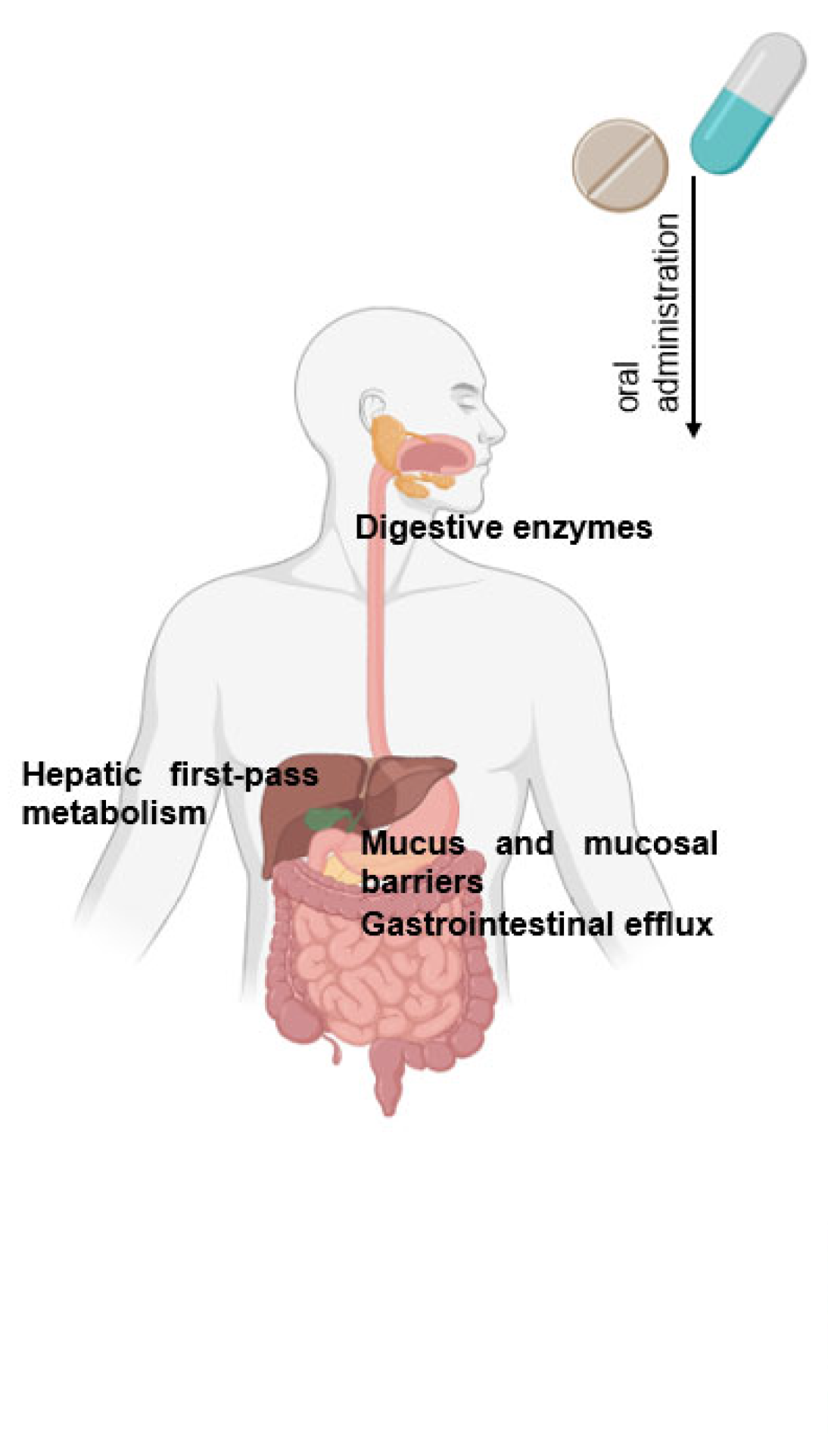
Products that are taken orally usually enter phase I metabolism in the liver. Here, the substance is broken down (metabolized) into other compounds, then distributed throughout the body via the bloodstream. When the same product is applied topically, it does not go through the same metabolic process, unless some of the product is absorbed into the systemic circulation.
When products are used in different formulations (oral, topical, or shampoo), they have completely different effects on the body compared to oral administration. This means that studies evaluating the efficacy of oral products for hair regrowth cannot be translated into claims for topically applied products, and certainly not for products used as shampoos.
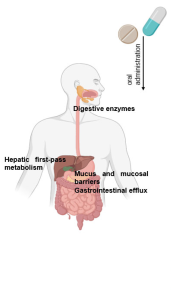
Figure 1. Metabolism of oral products. Adapted from Figure 1.[5]Dinh, L., Yan, B. (2023). Oral Drug Delivery Via Intestinal Lymphatic Transport Utilizing Lipid-Based Lyotropic Liquid Crystals. Liquids. 3(4). 456-468. Available at: … Continue reading
Used under Creative Commons License.#2: Scalp penetration and skin contact time
Now, if we look at studies that investigate products used topically, we may assume that any claims can automatically be applied to shampoo products. Unfortunately, this is not the case.
Many of the ingredients used in topicals take hours for effective penetration into the scalp. When products are applied as a shampoo, they are in contact with the scalp for much shorter periods, usually just minutes, before ingredients within the shampoo are washed out.
This means, in the majority of cases, ingredients lack enough time to effectively penetrate the scalp, and therefore, have little time to be efficacious for hair regrowth.
If you are a member, you can find out more about hair shampoo ingredients in our video and article here.
What Can “Hair Loss Shampoos” Actually Do?
Overall, shampoos may improve the appearance of the hair. Shampoos can potentially make the hair feel more robust and thicker, or even appear healthier and shinier. There are some shampoo ingredients that have limited preclinical or clinical support for hair regrowth (included in our top 10 list below).
However, it is important to note that these shampoos are mostly appropriate for people with AGA alongside inflammation associated with microorganism overgrowths in the scalp.
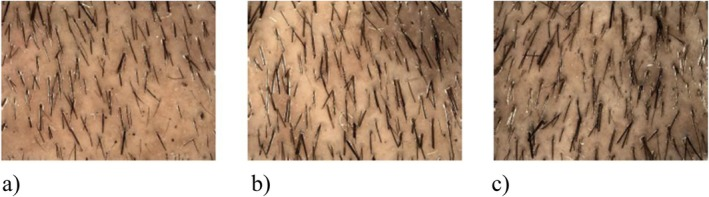
Figure 2. Photo documentation of hair growth at one scalp site at (a) Baseline, (b) after 3 months, and (c) after 6 months of shampoo application containing 1% caffeine and 1% sodium dimethylglycinate. Adapted from Figure 6.[6]Celleno, L., Bussoletti, C., Tolaini, M.V., Rossi, A., Ala, L., Becker, M., Völker, J.M., Wiesche, E.S.Z. (2025). A Novel Approach Against Male Pattern Hair Loss With Topical Dimethylglycine Sodium … Continue reading Used under Creative Commons License.
10 Shampoos Ingredients – Ranked by Evidence
Despite the marketing hype around hair loss shampoos, we have sifted through the noise and found some ingredients that have been tested in human trials.
At Perfect Hair Health, we evaluate products based on evidence quality. We prioritize randomized controlled human trials over small pilot studies, preclinical data, and anecdotes. We take into consideration regrowth potential, looking closely at clinical results that translate into cosmetically meaningful improvements (terminal hair counts and hair-thickness improvements).
Here is a breakdown of our top shampoos that have clinical evidence for hair growth:
Shampoo Ingredient Clinical studies Treatments Key findings #1 Ketoconazole Study #1:[7]Piérard-Franchimont, C., De Doncker, P., Cauwenbergh, G., Piérard, G.E. (1998). Ketoconazole Shampoo: Effect of Long-Term Use in Androgenic Alopecia. Dermatology. 196(4). 474-7. Available at: … Continue reading Controlled comparative study. 39 men with AGA aged 21-33, 22 non-AGA age-matched controls; 21 months 2% ketoconazole shampoo vs normal shampoo 2-4x/week Pilary index (% hairs in anagen hairs times average hair-shaft diameter) in AGA men increased progressively with ketoconazole; the control group showed a gradual decline. No change in non-AGA controls Study #2:[8]Piérard-Franchimont, C., De Doncker, P., Cauwenbergh, G., Piérard, G.E. (1998). Ketoconazole Shampoo: Effect of Long-Term Use in Androgenic Alopecia. Dermatology. 196(4). 474-7. Available at: … Continue reading Pilot study. 8 men with AGA aged 24-29; 6 months 2% ketoconazole shampoo vs 2% minoxidil lotion Ketoconazole: +18% hair density, +7% shaft diameter, -19% sebaceous gland size. Minoxidil: +11% hair density, +7% shaft diameter, +5% sebaceous gland size
Study #3:[9]Piérard-Franchimont, C., Goffin, V., Henry, F., Uhoda, I., Braham, C., Piérard, G.E. (2002). Nudging Hair Shedding By Antidandruff Shampoos: A Comparison Of 1% Ketoconazole, 1% Piroctone Olamine … Continue reading Randomized controlled trial. 150 men with telogen effluvium + AGA + dandruff; 6 months
1% ketoconazole vs 1 % piroctone olamine vs 1% zinc pyrithione shampoos 2-3x/week Ketoconazole: -17.3% shedding, +4.9% anagen hair ratio, -4.8% sebum excretion. No difference in hair density. Pruritus and dandruff cleared in all groups Study #4:[10]Khandpur, S., Suman, M., Reddy, B.S. (2002). Comparative Efficacy Of Various Treatment Regimens For Androgenetic Alopecia In Men. J Dermatol. 29(8). 489-98. Available at: … Continue reading Open-label, randomized, parallel-group trial. 100 men with AGA; 12 months
1 mg/day oral finasteride + 2% ketoconazole shampoo vs 1 mg/day oral finasteride vs 2% topical minoxidil vs 1 mg/day oral finasteride + 2% topical minoxidil Finasteride + minoxidil and finasteride + ketoconazole had the best improvement scores for both self- and physician-assessments. Finasteride + minoxidil slightly outperformed finasteride + ketoconazole Study #5:[11]Rafi, A.W., Katz, R.M. (2011). Pilot Study Of 15 Patients Receiving A New Treatment Regimen For Androgenic Alopecia: The Effects Of Atopy On AGA. ISRN Dermatol. 2011. 241953. Available at: … Continue reading Pilot study. 15 men with AGA + atopic or seborrheic dermatitis; 9 months
2% ketoconazole shampoo + NuH Hair + 1 mg/day finasteride + minoxidil foam vs NuH Hair vs 2% ketoconazole + NuH Hair + 1 mg/day finasteride vs 2% ketoconazole shampoo + NuH Hair Average time for hair regrowth: 30 days with NuH Hair + finasteride + minoxidil + ketoconazole and NuH Hair + finasteride + ketoconazole, 60 days with NuH Hair + ketoconazole, and 90 days with NuH Hair alone #2 Piroctone olamine Study #1:[12]Piérard-Franchimont, C., Goffin, V., Henry, F., Uhoda, I., Braham, C., Piérard, G.E. (2002). Nudging Hair Shedding By Antidandruff Shampoos: A Comparison Of 1% Ketoconazole, 1% Piroctone Olamine … Continue reading Randomized controlled trial. 150 men with telogen effluvium + AGA + dandruff; 6 months 1% ketoconazole vs 1 % piroctone olamine vs 1% zinc pyrithione shampoos 2-3x/week Piroctone olamine: -16.5% shedding, +7.9% anagen hair ratio, -2.9% sebum excretion. No difference in hair density. Pruritus and dandruff cleared in all groups #3 Zinc pyrithione Study #1:[13]Piérard-Franchimont, C., Goffin, V., Henry, F., Uhoda, I., Braham, C., Piérard, G.E. (2002). Nudging Hair Shedding By Antidandruff Shampoos: A Comparison Of 1% Ketoconazole, 1% Piroctone Olamine … Continue reading Randomized controlled trial. 150 men with telogen effluvium + AGA + dandruff; 6 months 1% ketoconazole vs 1 % piroctone olamine vs 1% zinc pyrithione shampoos 2-3x/week Zinc pyrithione: -10.1% shedding, +6.8% anagen hair ratio, -5.5% sebum excretion. No difference in hair density. Pruritus and dandruff cleared in all groups
Study #2:[14]Berger, R.S., Fu, J.L., Smiles, K.A., Turner, C.B., Schnell, B.M., Werchowski, K.M., Lammers, K.M. (2003). The Effects Of Minoxidil, 1% Pyrithione Zinc And A Combination Of Both On Hair Density: A … Continue reading Randomized, investigator-blinded, parallel-group trial. 200 men with AGA aged 18-49; 6 months 1% pyrithione zinc shampoo 1x/day vs 5% minoxidil topical solution 2x/day vs placebo shampoo vs 1% pyrithione zinc shampoo + 5% minoxidil topical solution At 9 weeks, total visible hair count increased in the pyrithione zinc, minoxidil, and zinc + minoxidil group compared to placebo. Relative hair count for pyrithione zinc was slightly less than half of the relative hair count for minoxidil. No advantage observed for the combination group. #4 Caffeine Study #1:[15]Celleno, L., Bussoletti, C., Tolaini, M.V., Rossi, A., Ala, L., Becker, M., Völker, J.M., Wiesche, E.S.Z. (2025). A Novel Approach Against Male Pattern Hair Loss With Topical Dimethylglycine Sodium … Continue reading Randomized, double-blind, placebo-controlled trial. 154 men early signs of hair thinning and/or AGA; 6 months Shampoo containing 1% caffeine + 1% sodium dimethylglycinate (plus further components) vs placebo Decreased mean number of hairs pulled in the hair pull test in the treatment group (-2.8) compared to placebo (+0.6). Phototrichogram results showed an increased number of hairs, hair density, and % anagen hairs after 6 months in the treatment group compared to placebo Study #2:[16]Bussoletti, C., Tolaini, M.V., Celleno, L. (2020). Efficacy Of A Cosmetic Phyto-Caffeine Shampoo In Female Androgenetic Alopecia. G Ital Dermatol Venereol. 155(4). 492-499. Available at: … Continue readingRandomized, double-blind parallel-group trial. 140 females with AGA aged 40-70; 6 months Plantur 39 caffeine shampoo vs placebo Reduction in pulled hairs after 3 and 6 months in the treatment group. Placebo group mean pulled hairs remained stable. Hair quality assessed by investigators revealed strength and thickness of hair, and hair fall improved in the treatment group compared to placebo Study #3:[17]Chen, D., Yu, F., Wang, C., Chen, H., Tan, J., Shi, Q., He, X., Liu, X., Wang, F., Zhao, H. (2024). Anti-Hair Loss Effect Of A Shampoo Containing Caffeine And Adenosine. Journal Of Cosmetic … Continue reading Randomized, single-blind, parallel-group, controlled trial. 77 individuals with self-perceieved thinning hair aged 20-60; 3 months 0.4% caffeine + 0.2% adenosine shampoo vs placebo Hair density increased from 118.25 to 130.03 hairs/cm2 in the treatment group at month 3. No change in hair density observed in the placebo group. Significant hair loss reduction in the treatment group compared to placebo. #5 Minoxidil Study #1:[18]Yaghmaee, R., Mirbagheri, M., Pakdaman, M.H., Rad, F., Gharibi, F. (2016). The Effect Of Minoxidil 1% Shampoo On Androgenetic Alopecia: A Clinical Trial Study. Research Journal Of Pharmaceutical, … Continue reading Randomized double-blind, placebo- controlled trial. 60 individuals with AGA aged 15-40; 4 months 1% minoxidil shampoo vs placebo Mean terminal hair count in the minoxidil group increased from 24.2 at baseline to 26.9 at 4 months. Placebo group terminal hair count was 22.9 at baseline and 22.9 at month 4. However, no significant differences between groups were observed #6 Salicylic acid, Panthenol & Niacinamide Study #1:[19]Kim, H.T., Park, H.S., Kim, Y.M. (2022). Double-Blind Randomized Placebo-Controlled Study Of The Efficacy And Safety Of Hair Loss Prevention Shampoo Containing Salicylic Acid, Panthenol, And … Continue reading Randomized, double-blind, placebo-controlled trial. 42 individuals with AGA aged 19-54; 24 weeks 0.2% salicylic acid + 0.2% panthenol + 0.1% niacinamide shampoo vs placebo 17.76% increase in the number of hairs on the crown in the treatment group compared to the placebo group after 24 weeks #7 Saw palmetto Study #1:[20]Sudeep, H.V., Rashmi, S., Jestin, T.V., Richards, A., Gouthamchandra, K., Shyamprasad, K. (2023). Oral and Topical Administration of a Standardized Saw Palmetto Oil Reduces Hair Fall and Improves the … Continue reading Randomized, double-blind, placebo-controlled trial. 80 individuals with mild-to-moderate AGA aged 18-50; 16 weeks. Investigated a standardized saw palmetto oil (VISPO™, containing 2-3% β-sitosterol) Important caveat: Not a true shampoo study. Data from a topical lotion washed off after 30 minutes
Oral placebo vs oral VISPO™ (400 mg capsule containing 100 mg VISPO™ daily) vs topical placebo vs topical VISPO™ (5 mL of a 20% VISPO™ lotion daily, left on for 30 minutes before washing) At week 16, both VISPO™ groups showed significant reductions in hair shedding (measured by hair comb and hair pull tests) compared to baseline and placebo. Hair fall decreased by around 22% in the topical VISPO™ group compared to baseline. Hair density increased 7.61% with topical VISPO™ Currently, only 7 shampoo ingredients have at least some human clinical evidence suggesting they may be beneficial for hair regrowth. Yet, the evidence on shampoo ingredients for hair loss does have its pitfalls. Many trials involve small cohorts, short trial durations, and investigate a combination of ingredients. This makes it difficult to truly determine which ingredients are responsible for the observed benefits.
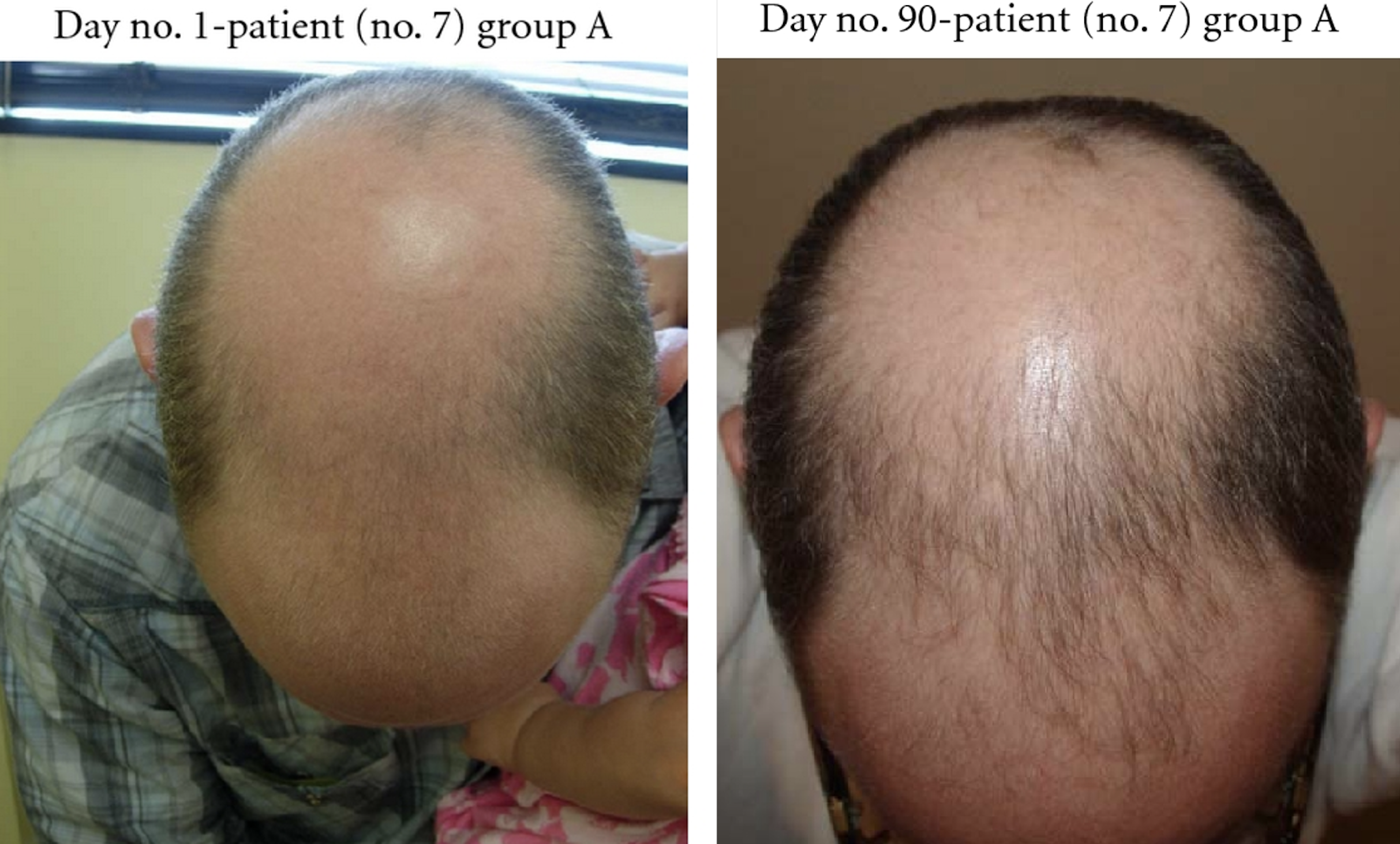
Figure 3. Patient with stage AGA who received 2% ketoconazole shampoo + NuH Hair + 1 mg/day finasteride + minoxidil foam. (a) Day 1, (b) Day 90. Adapted from Figure 1.[21]Rafi, A.W., Katz, R.M. (2011). Pilot Study Of 15 Patients Receiving A New Treatment Regimen For Androgenic Alopecia: The Effects Of Atopy On AGA. ISRN Dermatol. 2011. 241953. Available at: … Continue reading Used under Creative Commons license.
Here we provide information for 3 more shampoo ingredients: selenium sulfide, coal tar, and clobetasol. To date, these ingredients lack human clinical evidence for hair regrowth; however, they may indirectly improve scalp health and hair quality by reducing symptoms that damage hair follicles (e.g., inflammation, itching).
Shampoo ingredient Clinical Studies Treatments Key findings #8 Selenium sulfide Study #1:[22]Danby, F.W., Maddin, W.S., Margesson, L.J., Rosenthal, D. (1993). A Randomized, Double-Blind, Placebo-Controlled Trial Of Ketoconazole 2% Shampoo Versus Selenium Sulfide 2.5% Shampoo In The Treatment … Continue reading Randomized, double-blind, placebo-controlled trial. 246 adults with moderate-severe dandruff; 4 weeks 2.5% selenium sulfide shampoo vs 2% ketoconazole shampoo vs placebo Both selenium sulfide and ketoconazole reduced dandruff scores and itch compared to placebo. Ketoconazole was superior on day 8. Study #2:[23]Barbosa, V., Melo, D.F., Vañó-Galván, S., Lutchmanen-Kolanthan, V., Sant’Anna, B., Leclerc-Mercier, S., Reygagne, P. (2024). A Comparative Randomized Clinical Study Assessing The Efficacy Of … Continue reading Randomized, double-blind, comparative, clinical trial. 64 individuals with moderate-to-severe scalp seborrheic dermatitis; 28 days 1% selenium disulfide shampoo (3x/week) vs 2% ketoconazole shampoo 2x/week Selenium disulfide: 71% reduction in disease severity by day 28. Ketoconazole: 69% reduction in disease severity score by day 28
#9 Clobetasol Study #1:[24]Ortonne, J.-P., Nikkels, A.F., Reich, K., Ponce Olivera, R.M., Lee, J.H., Kerrouche, N., Sidou, F., Faergemann, J. (2011). Efficacious And Safe Management Of Moderate To Severe Scalp Seborrhoeic … Continue reading Randomized, multi-centre, comparative clinical trial. 326 individuals with moderate-to-severe scalp seborrhoeic dermatitis; 12 weeks total 0.05% clobetasol vs 2% ketoconazole vs 0.05% clobetasol twice weekly alternating with 2 % ketoconazole twice weekly vs 0.05% clobetasol four times weekly alternating with 2 % ketoconazole twice weekly Clobetasol + ketoconazole improved erythema, scaling, and pruritus more than ketoconazole alone. #10 Coal tar Study #1[25]Goyal, A. (2025). Comparative Study Of Ketoconazole-Based Shampoo Versus Coal Tar-Based Shampoo In Seborrheic Dermatitis. Int. J Med. Pharm. Res. 6(4). 208-211: Comparative clinical trial. 100 participants with mild-to-moderate scalp seborrheic dermatitis; 4 weeks 1% coal tar shampoo vs 2% ketoconazole shampoo 2x/week
By week 4, disease severity scores in both groups reduced from baseline. Ketoconazole was superior in reducing severity faster, providing better symptom relief, and causing fewer side effects Our #1 Best Shampoo Ingredient: Ketoconazole
Based on the available evidence, we ranked ketoconazole as our top-rated shampoo ingredient that may improve hair growth. Ketoconazole is commonly sold under the name Nizoral and is an antifungal medication used to help improve fungal-related conditions such as dandruff, fungal infections, certain hormone-linked diseases, and even hair loss from fungal and non-fungal causes.

Figure 4. Structure of ketoconazole. Adapted from Wikimedia.[26]Wikimedia Commons, (04 September 2025), Ketoconazole Chemical Structure (SVG). Available at: https://commons.wikimedia.org/wiki/Category:Ketoconazole#/media/File:(2S,4R)-Ketoconazol.svg (Accessed: 20 … Continue reading Image in the public domain.
Ketoconazole may improve telogen effluvium by killing scalp pathogens, thereby normalizing excessive hair shedding triggered by microorganism-mediated inflammation. It may also prolong the anagen phase of the hair cycle. Additionally, ketoconazole may improve AGA via three key mechanisms:
- Killing pathogens in the scalp, therefore normalizing excessive hair shedding triggered by microorganism-mediated inflammation.
- Reducing scalp DHT levels by inhibiting 5-alpha reductase (a key enzyme that converts testosterone to DHT) and blocking androgen receptors (“landing pads” for DHT to exert its effects).
- Prolonging the anagen phase of the hair cycle.
You can buy 1% ketoconazole shampoo over the counter, typically at around $16 for 200 mL. Whereas, 2% ketoconazole shampoo usually requires a prescription. Based on the available clinical evidence, there is stronger support for the use of 2% ketoconazole shampoo for hair growth than for 1%. However, there are currently no direct head-to-head studies comparing the effectiveness of 1% ketoconazole shampoo versus 2% for hair regrowth; therefore, any inferences are speculative.
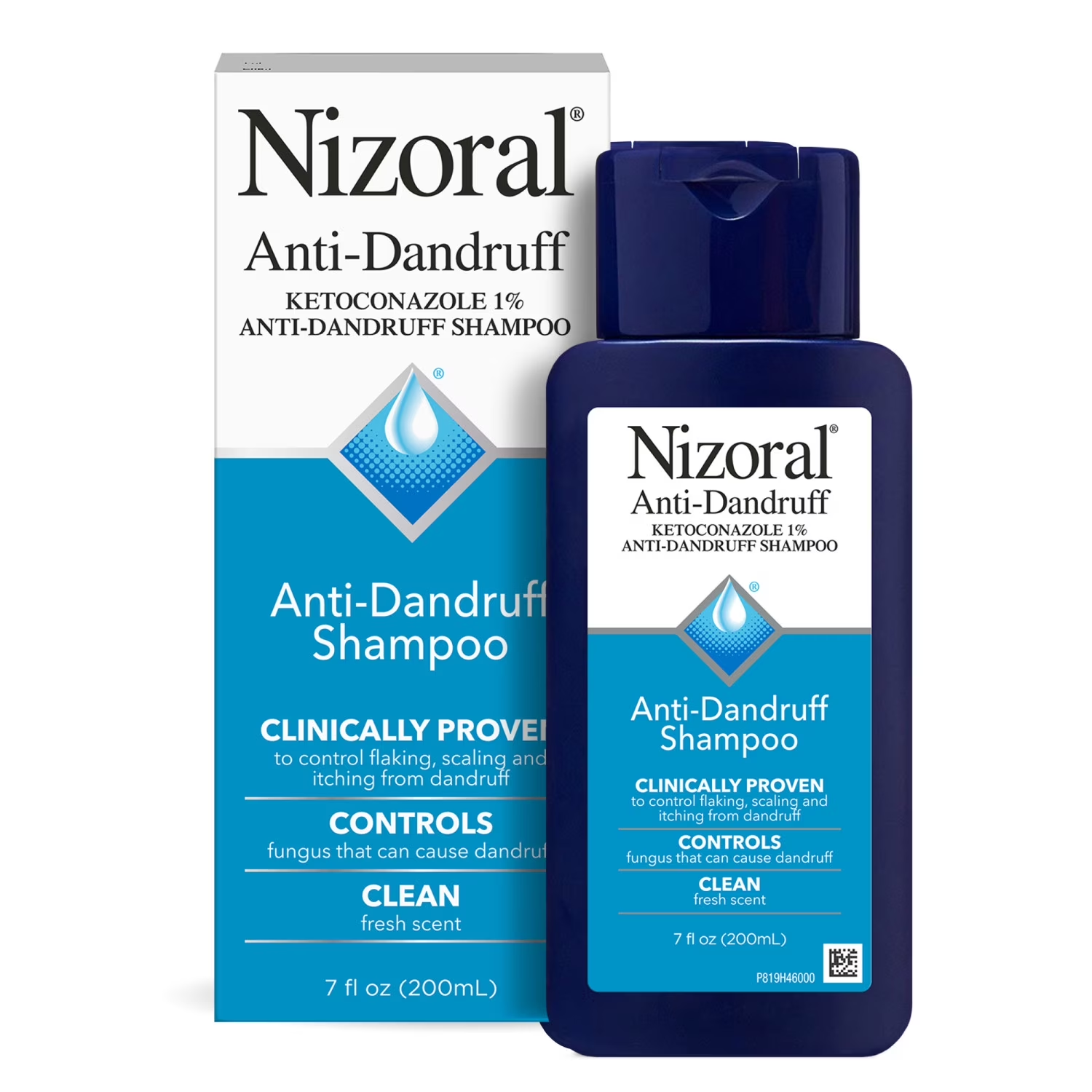
Figure 5. Image of Nizoral shampoo, containing 1% ketoconazole.
If you are a member and would like to learn more about ketoconazole, read our ultimate guide here.
Are Hair Loss Shampoos Safe?
In general, most hair-loss shampoos containing ketoconazole, piroctone olamine, zinc pyrithione, or caffeine are well tolerated. Very few side effects have been reported with use. However, local irritation, itching, or dryness may occur, particularly when overused or on very sensitive scalps. Concurrent use of other scalp products may require more cautious use and medical guidance.
How To Use Hair Loss Shampoos
The majority of hair loss shampoos that contain ingredients such as ketoconazole, piroctone olamine, zinc pyrithione, or caffeine are used 2-3 times per week, not daily, unless a dermatologist has advised otherwise. Using a mild, non-medicated shampoo in between use may help avoid cumulative irritation or excessive dryness of the scalp.
You should always follow the directions for use provided on the product label. Generally, hair loss shampoos can be used by wetting the hair and scalp, then lathering a small amount in the hands and applying it mainly to the scalp. Many typically massage gently with the fingertips for around 1-2 minutes, and leave on for a total of 3-5 minutes before rinsing. Rinse thoroughly, as residues may increase the risk of scalp irritation or dryness.
Final Verdict
Most products marketed as hair loss shampoos do not actually regrow hair. They may, however, improve scalp health and hair appearance. Only a small number of shampoo ingredients are currently backed by human clinical trial evidence.
Our top-rated ingredients in this article with the strongest evidence for potential hair-growth benefits include ketoconazole, piroctone olamine, and zinc pyrithione. Other ingredients mentioned in this article, including caffeine, salicylic acid, panthenol, and niacinamide, have been investigated in combination formulation studies. So while the data looks promising, we cannot determine how much benefit comes from each individual ingredient.
Overall, shampoos generally have short contact time with the scalp, limiting their regrowth potential. Hair loss shampoos are best viewed as adjuncts to proven topical or oral products such as minoxidil and finasteride. The next time you see bold hair shampoo marketing claims, keep in mind to focus on the ingredients and the evidence.
References[+]
References ↑1 Evron, E., Juhasz, M., Babadjouni, A., Mesinkovska, N.A., (2020). Natural Hair Supplement: Friend Or Foe? Saw Palmetto, A Systematic Review In Alopecia. Skin Appendage Disorders. 6(6). 329–337. Available at: https://doi.org/10.1159/000509905 ↑2 Völker, J.M., Koch, N., Becker, M., Klenk, A., (2020). Caffeine And Its Pharmacological Benefits In The Management Of Androgenetic Alopecia: A Review. Skin Pharmacology And Physiology. 33(3). 153–169. Available at: https://doi.org/10.1159/000508228 ↑3 Draelos, Z.D., Jacobson, E.L., Kim, H., Kim, M., Jacobson, M.K., (2005). A Pilot Study Evaluating The Efficacy Of Topically Applied Niacin Derivatives For Treatment Of Female Pattern Alopecia. Journal Of Cosmetic Dermatology. 4(4). 258–261. Available at: https://doi.org/10.1111/j.1473-2165.2005.00201.x ↑4 Patel, D.P., Swink, S.M., Castelo-Soccio, L., (2017). A Review Of The Use Of Biotin For Hair Loss. Skin Appendage Disorders. 3(3). 166–169. Available at: https://doi.org/10.1159/000462981 ↑5 Dinh, L., Yan, B. (2023). Oral Drug Delivery Via Intestinal Lymphatic Transport Utilizing Lipid-Based Lyotropic Liquid Crystals. Liquids. 3(4). 456-468. Available at: https://doi.org/10.3390/liquids3040029 ↑6 Celleno, L., Bussoletti, C., Tolaini, M.V., Rossi, A., Ala, L., Becker, M., Völker, J.M., Wiesche, E.S.Z. (2025). A Novel Approach Against Male Pattern Hair Loss With Topical Dimethylglycine Sodium Salt (DMG-Na) and Caffeine: Efficacy of a 24-Week, Double-Blind, Randomized, Placebo-Controlled Trial. J Cosmet Dermatol. 24(8). e70390. Available at: https://doi.org/10.1111/jocd.70390 ↑7, ↑8 Piérard-Franchimont, C., De Doncker, P., Cauwenbergh, G., Piérard, G.E. (1998). Ketoconazole Shampoo: Effect of Long-Term Use in Androgenic Alopecia. Dermatology. 196(4). 474-7. Available at: https://doi.org/10.1159/000017954 ↑9, ↑12, ↑13 Piérard-Franchimont, C., Goffin, V., Henry, F., Uhoda, I., Braham, C., Piérard, G.E. (2002). Nudging Hair Shedding By Antidandruff Shampoos: A Comparison Of 1% Ketoconazole, 1% Piroctone Olamine And 1% Zinc Pyrithione Formulations. International Journal Of Cosmetic Science. 24(5). 249-256. Available at: https://doi.org/10.1046/j.1467-2494.2002.00145.x ↑10 Khandpur, S., Suman, M., Reddy, B.S. (2002). Comparative Efficacy Of Various Treatment Regimens For Androgenetic Alopecia In Men. J Dermatol. 29(8). 489-98. Available at: https://doi.org/10.1111/j.1346-8138.2002.tb00314.x ↑11 Rafi, A.W., Katz, R.M. (2011). Pilot Study Of 15 Patients Receiving A New Treatment Regimen For Androgenic Alopecia: The Effects Of Atopy On AGA. ISRN Dermatol. 2011. 241953. Available at: https://doi.org/10.5402/2011/241953 ↑14 Berger, R.S., Fu, J.L., Smiles, K.A., Turner, C.B., Schnell, B.M., Werchowski, K.M., Lammers, K.M. (2003). The Effects Of Minoxidil, 1% Pyrithione Zinc And A Combination Of Both On Hair Density: A Randomized Controlled Trial. British Journal Of Dermatology. 149(2). 354–362. Available at: https://doi.org/10.1046/j.1365-2133.2003.05435.x ↑15 Celleno, L., Bussoletti, C., Tolaini, M.V., Rossi, A., Ala, L., Becker, M., Völker, J.M., Wiesche, E.S.Z. (2025). A Novel Approach Against Male Pattern Hair Loss With Topical Dimethylglycine Sodium Salt (DMG-Na) And Caffeine: Efficacy Of A 24-Week, Double-Blind, Randomized, Placebo-Controlled Trial. J Cosmet Dermatol. 24(8). e70390. Available at: https://doi.org/10.1111/jocd.70390 ↑16 Bussoletti, C., Tolaini, M.V., Celleno, L. (2020). Efficacy Of A Cosmetic Phyto-Caffeine Shampoo In Female Androgenetic Alopecia. G Ital Dermatol Venereol. 155(4). 492-499. Available at: https://doi.org/10.23736/S0392-0488.18.05499-8 ↑17 Chen, D., Yu, F., Wang, C., Chen, H., Tan, J., Shi, Q., He, X., Liu, X., Wang, F., Zhao, H. (2024). Anti-Hair Loss Effect Of A Shampoo Containing Caffeine And Adenosine. Journal Of Cosmetic Dermatology. 23(9). 2927-2933. Available at: https://doi.org/10.1111/jocd.16347 ↑18 Yaghmaee, R., Mirbagheri, M., Pakdaman, M.H., Rad, F., Gharibi, F. (2016). The Effect Of Minoxidil 1% Shampoo On Androgenetic Alopecia: A Clinical Trial Study. Research Journal Of Pharmaceutical, Biological And Chemical Sciences. 7(5). 856. Available at: https://www.rjpbcs.com/pdf/2016_7(5)/%5B105%5D.pdf ↑19 Kim, H.T., Park, H.S., Kim, Y.M. (2022). Double-Blind Randomized Placebo-Controlled Study Of The Efficacy And Safety Of Hair Loss Prevention Shampoo Containing Salicylic Acid, Panthenol, And Niacinamide In Alopecia Patients. Toxicol Environ Health Sci. 14. 173–185. Available at: https://doi.org/10.1007/s13530-022-00126-9 ↑20 Sudeep, H.V., Rashmi, S., Jestin, T.V., Richards, A., Gouthamchandra, K., Shyamprasad, K. (2023). Oral and Topical Administration of a Standardized Saw Palmetto Oil Reduces Hair Fall and Improves the Hair Growth in Androgenetic Alopecia Subjects – A 16-Week Randomized, Placebo-Controlled Study. Clin Cosmet Investig Dermatol. 16, 3251-3266. Available at: https://doi.org/10.2147/CCID.S435795 ↑21 Rafi, A.W., Katz, R.M. (2011). Pilot Study Of 15 Patients Receiving A New Treatment Regimen For Androgenic Alopecia: The Effects Of Atopy On AGA. ISRN Dermatol. 2011. 241953. Available at: https://doi.org/10.5402/2011/241953 ↑22 Danby, F.W., Maddin, W.S., Margesson, L.J., Rosenthal, D. (1993). A Randomized, Double-Blind, Placebo-Controlled Trial Of Ketoconazole 2% Shampoo Versus Selenium Sulfide 2.5% Shampoo In The Treatment Of Moderate To Severe Dandruff. J Am Acad Dermatol. 29(6). 1008-12. Available at: https://doi.org/10.1016/0190-9622(93)70282-x ↑23 Barbosa, V., Melo, D.F., Vañó-Galván, S., Lutchmanen-Kolanthan, V., Sant’Anna, B., Leclerc-Mercier, S., Reygagne, P. (2024). A Comparative Randomized Clinical Study Assessing The Efficacy Of A 1% Selenium Disulfide-Based Shampoo Versus 2% Ketoconazole Shampoo In Subjects With Moderate To Severe Scalp Seborrheic Dermatitis. Skin Appendage Disord. 10(6). 497-504. Available at: https://doi.org/10.1159/000539209 ↑24 Ortonne, J.-P., Nikkels, A.F., Reich, K., Ponce Olivera, R.M., Lee, J.H., Kerrouche, N., Sidou, F., Faergemann, J. (2011). Efficacious And Safe Management Of Moderate To Severe Scalp Seborrhoeic Dermatitis Using Clobetasol Propionate Shampoo 0.05% Combined With Ketoconazole Shampoo 2%: A Randomized, Controlled Study. British Journal Of Dermatology. 165(1). 171–176. Available at: https://doi.org/10.1111/j.1365-2133.2011.10269.x ↑25 Goyal, A. (2025). Comparative Study Of Ketoconazole-Based Shampoo Versus Coal Tar-Based Shampoo In Seborrheic Dermatitis. Int. J Med. Pharm. Res. 6(4). 208-211 ↑26 Wikimedia Commons, (04 September 2025), Ketoconazole Chemical Structure (SVG). Available at: https://commons.wikimedia.org/wiki/Category:Ketoconazole#/media/File:(2S,4R)-Ketoconazol.svg (Accessed: 20 January 2026) Finasteride is a prescription medication originally produced to treat benign prostatic hyperplasia (BPH), a non-cancerous enlargement of the prostate gland, and to treat hair loss in the form of androgenic alopecia (AGA).
This article will cover the history, evidence, and safety of finasteride, as well as easy and legitimate ways to purchase it safely in the U.S.
Interested in Oral Finasteride?
Oral finasteride & minoxidil available, if prescribed*
Take the next step in your hair regrowth journey. Get started today with a provider who can prescribe a topical solution tailored for you.
*Only available in the U.S. Prescriptions not guaranteed. Restrictions apply. Off-label products are not endorsed by the FDA.
What is Finasteride?
Finasteride is an FDA-approved prescription medication that is highly effective at promoting hair growth.
How Was Finasteride Discovered for Hair Loss?
Finasteride was first approved for use to treat BPH in 1992 after years of research into establishing dihydrotestosterone (DHT) as an important androgenic hormone controlling the enlargement of the prostate gland. DHT is crucial to the development of the prostate gland in fetuses, its enlargement during puberty, and its subsequent growth in later life (which can lead to BPH).[1]Marks, L.S., (2004). 5α-Reductase: History and Clinical Importance. Reviews in Urology. 6(Suppl 9). S11–S21. Available at: https://pmc.ncbi.nlm.nih.gov/articles/PMC1472916/
Scientists discovered that a deficiency in the 5-alpha reductase (5AR) enzyme caused the inhibition of the conversion of testosterone to DHT. They developed Finasteride as a drug to shrink the prostate by blocking the 5AR enzyme and therefore reducing levels of DHT and decreasing prostate size.[2]Stoner, E. (1990). The Clinical Development of a 5α-Reductase Inhibitor, Finasteride. The Journal of Steroid Biochemistry and Molecular Biology. 37(3). 375–378. Available at: … Continue reading
Historical summaries of BPH trials describe how men treated with finasteride for BPH also noticed improvements in hair growth, although this is not reported in any of the original trial reports. The first clinical trials investigating finasteride in hair loss were carried out in 1994, and finasteride was approved by the FDA in 1997.[3]U.S. Food and Drug Administration. (1997). Drug Approval Package. Available at: https://www.accessdata.fda.gov/drugsatfda_docs/nda/97/020788_propecia_toc.cfm (Accessed: 14 January 2026),[4]Libecco, J.F., Bergfeld, W.F., (2004). Finasteride in the Treatment of Alopecia. Expert Opinion on Pharmacotherapy. 5(4). 933–940. Available at: https://doi.org/10.1517/14656566.5.4.933
How Does Finasteride Work?
Similarly to BPH, the use of finasteride in hair loss also revolves around its inhibition of the 5AR enzyme.
Why Does Androgenic Alopecia Occur?
Androgenic alopecia (AGA), also known as male pattern baldness, occurs due to the progressive miniaturization of hair follicles in individuals susceptible to androgen (a type of sex hormone) sensitivity. The activation of the androgen receptor causes the growth phase of the hair cycle to shorten, leading to hair shedding and, in subsequent hair cycles, progressive miniaturization of hair.[5]Ho, C.H., Sood, T., Zito, P.M., (2024), Androgenetic Alopecia. Available at: https://www.ncbi.nlm.nih.gov/books/NBK430924/ (Accessed: 07 January 2026)
DHT is an androgen; it binds to the androgen receptor in hair follicles and drives follicular miniaturization. Both DHT and 5AR (the enzyme responsible for converting testosterone into DHT, as discussed above) have been shown to appear at high levels in balding areas of the scalp compared to hair-containing scalp.[6]Dallob, A.L., Sadick, N.S., Unger, W., Lipert, S., Geissler, L.A., Gregoire, S.L., Nguyen, H.H., Moore, E.C. and Tanaka, W.K. (1994). The Effect of Finasteride, a 5 Alpha-Reductase Inhibitor, on … Continue reading
How Does Finasteride Promote Hair Growth?
Finasteride blocks the activity of the 5AR enzyme in the scalp and the serum, preventing it from converting testosterone to DHT and therefore lowering levels of DHT. Lower DHT results in less activation of the androgen receptor and therefore less follicle miniaturization, leading to reduced hair loss and the promotion of hair growth.
Finasteride is an effective suppressor of DHT. It has a non-linear dose-response curve, meaning that even very low levels of finasteride (≤0.2 mg/day) can produce high levels of DHT suppression. In fact, the majority of its inhibitory action occurs at low doses, with higher doses barely providing additional effects.[7]Drake, L., Hordinsky, M., Fiedler, V., et al., (1999). The Effects of Finasteride on Scalp Skin and Serum Androgen Levels in Men with Androgenetic Alopecia. Journal of the American Academy of … Continue reading
What Does the Science Show?
The clinical effectiveness of finasteride in inhibiting DHT and improving hair growth has been demonstrated in multiple clinical trials, including:
- Kaufman et al., 1998: Two 1-year placebo-controlled trials with 1553 men total. Fixed dose of 1 mg/day.[8]Kaufman, K.D., Olsen, E.A., Whiting, D., et al. (1998). Finasteride in the Treatment of Men with Androgenetic Alopecia. Journal of the American Academy of Dermatology. 39(4 Pt 1). 578–589. … Continue reading
Demonstrated that finasteride treatment improved all of their measured scalp parameters, including significant increases in hair count in an area of balding scalp, photographic evidence, and patient self-assessment.
- Leyden et al., 1999: 12-month placebo-controlled trial with 326 men total. Fixed dose of 1 mg/day.[9]Leyden, J., Dunlap, F., Miller, B., et al., (1999). Finasteride in the Treatment of Men with Frontal Male Pattern Hair Loss. Journal of the American Academy of Dermatology. 40(6). 930–937. … Continue reading
Finasteride significantly improved hair count in the frontal-scalp region, in addition to patient, investigator, and photographic assessments.
- Roberts et al., 1999: Two placebo-controlled trials. The first trial was a year-long trial with 227 men using a fixed dose of 5 mg/day. The second trial was a six-month trial with 466 men using either 0.01, 0.2, or 1 mg/day.[10]Roberts, J.L., Fiedler, V., Imperato-McGinley, J., et al., (1999). Clinical Dose Ranging Studies with Finasteride, a Type 2 5α-Reductase Inhibitor, in Men with Male Pattern Hair Loss. Journal of the … Continue reading
Both trials demonstrated a significant increase in hair count with the use of finasteride compared to the placebo (with the exception of the 0.01 mg/day dose). Significant improvements were further seen in patient self-assessments, investigator assessments, and photographic assessments. They also demonstrated a significant decrease in DHT levels in the serum.
- Drake et al., 1999: Men with AGA underwent scalp biopsies before and after 42 days of finasteride treatment at 0.01, 0.05, 0.2, 1, or 5 mg/day or placebo.[11]Drake, L., Hordinsky, M., Fiedler, V., et al., (1999). The Effects of Finasteride on Scalp Skin and Serum Androgen Levels in Men with Androgenetic Alopecia. Journal of the American Academy of … Continue reading
Demonstrated that finasteride treatment significantly decreased levels of DHT in both the scalp and the serum. Doses as low as 0.2 mg/day lowered DHT by 56.5% in the scalp and 68.6% in the serum. Maximum inhibition of 69.4% in the scalp and 72.2% in the serum was seen with a 5 mg/day dose. No assessment of hair loss was carried out.
- Van Neste et al., 2001: 48-week placebo-controlled trial with 212 men. Fixed dose of 1 mg/day.[12]Van Neste, D., Fuh, V., Sanchez-Pedreno, P., et al., (2000). Finasteride Increases Anagen Hair in Men with Androgenetic Alopecia. British Journal of Dermatology. 143(4). 804–810. Available at: … Continue reading
Finasteride treatment significantly increased the total hair count compared to placebo treatment. They also showed that finasteride treatment improved the ratio of anagen (growth) to telogen (resting) in the hair growth cycle by 47%.
- The Finasteride Male Pattern Hair Loss Study Group, 2002: 5-year placebo-controlled trial (an initial 1-year trial with four 1-year extension studies). Fixed dose of 1 mg/day.[13]Finasteride Male Pattern Hair Loss Study Group, (2002). Long-Term (5-Year) Multinational Experience with Finasteride 1 mg in the Treatment of Men with Androgenetic Alopecia. European Journal of … Continue reading
A significant improvement in hair counts and patient, investigator, and photographic assessments was seen over 5 years. Treatment with the placebo resulted in progressive hair loss over the 5 years.
- Price et al., 2006: 4-year placebo-controlled trial. Fixed dose of 1 mg/day.[14]Price, V.H., Menefee, E., Sanchez, M., Kaufman, K.D., (2006). Changes in Hair Weight in Men with Androgenetic Alopecia after Treatment with Finasteride (1 mg Daily): Three- and Four-Year Results. … Continue reading
Finasteride increased both hair weight and hair counts, demonstrating that increased hair length and thickness may contribute to finasteride’s effects in addition to the increased number of hairs.
Why is Finasteride Prescription-Only?
Finasteride is not an over-the-counter drug in the U.S.; it is only available via prescription.
Finasteride is a hormone-modulating drug with associated risks and monitoring requirements, making medical supervision necessary.
While generally well-tolerated, finasteride is associated with several possible side effects. These can be more serious in certain populations, such as women, making consultation with a medical professional essential before starting finasteride treatment.
Potential Finasteride Side Effects
The average person trying finasteride has no noticeable side effects and significant hair gain. However, there is the potential that an individual will experience side effects.
Sexual Side Effects
Sexual side effects may include:
- Reduced libido
- Erectile dysfunction
- Decreased ejaculatory volume
These are thought to occur as a result of lowered levels of DHT, altered neurosteroids in the brain and spinal cord (affecting the transmission of certain signals), and increased androgen redistribution.
How Common are Sexual Side Effects?
The original FDA registration trials found that sexual side effects were only seen in 1.8% of men (compared to 1.3% in the placebo group), suggesting a rate of only 1 in 200 people. Other studies have found higher rates of sexual side effects, with more conservative estimates of up to 15% of users affected.[15]Mysore, V., (2012). Finasteride and Sexual Side Effects. Indian Dermatology Online Journal. 3(1). 62–65. Available at: https://pmc.ncbi.nlm.nih.gov/articles/PMC3481923/,[16]Zito, P.M., Bistas, K.G., Patel, P., Syed, K. (2025). Finasteride. In: StatPearls [Internet]. Treasure Island (FL): StatPearls Publishing; 2025 Jan–. Available at: … Continue reading
In addition, the “nocebo” phenomenon may increase reports of side effects. In this phenomenon, a patient may experience negative symptoms or worse outcomes due to being informed that the product may cause them harm. A small study investigating this in BPH patients treated with 5 mg/day finasteride showed that the group told in advance about potential sexual side effects had a significantly higher number of people reporting sexual side effects than the group who were not told in advance (43.6% vs. 15.3%).[17]Mondaini, N., Gontero, P., Giubilei, G., Lombardi, G., Cai, T., Gavazzi, A. and Bartoletti, R. (2007). Finasteride 5 mg And Sexual Side Effects: How Many Of These Are Related To A Nocebo Phenomenon? … Continue reading
Other Side Effects
Cognitive Effects
Some users have reported cognitive issues, such as memory lapses or “brain fog”, while on finasteride. These have not been widely reported and are not well documented in human trials, potentially due to their subtle and subjective nature.
An animal study investigating these effects found that rodents given extremely high doses of finasteride (equivalent to a year’s worth of finasteride per day) showed signs of inflammation in their brains and depressive-like behaviour after withdrawal. While this study does demonstrate that finasteride has the potential to alter brain chemistry, it cannot be directly applied to humans due to the differences in how rodent and human brains work and due to the incredibly high dose used.[18]Diviccaro, S., Giatti, S., Borgo, F., et al., (2019). Treatment of Male Rats with Finasteride, an Inhibitor of 5alpha-Reductase Enzyme, Induces Long-Lasting Effects on Depressive-Like Behavior, … Continue reading
This study, combined with the anecdotal reports of cognitive issues, should be considered by a medical professional when prescribing to an individual with pre-existing depression, anxiety, or bipolar disorder, as they may be more susceptible to the mood-related effects of finasteride.
That said, hair loss itself is often a cause of psychological stress in men and women, with finasteride use often providing people with psychological relief.
Risks in Pregnancy
Finasteride should not be taken by women who are trying to conceive, pregnant, breastfeeding, or those who are not on birth control. This is because DHT is crucial to fetal development, particularly for male babies. As a result, exposure to finasteride risks mutation or inhibition of the male fetus’s genitalia development.[19]Finasteride. In: MotherToBaby | Fact Sheets. (1994). Organization of Teratology Information Specialists (OTIS). Available at: http://www.ncbi.nlm.nih.gov/books/NBK582707/ (Accessed: 15 January 2026)
Finasteride remains in the body for approximately 30 days after use; so doctors recommend that women trying to conceive should stop taking the drug for at least a month before conception.
The evidence for risks in men trying to conceive is less definite. One study found a potential connection between men conceiving while on finasteride and an increased likelihood of male babies having a congenital anomaly called “cryptorchidism” (undescended testicles).[20]Zeng, Y., Lin, W., Zhuang, W., (2025). Safety Concerns of Paternal Drug Exposure on Fertility, Pregnancy and Offspring: An Analysis Based on the FDA Adverse Event Reporting System. Andrology. 13(6). … Continue reading The findings of this paper have been thoroughly discussed in our article here. However, the current evidence does not justify major concern but provides another reason why a prescription is required for finasteride use.
For more information on finasteride use when trying to conceive, see our article here.
Further Hormonal Effects
The DHT-reducing effects of finasteride can have knock-on effects on other hormones, namely a mild increase in testosterone, which can then be converted to estradiol (a type of estrogen).[21]Lee, Y.R., Im, E., Kim, H., Lew, B.L., Sim, W.-Y., Lee, J., Oh, H.B., Paeng, K.J., Hong, J., Chung, B.C. (2020). Untargeted Metabolomics and Steroid Signatures in Urine of Male Pattern Baldness … Continue reading
In some men, a mild increase in estradiol can lead to:
- Gynecomastia (male breast tissue development)
- Nipple tenderness
- Water retention and puffier facial appearance
- Fat redistribution
All of these side effects are relatively rare, and some lack anything more than anecdotal evidence. However, the potential seriousness of side effects reveals the importance of medical screening and clinician oversight, and necessitates that finasteride be a prescription-only drug.
How to Get Finasteride in the U.S?
Finasteride can easily be obtained in the U.S. by obtaining a prescription from a licensed prescriber and then taking the prescription to a pharmacy. There are three main options for getting prescribed finasteride:
- From your primary care doctor: licensed doctors are the most common prescribers of finasteride for BPH and AGA. Their detailed knowledge of a patient’s medical history and their expertise in drug-drug interactions and side effects can help them counsel patients on nuanced risks and rewards.
- From your dermatologist: dermatologists will have an in-depth knowledge of AGA, with the ability to distinguish different forms of alopecia. Their understanding of AGA staging, response patterns, and alternative or adjunctive therapies will ensure that individuals receive optimal treatments. They will also have a greater knowledge of off-label uses of products, such as topical finasteride.
- Via a telehealth platform: telehealth platforms are a highly convenient and rapid method of gaining access to finasteride. They commonly work with board-certified dermatologists and medical professionals to ensure correct diagnosis. Evaluations of telehealth platforms have shown high customer satisfaction and accurate diagnoses.[22]Young, P.C., Mahajan, C., Shapiro, J., Tosti, A. (2023). Digital Health Platforms Expand Access and Improve Care for Male Androgenetic Alopecia. International Journal of Dermatology. 62(2). … Continue reading,[23]von Büren, J., Hansen, I., Kött, J., et al., (2023). Patient-Reported Treatment Outcomes and Safety of Direct-to-Consumer Teledermatology for Finasteride Treatment in Male Androgenetic Alopecia: A … Continue reading
The Dangers of Buying Finasteride Without a Prescription
Buying finasteride from unregulated sources where a prescription is not needed can be dangerous due to several reasons:
- Unregulated or counterfeit drugs can suffer from poor product quality and contamination with other drugs. Their lack of regulation means that people are not checking that the contents of the drug match what is being sold. This could result in serious side effects and dangerous drug interactions.
- The dose of finasteride within such drugs is unknown. Lower doses may fail to have the desired effect on hair loss, whereas high doses will increase the risk of side effects.
- Bypassing a prescriber removes controls in place to protect individuals from being prescribed the wrong drug or receiving a drug that may exacerbate or cause health problems.
When obtaining a legal prescription for finasteride is so simple (particularly now that telehealth prescribers are in operation), it is unwise to attempt to buy it from unregulated sites where a prescription is not needed.
Ulo: Our Telehealth Partner
If you’re in the U.S., and you’re curious about finasteride, we cofounded the company, Ulo, to provide services that facilitate your access to hair loss medications like finasteride, pending a doctor’s review.
Ulo is a telehealth brand focused on offering hair growth treatments that prioritize scientific evidence, personalization, and consumer safety. Ulo offers both over-the-counter products and access to prescriptions, connecting customers with licensed healthcare providers where necessary to prescribe appropriate treatments. After 10+ years of consumer advocacy, Perfect Hair Health helped cofound Ulo to finally tackle dosing & formulation problems that have remained unaddressed by the hair loss industry for years.
Ulo is focused on evidence-based prescribing. After choosing a treatment, you will receive a medical intake form and be assigned a doctor, usually within an hour of purchase. Your information will be reviewed, any inquiries addressed, and your prescription will be confirmed.
The prescription will be sent to the pharmacy, which will prepare and ship your treatment straight to your door. Prescribed medicines are filled by trusted U.S. pharmacies to ensure that the products are of high quality and reliability.
Ulo continues to offer support, even once you have received your product, providing personalized, ongoing care and guidance from their experienced licensed prescribers.
Ulo was co-founded by Perfect Hair Health, meaning that it perfectly aligns with Perfect Hair Health’s science-first philosophy. They carefully assess product ingredients and only include those that have sufficient evidence supporting their safety and effectiveness; they do not include “trending” ingredients, but only those that can get you results without compromising safety.
For more information on Ulo, read our article here.
Final Thoughts
Finasteride is a well-studied, effective, and FDA-approved treatment for AGA, with many high-quality clinical trials providing extensive evidence both for its ability to promote hair growth and for supporting its safety profile. It is a hormone-modulating medication, which is why understanding its mechanism, benefits, and potential risks is important before starting treatment.
For the vast majority of users, finasteride is well-tolerated and highly effective. However, the potential for side effects and harm that can be caused if used incorrectly makes obtaining finasteride through the correct channels essential. Finasteride can be accessed through a licensed prescriber; this ensures the correct diagnosis, personalized risk assessments, and access to safe, regulated products.
When used correctly and as part of a wider, evidence-based hair loss strategy, finasteride is a powerful tool for long-term hair preservation.
References[+]
References ↑1 Marks, L.S., (2004). 5α-Reductase: History and Clinical Importance. Reviews in Urology. 6(Suppl 9). S11–S21. Available at: https://pmc.ncbi.nlm.nih.gov/articles/PMC1472916/ ↑2 Stoner, E. (1990). The Clinical Development of a 5α-Reductase Inhibitor, Finasteride. The Journal of Steroid Biochemistry and Molecular Biology. 37(3). 375–378. Available at: https://doi.org/10.1016/0960-0760(90)90487-6 ↑3 U.S. Food and Drug Administration. (1997). Drug Approval Package. Available at: https://www.accessdata.fda.gov/drugsatfda_docs/nda/97/020788_propecia_toc.cfm (Accessed: 14 January 2026) ↑4 Libecco, J.F., Bergfeld, W.F., (2004). Finasteride in the Treatment of Alopecia. Expert Opinion on Pharmacotherapy. 5(4). 933–940. Available at: https://doi.org/10.1517/14656566.5.4.933 ↑5 Ho, C.H., Sood, T., Zito, P.M., (2024), Androgenetic Alopecia. Available at: https://www.ncbi.nlm.nih.gov/books/NBK430924/ (Accessed: 07 January 2026) ↑6 Dallob, A.L., Sadick, N.S., Unger, W., Lipert, S., Geissler, L.A., Gregoire, S.L., Nguyen, H.H., Moore, E.C. and Tanaka, W.K. (1994). The Effect of Finasteride, a 5 Alpha-Reductase Inhibitor, on Scalp Skin Testosterone and Dihydrotestosterone Concentrations in Patients with Male Pattern Baldness. J Clin Endocrinol Metab. 79(3), pp.703-706. Available at: https://doi.org/10.1210/jcem.79.3.8077349 ↑7, ↑11 Drake, L., Hordinsky, M., Fiedler, V., et al., (1999). The Effects of Finasteride on Scalp Skin and Serum Androgen Levels in Men with Androgenetic Alopecia. Journal of the American Academy of Dermatology. 41(4). 550–554. Available at: https://doi.org/10.1016/S0190-9622(99)80051-6 ↑8 Kaufman, K.D., Olsen, E.A., Whiting, D., et al. (1998). Finasteride in the Treatment of Men with Androgenetic Alopecia. Journal of the American Academy of Dermatology. 39(4 Pt 1). 578–589. Available at: https://doi.org/10.1016/S0190-9622(98)70007-6 ↑9 Leyden, J., Dunlap, F., Miller, B., et al., (1999). Finasteride in the Treatment of Men with Frontal Male Pattern Hair Loss. Journal of the American Academy of Dermatology. 40(6). 930–937. Available at: https://doi.org/10.1016/S0190-9622(99)70081-2 ↑10 Roberts, J.L., Fiedler, V., Imperato-McGinley, J., et al., (1999). Clinical Dose Ranging Studies with Finasteride, a Type 2 5α-Reductase Inhibitor, in Men with Male Pattern Hair Loss. Journal of the American Academy of Dermatology. 41(4). 555–563. Available at: https://doi.org/10.1016/S0190-9622(99)80052-8 ↑12 Van Neste, D., Fuh, V., Sanchez-Pedreno, P., et al., (2000). Finasteride Increases Anagen Hair in Men with Androgenetic Alopecia. British Journal of Dermatology. 143(4). 804–810. Available at: https://doi.org/10.1046/j.1365-2133.2000.03780.x ↑13 Finasteride Male Pattern Hair Loss Study Group, (2002). Long-Term (5-Year) Multinational Experience with Finasteride 1 mg in the Treatment of Men with Androgenetic Alopecia. European Journal of Dermatology. 12(1). 38–49. Available at: https://pubmed.ncbi.nlm.nih.gov/11809594/ ↑14 Price, V.H., Menefee, E., Sanchez, M., Kaufman, K.D., (2006). Changes in Hair Weight in Men with Androgenetic Alopecia after Treatment with Finasteride (1 mg Daily): Three- and Four-Year Results. Journal of the American Academy of Dermatology. 55(1). 71–74. Available at: https://doi.org/10.1016/j.jaad.2005.07.001 ↑15 Mysore, V., (2012). Finasteride and Sexual Side Effects. Indian Dermatology Online Journal. 3(1). 62–65. Available at: https://pmc.ncbi.nlm.nih.gov/articles/PMC3481923/ ↑16 Zito, P.M., Bistas, K.G., Patel, P., Syed, K. (2025). Finasteride. In: StatPearls [Internet]. Treasure Island (FL): StatPearls Publishing; 2025 Jan–. Available at: https://www.ncbi.nlm.nih.gov/books/NBK513329/ ↑17 Mondaini, N., Gontero, P., Giubilei, G., Lombardi, G., Cai, T., Gavazzi, A. and Bartoletti, R. (2007). Finasteride 5 mg And Sexual Side Effects: How Many Of These Are Related To A Nocebo Phenomenon? Journal Of Sexual Medicine. 4(6), pp.1708–1712. Available at: https://pubmed.ncbi.nlm.nih.gov/17655657/ ↑18 Diviccaro, S., Giatti, S., Borgo, F., et al., (2019). Treatment of Male Rats with Finasteride, an Inhibitor of 5alpha-Reductase Enzyme, Induces Long-Lasting Effects on Depressive-Like Behavior, Hippocampal Neurogenesis, Neuroinflammation and Gut Microbiota Composition. Psychoneuroendocrinology. 99. 206–215. Available at: https://doi.org/10.1016/j.psyneuen.2018.09.021 ↑19 Finasteride. In: MotherToBaby | Fact Sheets. (1994). Organization of Teratology Information Specialists (OTIS). Available at: http://www.ncbi.nlm.nih.gov/books/NBK582707/ (Accessed: 15 January 2026) ↑20 Zeng, Y., Lin, W., Zhuang, W., (2025). Safety Concerns of Paternal Drug Exposure on Fertility, Pregnancy and Offspring: An Analysis Based on the FDA Adverse Event Reporting System. Andrology. 13(6). 1420–1431. Available at: https://doi.org/10.1111/andr.13790 ↑21 Lee, Y.R., Im, E., Kim, H., Lew, B.L., Sim, W.-Y., Lee, J., Oh, H.B., Paeng, K.J., Hong, J., Chung, B.C. (2020). Untargeted Metabolomics and Steroid Signatures in Urine of Male Pattern Baldness Patients after Finasteride Treatment for a Year. Metabolites. 10(4). 131. Available at: https://doi.org/10.3390/metabo10040131 ↑22 Young, P.C., Mahajan, C., Shapiro, J., Tosti, A. (2023). Digital Health Platforms Expand Access and Improve Care for Male Androgenetic Alopecia. International Journal of Dermatology. 62(2). 217–220. Available at: https://doi.org/10.1111/ijd.16452 ↑23 von Büren, J., Hansen, I., Kött, J., et al., (2023). Patient-Reported Treatment Outcomes and Safety of Direct-to-Consumer Teledermatology for Finasteride Treatment in Male Androgenetic Alopecia: A Cross-Sectional Study. Digital Health. 9. 20552076231205740. Available at: https://doi.org/10.1177/20552076231205740 Men are becoming increasingly skeptical about hair loss solutions due to the flooding of the market with pseudoscience-backed products that aren’t effective. Keeps is a telehealth brand offering hair loss and sexual health products. According to their website, their main focus is providing customers with access to proven, science-backed hair loss treatments produced using FDA-approved ingredients. They have strong claims about the effectiveness of their products, but what does the research actually say?
In this article, we’ll explore the products offered by Keeps, the science behind their hair loss treatments, whether their claims and recommendations align with current research, and any safety considerations associated with their products.
Finally, we’ll also discuss certain limitations in treatment options related to personalization. This is a problem less reflective of Keeps in particular, and more reflective of the current state of the telehealth hair care industry. It’s also why, after 10+ years of consumer advocacy, Perfect Hair Health decided to cofound the brand Ulo – a U.S.-based telehealth brand that focuses on hair loss, and also attempts to address core issues that have remained relatively neglected by other brands.
Topical Minoxidil From our partners at UloGet Personalized Topical Minoxidil
Rx-strength topical minoxidil, formulated without propylene glycol. Prescribed 100% online. Choose a multi-month plan and get up to 30% plus a free gift bundle.
Free full-size gifts with 3-month+ plans Prescribed online, shipped to your door Rx-strengthHigh strength growth support
*Only available in the U.S. Prescription requires an online medical consultation at no extra cost. Off-label products are not endorsed by the FDA. Free gifts included with select multi-month plans while supplies last. Ulo is a partner of Perfect Hair Health; we may earn a commission on purchases.
Key Takeaways
- Convenient and affordable. Keeps’ platform offers access to Rx hair loss medications throughout the U.S., along with online medical appointments to facilitate the prescription process. They also offer these products at mostly-affordable prices.
- Supported by science. The science supports the core treatments offered by Keeps – both finasteride and minoxidil reliably slow hair loss and promote regrowth for many men. Keeps also offers both medications orally and topically, which adds to the convenience and flexibility of their platform.
- Dosing concerns. While Keeps offers a range of product formulations, some active ingredients offered in their Rx topicals – such as finasteride – come at doses so high that they leak into the bloodstream and impact systemic hormones not dissimilarly to oral finasteride. As many users often turn to Rx topicals under the assumption that they’re more localized and cause fewer side effects, these larger doses may warrant revisiting by Keeps – or perhaps a change in messaging around these doses.
What Causes Male Pattern Hair Loss?
Androgenic alopecia (AGA) is the medical name of male pattern hair loss. It involves the progressive miniaturization of hair follicles, a process that is induced by androgen sensitivity and driven predominantly by interactions between genes and the hormone dihydrotestosterone (DHT).[1]Ho, C.H., Sood, T., Zito, P.M., (2024), Androgenetic Alopecia. Available at: https://www.ncbi.nlm.nih.gov/books/NBK430924/ (Accessed: 07 January 2026)
DHT is the key androgen driving follicular miniaturization and AGA. The 5-alpha reductase (5AR) enzyme binds to free testosterone and converts it into DHT. DHT then binds to cells via androgen receptors and influences the behavior of those cells. In AGA-sensitive hair follicles, this interaction ultimately results in increased rates of hair shedding, followed by progressive hair follicle miniaturization – both of which tend to worsen without treatment.
What Does Keeps Offer?
Keeps offers a range of treatments for hair loss, with a focus on minoxidil and finasteride. In addition, they offer various other products, including shampoos, a styling product, and supplements. Their Rx offerings include reliable, clinically-proven products delivered in multiple formats, such as sprays, gels, and pills.
We will investigate their product range, exploring what their catalog offers, and examine if the science backs their claims.
Keeps Finasteride (1mg Oral)
Formulations
Keeps offers Finasteride as an oral drug; they do not offer topical finasteride without it being in combination with minoxidil. The oral drug offered contains 1 mg finasteride.
Figure 1. Keeps Oral Finasteride
What is Finasteride?
Finasteride is a drug originally created to treat benign prostatitic hyperplasia and now commonly used to treat AGA. It is a prescription drug that has been approved by the FDA for oral use, and is commonly also prescribed off-label for topical use.
How Does Finasteride Work?
Finasteride selectively inhibits type II 5AR, the enzyme that converts testosterone to DHT. As DHT is the primary driver of AGA, blocking its production interrupts the hormonal processes causing pattern hair loss. As such, finasteride helps to maintain existing hair and induce hair regrowth.
Clinical trials have demonstrated that finasteride treatment decreased levels of DHT in the scalp by 64-60%.[2]Drake, L., Hordinsky, M., Fiedler, V., Swinehart, J., Unger, W.P., Cotterill, P.C., Thiboutot, D.M., Lowe, N., Jacobson, C., Whiting, D., Stieglitz, S., Kraus, S.J., Griffin, E.I., Weiss, D., … Continue reading Finasteride also contributes to anti-cell death effects, in addition to promoting pathways that are important in hair follicle maintenance.
Clinical Effectiveness
Multiple clinical trials have demonstrated the effectiveness of finasteride in improving hair growth. Long-term trials have shown its ability to enhance hair growth and reduce further hair loss across 1-year, 2-year, and 5-year clinical trials. These trials have demonstrated that approximately 65% of men show increased hair counts after 5 years of use.[3]Finasteride Male Pattern Hair Loss Study Group. (2002). Long-Term (5-Year) Multinational Experience With Finasteride 1 mg in the Treatment of Men With Androgenetic Alopecia. Eur J Dermatol. 12:38-49. … Continue reading,[4]Shapiro, J., Kaufman, K.D. (2003). Use of Finasteride in the Treatment of Men With Androgenetic Alopecia (Male Pattern Hair Loss). J Investig Dermatol Symp Proc. 8(1):20-23. Available at: … Continue reading
Are There Any Side Effects?
Finasteride works by altering certain hormones; as such, it can cause side effects throughout the body. These include altered libido, erectile dysfunction, breast enlargement, or mood alterations.
In controlled clinical trials, side effects are uncommon. A meta-analysis (a study where data from multiple independent studies are analyzed) of 15 clinical trials found that only 5.31% of users experienced sexual side effects when taking 1 mg finasteride, whereas these were seen in 3.05% of those taking a sugar pill.[5]Lee, S., Lee, Y.B., Choe, S.J., Lee, W.S. (2019). Adverse Sexual Effects of Treatment with Finasteride or Dutasteride for Male Androgenetic Alopecia: A Systematic Review and Meta-Analysis. Acta … Continue reading
Although rare, these side effects can seriously impact the lives of those experiencing them, and it is for this reason that finasteride is a prescription-only product that requires medical supervision.
Does the Science Support Keeps’ Claims?
Claim 1: Blocks the production of DHT
Conclusion: True
Finasteride has demonstrated its ability to reduce DHT in multiple clinical trials, in one study showing a 69.4% decrease in DHT in the scalp (although at a higher dose of 5 mg/day).[6]Drake, L., Hordinsky, M., Fiedler, V., et al., (1999). The Effects of Finasteride on Scalp Skin and Serum Androgen Levels in Men with Androgenetic Alopecia. Journal of the American Academy of … Continue reading
Claim 2: Works on a receding hairline and for overall hair thinning
Conclusion: True, but slightly misleading
While finasteride does “work” on a receding hairline, it often does not move a users’ hairline several inches forward – nor does it regrow hair lost 5-10 years ago. In general, drugs like finasteride typically produce a slowing, stopping, or partial reversal of hair loss in 80-90% of men affected by AGA – along with a 10% increase in terminal hair counts over 2 years. Thereafter, hair gains tend to (mostly) plateau. Without treatment, men with androgenic alopecia tend to lose ~5% hair density per year. So, with this in mind, a good rule-of-thumb is that after starting finasteride, a good responder will typically “rewind the clock” on how their hair looked 6-36 months prior. If significant hairline recession happened before then, it’s unlikely to see significant hairline recovery. For more information, see this video.
Encouragingly, finasteride tends to work in most AGA-affected scalp regions.[7]Leyden, J., Dunlap, F., Miller, B. (1999). Finasteride in the Treatment of Men with Frontal Male Pattern Hair Loss. Journal of the American Academy of Dermatology. 40(6). 930–937. Available at: … Continue reading Finasteride acts on all androgen-sensitive scalp areas – the frontal, mid-scalp, and vertex – with some evidence that the vertex (crown) may respond more robustly in some men.[8]Olsen, E.A., Whiting, D.A., Savin, R. (2012). Global Photographic Assessment of Men Aged 18 to 60 Years with Male Pattern Hair Loss Receiving Finasteride 1 mg or Placebo. Journal of the American … Continue reading
Finasteride is effective at improving overall scalp hair thinning.
Claim 3: 90% effective at treating hair loss
Conclusion: True, but requires more context
High-quality, randomized controlled trials (the optimal method of testing claims) have shown that finasteride can slow, stop, or partially reverse hair loss in 80-90% of men with AGA. This has been loosely corroborated by in-clinic, population-level data that acts as a proxy for outcomes of real-world finasteride prescriptions.[9]Sato, A., Takeda, A. (2011). Evaluation of Efficacy and Safety of Finasteride 1 mg in 3177 Japanese Men with Androgenetic Alopecia. Journal of Dermatology. 39(1). 27–32. Available at: … Continue reading,[10]Shin, J., Chung, E., Kim, M., Kim, T., Kim, W., Huh, C. (2018). Evaluation of Long-Term Efficacy of Finasteride in Korean Men with Androgenetic Alopecia Using the Basic and Specific Classification … Continue reading
Having said that, the word “effective” needs further unpacking.
Yes, finasteride is “effective” for 80-90% of men with AGA. However, in this case, the term “effective” is in reference to any slowing, stopping, or partial reversal of hair loss over placebo. That means that being effective might mean you see hair regrowth… but it also might mean you just see hair loss stabilization or, in some cases, a slowing down of your prior speed of hair loss.
For everyday consumers looking to get hair loss support, the term “effective” is more likely to be interpreted as “regrows hair”. But in the world of hair loss research – and in the way Keeps refers to “effective” – the term is actually much broader, and includes those who experience both hair loss stabilization and a slowing down of hair loss, even without reversal. This isn’t necessarily a deliberate misapplication of the term! But it is context that we want readers of this article to have when making treatment decisions.
Claim 4: Results within 4-6 months of consistent use
Conclusion: True, but that’s not the whole story.
Improved hair growth is consistently seen in controlled clinical trials within 6 months of taking finasteride.[11]Van Neste, D., Fuh, V., Sanchez-Pedreno, P. (2000). Finasteride Increases Anagen Hair in Men with Androgenetic Alopecia. British Journal of Dermatology. 143(4). 804–810. Available at: … Continue reading
However, just as with the term “effective”, we also must look at the term “results” and unpack what this means.
Two-year studies on finasteride show that microscopic hair gains typically present in the first 3 months, with those results first beginning to show cosmetically around month 6 (as the hair grows out). However, results don’t stop at month 6. Instead, they keep improving through months 18-24, at which point, hair improvement plateaus. For more information, see this video.
So, if you don’t see results within the first 6 months, please understand that you have 12-18 remaining months before results officially “peak”. There is still a lot of time!
Keeps Minoxidil Solution (5%)
Formulations
Minoxidil exists in oral and topical forms. The oral form requires a prescription, whereas the topical form can be purchased over the counter.
Figure 2. Keeps Minoxidil Solution
What is Minoxidil?
Minoxidil was originally developed as an oral drug to treat high blood pressure. However, a side effect of this product was noted to be increased hair growth. This was corroborated in follow-up clinical studies on topical minoxidil, and in 1988, the FDA approved topical minoxidil for male pattern hair loss (AGA).[12]Suchonwanit, P., Thammarucha, S., Leerunyakul, K. (2019). Minoxidil and Its Use in Hair Disorders: A Review. Drug Design, Development and Therapy. 13. 2777–2786. Available at: … Continue reading
How Does Minoxidil Work?
Minoxidil is thought to stimulate hair growth through a combination of biological mechanisms:
- Local Vasodilation: Minoxidil causes vasodilation, enhancing blood circulation around the hair follicles and delivering more oxygen and nutrients to the follicular environment, creating enhanced conditions for hair growth.[13]Patel, P., Nessel, T.A., Kumar, D.D. (2023). Minoxidil. StatPearls. Available at: http://www.ncbi.nlm.nih.gov/books/NBK482378/ (Accessed: 04 February 2026)
- Anagen Induction and Telogen Shortening: Minoxidil can induce the anagen phase (growth) and shorten the telogen phase (resting).[14]Van Neste, D. (2020). Placebo-Controlled Dose-Effect Studies with Topical Minoxidil 2% or 5% in Male-Patterned Hair Loss Treated with Oral Finasteride Employing an Analytical and Exhaustive Study … Continue reading By influencing resting hair follicles to re-enter the growth phase, minoxidil treatment causes increased hair density and thickness.
- Prostaglandin Modulation: Minoxidil is thought to increase the production of prostaglandin E2 (PGE2), promoting hair growth, potentially through providing cytoprotective effects and modulating inflammation within the surrounding follicle environment.[15]Michelet, J.F., Commo, S., Billoni, N., Mahé, Y.F., Bernard, B.A. (1997). Activation of Cytoprotective Prostaglandin Synthase-1 by Minoxidil as a Possible Explanation for Its Hair Growth-Stimulating … Continue reading
However, it’s still unclear how, exactly, minoxidil regrows hair. If you’re interested in learning more, see this article on 3 hypotheses for how minoxidil works.
Clinical Effectiveness
The effectiveness of minoxidil can be split into response rates (proportion of men for whom minoxidil works) and regrowth rates.
Response rates
Surveys and clinical studies demonstrate that approximately 60% of men show a response to minoxidil (the slowing, stopping, or reversal of hair loss) within 3-6 months of beginning treatment.[16]Asilian, A., Farmani, A., Saber, M. (2023). Clinical Efficacy and Safety of Low-Dose Oral Minoxidil Versus Topical Solution in the Improvement of Androgenetic Alopecia: A Randomized Controlled Trial. … Continue reading However, increasing the treatment time up to over 12 months does not show continued improvements. Instead, response rates drop to approximately 30%.[17]Rietschel, R.L., Duncan, S.H. (1987). Safety and Efficacy of Topical Minoxidil in the Management of Androgenetic Alopecia. Journal of the American Academy of Dermatology. 16(3). 677–685. Available … Continue reading
After the 12-month mark, the rate of discontinuation is approximately 90%, with “low effect” as the leading reason given for stopping.[18]Shadi, Z. (2023). Compliance to Topical Minoxidil and Reasons for Discontinuation among Patients with Androgenetic Alopecia. Dermatology and Therapy (Heidelberg). 13(5). 1157–1169. Available at: … Continue reading
Regrowth rate
Multiple clinical trials have been carried out to assess the effects of minoxidil on hair growth, with the majority demonstrating measurable regrowth after 4-12 months of use.[19]Olsen, E.A., Whiting, D., Bergfeld, W. (2007). A Multicenter, Randomized, Placebo-Controlled, Double-Blind Clinical Trial of a Novel Formulation of 5% Minoxidil Topical Foam Versus Placebo in the … Continue reading,[20]Hasanzadeh, H., Nasrollahi, S.A., Halavati, N., Saberi, M., Firooz, A. (2016). Efficacy and Safety of 5% Minoxidil Topical Foam in Male Pattern Hair Loss Treatment and Patient Satisfaction. Acta … Continue reading[21]Van Neste, D. (2020). Placebo-Controlled Dose-Effect Studies with Topical Minoxidil 2% or 5% in Male-Patterned Hair Loss Treated with Oral Finasteride Employing an Analytical and Exhaustive Study … Continue reading The exact level of regrowth varies; however, estimates of regrowth are approximately 50-70% over 12 months. Few trials carry out assessments beyond 12 months. Those assessing longer-term effects see reduced regrowth after 12 months.[22]Olsen, E.A., DeLong, E.R., Weiner, M.S. (1987). Long-Term Follow-Up of Men with Male Pattern Baldness Treated with Topical Minoxidil. Journal of the American Academy of Dermatology. 16(3). 688–695. … Continue reading
Does the Science Support Keeps’ Claims?
Claim 1: Increases new hair growth in men with AGA
Conclusion: True
Minoxidil has been shown in multiple clinical trials to have a positive effect on hair growth.
Claim 2: Works at the crown and middle of the head
Conclusion: True, but it can also work at the temples
Evidence from clinical trials has not shown that minoxidil only or primarily works at the crown or middle of the head. This misconception arose due to early important trials specifically focusing on these areas, such as a 2002 trial that recruited men with a blading spot on their crown.[23]Olsen, E.A., Dunlap, F.E., Funicella, T. (2002). A Randomized Clinical Trial of 5% Topical Minoxidil Versus 2% Topical Minoxidil and Placebo in the Treatment of Androgenetic Alopecia in Men. Journal … Continue reading
More recent trials have demonstrated the effectiveness of minoxidil across the scalp, with no significant differences in effects seen between the frontotemporal and vertex areas.[24]Kanti, V., Hillmann, K., Kottner, J., Stroux, A., Canfield, D., Blume-Peytavi, U. (2016). Effect of Minoxidil Topical Foam on Frontotemporal and Vertex Androgenetic Alopecia in Men: A 104-Week … Continue reading
Claim 3: Increases hair growth by up to 35%
Conclusion: True, but also unspecific
What does it mean to increase hair growth by up to 35?% This might mean increasing hair length, or hair growth speed, or total hair counts, or vellus hair counts, or terminal hair counts, or hair density including or excluding vellus hairs, or hair diameters.
All in, the term is consumer-friendly, but also unspecific. It implies that users of minoxidil might expect a 35% visual increase in hair on their heads, when this just often isn’t the case. The improvements are often much smaller, much subtler, and shorter-lived relative to finasteride – which tends to sustain results much longer.
Keeps Minoxidil Foam (5%)
The Keeps Minoxidil Foam claims to offer the same benefits as the Minoxidil Solution. It could be assumed that the exact ingredients forming the products are not the same; however, no readily accessible list of ingredients is provided on the website.
Figure 3. Keeps Minoxidil Foam
Keeps Minoxidil+ Spray
The Minoxidil+ Spray contains additional ingredients aimed at improving minoxidil’s efficacy and supporting hair growth.
Formulation
The Minoxidil+ Spray consists of 5% minoxidil, 0.01% tretinoin, 0.2% caffeine, and 0.1% melatonin.
Figure 4. Keeps Minoxidil+ Spray
Clinical Effectiveness
0.01% Tretinoin
Tretinoin (also known as retinoic acid) helps to increase cell turnover in application sites and, resultantly, also helps to improve the penetration and activation of certain hair loss drugs. It has been studied in combination with other hair loss drugs, such as minoxidil.
Tretinoin is thought to increase responsiveness to minoxidil by increasing the activity of the enzyme that converts minoxidil in the body into its active form.[25]Sharma, A., Goren, A., Dhurat, R. (2019). Tretinoin Enhances Minoxidil Response in Androgenetic Alopecia Patients by Upregulating Follicular Sulfotransferase Enzymes. Dermatologic Therapy. 32(3). … Continue reading Clinical trials have shown that the once-daily application of a combination of 5% minoxidil and 0.01% tretinoin is as effective (and safe) as twice-daily application of 5% minoxidil alone.[26]Shin, H.S., Won, C.H., Lee, S.H., Kwon, O.S., Kim, K.H., Eun, H.C. (2007). Efficacy of 5% Minoxidil Versus Combined 5% Minoxidil and 0.01% Tretinoin for Male Pattern Hair Loss. American Journal of … Continue reading
See our article for a more in-depth look at tretinoin.
0.2% Caffeine
Caffeine is a popular (but less-supported) intervention for hair growth. It acts as a phosphodiesterase inhibitor, which may boost IGF-1 levels near hair follicles (amongst other benefits). As a result, limited research suggests that caffeine may prolong the growth stage of the hair cycle, encourage new hair growth, and reduce hair shedding. For more information, see our article assessing the effectiveness of topical caffeine.
The clinical studies supporting the use of topical caffeine (including in conjunction with minoxidil) are generally positive. However, these studies are not without their methodological flaws. For this reason, caffeine ranks lower in terms of regrowth potential and evidence quality relative to FDA-approved hair loss medications, like minoxidil and finasteride.[27]Dressler, C., Blumeyer, A., Rosumeck, S., Arayesh, A., Nast, A. (2017). Efficacy of Topical Caffeine in Male Androgenetic Alopecia. Journal der Deutschen Dermatologischen Gesellschaft. 15(7). … Continue reading For more information, see our Treatment Metrics.
For those using caffeine, please consider it an adjuvant to better-supported interventions – and not a replacement.
0.1% Melatonin
Melatonin is an endogenously-produced hormone that has long been associated with sleep quality. More recently, research suggests this hormone may also have anti-inflammatory effects that may benefit AGA-affected hair follicles.
While the mechanisms for melatonin’s impact on hair loss are not yet fully elucidated, a few clinical studies have shown that it appears to have a positive effect on hair growth and reducing hair loss.[28]Fischer, T.W., Burmeister, G., Schmidt, H.W., Elsner, P. (2004). Melatonin Increases Anagen Hair Rate in Women with Androgenetic Alopecia or Diffuse Alopecia: Results of a Pilot Randomized Controlled … Continue reading[29]Fischer, T.W., Trüeb, R.M., Hänggi, G., Innocenti, M., Elsner, P. (2012). Topical Melatonin for Treatment of Androgenetic Alopecia. International Journal of Trichology. 4(4). 236–245. Available … Continue reading
Like caffeine, the research on topical melatonin for hair regrowth is limited. Our summary of the clinical data can be found here.
However, like with all topical ingredients, there must be dosing considerations.
Currently, the only concentration of topical melatonin shown to (1) improve hair parameters and (2) not impact serum melatonin levels is a daily dose equating to 0.1 mg of topical melatonin exposure per day. This can be achieved through a variety of means: 0.0033% x 3 mL daily, 0.005% x 2 mL daily, or even 0.01% x 1 mL daily.
Keeps’ melatonin content is 10x higher than this – and likely exposes users to 1-2 mg per day topically, which likely increases circulating melatonin levels and may come with an increased risk of melatonin-produced side effects. As such, users may want to keep this in mind and apply the topical only at night – during windows close to bed. Or, they may want to opt for a minoxidil + melatonin combination product that uses lower doses of melatonin that better localize to just the scalp skin. One example would be the combination Rx topicals from Ulo, a telehealth brand we helped to cofound, in part based on these dosing considerations that seemed neglected by other brands:
Interested in Topical Minoxidil?
High-strength topical minoxidil available, if prescribed*
Take the next step in your hair regrowth journey. Get started today with a provider who can prescribe a topical solution tailored for you.
*Only available in the U.S. Prescriptions not guaranteed. Restrictions apply. Off-label products are not endorsed by the FDA.
Does the Science Support Keeps’ Claims?
Claim 1: Topical minoxidil improves blood flow to hair follicles to boost hair regrowth by up to 35%
Conclusion: True, but requires a little more context
As discussed above, minoxidil might boost hair counts microscopically by 35% within 4-6 months. However, this rarely results in a 35% visual improvement to hair density – as microscopic hair count changes do not linearly track with cosmetic changes to hair volume. Consumers may want to understand this, especially those who don’t closely follow hair loss research.
Claim 2: Tretinoin gently exfoliates to enhance minoxidil’s efficacy, making for easy once-daily application
Conclusion: Mostly true
Tretinoin has been shown to enhance minoxidil’s efficacy to enable once-daily instead of twice-daily application. This comes through two factors: enhancing (1) skin penetration, and (2) drug activation. The former is a close proxy for exfoliation, and even though that’s not exactly how tretinoin works, the language is more consumer-friendly and mostly within agreement of the science.
Claim 3: Caffeine supports thicker, healthier hair growth and makes thinning hair look thicker
Conclusion: Requires larger, better-designed studies
Preliminary evidence suggests caffeine might improve hair parameters. However, the quality of evidence supporting caffeine remains incredibly low relative to the proven results of minoxidil and finasteride. For this reason, caffeine may be worth exploring as an adjuvant (i.e., addition) to be used alongside better-supported ingredients. Fortunately, Keeps’ topical formulation does this with the inclusion of minoxidil.
Claim 4: Melatonin helps increase hair growth on the scalp
Conclusion: Requires larger, better-designed studies
Studies have demonstrated that melatonin increases hair growth and reduces hair loss. But, like with caffeine, the evidence quality remains low.
Topical Finasteride and Minoxidil Gel
Formulation
Keeps offers this two-in-one prescription topical treatment consisting of 0.25% finasteride and 5% minoxidil.
Figure 5. Keeps Topical Finasteride and Minoxidil Gel
Clinical Effectiveness
Finasteride and minoxidil function through two separate mechanisms. As such, their combination offers users the opportunity to attack hair loss from two different angles.
Multiple clinical trials have demonstrated the efficacy of combining finasteride with minoxidil, showing that the combined therapy is more effective than minoxidil or finasteride alone.[30]Suchonwanit, P., Srisuwanwattana, P., Chalermroj, N., Khunkhet, S. (2018). A Randomized, Double-Blind Controlled Study of the Efficacy and Safety of Topical Solution of 0.25% Finasteride Admixed with … Continue reading,[31]Rossi, A., Caro, G. (2023). Efficacy of the Association of Topical Minoxidil and Topical Finasteride Compared to Their Use in Monotherapy in Men with Androgenetic Alopecia: A Prospective, Randomized, … Continue reading[32]Bharadwaj, A.V., Mendiratta, V., Rehan, H.S., Tripathi, S. (2023). Comparative Efficacy of Topical Finasteride (0.25%) in Combination with Minoxidil (5%) Against 5% Minoxidil or 0.25% Finasteride … Continue reading, with a meta-analysis also backing up these findings.[33]Li, Y., Huang, Q., Zhou, Z., Zhang, Y. (2025). Comparing Minoxidil-Finasteride Mixed Solution with Minoxidil Solution Alone for Male Androgenetic Alopecia: A Systematic Review and Meta-Analysis of … Continue reading
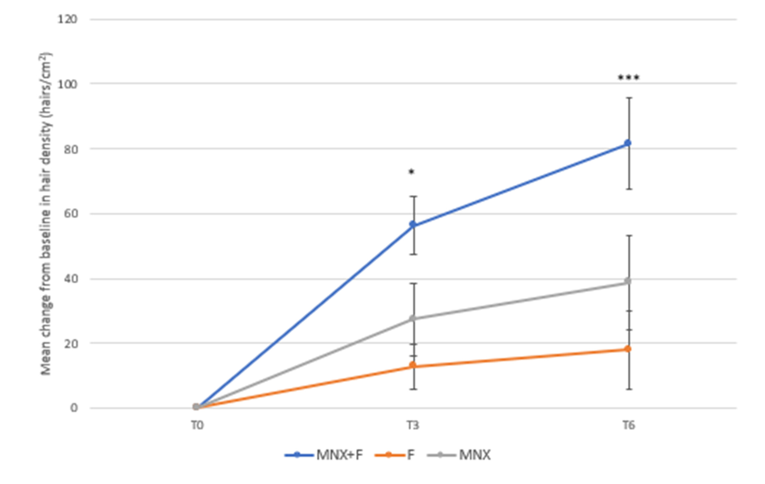
Figure 6. The combination of minoxidil and finasteride (MNX+F; blue line) shows improved hair density compared to both finasteride (F; orange line) and minoxidil (MNX; gray line) after 3 months and 6 months of treatment. Adapted from Figure 2.[34]Rossi, A., Caro, G. (2023). Efficacy of the Association of Topical Minoxidil and Topical Finasteride Compared to Their Use in Monotherapy in Men with Androgenetic Alopecia: A Prospective, Randomized, … Continue reading Image used under Creative Commons License.
Does the Science Support Keeps’ Claims?
Claim 1: Finasteride stops hair loss by blocking the production of DHT, the hormone responsible for male pattern baldness
Conclusion: True
Studies have shown that the topical application of finasteride also successfully lowers DHT levels in the scalp.[35]Lee, S.W., Juhasz, M., Mobasher, P., Ekelem, C., Mesinkovska, N.A. (2018). A Systematic Review of Topical Finasteride in the Treatment of Androgenetic Alopecia in Men and Women. Journal of Drugs in … Continue reading
Claim 2: Minoxidil increases blood flow to hair follicles to stimulate hair regrowth
Conclusion: True
Minoxidil has been shown in multiple clinical trials to have a positive effect on hair growth.
Keeps Daily Hair Defense Supplement
Formulation
The Daily Hair Defense Supplement contains saw palmetto, vitamins A, B6, B12, C, D, calcium, selenium, zinc, and biotin.
Figure 7. Keeps Daily Hair Defense
Clinical Effectiveness
Saw Palmetto
Saw palmetto is a popular hair growth supplement as it does not require a prescription to obtain. But is it actually effective?
Early studies demonstrated positive results, showing that 60% of men taking 200 mg of saw palmetto experienced some degree of hair regrowth compared to 11% in the control group, although the researchers agreed that more work needed to be done given the small size of the trial.[36]Prager, N., Bickett, K., French, N., Marcovici, G. (2002). A Randomized, Double-Blind, Placebo-Controlled Trial to Determine the Effectiveness of Botanically Derived Inhibitors of 5-Alpha-Reductase … Continue reading
Saw palmetto is able to reduce DHT, although not to the same degree as finasteride, resulting in reduced effectiveness at inducing hair growth compared to finasteride.[37]Rossi, A., Mari, E., Scarnò, M. (2012). Comparative Effectiveness of Finasteride vs Serenoa Repens in Male Androgenetic Alopecia: A Two-Year Study. International Journal of Immunopathology and … Continue reading However, hair growth was still seen on saw palmetto supplementation, indicating its potential for use in a supplement.
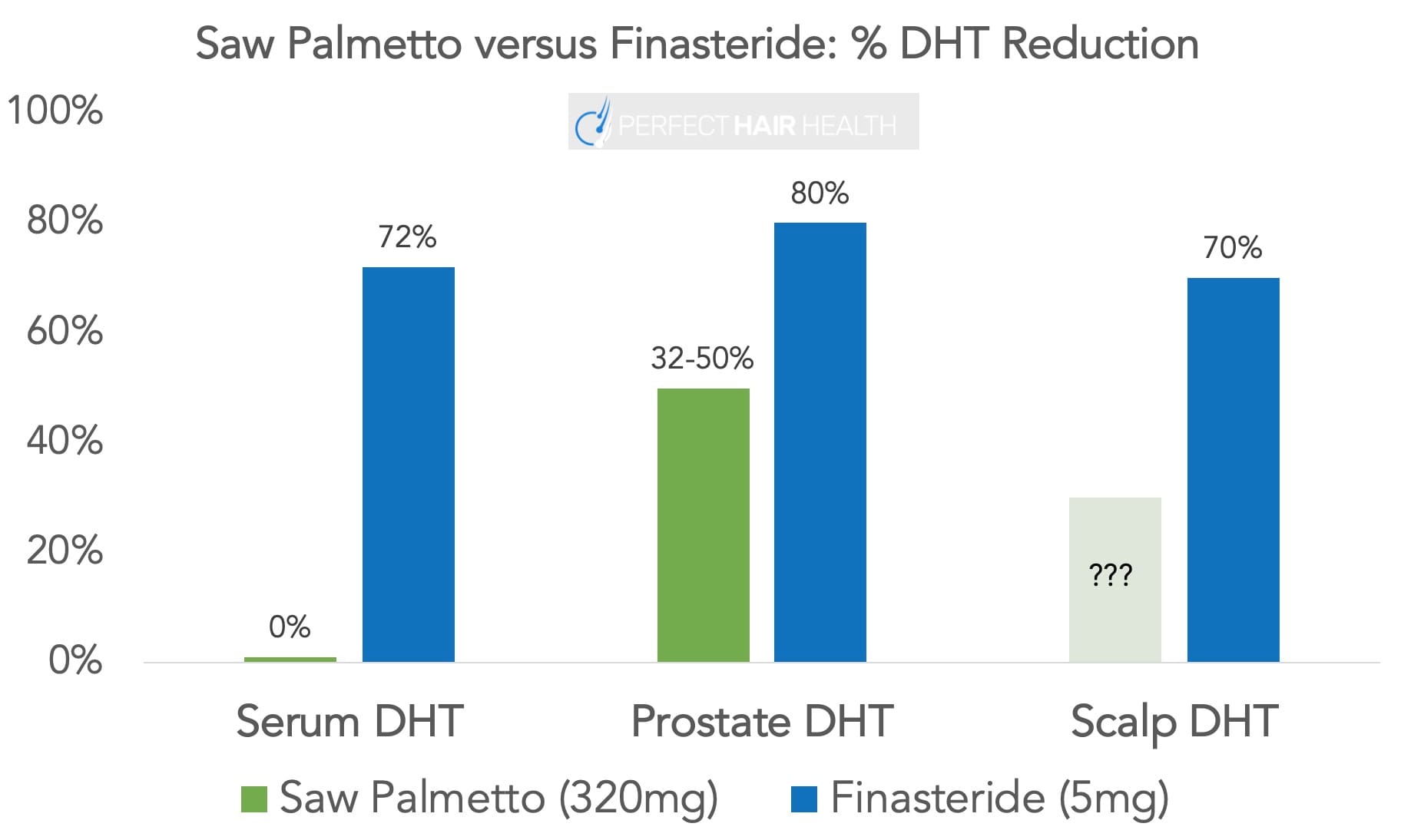
Figure 8. Saw palmetto does not reduce DHT to the same degree as finasteride
For more information, see our article on saw palmetto. Or review saw palmetto inside our Ingredient Database.
Vitamins A, B6, B12, C, and D
There is little-to-no convincing clinical evidence that supplementation with Vitamins A, B6, B12, C, and D has any effect on hair growth, although they may have positive effects in cases where people have a severe deficiency.[38]Cheung, E.J., Sink, J.R., English, J.C. (2016). Vitamin and Mineral Deficiencies in Patients With Telogen Effluvium: A Retrospective Cross-Sectional Study. Journal of Drugs in Dermatology. 15(10). … Continue reading
Calcium
No strong clinical trials have shown any role of calcium in hair growth.[39]Almohanna, H.M., Ahmed, A.A., Tsatalis, J.P., Tosti, A. (2018). The Role of Vitamins and Minerals in Hair Loss: A Review. Dermatology and Therapy (Heidelberg). 9(1). 51–70. Available at: … Continue reading
Selenium
Both severe selenium deficiency and too much selenium can cause hair loss. A clinical trial in chemotherapy patients receiving a selenium supplement showed reduced hair loss, but no successful clinical trials have been carried out in people representative of the general population (i.e., individuals most likely to buy the Keeps supplements).[40]Almohanna, H.M., Ahmed, A.A., Tsatalis, J.P., Tosti, A. (2018). The Role of Vitamins and Minerals in Hair Loss: A Review. Dermatology and Therapy (Heidelberg). 9(1). 51–70. Available at: … Continue reading
Biotin
Biotin deficiencies also cause hair loss. However, they have to be extreme – often caused by rare genetic mutations (i.e., biotinidase deficiencies), long-term abuse of alcohol, and/or irritable bowel disease. To date, no high-quality clinical trials have demonstrated any effectiveness for otherwise-healthy people supplementing with biotin to improve androgenic alopecia.[41]Yelich, A., Jenkins, H., Holt, S., Miller, R. (2024). Biotin for Hair Loss: Teasing Out the Evidence. Journal of Clinical and Aesthetic Dermatology. 17(8). 56–61. Available at: … Continue reading
Does the Science Support Keeps’ Claims?
Claim 1: The key ingredient, saw palmetto, stabilizes hair loss and promotes healthy hair growth
Conclusion: Potentially misleading
Saw palmetto is thought to support hair growth and reduce hair loss, although not as successfully as finasteride. While short-term (i.e., 6-month) clinical studies have shown that saw palmetto can improve hair loss in those with AGA, and long-term (i.e., 2-year) studies show hair stabilization – the long-term studies did not rely on objective hair counting metrics, such as a phototrichogram. Instead, they relied on visual observations made by the investigators. For these reasons, the evidence supporting long-term stabilization of saw palmetto remains limited. Our personal opinion is that it likely helps, but not nearly as much as more powerful DHT reducers, and its durability long-term remains a subject of debate. For more information, see this article.
Claim 2: Vitamins A, B6, B12, C, D, Calcium, Selenium, Zinc, and Biotin support overall health, immune function, and vitality
Conclusion: True
These vitamins and minerals do not have any significant effects on hair growth on otherwise-healthy people. But they may contribute to improved overall health by reducing the risk of deficiency.
Problems with Keeps’ Approach: Our Recommendations
Overall, Keeps provides a range of comprehensive and affordable offerings for those with androgenic alopecia – including OTC products and Rx medications. Their range of topical formulations (gels, sprays, serums) also offer several alternatives for those still looking to use topicals, but may need to make adjustments due to having a sensitive scalp and/or longer hair. In our eyes, these are all steps in the right direction. The brand is a positive force in the telehealth haircare space.
Having said that, we also see areas of opportunity for Keeps to improve both personalization and outcomes for consumers. Here are a few:
1. Better Guidance On How To Improve Results
In the world of hair loss treatments, many consumers often quit therapies due to the perception of “no effect”. This often happens because of an educational gap:
- Consumers don’t often have clear guidance on how long to use products before expecting results. In Keeps’ marketing language on finasteride, there is an emphasis on results occurring within 6 months. While this is often true microscopically and, in some cases, cosmetically – the totality of clinical data on finasteride show that results continue to improve through 18-24 months before plateauing. For this reason, we see an opportunity for Keeps to update their marketing language to specify that, if someone isn’t seeing results in 6 months, that doesn’t mean they’re not getting results. They still have 12-18 more months of progress before being in a fully-informed position to judge. Results will happen sooner for some, and later for others.
- Consumers don’t often have clear guidance on “escalation” protocols. Non-responders of Keeps’ 5% minoxidil might want to learn that the addition of topical tretinoin might amplify their results and put them in a better position for success. But for those purchasing Keeps’ 5% minoxidil, this escalation protocol isn’t always clearly stated. Similarly, for true non-responders to finasteride – or for those whose goals are to maximize hair gains – oral dutasteride can help achieve this.[42]Harcha, W. G., Barboza Martínez, J., Tsai, T.-F., Katsuoka, K., Kawashima, M., Tsuboi, R., Barnes, A., Ferron-Brady, G., & Chetty, D. (2014). A randomized, active- and placebo-controlled study … Continue reading This option is also not available with Keeps, limiting the opportunity for effective hair growth. However, at the time of this writing, Keeps does not yet offer oral dutasteride to its customers.
2. More Flexibility With Mega-Dosed Topicals
One of Keeps’ strengths is its flexibility of its topical base formulas – including gel, spray, and serum options. But there remains an area of opportunity to expand this flexibility not just to its base formulas, but also its ingredient doses.
This is especially true with two ingredients that have a high capacity to travel from the scalp into the body and potentiate side effects: namely, finasteride and melatonin.
Finasteride Dosing Concerns
Keeps offers combination topicals (if prescribed) of 5% minoxidil and 0.25% finasteride. Many consumers turn to hair loss topicals because they’re hoping to avoid the systemic effects of drugs. However, what isn’t always communicated to consumers seeking Rx topicals is that high-strength concentrations of finasteride (i.e., 0.25%) are virtually guaranteed to go systemic, and lower blood levels of DHT (our best proxy for systemic absorption) by nearly the same amount as oral finasteride.{{Piraccini, B. M., Blume-Peytavi, U., Scarci, F., Jansat, J. M., Falqués, M., Otero, R., Tamarit, M. L., et al. (2022). Efficacy and safety of topical finasteride spray solution for male androgenetic alopecia: a phase III, randomized, controlled clinical trial. *Journal of the European Academy of Dermatology and Venereology.* 36(2). 286–294. Available at: https://doi.org/10.1111/jdv.17738}}
This issue has been recognized by the FDA, who have recently issued a warning for topical finasteride, stating that “Absorption of finasteride through the skin into the bloodstream is expected, and the reports describe adverse events that are consistent with those reported in association with the approved oral finasteride products”.[43]U.S. Food and Drug Administration. (n.d.). FDA alerts health care providers, compounders, and consumers about potential risks associated with compounded drugs. *FDA.* Available at: … Continue reading
Encouragingly, there is a clinical study showing that an ultra low-dose of topical finasteride (0.005% x 2 mL daily) improved hair parameters without affecting serum DHT levels. We discuss the study in this article.
At the time of this writing, Keeps does not offer this ultra-low dose of topical finasteride. They only offer the high-strength topical finasteride. And while an ultra-low dose of topical finasteride does not guarantee zero systemic absorption or complete protection of any side effect, we think the lower-dose is better-aligned with the ethos of why hair loss sufferers pursue topicals in the first place: an attempt to localize a medication’s impact mainly to the scalp.
Melatonin Dosing Concerns
Similarly, Keeps offers an Rx topical containing 0.1% melatonin – which is supported by the clinical literature and may improve hair parameters in those with androgenic alopecia.
However, this dose of melatonin (i.e., 1 mg per mL) has also been shown to raise circulating levels of melatonin throughout the body – with no large, randomized clinical trials to tease out whether these elevated melatonin levels interfere were sleep quality or cause drowsiness.
At the same time, there are studies showing that low-dose topical melatonin (i.e., 0.1 mg per day, or 1/10th the concentration offered by Keeps if applying 1 mL daily) can improve also hair parameters, but without significantly impacting serum melatonin levels. At least for us, the lower concentration of melatonin appears to better-align with the goals of most topical users: to localize a medication’s effects and reduce the potential for side effects. And so we see another area of opportunity for Keeps to revisit the concentration of this ingredient, as well.
For those interested in more customization, more flexible doses of topical finasteride, and lower concentrations of melatonin that better localize to the scalp – we created the telehealth brand, Ulo, to finally offer consumers this level of personalization.
Keeps does a lot of things right, and we’re thrilled that they exist to serve hair loss sufferers. But for those particularly interested in topical localization, side effect mitigation, and an added level of personalization – Ulo was built to fill this large gap in the marketplace. Not only do we offer clear escalation protocols for non-responders to treatments (i.e., topical minoxidil + tretinoin, oral dutasteride, etc.), but we also offer lower-dose topicals that may finally enable those with higher drug sensitivities to finally begin to tolerate (and benefit from) hair growth medications. For these reasons, we’re thrilled to be cofounders of the brand. You can learn more here:
Interested in Topical Finasteride?
Low-dose & full-strength finasteride available, if prescribed*
Take the next step in your hair regrowth journey. Get started today with a provider who can prescribe a topical solution tailored for you.
*Only available in the U.S. Prescriptions not guaranteed. Restrictions apply. Off-label products are not endorsed by the FDA.
Final Remarks
Keeps offers multiple clinically-backed medications via a range of delivery methods, providing a broad and accessible entry point for hair loss treatments that are proven to work. These treatments have the potential to successfully slow hair loss and increase hair growth in many users.
Even still, there are areas of opportunity where Keeps may want to expand their core offerings for hair loss sufferers. This may include lower-dose finasteride and melatonin topical options that better localize to the scalp. It may also include the addition of oral dutasteride for those looking to unlock bigger hair gains than finasteride.
All in, Keeps enables easier access to clinically-proven hair loss medications via their telehealth model. We hope they consider our above recommendations, and in the interim, we wish them continued success.
References[+]
References ↑1 Ho, C.H., Sood, T., Zito, P.M., (2024), Androgenetic Alopecia. Available at: https://www.ncbi.nlm.nih.gov/books/NBK430924/ (Accessed: 07 January 2026) ↑2 Drake, L., Hordinsky, M., Fiedler, V., Swinehart, J., Unger, W.P., Cotterill, P.C., Thiboutot, D.M., Lowe, N., Jacobson, C., Whiting, D., Stieglitz, S., Kraus, S.J., Griffin, E.I., Weiss, D., Carrington, P., Gencheff, C., Cole, G.W., Pariser, D.M., Epstein, E.S., Tanaka, W., Dallob, A.D., Vandormael, K., Geissler, L. and Waldstreicher, J. (1999). The Effects of Finasteride on Scalp Skin and Serum Androgen Levels in Men with Androgenetic Alopecia. J Am Acad Dermatol. 41(4), pp.550-554. Available at: https://pubmed.ncbi.nlm.nih.gov/10495374/ ↑3 Finasteride Male Pattern Hair Loss Study Group. (2002). Long-Term (5-Year) Multinational Experience With Finasteride 1 mg in the Treatment of Men With Androgenetic Alopecia. Eur J Dermatol. 12:38-49. Available at: https://pubmed.ncbi.nlm.nih.gov/11809594/ ↑4 Shapiro, J., Kaufman, K.D. (2003). Use of Finasteride in the Treatment of Men With Androgenetic Alopecia (Male Pattern Hair Loss). J Investig Dermatol Symp Proc. 8(1):20-23. Available at: https://www.sciencedirect.com/science/article/pii/S0022202X15529357 ↑5 Lee, S., Lee, Y.B., Choe, S.J., Lee, W.S. (2019). Adverse Sexual Effects of Treatment with Finasteride or Dutasteride for Male Androgenetic Alopecia: A Systematic Review and Meta-Analysis. Acta Dermato-Venereologica. 99(1). 12–17. Available at: https://doi.org/10.2340/00015555-3035 ↑6 Drake, L., Hordinsky, M., Fiedler, V., et al., (1999). The Effects of Finasteride on Scalp Skin and Serum Androgen Levels in Men with Androgenetic Alopecia. Journal of the American Academy of Dermatology. 41(4). 550–554. Available at: https://doi.org/10.1016/S0190-9622(99)80051-6 ↑7 Leyden, J., Dunlap, F., Miller, B. (1999). Finasteride in the Treatment of Men with Frontal Male Pattern Hair Loss. Journal of the American Academy of Dermatology. 40(6). 930–937. Available at: https://doi.org/10.1016/S0190-9622(99)70081-2 ↑8 Olsen, E.A., Whiting, D.A., Savin, R. (2012). Global Photographic Assessment of Men Aged 18 to 60 Years with Male Pattern Hair Loss Receiving Finasteride 1 mg or Placebo. Journal of the American Academy of Dermatology. 67(3). 379–386. Available at: https://doi.org/10.1016/j.jaad.2011.10.027 ↑9 Sato, A., Takeda, A. (2011). Evaluation of Efficacy and Safety of Finasteride 1 mg in 3177 Japanese Men with Androgenetic Alopecia. Journal of Dermatology. 39(1). 27–32. Available at: https://doi.org/10.1111/j.1346-8138.2011.01378.x ↑10 Shin, J., Chung, E., Kim, M., Kim, T., Kim, W., Huh, C. (2018). Evaluation of Long-Term Efficacy of Finasteride in Korean Men with Androgenetic Alopecia Using the Basic and Specific Classification System. Journal of Dermatology. 46(2). 139–143. Available at: https://doi.org/10.1111/1346-8138.14719 ↑11 Van Neste, D., Fuh, V., Sanchez-Pedreno, P. (2000). Finasteride Increases Anagen Hair in Men with Androgenetic Alopecia. British Journal of Dermatology. 143(4). 804–810. Available at: https://doi.org/10.1046/j.1365-2133.2000.03780.x ↑12 Suchonwanit, P., Thammarucha, S., Leerunyakul, K. (2019). Minoxidil and Its Use in Hair Disorders: A Review. Drug Design, Development and Therapy. 13. 2777–2786. Available at: https://doi.org/10.2147/DDDT.S214907 ↑13 Patel, P., Nessel, T.A., Kumar, D.D. (2023). Minoxidil. StatPearls. Available at: http://www.ncbi.nlm.nih.gov/books/NBK482378/ (Accessed: 04 February 2026) ↑14, ↑21 Van Neste, D. (2020). Placebo-Controlled Dose-Effect Studies with Topical Minoxidil 2% or 5% in Male-Patterned Hair Loss Treated with Oral Finasteride Employing an Analytical and Exhaustive Study Protocol. Skin Research and Technology. 26(4). 542–557. Available at: https://doi.org/10.1111/srt.12827 ↑15 Michelet, J.F., Commo, S., Billoni, N., Mahé, Y.F., Bernard, B.A. (1997). Activation of Cytoprotective Prostaglandin Synthase-1 by Minoxidil as a Possible Explanation for Its Hair Growth-Stimulating Effect. Journal of Investigative Dermatology. 108(2). 205–209. Available at: https://doi.org/10.1111/1523-1747.ep12334249 ↑16 Asilian, A., Farmani, A., Saber, M. (2023). Clinical Efficacy and Safety of Low-Dose Oral Minoxidil Versus Topical Solution in the Improvement of Androgenetic Alopecia: A Randomized Controlled Trial. Journal of Cosmetic Dermatology. 23(3). 949–957. Available at: https://doi.org/10.1111/jocd.16086 ↑17 Rietschel, R.L., Duncan, S.H. (1987). Safety and Efficacy of Topical Minoxidil in the Management of Androgenetic Alopecia. Journal of the American Academy of Dermatology. 16(3). 677–685. Available at: https://doi.org/10.1016/S0190-9622(87)70087-5 ↑18 Shadi, Z. (2023). Compliance to Topical Minoxidil and Reasons for Discontinuation among Patients with Androgenetic Alopecia. Dermatology and Therapy (Heidelberg). 13(5). 1157–1169. Available at: https://doi.org/10.1007/s13555-023-00919-x ↑19 Olsen, E.A., Whiting, D., Bergfeld, W. (2007). A Multicenter, Randomized, Placebo-Controlled, Double-Blind Clinical Trial of a Novel Formulation of 5% Minoxidil Topical Foam Versus Placebo in the Treatment of Androgenetic Alopecia in Men. Journal of the American Academy of Dermatology. 57(5). 767–774. Available at: https://doi.org/10.1016/j.jaad.2007.04.012 ↑20 Hasanzadeh, H., Nasrollahi, S.A., Halavati, N., Saberi, M., Firooz, A. (2016). Efficacy and Safety of 5% Minoxidil Topical Foam in Male Pattern Hair Loss Treatment and Patient Satisfaction. Acta Dermatovenerologica Alpina, Pannonica et Adriatica. 25(3). 41–44. Available at: https://doi.org/10.15570/actaapa.2016.12 ↑22 Olsen, E.A., DeLong, E.R., Weiner, M.S. (1987). Long-Term Follow-Up of Men with Male Pattern Baldness Treated with Topical Minoxidil. Journal of the American Academy of Dermatology. 16(3). 688–695. Available at: https://doi.org/10.1016/S0190-9622(87)70089-9 ↑23 Olsen, E.A., Dunlap, F.E., Funicella, T. (2002). A Randomized Clinical Trial of 5% Topical Minoxidil Versus 2% Topical Minoxidil and Placebo in the Treatment of Androgenetic Alopecia in Men. Journal of the American Academy of Dermatology. 47(3). 377–385. Available at: https://doi.org/10.1067/mjd.2002.124088 ↑24 Kanti, V., Hillmann, K., Kottner, J., Stroux, A., Canfield, D., Blume-Peytavi, U. (2016). Effect of Minoxidil Topical Foam on Frontotemporal and Vertex Androgenetic Alopecia in Men: A 104-Week Open-Label Clinical Trial. Journal of the European Academy of Dermatology and Venereology. 30(7). 1183–1189. Available at: https://doi.org/10.1111/jdv.13324 ↑25 Sharma, A., Goren, A., Dhurat, R. (2019). Tretinoin Enhances Minoxidil Response in Androgenetic Alopecia Patients by Upregulating Follicular Sulfotransferase Enzymes. Dermatologic Therapy. 32(3). e12915. Available at: https://doi.org/10.1111/dth.12915 ↑26 Shin, H.S., Won, C.H., Lee, S.H., Kwon, O.S., Kim, K.H., Eun, H.C. (2007). Efficacy of 5% Minoxidil Versus Combined 5% Minoxidil and 0.01% Tretinoin for Male Pattern Hair Loss. American Journal of Clinical Dermatology. 8(5). 285–290. Available at: https://doi.org/10.2165/00128071-200708050-00003 ↑27 Dressler, C., Blumeyer, A., Rosumeck, S., Arayesh, A., Nast, A. (2017). Efficacy of Topical Caffeine in Male Androgenetic Alopecia. Journal der Deutschen Dermatologischen Gesellschaft. 15(7). 734–741. Available at: https://doi.org/10.1111/ddg.13271 ↑28 Fischer, T.W., Burmeister, G., Schmidt, H.W., Elsner, P. (2004). Melatonin Increases Anagen Hair Rate in Women with Androgenetic Alopecia or Diffuse Alopecia: Results of a Pilot Randomized Controlled Trial. British Journal of Dermatology. 150(2). 341–345. Available at: https://doi.org/10.1111/j.1365-2133.2004.05685.x ↑29 Fischer, T.W., Trüeb, R.M., Hänggi, G., Innocenti, M., Elsner, P. (2012). Topical Melatonin for Treatment of Androgenetic Alopecia. International Journal of Trichology. 4(4). 236–245. Available at: https://doi.org/10.4103/0974-7753.111199 ↑30 Suchonwanit, P., Srisuwanwattana, P., Chalermroj, N., Khunkhet, S. (2018). A Randomized, Double-Blind Controlled Study of the Efficacy and Safety of Topical Solution of 0.25% Finasteride Admixed with 3% Minoxidil vs 3% Minoxidil Solution in the Treatment of Male Androgenetic Alopecia. Journal of the European Academy of Dermatology and Venereology. 32(12). 2257–2263. Available at: https://doi.org/10.1111/jdv.15171 ↑31 Rossi, A., Caro, G. (2023). Efficacy of the Association of Topical Minoxidil and Topical Finasteride Compared to Their Use in Monotherapy in Men with Androgenetic Alopecia: A Prospective, Randomized, Controlled, Assessor Blinded, 3-Arm, Pilot Trial. Journal of Cosmetic Dermatology. 23(2). 502–509. Available at: https://doi.org/10.1111/jocd.15953 ↑32 Bharadwaj, A.V., Mendiratta, V., Rehan, H.S., Tripathi, S. (2023). Comparative Efficacy of Topical Finasteride (0.25%) in Combination with Minoxidil (5%) Against 5% Minoxidil or 0.25% Finasteride Alone in Male Androgenetic Alopecia: A Pilot, Randomized Open-Label Study. International Journal of Trichology. 15(2). 56–62. Available at: https://doi.org/10.4103/ijt.ijt_72_22 ↑33 Li, Y., Huang, Q., Zhou, Z., Zhang, Y. (2025). Comparing Minoxidil-Finasteride Mixed Solution with Minoxidil Solution Alone for Male Androgenetic Alopecia: A Systematic Review and Meta-Analysis of Randomized Controlled Trials. Frontiers in Medicine. 12. 1632139. Available at: https://doi.org/10.3389/fmed.2025.1632139 ↑34 Rossi, A., Caro, G. (2023). Efficacy of the Association of Topical Minoxidil and Topical Finasteride Compared to Their Use in Monotherapy in Men with Androgenetic Alopecia: A Prospective, Randomized, Controlled, Assessor Blinded, 3-Arm, Pilot Trial. Journal of Cosmetic Dermatology. 23(2). 502–509. Available at: https://doi.org/10.1111/jocd.15953 ↑35 Lee, S.W., Juhasz, M., Mobasher, P., Ekelem, C., Mesinkovska, N.A. (2018). A Systematic Review of Topical Finasteride in the Treatment of Androgenetic Alopecia in Men and Women. Journal of Drugs in Dermatology. 17(4). 457–463. Available at: https://pmc.ncbi.nlm.nih.gov/articles/PMC6609098/ ↑36 Prager, N., Bickett, K., French, N., Marcovici, G. (2002). A Randomized, Double-Blind, Placebo-Controlled Trial to Determine the Effectiveness of Botanically Derived Inhibitors of 5-Alpha-Reductase in the Treatment of Androgenetic Alopecia. Journal of Alternative and Complementary Medicine. 8(2). 143–152. Available at: https://doi.org/10.1089/acm.2002.8.143 ↑37 Rossi, A., Mari, E., Scarnò, M. (2012). Comparative Effectiveness of Finasteride vs Serenoa Repens in Male Androgenetic Alopecia: A Two-Year Study. International Journal of Immunopathology and Pharmacology. 25(4). 1167–1173. Available at: https://doi.org/10.1177/039463201202500435 ↑38 Cheung, E.J., Sink, J.R., English, J.C. (2016). Vitamin and Mineral Deficiencies in Patients With Telogen Effluvium: A Retrospective Cross-Sectional Study. Journal of Drugs in Dermatology. 15(10). 1235–1237. Available at: https://pubmed.ncbi.nlm.nih.gov/27741341/ ↑39, ↑40 Almohanna, H.M., Ahmed, A.A., Tsatalis, J.P., Tosti, A. (2018). The Role of Vitamins and Minerals in Hair Loss: A Review. Dermatology and Therapy (Heidelberg). 9(1). 51–70. Available at: https://doi.org/10.1007/s13555-018-0278-6 ↑41 Yelich, A., Jenkins, H., Holt, S., Miller, R. (2024). Biotin for Hair Loss: Teasing Out the Evidence. Journal of Clinical and Aesthetic Dermatology. 17(8). 56–61. Available at: https://pmc.ncbi.nlm.nih.gov/articles/PMC11324195/ ↑42 Harcha, W. G., Barboza Martínez, J., Tsai, T.-F., Katsuoka, K., Kawashima, M., Tsuboi, R., Barnes, A., Ferron-Brady, G., & Chetty, D. (2014). A randomized, active- and placebo-controlled study of the efficacy and safety of different doses of dutasteride versus placebo and finasteride in the treatment of male subjects with androgenetic alopecia. *Journal of the American Academy of Dermatology.* 70(3). 489–498. Available at: https://doi.org/10.1016/j.jaad.2013.10.049 ↑43 U.S. Food and Drug Administration. (n.d.). FDA alerts health care providers, compounders, and consumers about potential risks associated with compounded drugs. *FDA.* Available at: https://www.fda.gov/drugs/human-drug-compounding/fda-alerts-health-care-providers-compounders-and-consumers-potential-risks-associated-compounded (Accessed: November 2025) In less than a decade since its founding, Hims has grown into an internationally recognized brand. With a range of products available in the USA that can boost testosterone, help with weight loss, and tackle issues in the bedroom, Hims is, unsurprisingly, targeted directly at men. In keeping with this approach, they also have a strong selection of products to tackle hair loss and androgenic alopecia (AGA). As a telehealth provider, Hims offers prescription medications alongside shampoos and supplements.
The brand positions itself as providing highly individualized care: “It’s more than a plan, it’s personal.” Given the diversity of ways in which hair loss can present, and the sometimes unpredictable nature of men’s response to treatment, this approach is often a strong route to a successful regrowth. But how does Hims’ offering stack up? We’ll examine the range of products available through Hims’ telehealth service in the USA, assess the clinical evidence supporting each option, and explore whether the brand can support effective hair loss management.
Topical Minoxidil From our partners at UloGet Personalized Topical Minoxidil
Rx-strength topical minoxidil, formulated without propylene glycol. Prescribed 100% online. Choose a multi-month plan and get up to 30% plus a free gift bundle.
Free full-size gifts with 3-month+ plans Prescribed online, shipped to your door
Rx-strengthHigh strength growth support*Only available in the U.S. Prescription requires an online medical consultation at no extra cost. Off-label products are not endorsed by the FDA. Free gifts included with select multi-month plans while supplies last. Ulo is a partner of Perfect Hair Health; we may earn a commission on purchases.
Key Takeaways
- Hims offers proven medications like finasteride and minoxidil in convenient formats, which can be effective for many users.
- Hims promises personalization and individualized plans. However, this personalization is mostly limited to a smaller assortment of Rx options than the involvement of their assessment surveys might lead users to believe, with fewer than 5 Rx products for each gender (male and female) from which to choose.
- The absence of treatment options, escalation routes, and dosing changes makes sustained management more difficult – especially under circumstances where side effect troubleshooting is warranted. While Hims’ Rxproducts surely help boost hair growth, the limits of customization might still mean many of its customers may lack the options needed to resolve side effects, address scalp inflammation, or even further boost hair growth.
What Does Hims Offer?
Hims offers a range of prescription hair loss drugs, as well as over-the-counter products, including 5% minoxidil and anti-dandruff shampoos. The Rx offering features reliable, clinically proven pharmaceuticals delivered in an impressive range of vehicles: oral supplements are available in pills and “chews”, while topical formulations are available as sprays, serum, and foams.
We’ll take a tour of the product range and see what the Rx catalog offers. Does the science back up the use of the selection to tackle hair loss? And to what extent is it “personal”?
Finasteride (from $22 a month)
Figure1 . Hims Oral Finasteride
Starting off simple, 1 mg a day of finasteride is FDA-approved for the treatment of androgenic AGA in men. There’s a reason finasteride is one of the most popular treatments for hair loss globally. It has been widely studied both for its efficacy in reversing the impact of AGA and for its potential long-term side effects. It’s reliable, widely available, and relatively cheap.
Finasteride lowers levels of a hormone called dihydrotestosterone (DHT), which is known to be involved in AGA. An enzyme called 5-alpha reductase converts testosterone into DHT, which then binds to androgen receptors in susceptible hair follicles in the scalp. This leads to shortening of the growth phase in hair follicles, resulting in miniaturizing the follicles until they produce thin vellus‑like hairs or none at all.[1]Makridakis, N., & Reichardt, J. K. V. (2005). Pharmacogenetic analysis of human steroid 5α-reductase type II: comparison of finasteride and dutasteride. *Journal of Molecular Endocrinology.* … Continue reading
Finasteride blocks 5AR, thereby reducing levels of DHT and inhibiting its effect on hair follicles. Clinical studies suggest that dutasteride can reduce serum levels of DHT (levels circulating in the blood) by around 50%.[2]Olsen, E. A., Hordinsky, M., Whiting, D., Stough, D., Hobbs, S., Ellis, M. L., Wilson, T., Rittmaster, R. S., & Dutasteride Alopecia Research Team. (2006). The importance of dual 5α-reductase … Continue reading Long-term clinical trials have shown that 1 mg finasteride daily stops AGA progression in 80-90% of men and can lead to a 10% increase in hair count on average after two years.[3]Shapiro, J., & Kaufman, K. D. (2003). Use of finasteride in the treatment of men with androgenetic alopecia (male pattern hair loss). *Journal of Investigative Dermatology Symposium Proceedings.* … Continue reading
Because finasteride is a hormonally active drug, it can cause side effects throughout the body. This can include decreased libido, sexual dysfunction, breast enlargement or tenderness, and issues with mood in some rare cases. Long-term studies suggest that some level of side effects are experienced by between 2.6% and 13.4% of individuals, although these normally stop after treatment is halted.[4]Olsen, E. A., Hordinsky, M., Whiting, D., Stough, D., Hobbs, S., Ellis, M. L., Wilson, T., Rittmaster, R. S., & Dutasteride Alopecia Research Team. (2006). The importance of dual 5α-reductase … Continue reading, [5]Shanshanwal, S. J., & Dhurat, R. S. (2017). Superiority of dutasteride over finasteride in hair regrowth and reversal of miniaturization in men with androgenetic alopecia: a randomized controlled … Continue reading,[6]Choi, G.-S., Sim, W.-Y., Kang, H., Huh, C. H., Lee, Y. W., Shantakumar, S., Ho, Y.-F., et al. (2022). Long-term effectiveness and safety of dutasteride versus finasteride in patients with male … Continue reading
It’s because of these potentially serious side effects that finasteride is prescription-only and should be taken with medical supervision.
Outside of their sleek branding, there is nothing unique about Hims’ offering here, and the generic finasteride pill is the same you would receive from any vendor.
Finasteride & Minoxidil + Supplement Blend (from $35 a month)
Figure 2. Hims Hairloss Chew
Things start getting more interesting when we look at combination therapies. Clinical data and anecdotal evidence from our members’ point to combinations of therapies as potentially powerful routes to address AGA. The impact of multiple drugs targeting different causes of hair loss can be additive and may lead to improved results.[7]Hu, R., Xu, F., Sheng, Y., Qi, S., Han, Y., Miao, Y., Rui, W., & Yang, Q. (2015). Combined treatment with oral finasteride and topical minoxidil in male androgenetic alopecia: a randomized and … Continue reading
Finasteride with minoxidil is a popular combination. While finasteride works by regulating hormonal causes of AGA, the mechanism of action of minoxidil is less clear-cut. The drug appears to shorten the resting phase in hair follicles, promoting earlier entry into the growth phase.[8]Messenger, A. G., & Rundegren, J. (2004). Minoxidil: mechanisms of action on hair growth. British Journal of Dermatology. 150(2). 186–194. Available at: … Continue reading
Evidence suggests that minoxidil also increases local blood flow to the follicles, activates the Wnt/β-catenin signaling pathway involved in follicular cell proliferation and differentiation, and may have cytoprotective and anti-inflammatory effects.
Minoxidil is most commonly applied in topical formulations, while finasteride is typically taken orally. That rule isn’t universal, however, and there is plenty of clinical evidence supporting oral minoxidil and topical finasteride. You can read more about oral minoxidil and topical finasteride in our in-depth articles.
Hims’ combination approaches offer either oral blends or topical blends. This will simplify the production of the drugs, and also help adherence: it’s much easier to take a single pill every day or apply a single lotion than remember to use a combination of both.
Does Combination Oral Finasteride and Minoxidil Work?
Their finasteride-minoxidil combination includes 1.2 mg finasteride and 3 mg minoxidil, with the option to add a supplemental blend.
There hasn’t been much research into the impact of the combination of oral finasteride and minoxidil on hair loss. One retrospective study, involving 502 men, found that, after one year of 1 mg finasteride and 2.5 mg minoxidil daily, 92.4% of men were stable or improved, while 57.4% showed overt regrowth. This is a retrospective study with no control group, so we can’t make any comparisons to individual therapies.[9]Johnson, H., Huang, D., Clift, A. K., Ângela, B. F., & Guimarães, G. A. (2025). Effectiveness of combined oral minoxidil and finasteride in male androgenetic alopecia: a retrospective service … Continue reading
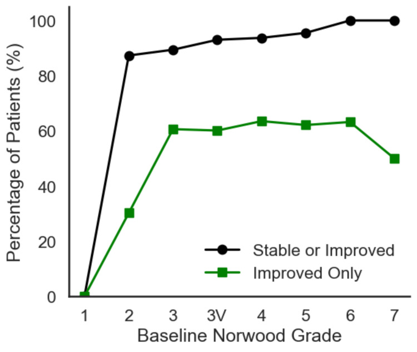
Figure 3. Response of patients to the combination 1 mg finasteride and 2.5 mg minoxidil daily. The study is retrospective with no control groups, so improvement is compared to baseline (before treatment). Adapted from Figure 2.[10]Johnson, H., Huang, D., Clift, A. K., Ângela, B. F., & Guimarães, G. A. (2025). Effectiveness of combined oral minoxidil and finasteride in male androgenetic alopecia: a retrospective service … Continue reading Image used under Creative Commons license.
The lack of direct evidence doesn’t mean that this combination won’t be effective, and we know that both therapies are effective independently. What we still lack, however, is long-term safety data on low-dose oral minoxidil.
We’ve discussed the potential side effects of finasteride, and oral minoxidil also raises safety concerns. Unlike topical minoxidil, which is FDA-approved for hair loss, oral formulations can act systemically throughout the body. The most common side effect is hypertrichosis, or unwanted hair growth outside the scalp, including on the face. Other commonly reported side effects include lightheadedness, fluid retention, an elevated heart rate, and headache.[11]Vañó-Galván, S., Pirmez, R., Hermosa-Gelbard, A., Moreno-Arrones, Ó. M., Saceda-Corralo, D., Rodrigues-Barata, R., Jimenez-Cauhe, J., et al. (2021). Safety of low-dose oral minoxidil for hair … Continue reading
This leads us to a major issue with Hims’ offerings for hair loss. The brand is marketed as highly personalizable, and there is a range of options available to suit your practical needs: do you prefer a pill or a chew, would you rather spray on or apply a topical solution? However, this customization doesn’t stretch to the actual treatment itself. If you find that the oral minoxidil and finasteride combination is causing side effects, there is no route to decrease your concentration or find a safer option.
Similarly, if you find the plan tolerable or your regrowth plateaus and you want to escalate your treatment, there is no path to do so with Hims. Dutasteride is a very common escalation route from finasteride: it has been shown to better reduce DHT and can lead to better regrowth, but is not available here.[12]Harcha, W. G., Barboza Martínez, J., Tsai, T.-F., Katsuoka, K., Kawashima, M., Tsuboi, R., Barnes, A., Ferron-Brady, G., & Chetty, D. (2014). A randomized, active- and placebo-controlled study … Continue reading
A one-size-fits-all treatment plan goes against Hims’ stated aim of providing a personalized approach. In the absence of alternatives or proper guidance, many men will simply persevere with their (potentially harmful) treatment or stop treating their hair loss altogether.
Does the Supplement Blend Help?
Hims’ oral finasteride and minoxidil are available with a supplement including biotin, vitamin B12, vitamin C, resveratrol, and zinc to “support healthy hair”. It’s unlikely that any supplement will have any substantial impact on hair growth compared to the highly active pharmaceutical ingredients. Instead, these ingredients are typically included to improve the condition and appearance of existing hair.
Biotin is commonly found in supplements and shampoos, but there is limited data to support its use for supporting hair growth. In fact, data supporting the use of biotin for hair loss comes almost exclusively from studies done on children with a biotin deficiency. Because biotin is a component of keratin, it is essential for hair growth. For people who can’t absorb dietary biotin, supplementation can make a real difference. Unfortunately, this only accounts for around 1 in 110,000 people.[13]Patel, D. P., Swink, S. M., & Castelo-Soccio, L. (2017). A review of the use of biotin for hair loss. *Skin Appendage Disorders.* 3(3). 166–169. Available at: https://doi.org/10.1159/000462981
Other inclusions, like vitamin B12, vitamin C, and zinc, are also unlikely to provide boosts in growth to anyone without a vitamin deficiency. For Hims customers in the US, the likelihood of deficiencies in these nutrients is highly unlikely. Instead, these ingredients are typically added to increase the value of the average purchase, rather than because of any proven gains.
Rx Hair Loss Spray (from $35 a month)
Figure 6. Hims Hair Loss Spray
Hims’ Hair Loss Spray pairs 6% minoxidil with 0.3% finasteride. Topical formulations are often used to avoid some of the more severe, systemic side effects associated with oral pharmaceuticals. Because treatment is localized to the scalp, off-target effects on other organs are minimized.
Topical minoxidil at 6% is higher than the over-the-counter dose of 5%. There is some clinical data suggesting that increased dosing can improve results for some people, though there is diminishing returns at concentrations of 10% and higher, while the risk of side effects such as irritation and unwanted hair growth increases.[14]Singh, S., Patil, A., Kianfar, N., Waśkiel-Burnat, A., Rudnicka, L., Sinclair, R., & Goldust, M. (2022). Does topical minoxidil at concentrations higher than 5% provide additional clinical … Continue reading, [15]Ghonemy, S., Alarawi, A., & Bessar, H. (2021). Efficacy and safety of a new 10% topical minoxidil versus 5% topical minoxidil and placebo in the treatment of male androgenetic alopecia: a … Continue reading
Topical finasteride is a relatively recent development and has shown promising results in clinical trials. One study suggested that improvements from 1% topical solution were comparable to 1 mg oral finasteride.[16]Hajheydari, Z., Akbari, J., Saeedi, M., & Shokoohi, L. (2009). Comparing the therapeutic effects of finasteride gel and tablet in treatment of the androgenetic alopecia. *Indian Journal of … Continue reading
Given the power of topical minoxidil and finasteride to combat hair loss independently, there has been clinical research into the potential of combined therapies. A meta-analysis, which pools the results from multiple studies to find if results are repeatable, found that the combination was superior to minoxidil alone.[17]Li, Y., Huang, Q., Zhou, Z., & Zhang, Y. (2025). Comparing minoxidil-finasteride mixed solution with minoxidil solution alone for male androgenetic alopecia: a systematic review and meta-analysis … Continue reading As such, there’s reason to believe that Hims’ Hair Loss Spray can provide meaningful improvements for many users.
Where Does Hims’ Rx Hair Loss Spray Come Up Short?
Unfortunately, we find the same problems with the Hair Loss Spray offering as we did with the tablet and chew. A one-size-fits-all approach doesn’t provide the nuance that is essential to provide effective care. There is no standard, safe dosing regimen for topical finasteride, and one study has shown that aa 0.25% solution can reduce serum DHT by 35%. While this is lower than oral (55%), it does suggest that there is still a risk of side effects.[18]Piraccini, B. M., Blume-Peytavi, U., Scarci, F., Jansat, J. M., Falqués, M., Otero, R., Tamarit, M. L., et al. (2022). Efficacy and safety of topical finasteride spray solution for male androgenetic … Continue reading
Some users may find that the high concentration used here is not sustainable, but will have no route to try alternatives. Furthermore, Hims’ Hair Loss spray includes propylene glycol, which is unfortunately common in hair growth treatments. Propylene glycol causes irritation in around 7% of users and can add to inflammation in the scalp. This acts to worsen, rather than improve, hair growth outcomes.[19]Patel, K., Palmer, A., & Nixon, R. (2023). Allergic contact dermatitis from propylene glycol: a case series from Australia. *Contact Dermatitis.* 89(2). 79–84. Available at: … Continue reading
Sprays also cause issues for users. Particularly for men who wear their hair longer, sprays are often absorbed by the hair and cannot reach the follicles, where drugs are active. This is also likely to increase the proportion of the drug that does not reach the target areas, thereby increasing systemic absorption and the likelihood of further reductions in serum DHT.
What Else is Missing?
As we’ve noted above, dutasteride is a common route to escalate therapy when finasteride isn’t having the expected impact. Dutasteride can provide stronger DHT reduction, with a similar incidence of side effects.[20]Shanshanwal, S. J., & Dhurat, R. S. (2017). Superiority of dutasteride over finasteride in hair regrowth and reversal of miniaturization in men with androgenetic alopecia: a randomized controlled … Continue reading,[21]Choi, G.-S., Sim, W.-Y., Kang, H., Huh, C. H., Lee, Y. W., Shantakumar, S., Ho, Y.-F., et al. (2022). Long-term effectiveness and safety of dutasteride versus finasteride in patients with male … Continue reading.
In fact, the FDA recently issued a warning for topical finasteride, noting that “Absorption of finasteride through the skin into the bloodstream is expected, and the reports describe adverse events that are consistent with those reported in association with the approved oral finasteride products”.[22]U.S. Food and Drug Administration. (n.d.). FDA alerts health care providers, compounders, and consumers about potential risks associated with compounded drugs. *FDA.* Available at: … Continue reading This further highlights the need for ongoing physician involvement and expert input.
Interested in Topical Dutasteride?
Hair gains bigger than finasteride? Dutasteride makes this possible, if prescribed*
Take the next step in your hair regrowth journey. Get started today with a provider who can prescribe a topical solution tailored for you.
*Only available in the U.S. Prescriptions not guaranteed. Restrictions apply. Off-label products are not endorsed by the FDA.
There is also no option to include add-ons to help promote the activity of the pharmaceutical components. Tretinoin, for example, can help minoxidil penetrate into the skin and hair follicles, enhancing its activity
Rx Hair Loss Serum (from $35 a month)
Figure 7. Hims Hair Loss Serum
Hims’ Hair Loss Serum contains the same ingredients as the Hair Loss Spray, except for the absence of propylene glycol. This would reduce the chances of scalp irritation. It is also applied directly to the scalp, avoiding the issues associated with spray-on topicals. The serum should, therefore, help with adherence and increase the proportion of active ingredients reaching the scalp when compared to the spray.
Where to Find Real Personalization
Unfortunately, the issues found in Hims’ products are systemic in the hair loss industry. Over-standardized dosing, limited escalation paths, and a lack of meaningful medical oversight are widespread and pose a major hurdle for men looking to combat hair loss.
Ulo was launched in response to these issues. Rather than offering fixed, one-size-fits-all protocols, Ulo was designed to give patients and physicians the flexibility needed to manage hair loss as it presents and was built around three core pillars: evidence, personalization, and consumer safety.
At a practical level, this personalization is built-in in several important ways:
- True dosing flexibility
- Ingredient-level customization
- Access to escalation pathways
- Formulations designed for long-term use
- Ongoing physician involvement
Where many brands promise personalization but deliver rigid protocols, Ulo was built to support informed medical decision-making over time.
Final Remarks
Hims offers a broad, accessible entry point into hair loss treatment, with clinically proven medications and tested delivery methods. For many men, these products may slow or stabilize androgenic alopecia, particularly when well tolerated.
However, beneath the convenience and branding, we find consistent limitations: rigid dosing, limited escalation pathways, high-concentration formulations with unclear long-term safety margins, and a lack of meaningful personalization once side effects or plateaus emerge. These issues are not unique to Hims, but they underscore broader problems in telehealth hair loss care.
References[+]
References ↑1 Makridakis, N., & Reichardt, J. K. V. (2005). Pharmacogenetic analysis of human steroid 5α-reductase type II: comparison of finasteride and dutasteride. *Journal of Molecular Endocrinology.* 34(3). 617–623. Available at: https://doi.org/10.1677/jme.1.01725 ↑2, ↑4 Olsen, E. A., Hordinsky, M., Whiting, D., Stough, D., Hobbs, S., Ellis, M. L., Wilson, T., Rittmaster, R. S., & Dutasteride Alopecia Research Team. (2006). The importance of dual 5α-reductase inhibition in the treatment of male pattern hair loss: results of a randomized placebo-controlled study of dutasteride versus finasteride. *Journal of the American Academy of Dermatology.* 55(6). 1014–1023. Available at: https://doi.org/10.1016/j.jaad.2006.05.007 ↑3 Shapiro, J., & Kaufman, K. D. (2003). Use of finasteride in the treatment of men with androgenetic alopecia (male pattern hair loss). *Journal of Investigative Dermatology Symposium Proceedings.* 8(1). 20–23. Available at: https://doi.org/10.1046/j.1523-1747.2003.12167.x ↑5, ↑20 Shanshanwal, S. J., & Dhurat, R. S. (2017). Superiority of dutasteride over finasteride in hair regrowth and reversal of miniaturization in men with androgenetic alopecia: a randomized controlled open-label, evaluator-blinded study. *Indian Journal of Dermatology, Venereology and Leprology.* 83. 47. Available at: https://doi.org/10.4103/0378-6323.188652 ↑6 Choi, G.-S., Sim, W.-Y., Kang, H., Huh, C. H., Lee, Y. W., Shantakumar, S., Ho, Y.-F., et al. (2022). Long-term effectiveness and safety of dutasteride versus finasteride in patients with male androgenic alopecia in South Korea: a multicentre chart review study. *Annals of Dermatology.* 34(5). 349. Available at: https://doi.org/10.5021/ad.22.027 ↑7 Hu, R., Xu, F., Sheng, Y., Qi, S., Han, Y., Miao, Y., Rui, W., & Yang, Q. (2015). Combined treatment with oral finasteride and topical minoxidil in male androgenetic alopecia: a randomized and comparative study in Chinese patients. *Dermatologic Therapy.* 28(5). 303–308. Available at: https://doi.org/10.1111/dth.12246 ↑8 Messenger, A. G., & Rundegren, J. (2004). Minoxidil: mechanisms of action on hair growth. British Journal of Dermatology. 150(2). 186–194. Available at: https://doi.org/10.1111/j.1365-2133.2004.05785.x ↑9, ↑10 Johnson, H., Huang, D., Clift, A. K., Ângela, B. F., & Guimarães, G. A. (2025). Effectiveness of combined oral minoxidil and finasteride in male androgenetic alopecia: a retrospective service evaluation. *Cureus.* 17(1). Available at:https://doi.org/10.7759/cureus.77549 ↑11 Vañó-Galván, S., Pirmez, R., Hermosa-Gelbard, A., Moreno-Arrones, Ó. M., Saceda-Corralo, D., Rodrigues-Barata, R., Jimenez-Cauhe, J., et al. (2021). Safety of low-dose oral minoxidil for hair loss: a multicenter study of 1404 patients. *Journal of the American Academy of Dermatology.* 84(6). 1644–1651. Available at: https://doi.org/10.1016/j.jaad.2021.02.054 ↑12 Harcha, W. G., Barboza Martínez, J., Tsai, T.-F., Katsuoka, K., Kawashima, M., Tsuboi, R., Barnes, A., Ferron-Brady, G., & Chetty, D. (2014). A randomized, active- and placebo-controlled study of the efficacy and safety of different doses of dutasteride versus placebo and finasteride in the treatment of male subjects with androgenetic alopecia. *Journal of the American Academy of Dermatology.* 70(3). 489–498. Available at: https://doi.org/10.1016/j.jaad.2013.10.049 ↑13 Patel, D. P., Swink, S. M., & Castelo-Soccio, L. (2017). A review of the use of biotin for hair loss. *Skin Appendage Disorders.* 3(3). 166–169. Available at: https://doi.org/10.1159/000462981 ↑14 Singh, S., Patil, A., Kianfar, N., Waśkiel-Burnat, A., Rudnicka, L., Sinclair, R., & Goldust, M. (2022). Does topical minoxidil at concentrations higher than 5% provide additional clinical benefit?. *Clinical and Experimental Dermatology.* 47(11). 1951–1955. Available at: https://doi.org/10.1111/ced.15338 ↑15 Ghonemy, S., Alarawi, A., & Bessar, H. (2021). Efficacy and safety of a new 10% topical minoxidil versus 5% topical minoxidil and placebo in the treatment of male androgenetic alopecia: a trichoscopic evaluation. *Journal of Dermatological Treatment.* 32(2). 236–241. Available at: https://doi.org/10.1080/09546634.2019.1654070 ↑16 Hajheydari, Z., Akbari, J., Saeedi, M., & Shokoohi, L. (2009). Comparing the therapeutic effects of finasteride gel and tablet in treatment of the androgenetic alopecia. *Indian Journal of Dermatology, Venereology and Leprology.* 75. 47. Available at: https://doi.org/10.4103/0378-6323.45220 ↑17 Li, Y., Huang, Q., Zhou, Z., & Zhang, Y. (2025). Comparing minoxidil-finasteride mixed solution with minoxidil solution alone for male androgenetic alopecia: a systematic review and meta-analysis of randomized controlled trials. *Frontiers in Medicine.* 12. 1632139. Available at: https://doi.org/10.3389/fmed.2025.1632139 ↑18 Piraccini, B. M., Blume-Peytavi, U., Scarci, F., Jansat, J. M., Falqués, M., Otero, R., Tamarit, M. L., et al. (2022). Efficacy and safety of topical finasteride spray solution for male androgenetic alopecia: a phase III, randomized, controlled clinical trial. *Journal of the European Academy of Dermatology and Venereology.* 36(2). 286–294. Available at: https://doi.org/10.1111/jdv.17738 ↑19 Patel, K., Palmer, A., & Nixon, R. (2023). Allergic contact dermatitis from propylene glycol: a case series from Australia. *Contact Dermatitis.* 89(2). 79–84. Available at: https://doi.org/10.1111/cod.14325 ↑21 Choi, G.-S., Sim, W.-Y., Kang, H., Huh, C. H., Lee, Y. W., Shantakumar, S., Ho, Y.-F., et al. (2022). Long-term effectiveness and safety of dutasteride versus finasteride in patients with male androgenic alopecia in South Korea: a multicentre chart review study. *Annals of Dermatology.* 34(5). 349. Available at: https://doi.org/10.5021/ad.22.027 ↑22 U.S. Food and Drug Administration. (n.d.). FDA alerts health care providers, compounders, and consumers about potential risks associated with compounded drugs. *FDA.* Available at: https://www.fda.gov/drugs/human-drug-compounding/fda-alerts-health-care-providers-compounders-and-consumers-potential-risks-associated-compounded (Accessed: November 2025) A rising interest has grown in topical finasteride as a middle ground between oral dihydrotestosterone (DHT) blockers and non-hormonal treatments like minoxidil. This shift is largely driven by individuals seeking similar efficacy to oral finasteride while minimizing the risk of systemic side effects.
Online transformation photos showcasing impressive regrowth have further fueled the trend, but these often highlight the most exceptional cases rather than typical results. As a result, perceptions of topical finasteride’s effectiveness can be skewed by outliers, making it difficult for prospective users to understand what to expect in real-world use.
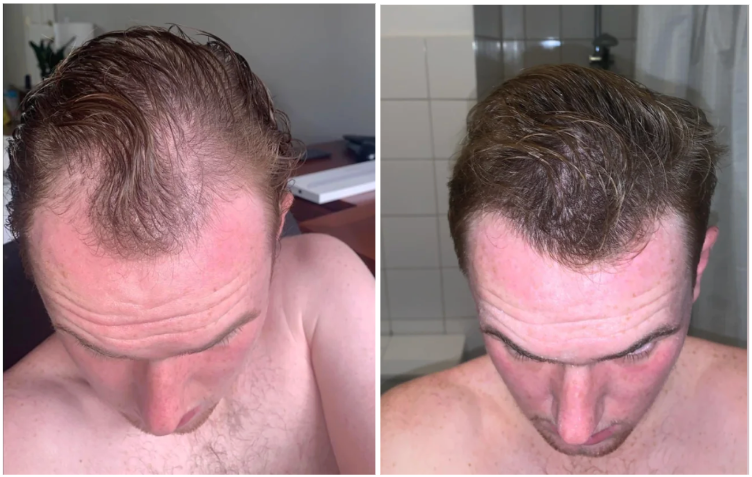
Source: u/MrDiabeticGinger via r/tressless.
We’ll take a closer look at this one later.
This article explores how topical finasteride fits within today’s hair loss treatment landscape, clarifying what current evidence supports, how much regrowth is realistically achievable, and how it compares to both oral finasteride and non-DHT-based alternatives like minoxidil.
Topical Finasteride From our partners at UloGet Personalized Topical Finasteride
Compounded finasteride for DHT control targeted at the follicle. Get prescribed 100% online. Choose a multi-month plan and get up to 30% plus a free gift bundle.
Free full-size gifts with 3-month+ plans Prescribed online, shipped to your door
Topical finasterideTargets DHT at the scalp*Only available in the U.S. Prescription requires an online medical consultation at no extra cost. Off-label products are not endorsed by the FDA. Free gifts included with select multi-month plans while supplies last. Ulo is a partner of Perfect Hair Health; we may earn a commission on purchases.
What is Topical Finasteride?
Topical finasteride is a 5ɑ-reductase type II inhibitor formulated for direct scalp application. It is designed to inhibit DHT locally in the scalp. By blocking DHT conversion in the scalp, the hope is that it will reduce miniaturization and hair loss in androgenic alopecia (AGA) while minimizing the risk of sexual and hormonal side effects seen with oral administration.
Mechanism of Action
Topical finasteride selectively inhibits the type II 5ɑ-reductase enzyme, decreasing local DHT levels. Topical finasteride has been found to reduce serum DHT by approximately 24-48% depending on the dose, which is notably less than the 60-70% reduction seen with oral finasteride. Lower doses primarily inhibit scalp DHT, potentially minimizing systemic side effects.[1]Caserini, M., Radicioni, M., Leuratti, C., Terragni, E., Iorizzo, M., Palmieri, R. (2016). Effects of a novel finasteride 0.25% topical solution on scalp and serum dihydrotestosterone in healthy men … Continue reading But, as the data shows, complete elimination of systemic impact is not guaranteed.
Formulations and Dosing
Compound strengths for topical finasteride vary, typically ranging from 0.005% to 0.2% (as Ulo does), with other companies offering doses as high as 2.5%; however, the higher the dose, the higher the risk of systemic absorption.
Why Expectation Setting Matters
Expectation setting is important when starting topical or oral finasteride for hair loss because online forums and before-and-after images tend to spotlight the most extreme results, rather than typical user outcomes. While finasteride has demonstrated high effectiveness on average, regrowth is generally gradual, with noticeable changes taking six months or more and reaching a plateau around 12-18 months.[2]Piraccini, B.M., Blume-Peytavi, U., Scarci, F., Jansat, J.M., Falques, M., Otero, R., Tamarit, M.L., Galvan, J., Tebbs, V., Massana, E. (2021). Efficacy and safety of topical finasteride spray … Continue reading,[3]Rossi, A., Magri, F., D’Arino, A., Pigliacelli, F., Muscianese, M., Leonici, P., Caro, G., Federico, A., Fortuna, M.C., Carlesimo, M. (2020). Efficacy of Topical Finasteride 0.5% vs 17ɑ-Estradiol … Continue reading
Overestimating likely results can lead to frustration, disappointment, and ultimately premature abandonment of therapy when expectations are unmatched by personal experience. Conversely, underestimating the drug’s potential may lead individuals to dismiss a therapy that could offer substantial stabilization or regrowth if given enough time and proper use.
Balanced, evidence-based expectations help users remain committed through the plateau period and recognize that slow, steady improvement, rather than dramatic changes overnight, is the most common pattern for most finasteride users.
What’s Possible ≠ What’s Probable
While topical finasteride can occasionally deliver dramatic regrowth, most users should expect moderate thickening and stabilization in hair density rather than extreme transformations.
Outcomes are best thought of as falling along a distribution curve:
- A small portion of users are “hyper-responders” who achieve big, visible transformations.
- The majority see moderate, steady improvement, such as visible thickening or a reduction in hair loss.
- Some individuals are non-responders with little to no benefit, reflecting the variability in biology and clinical response.
Several factors influence where an individual might fall on this spectrum:
- Duration of hair loss: Early intervention typically yields better results, while longer-standing balding zones respond less robustly.
- Consistency: Adhering reliably to a treatment schedule increases the chances of improvement, as missed doses may lead to suboptimal outcomes.
- Adjunct therapies: Combining topical finasteride with minoxidil or microneedling can enhance benefits, especially in difficult cases.
- Genetic factors: Variations in androgen receptor (AR) gene sensitivity and baseline DHT levels can also help dictate who will be a strong or weak responder.[4]Wakisaka, N., Taira, Y-I., Ishikawa, M., Nakamizo, Y., Kobayashi, K., Uwabu, M., Fukuda, Y., Taguchi, Y., Hama, T., Kawakami, M. (2005). Effectiveness of finasteride on patients with male pattern … Continue reading
Stronger Evidence = Greater Predictability
Finasteride is one of the most thoroughly studied hair loss medications, with clinical trial data supporting its reliability and predictability. This evidence base translates into a narrower distribution of user responses; most people see consistent moderate results, with fewer extremes compared to newer drugs.
By contrast, topical dutasteride has been studied less, limiting the ability to accurately predict outcomes and resulting in a wider variation of response. Clinical trials consistently show that dutasteride is more potent in DHT suppression and regrowth than finasteride, yet variability in regrowth and side effect profiles remains higher, especially in real-world use due to less standardization and a less robust evidence base.[5]Almudimeegh, A., AlMutairi, H., AlTassan, F., AlQuraishi, Y., Nagshabandi, K.N. (2024). Comparison between dutasteride and finasteride in hair regrowth and reversal of miniaturization in male and … Continue reading
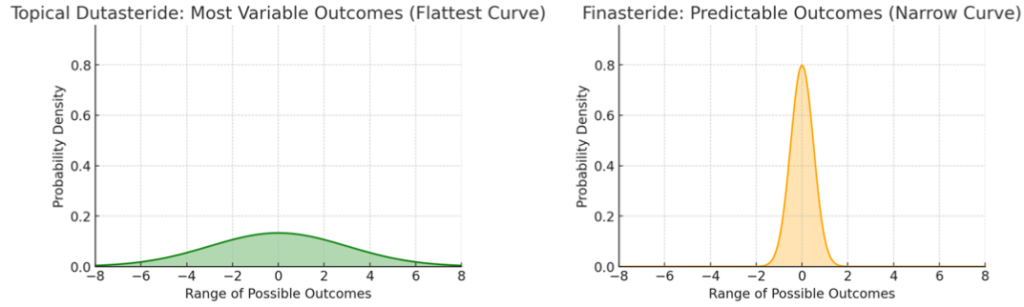
Figure 1: For topical dutasteride, a wide, shallow curve represents a much wider spread of outcomes. For finasteride, a narrow bell curve shows predictable outcomes.
Finasteride’s consistent results and well-documented safety profile make it the first-line treatment for most men with AGA, as clinicians and users can anticipate a predictable, steady benefit with a lower risk of surprises. This predictability helps set realistic user expectations and avoids over- or under-estimation of results.
Real Case Studies: Topical Finasteride Before and After
Case #1: Male (32), 24 Months on Topical Finasteride 0.025% (1 ml nightly) + Minoxidil 5% Added After 12 Months
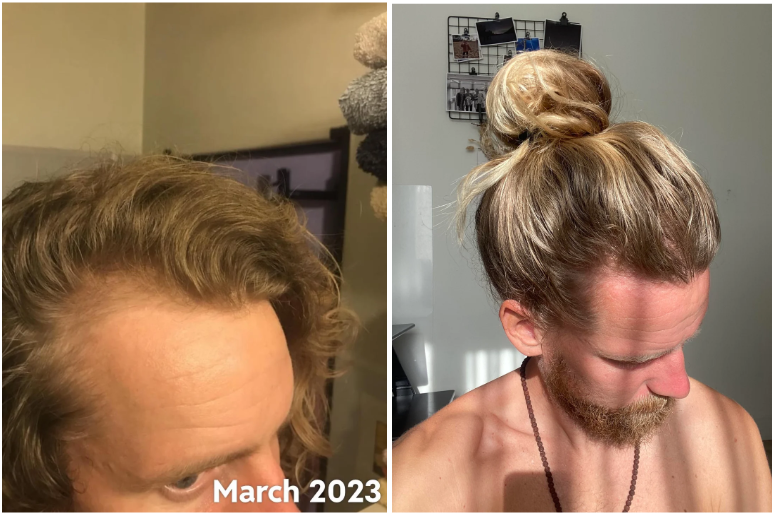
Source: u/Ecstatic-Nature-1631 via r/tressless.
This 32-year-old male’s current protocol includes a 0.025% topical finasteride solution, dosed at 1 mL nightly. He incorporated 5% topical minoxidil at month 12. Adjuncts included weekly dermastamping, a conditioner-only washing routine, and occasional argan oil usage. He reported stabilization of hair shedding from months 0-3, strong thickening from months 3-12, and maintained density, improved texture, and shine from months 12-24. He reported no sexual or systemic side effects from topical finasteride.
Case #2: Male (23) – 3.5 Months on Topical Finasteride 0.025% (Twice Daily) + Minoxidil 5% (twice daily)
Source: u/MrDiabeticGinger via r/tressless.
This 23-year-old male applied a topical finasteride 0.025% solution compounded with minoxidil 5%, in addition to occasional, inconsistent derma-rolling over 3.5 months. He reported an initial shedding phase at months 1-2 of the protocol, followed by a sudden improvement in hairline density and thickness at month 3. By month 3.5, he noted significant regrowth and richer color and texture along the frontal hairline. The user noted that the topical regimen has been well-tolerated with no systemic side effects.
Case #3: Male (34) – 12 Months on Topical Finasteride 0.3% + Minoxidil 6% (twice daily)
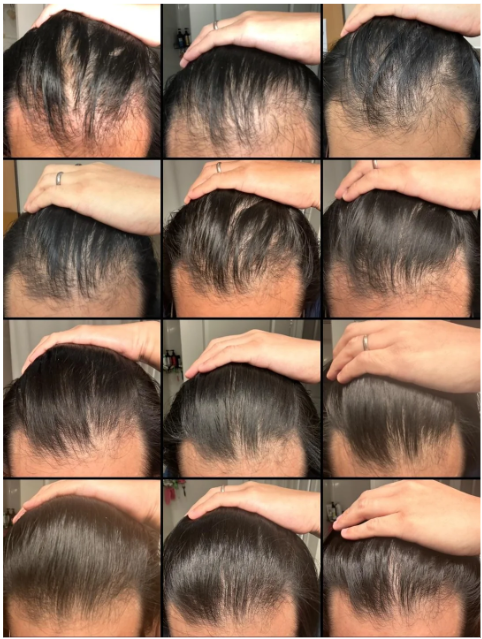
Source: u/iTsundere via r/tressless.
This 34-year-old male had tried numerous natural and supplement-based approaches (including pumpkin seed oil, saw palmetto, and rosemary) without success before starting pharmacologic therapy. He used a topical finasteride 0.3% spray compounded with topical minoxidil 6%, applied twice daily. He additionally used microneedling (1.5 mm depth) every 10 days. He described the first 2 months as a “rough” period, marked by noticeable shedding and even mild chest tenderness.
At months 3-6, he noted steady improvement and early thickening, especially near the temples and mid-scalp. By months 7-8, he observed significant progress, and in months 9-12, coverage stabilized, with occasional light shedding cycles. At this point, he transitioned to an oral regimen for convenience.
Case #4: Male, 8 Months on Topical Finasteride 0.25% (1 mL twice daily) + Minoxidil 8% (1 mL twice daily) + Microneedling 0.25mm (every three days)
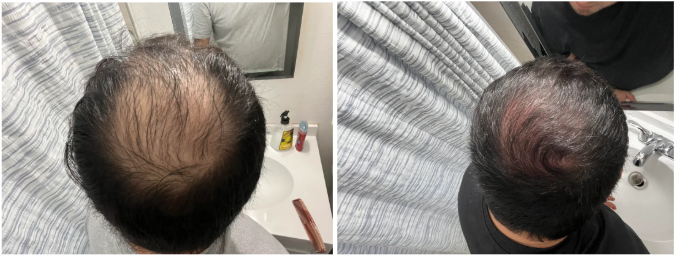
Source: u/coldmoney21 via r/tressless.
This male user reported on his 8-month progress using topical finasteride, minoxidil, and microneedling. He applied a topical finasteride 0.25% solution compounded with topical minoxidil 8% twice daily to the target areas, with 0.25 mm microneedling sessions every 3 days. At month 1, he reported a mild, brief shedding period, and his first noticeable improvement with thicker strands by month 3. From months 4-8, the user continued to show thickening and increased density. He reported no side effects beyond scalp redness attributed to dermarolling.
Case #5: Male (37) – 4 Months on Topical Finasteride 0.1% + Minoxidil 5% ( 1mL Daily)
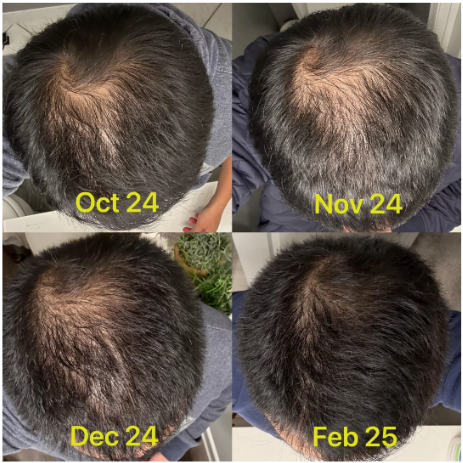
Source: u/Far-Instance268 via r/tressless.
This 37-year-old male opted for a topical combination for safety and convenience. The solution contained topical finasteride 0.5% and topical minoxidil 5%, which he applied 1 mL once daily over 4 months, exclusively to the crown. He noted a 4-week shedding phase from week 3 of treatment, followed by continued shedding and apparent thinning at month 2. By month 2.5, shedding ceased, and months 3-4 marked a period of steady regrowth and improved crown density.
The user reported maintaining consistent adherence despite the discouraging shedding phase and did not report any systemic or local irritation or side effects. While he did not apply the solution outside the crown, he reported slight thickening near the frontal region.
Case #6: Male (23) – 3 Months on Topical Finasteride 0.3% + Minoxidil 6% (4 Sprays Nightly) + Microneedling 1 mm (Weekly)
This 23-year-old male chose a combination therapy of topical finasteride 0.3%/topical minoxidil 6%, which he applied as a spray 4 times nightly for 3 months. Additionally, he used 1 mm dermastamp once weekly, from which he reports mild temporary redness. At month 1, he reported mild shedding, with no change in his appearance. At month 2, he noticed the first signs of regrowth and thickening, especially along the temples. Month 3 was marked by significant visible improvement. The user described his hair as visibly denser and fuller and reported satisfaction after only 3 months of combination therapy.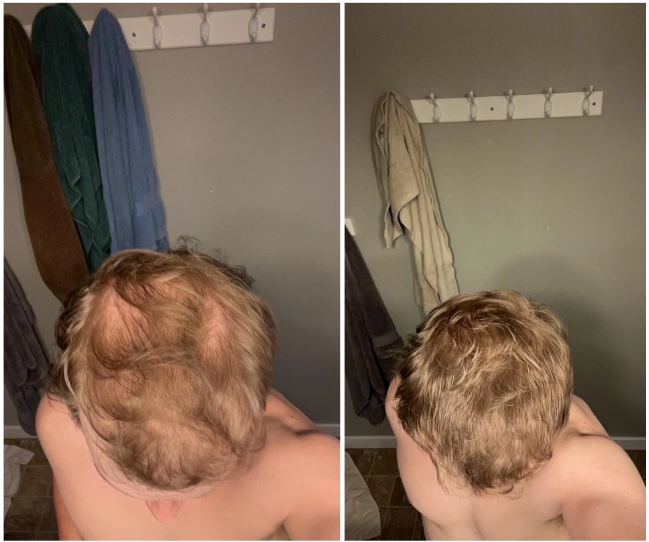
Source: u/[deleted] via r/tressless.
Case #7: Male (46) – 4+ Months on Topical Finasteride 0.1% (0.5 mL front + 0.5 mL crown twice daily, TrichoSol) + Minoxidil 5% + Dermastamp 0.8–1 mm Weekly
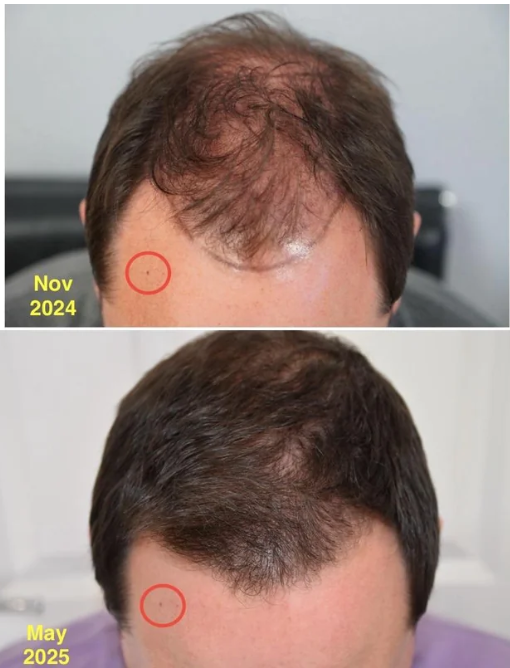
Source: u/Hypergrade46 via r/tressless.
Due to long-standing crown thinning, this 46-year-old male commenced a combination of topical finasteride 0.1% and minoxidil 5%, applied twice daily for 4 months. He complemented with microneedling (initially daily, then weekly), occasional rosemary oil, and regular biotin. He noted an initial skin reaction at the start of therapy, which caused him to stop it for around 4 weeks. He did not note any ongoing side effects since restarting, nor any shedding or unrelated side effects. He noted improvement in the mid-scalp despite limiting the application to that area, suggesting a possible systemic effect or local spread.
Case #8: Male (24), 4 Months on Topical Finasteride 0.3% + Minoxidil 6%
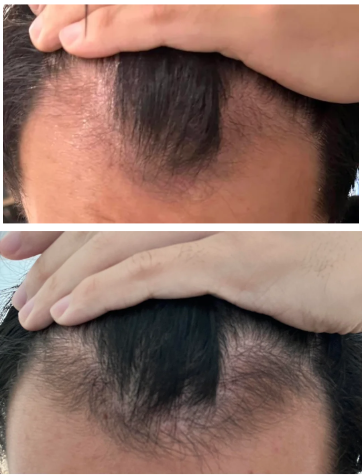
Source: u/Aromatic_Tangerine33 via r/tressless.
This 24-year-old male started the topical combination of finasteride 0.3% and minoxidil 6%, applied mainly to his hairline and temples via a serum. He did not observe any side effects, save for transient greasiness and a distinct smell from the serum. Between baseline and month 4 of therapy, he reported visible baby hairs and an early fill across his hairline. He did not notice any shedding across the 4 months.
Case #9: Male, 9 Weeks on Low-Dose Topical Finasteride (0.01–0.02%) + Topical Minoxidil 5% (Daily)
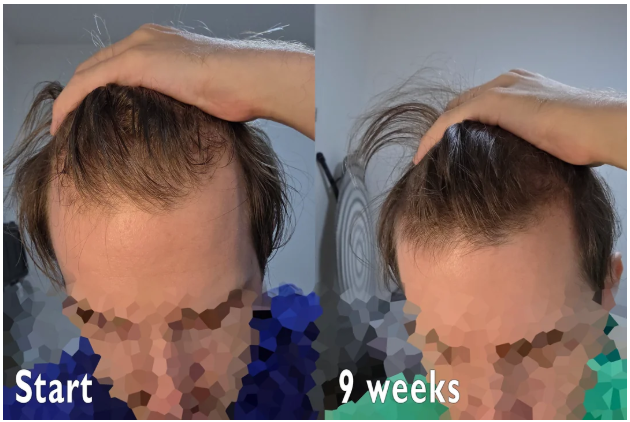
Source: u/Yellow_Icicle via r/tressless.
This male documented his results after 9 weeks on low-dose topical finasteride combined with minoxidil. He created a 0.02% topical finasteride solution using crushed finasteride tablets, which he took from month 2 after initially trialing a 0.01% solution. He also applied a 5% minoxidil solution with a standard alcohol-based carrier. He noted a brief shedding phase at week 4 of the protocol, which he interpreted as a positive response indicator. From weeks 6-9, he noted visible regrowth at the front and thickening of the crown. He did not note any systemic or dermatologic adverse events.
Case #10: Male (43), 3 Months on Topical Finasteride 0.025% (1 ml daily) + Topical Minoxidil 5% (daily) + Microneedling 0.75mm (once every two weeks)
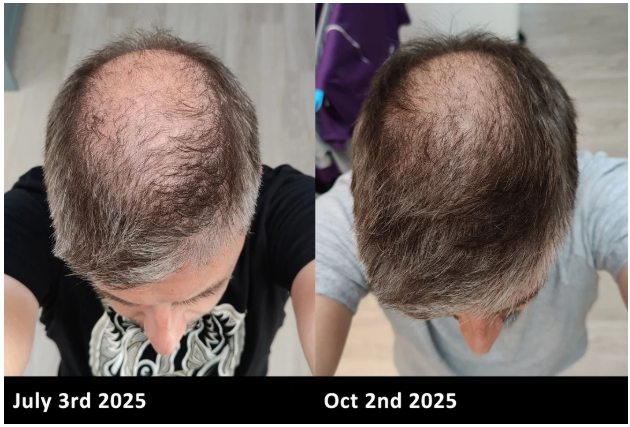
Source: u/siritchie via r/tressless.
This 43-year-old male sought combination finasteride and minoxidil therapy to improve his hair loss. Over three months, he applied a 0.025% topical finasteride solution once daily to the affected areas, along with 5% minoxidil combined with the same solution. Additionally, he applied Dermastamp 0.75 mm every 2 weeks, avoiding topical application on stamping days. Additionally, he supplemented with magnesium, zinc, B-complex, vitamin D3+K2, lecithin, and followed a generally healthy diet with regular exercise.
At months 1-2, he noted early thickening and density improvements, and by month 3, he achieved increased coverage and shaft thickness at the vertex, with no shedding or side effects reported.
Probable Regrowth Timeline
Based on the available data, we’ve created a probable timeline of regrowth.
Months 0-6: No Cosmetic Changes
Most users will see little to no visible improvement in the first six months. During this period, finasteride is actively reducing DHT and stabilizing hair follicles, but hair regrowth is not yet apparent. Some individuals may notice decreased shedding, while others may experience temporary increased shedding as old hairs make way for newer ones.
Months 6-12: First Cosmetic Improvements
Between 6 and 12 months, initial improvements become visible for most responders. Hair density may be noticeably improved, with thicker strands and slower progression of hair loss.[6]Piraccini, B.M., Blume-Peytavi, U., Scarci, F., Jansat, J.M., Falques, M., Otero, R., Tamarit, M.L., Galvan, J., Tebbs, V., Massana, E. (2021). Efficacy and safety of topical finasteride spray … Continue reading
Months 12-24: Noticeable Regrowth in Responders
During the second year, responders typically achieve their most significant gains. Hair regrowth becomes more noticeable, and improvements in overall density continue to build. For many, this period yields the best results, though those who started with advanced hair loss may see stabilization rather than dramatic regrowth.[7]Rossi, A., Magri, F., D’Arino, A., Pigliacelli, F., Muscianese, M., Leonici, P., Caro, G., Federico, A., Fortuna, M.C., Carlesimo, M. (2020). Efficacy of Topical Finasteride 0.5% vs 17ɑ-Estradiol … Continue reading
Months 24+: Maintenance and Plateau
After two years, most responders maintain their gains if they consistently use the medication. Regrowth typically plateaus, with ongoing use required to sustain results. Discontinuation leads to a gradual loss of regained hair within 6-12 months, returning to baseline levels. Some individuals may see marginal further improvement with combination or adjunct therapies.
For most users, topical finasteride is a long-term commitment with gradual, steady gains and sustained maintenance. The timeline highlights the importance of patience and expectations aligned with clinical reality.
How To Maintain Realistic Expectations
Most topical finasteride users experience visible, but not dramatic, improvements in hair density and preservation. Rather than achieving total restoration, finasteride is more likely to “turn back the clock” by 1-3 years.
Patience is important as results often take between 6 to 12 months to become noticeable. Initial changes may be subtle, such as reduced shedding or minor thickening, before more visible regrowth stabilizes over the course of a year.
To accurately assess progress, you can track your progress with photographs. However, it’s important to use the same lighting and angles each time you photograph your scalp. This approach reduces bias and helps clearly identify gradual changes that might otherwise go unnoticed day-to-day. Setting and maintaining realistic expectations can improve satisfaction and help sustain adherence to the long-term treatment plan.
Practical Takeaways
- Topical finasteride offers a clinically proven, lower-risk alternative to oral formulations for treating AGA.
- Multiple studies demonstrate that its efficacy is comparable to oral finasteride.
- The key safety advantage of topical finasteride is its reduced systemic DHT suppression, potentially leading to a lower incidence of sexual and hormonal side effects commonly associated with oral therapy.
- Consistency in application and patience over many months remain the most important predictors of treatment success, as improvements are typically gradual and require ongoing commitment to daily use.
Final Thoughts
When evaluating topical finasteride, it’s important to consider both its proven efficacy and its measured expectations. Clinical studies consistently show that topical finasteride can deliver meaningful stabilization and regrowth with a lower likelihood of systemic side effects compared to oral therapy. However, like all hair loss treatments, results develop gradually and vary between individuals.
By grounding expectations in clinical averages rather than exceptional before-and-after photos, users can better appreciate the steady, cumulative improvements that typically occur over months, not weeks. Patience, consistency, and realistic goal setting are key; most users will experience visible thickening, reduced shedding, and sustained density when topical finasteride is used correctly and maintained long term.
Ultimately, topical finasteride represents a balanced, evidence-backed option in the modern hair restoration toolkit: one that offers both reliability and tolerability for those seeking to preserve and strengthen their existing hair with confidence.
References[+]
References ↑1 Caserini, M., Radicioni, M., Leuratti, C., Terragni, E., Iorizzo, M., Palmieri, R. (2016). Effects of a novel finasteride 0.25% topical solution on scalp and serum dihydrotestosterone in healthy men with androgenetic alopecia. 54(1). 19-27. Available at: https://doi.org/10.5414/CP202467 ↑2 Piraccini, B.M., Blume-Peytavi, U., Scarci, F., Jansat, J.M., Falques, M., Otero, R., Tamarit, M.L., Galvan, J., Tebbs, V., Massana, E. (2021). Efficacy and safety of topical finasteride spray solution for male androgenetic alopecia: a phase III, randomized, controlled clinical trial. Journal of the European Academy of Dermatology and Venereology. 36(2). 286-294. Available at: https://doi.org/10.1111/jdv.17738 ↑3, ↑7 Rossi, A., Magri, F., D’Arino, A., Pigliacelli, F., Muscianese, M., Leonici, P., Caro, G., Federico, A., Fortuna, M.C., Carlesimo, M. (2020). Efficacy of Topical Finasteride 0.5% vs 17ɑ-Estradiol 0.05% in the Treatment of Postmenopausal Female Pattern Hair Loss: A Retrospective, Single-Blind Study of 119 Patients. Dermatology Practical & Conceptual. 10(2). E2020039. Available at: PMID: 32363101 ↑4 Wakisaka, N., Taira, Y-I., Ishikawa, M., Nakamizo, Y., Kobayashi, K., Uwabu, M., Fukuda, Y., Taguchi, Y., Hama, T., Kawakami, M. (2005). Effectiveness of finasteride on patients with male pattern baldness who have different androgen receptor gene polymorphism. The Journal of Investigative Dermatology. Symposium Proceedings. 10(3). 293-294. Available at: https://doi.org/10.1111/j.0022-202X.2005.10123.x ↑5 Almudimeegh, A., AlMutairi, H., AlTassan, F., AlQuraishi, Y., Nagshabandi, K.N. (2024). Comparison between dutasteride and finasteride in hair regrowth and reversal of miniaturization in male and female androgenetic alopecia: a systematic review. Dermatology Reports. 16(4). 9909. Available at: https://doi.org/10.4081/dr.2024.9909 ↑6 Piraccini, B.M., Blume-Peytavi, U., Scarci, F., Jansat, J.M., Falques, M., Otero, R., Tamarit, M.L., Galvan, J., Tebbs, V., Massana, E. (2021). Efficacy and safety of topical finasteride spray solution for male androgenetic alopecia: a phase III randomized, controlled clinical trial. Journal of the European Academy of Dermatology and Venereology. 36(2). 286-294. Available at: https://doi.org/10.1111/jdv.17738 Finasteride Side Effects
Finasteride is the most powerful, well-studied, FDA-approved drug for androgenic alopecia (AGA). It stops AGA progression in 80-90% of men and, on average, leads to a 10% increase in hair count over two years. For men wanting a hands-off approach to hair maintenance, finasteride is often an excellent option.
That said, finasteride isn’t for everyone. While its risk of side effects are often overstated online, the drug appears to reduce libido in a certain percentage of men and may induce gynecomastia. The drug can also temporarily lower sperm counts, which might make conception more difficult during its first six months of use. In some men, the use of finasteride appears to increase anxiety and/or depression.
The true incidence and magnitude of these reports are hard to discern. Depending on the study we cite and the questionnaire design, these effects can range from 1% to 40%. Whether or not one should worry about finasteride side effects may depend on their current hormonal profile and mental health. Keep reading to learn more.
Interested in Topical Finasteride?
Low-dose & full-strength finasteride available, if prescribed*
Take the next step in your hair regrowth journey. Get started today with a provider who can prescribe a topical solution tailored for you.
*Only available in the U.S. Prescriptions not guaranteed. Restrictions apply. Off-label products are not endorsed by the FDA.
Gynecomastia
Gynecomastia is the growth of male breast tissue. It results from elevated hormones such as prolactin and estrogen. While gynecomastia is estimated to only affect between 0.25-1.00% of people on 5-alpha reductase inhibitors (such as finasteride), those who start the drug with already elevated levels of prolactin and estrogen are likely at a higher risk of its development.
Drugs like finasteride can raise blood levels of both testosterone and estrogen by 10-30%, depending on the dose. So, for those starting the drug with borderline-high estrogen, the additional lift in estrogen levels may put someone at greater risk of gynecomastia.
Sexual Side Effects
Because it lowers DHT levels (a hormone that helps maintain male sex characteristics), some studies have shown that a percentage of finasteride users report sexual side effects ranging from decreased sex drive to reduced semen volume to erectile dysfunction. Studies vary widely, but incidents could be as low as 1-2% of users.
Female users should be aware that Finasteride can potentially mutate and/or inhibit the development of male fetus genitalia.[1]dailymed.nlm.nih.gov/dailymed/lookup.cfm As such, pregnant women are neither prescribed finasteride nor advised to even handle the medication.
Cognitive Side Effects
On hair loss forums, some men taking finasteride have complained of changes to cognition, specifically, a feeling of brain fog since starting therapy. To date, this hasn’t been reported to significant degrees in clinical studies. This may be because even if the effects do exist, it’s likely a subtle, gradual side effect that many may not attribute to the drug.
Animal models have demonstrated that finasteride can indeed change brain chemistry, especially after transitioning off of the drug. But it’s important to note that animals in those studies take dosages of finasteride thousands of times greater than what is prescribed to humans.
In any case, it’s not unreasonable that those with depression, anxiety, and/or bipolar disorder should proceed with caution and speak with their doctor to closely monitor the effects of finasteride use.
How To Reduce Side Effects Of Finasteride
Regardless of the specific side effect that’s being targeted to reduce, the strategies are all similar: find ways to (1) reduce daily drug exposure, (2) localize the drug’s effects to the scalp, and (3) do lab tests to determine personal risk for certain side effects like gynecomastia. These strategies are outlined in detail below:
Limit Daily Drug Exposure
As a hair loss drug, finasteride is typically prescribed orally at 1mg daily. Having said that, there’s evidence that 0.2mg daily is nearly just as effective at improving hair counts while simultaneously reducing total drug exposure by 80%. For many people, this coincides with a reduction in perceived side effects.
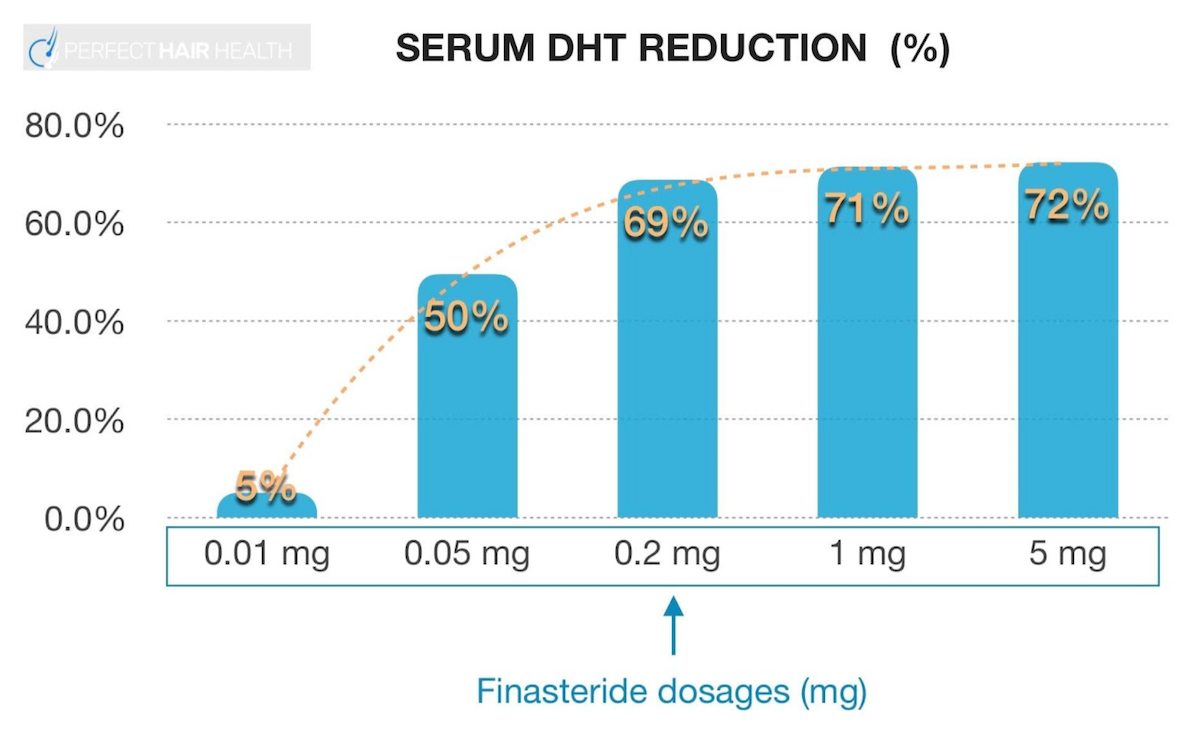
Finasteride’s dose-dependent, logarithmic response curve on serum DHT reduction
If side effects, or anticipatory anxiety, are a concern, try lowering the dose of the drug from 1mg daily to 0.2mg daily. After all, small clinical studies have demonstrated that doses as low as 0.2mg daily still improve hair counts, and may also confer a slightly smaller magnitude and/or severity of side effects (at least anecdotally).[2]https://pubmed.ncbi.nlm.nih.gov/10495375/
Unfortunately, finasteride is a hair loss drug that must be continued indefinitely for its effectiveness to remain. When finasteride treatment is stopped, men typically lose what hair regrowth they gained within 3-12 months. For these reasons, it’s not advised to drop below doses equating to 0.2mg daily – as efficacy may rapidly diminish below this threshold.
If finasteride side effects don’t go away with reduced usage, most users report any lingering side effects go away after discontinuing the drug within 2-3 weeks, and for some, up to a few months. If problems persist beyond that, it’s important to contact your prescribing physician.
Localize Finasteride’s Effects to the Scalp
There are two primary ways to localize finasteride’s effects to the scalp. These methods minimize the amount of the drug that circulates throughout the bloodstream, thus minimizing the side effects of finasteride. Both entail switching from an oral to topical formula.
Try a topical formulation
Studies show that – when formulated properly – topical finasteride may reduce the risk of side effects by 30-90%. One 16-month study on 0.005% topical finasteride demonstrated significant hair improvements, no drug-associated side effects, and no impact on blood hormonal levels.[3]https://dx.doi.org/10.3109%2F09546639709160517 This suggests that any absorption of the drug beyond the scalp was metabolized quickly enough to not impact serum DHT levels.
Other studies have demonstrated that higher doses of topical finasteride also confer benefit, and at smaller reductions of serum DHT (i.e., a proxy for systemic absorption) and perhaps side effects, too.[4]https://onlinelibrary.wiley.com/doi/full/10.1111/jdv.17738 Having said that, if minimizing side effects are a top priority, we still recommend starting with the minimum viable dose of topical finasteride – 0.005% x 2 mL daily – and working your way up from there.
Try intradermal delivery methods (dutasteride)
Also known as mesotherapy, intradermal delivery methods inject finasteride into the scalp. While there aren’t yet clinical studies of mesotherapy finasteride in reputable journals, there are clinical studies of mesotherapy dutasteride – a drug that is more powerful at reducing DHT levels versus finasteride and that also has a longer half-life (which makes it a better candidate for less-frequent injections into the scalp – since the drug will stay active for longer).
A small number of clinical studies suggest that scalp injections of ~0.01% x 1-2 mL of dutasteride, once every 1-3 months, do not appreciably alter serum hormones, nor do they result in any reported cognitive or sexual side effects. They do, however, lead to statistically significant hair improvements.
Determine Your Risk for Finasteride Side Effects
Determining personal risk ahead of time, and getting a baseline measure of hormonal health, can help people decide if finasteride is right for them. It can also help people keep track of how the drug is influencing their serum hormones.
Testing for Sexual Side Effect Risk
There aren’t yet clinical studies demonstrating the predictability of finasteride side effects related to lowered libido or sexual dysfunction. There are, however, clinical studies suggesting men who are experiencing reduced libidos tend to also have low levels of free testosterone and/or high levels of sex hormone binding globulin.
For these reasons, some clinicians recommend getting these hormones tested prior to starting finasteride. While finasteride isn’t known to have a major influence over these hormones, borderline-abnormal tests may make someone more likely to report these problems, irrespective of whether they’re using hair loss drugs.
Testing for Gynecomastia Risk
For peace of mind, blood tests for prolactin and estrogen can be ordered prior to starting finasteride. Clinical studies do show that finasteride and dutasteride can slightly increase levels of estrogen, and that a rise in estrogen and/or prolactin can be pathogenically linked to the development of gynecomastia, also known as male breast development.[5]https://www.accessdata.fda.gov/drugsatfda_docs/label/2012/020788s020s021s023lbl.pdf[6]https://journals.sagepub.com/doi/abs/10.1177/2051415820926301[7]https://www.ncbi.nlm.nih.gov/books/NBK279105/
If you’re worried about this side effect, test your estrogen and prolactin levels. If they’re within 10-20% of the upper limit for normal, then finasteride or dutasteride use may put you “over the edge” and into that risk category of gynecomastia. Under these circumstances, consider dietary, lifestyle, and/or environmental interventions to lower levels of these into a normal range prior to starting finasteride, and rechecking these hormones regularly or if breast tenderness begins to develop.
Also keep in mind that blood tests for hormones are just proxies for what might be occurring elsewhere in the body. Therefore, it’s entirely possible for serum blood tests to mislead us into thinking we have “normal” levels of hormones, when our tissue hormonal profiles might be out-of-range. The inverse is also true: out-of-range blood hormones don’t always signify out-of-range tissue hormones. So, treat any laboratory test as preliminary, and recognize the science supporting these tests – at least for their predictability of finasteride side effects – is still in its infancy.
Anyone interested in doing these lab tests can do so with the help of their primary care physician. Or, those based in the U.S. (or any other country that offers direct-to-consumer lab testing) may be able to order tests through the links below.
For more information, see these resources (no affiliate links):
- Direct-To-Consumer Lab Test: Prolactin (U.S. only) [8]truehealthlabs.com/product/prolactin
- Direct-To-Consumer Lab Test: Estrogen (U.S. only) [9]truehealthlabs.com/product/estradiol-e2
Can We Localize Finasteride Entirely To The Scalp?
Topical finasteride can still go systemic. Having said that, clinical studies also show that daily doses of topical finasteride as low as 0.005% x 2 mL can still produce positive hair parameter changes over 16 months, and without impacting serum DHT levels (a proxy for systemic circulation of the drug).
For those worried about the sexual side effects of finasteride, this formulation of topical finasteride might be most appropriate. However, if you go down this route, you also may want to consider periodically testing serum DHT levels – as members inside our membership community have found that even at these ultra-low dilutions of finasteride, serum DHT tests can still decline by more than 25%.
Changes to serum DHT levels can help people understand just how much topical finasteride (if any) is going systemic. In general, DHT fluctuations smaller than 20% are considered biologically insignificant.
Directions for how to do this can be found inside our comprehensive finasteride guides, available only to members.
So, consider these options (and the data) before giving up entirely on finasteride. There are many ways to leverage its power, mitigate its risks, and perhaps take your hair regrowth to a new level.
References[+]
References ↑1 dailymed.nlm.nih.gov/dailymed/lookup.cfm ↑2 https://pubmed.ncbi.nlm.nih.gov/10495375/ ↑3 https://dx.doi.org/10.3109%2F09546639709160517 ↑4 https://onlinelibrary.wiley.com/doi/full/10.1111/jdv.17738 ↑5 https://www.accessdata.fda.gov/drugsatfda_docs/label/2012/020788s020s021s023lbl.pdf ↑6 https://journals.sagepub.com/doi/abs/10.1177/2051415820926301 ↑7 https://www.ncbi.nlm.nih.gov/books/NBK279105/ ↑8 truehealthlabs.com/product/prolactin ↑9 truehealthlabs.com/product/estradiol-e2 Dihydrotestosterone (DHT) is a male hormone, and one of the factors that can cause androgenic alopecia (AGA). Naturally, there are many products on the market that use “DHT-blocking” ingredients and offer a “science-backed” way to improve hair loss through use of their formulation.
DHT-blocking has proven effective in treating hair loss. After all, oral finasteride is an FDA-approved medication for androgenic alopecia, and it blocks DHT by inhibiting the DHT-forming enzyme, 5-α-reductase.
We are now seeing more haircare products incorporating “DHT-blocking” ingredients into their formulations, including shampoos. These products offer a milder option to FDA-approved medications that can be incorporated into an everyday routine. But do they really work?
With so many options on the market, sorting the science from the marketing can feel daunting. That’s why we’ve researched the evidence behind key shampoo ingredients, from speculative herbal formulas to clinically proven ingredients. In this article, we break down the 10 best DHT-blocking shampoos and assess whether they are worthy hair loss products to incorporate into your routine.
Ketoconazole Shampoo From our partners at UloSulfate-Free Ketoconazole Shampoo
Ulo's Thickening+ Shampoo pairs ketoconazole with thickening actives in a sulfate-free, gentle formula. Choose a multi-month plan and get up to 30% plus a free gift bundle.
Free full-size gifts with 3-month+ plans No prescription needed
KetoconazoleSupports a healthy scalpFree gifts included with select multi-month plans while supplies last. Ulo is a partner of Perfect Hair Health; we may earn a commission on purchases. This product is a cosmetic and is not intended to diagnose, treat, cure, or prevent any disease.
What is DHT and DHT-Blocking?
DHT is an androgen, a hormone that is formed from testosterone by the enzyme 5-ɑ-reductase. It is involved in the growth of facial, underarm, pubic, and body hair. While this might sound great, DHT is also implicated in the development of pattern hair loss.
The binding of DHT to androgen receptors causes hair follicles to shrink. It shortens their growth phase while also prolonging their non-growing phase. This leads to hair thinning and shorter hair that may fall out or stop growing.
Those with AGA often have elevated levels of 5-ɑ-reductase, DHT androgen receptors, and DHT itself.[1]Ustuner, E. T. (2013). Cause of Androgenic Alopecia: Crux of the Matter. Plast Reconstr Surg Glob Open. 1(7). e64. Available at: https://doi.org/10.1097/GOX.0000000000000005,[2]Sekhavat, H., Bar Yehuda, S., Asotra, S. (2025). Using the Mechanisms of Action Involved in the Pathogenesis of Androgenetic Alopecia to Treat Hair Loss. Int J Mol Sci. 26(21). 10712. Available at: … Continue reading
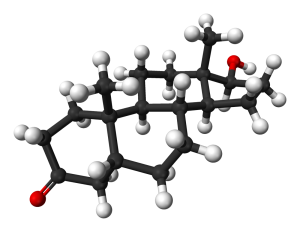
Figure 1: 3D image of dihydrotestosterone (DHT).
DHT blockers do what their name suggests – they block DHT. To do this, they often operate in one of two ways, or sometimes a combination of both:
- They inhibit 5-ɑ-reductase, reducing the formation of DHT
- They bind to androgen receptors and block DHT binding
These are not the only ways an ingredient may act to block DHT, but they are the most common.
What Are DHT-Blocking Shampoos?
Elevated DHT is often the primary cause of a balding scalp. So, naturally, there are a plethora of products available that act to block DHT, including DHT-blocking shampoos. These shampoos are formulated with ingredients that have been shown in laboratory research or in human clinical trials to reduce DHT levels.

Ulo’s Thickening+ Ketoconazole Shampoo
The Problem With DHT-Blocking Shampoos
A DHT-blocking shampoo may appear like a great addition to your daily routine if you are concerned about hair loss. However, shampoos may not be the best option if you have AGA, and there are several factors to consider before purchasing a shampoo that claims to support hair growth.
Regulation
You’ve probably seen shampoos advertised as “DHT-blocking” or “clinically proven to stop hair loss.” But here’s the truth: there are currently no over-the-counter shampoos that have been clinically proven to lower DHT in humans.
That doesn’t mean the ingredients are useless; it just means the science doesn’t support the marketing claims being made.
Marketing vs. Science
Many hair loss shampoos include ingredients like:
- Saw palmetto
- Green tea extract
- Rosemary oil
- Pumpkin seed extract
Marketers label these as “DHT blockers” because some research suggests these compounds might reduce DHT, but this is where the story gets complicated.
Firstly, laboratory studies are not human studies. Much of the evidence behind these claims comes from petri dish experiments (cells in a lab) or animal models (usually mice).
For example, green tea extract might reduce androgen activity in a dish of cultured cells. But real human scalps are a completely different environment. So if something works in a lab, the safest assumption is actually that it won’t work the same way in people until proven otherwise.
This is why evidence quality is so important, and why we include evidence quality rubrics with every ingredient in our ingredient database.
Delivery Mechanism
Even when ingredients have been studied in humans, most studies use oral supplements or leave-on topical products.
That matters because oral products circulate throughout your entire body, and leave-on topicals sit on your scalp for 12+ hours. But shampoo remains on the scalp for only 1 to 2 minutes, typically 3 to 4 times per week.
That is usually not enough time for meaningful absorption, and even if some does get in, the dose is likely small. So it’s a big leap to take results from pills or leave-on products and assume the same ingredient will work in a rinse-off shampoo.
For this very reason, we organise our product metrics by formulation at Perfect Hair Health.
Hypothesis vs. Reality
Ketoconazole shampoo is often called the “best DHT-blocking shampoo”.
Oral ketoconazole can lower male androgens (like DHT), and ketoconazole shampoo has been shown to improve hair outcomes in patients with androgenic alopecia.[3]Perez, H.B.S. (2004). Ketoconazole as an Adjunct to Finasteride in the Treatment of Androgenetic Alopecia in Men. Medical Hypotheses. 62(1). 112-115. Available at: … Continue reading,[4]Khandpur, S., Suman, M., Reddy, B.S. (2002). Comparative Efficacy of Various Treatment Regimens for Androgenetic Alopecia in Men. Journal of Dermatology. 29(8). 489-498. Available at: … Continue reading,[5]Rafi, A.W., Katz, R.M. (2011). Pilot Study of 15 Patients Receiving a New Treatment Regimen for Androgenic Alopecia: The Effects of Atopy on AGA. ISRN Dermatology. 2011. 241953. Available at: … Continue reading But we don’t actually know whether ketoconazole shampoo helps hair by lowering scalp DHT.
It might help hair for completely different reasons, such as reducing scalp inflammation, killing Malassezia yeast, or improving overall scalp health.[6]Prohic, A., Simic, D., Sadikovic, T.J., Krupalija-Fazlic, M. (2014). Distribution of Malassezia Species on Healthy Human Skin in Bosnia and Herzegovina: Correlation With Body Part, Age and Gender. … Continue reading,[7]Piérard-Franchimont, C., De Doncker, P., Cauwenbergh, G., Piérard, G.E. (1998). Ketoconazole Shampoo: Effect of Long-Term Use in Androgenic Alopecia. Dermatology. 196(4). 474-477. Available at: … Continue reading
While ketoconazole shampoo appears helpful, its benefit may have little or no relationship to DHT.
The 10 Best DHT-Blocking Shampoos
When it comes to DHT-blocking shampoos, the claims go far beyond the science. Laboratory studies do not translate to human results; supplements and leave-on products are not the same as rinse-off shampoos; and even the most promising examples are based on hypotheses, not proven evidence.
Considering this, to say that there was a particular brand of DHT-blocking shampoo that is the “best” would be incorrect. Instead, we can consider ingredients that are common to many of these shampoo products. So here, we rank the 10 most common DHT-blocking ingredients in shampoos. We dissect the science, evidence quality, and growth potential behind each of them as hair loss products, so you can decide whether these ingredients in DHT-blocking shampoos really stack up to their marketing claims.
1. Ulo Ketoconazole Shampoo
Ketoconazole was a medication formulated to treat fungal infections, but it has also been shown to treat hair loss. Ketoconazole can inhibit 5‑α‑reductase activity and could disrupt DHT binding to androgen receptors.[8]Hugo Perez, B. S. (2004). Ketocazole as an adjunct to finasteride in the treatment of androgenetic alopecia in men. Med Hypotheses. 62(1). 112-115. Available at: … Continue reading
Unlike many of the ingredients on this list, there is clinical evidence of ketoconazole shampoo as a product for hair loss.
A 1998 trial of 39 participants with androgenic alopecia directed participants to apply 2% kentoconazole for six months. After six months, participants using the ketoconazole shampoo showed an increase in hair diameter, while those using a placebo shampoo showed a decrease. Hair density improvements were similar between those using the ketoconazole shampoo and a 2% minoxidil therapy.[9]Piérard-Franchimont, C., De Doncker, P., Cauwenbergh, G., Piérard, G. E. (1998). Ketoconazole Shampoo: Effect of Long-Term Use in Androgenic Alopecia. Dermatology. 196(4). 474-477. Available at: … Continue reading
In support of this, a review summarising seven studies using topical ketoconazole concluded that ketoconazole appears to increase hair diameter and result in clinical improvement in those with androgenic alopecia.[10]Fields, J. R., Vonu, P. M., Monir, R. L., Schoch, J. J. (2020). Topical ketoconazole for the treatment of androgenetic alopecia: A systematic review. Dermatol Ther. 33(1). e13202. Available at: … Continue reading
Although more trials are needed, and only prescription-grade 2% ketoconazole has shown to improve hair loss, this promising clinical evidence places ketoconazole at the top of the list for DHT-blocking shampoos.
Our evidence score – 54/100 (shampoo)
Interested in learning more about ketoconazole? Read our article.
Example ketoconazole shampoos:
- Ulo Ketoconazole Shampoo – from $29
- Nizoral Anti‑Dandruff Shampoo 1% Ketoconazole – $15.89
- Minoxidil Max Hair Covet Hair Restoration Shampoo – $40
- Ketoconazole 2% Medicated Shampoo – $12.50 to $47.00 (Prescription)
Ketoconazole Shampoo From our partners at UloSulfate-Free Ketoconazole Shampoo
Ulo's Thickening+ Shampoo pairs ketoconazole with thickening actives in a sulfate-free, gentle formula. Choose a multi-month plan and get up to 30% plus a free gift bundle.
Free full-size gifts with 3-month+ plans No prescription needed
KetoconazoleSupports a healthy scalpFree gifts included with select multi-month plans while supplies last. Ulo is a partner of Perfect Hair Health; we may earn a commission on purchases. This product is a cosmetic and is not intended to diagnose, treat, cure, or prevent any disease.
2. Ginseng Root Shampoo
Ginseng root is often derived from the Panax species of plant. Two different extracts of Panax ginseng root have shown to inhibit 5-α-reductase activity by 50% at certain concentrations.[11]Murata, K., Takeshita, F., Samukawa, K., Tani, T. and Matsuda, H. (2012). Effects of ginseng rhizome and ginsenoside Ro on testosterone 5α-reductase and hair re-growth in testosterone-treated mice. … Continue reading In rats, oral administration of ginseng root has been found to reduce DHT levels, suggesting ginseng maintains its inhibitory activity against 5-α-reductase in vivo (in living organisms).[12]Park, J. Y., Park, W. Y., Song, G., et al. (2023). Panax ginseng C.A. meyer alleviates benign prostatic hyperplasia while preventing finasteride-induced side effects. Front Pharmacol. 14. Available … Continue reading,[13]Park, H. K., Kim, S. K., Lee, S. W., et al. (2017). A herbal formula, comprising Panax ginseng and bee-pollen, inhibits development of testosterone-induced benign prostatic hyperplasia in male Wistar … Continue reading
Clinical trials have also shown that oral ingestion of Panax ginseng was found to increase hair density and thickness over 24 weeks in those with androgenic alopecia.[14]Kim, J.H., Yi, S.M., Choi, J.E. and Son, S.W. (2009). Study of the efficacy of Korean red ginseng in the treatment of androgenic alopecia. Journal of Ginseng Research. 33(3). 223–228. Available at: … Continue reading Notably this has limited applicability to topical application, and the study does not specify whether total hair or just terminal hairs (i.e. those that actually contribute to hair looking cosmetically dense) were included, so results should be taken with a pinch of salt.
In another trial, Panax ginseng extracts were found to improve hair density and thickness in those with female pattern alopecia when used in combination with 3% minoxidil compared to 3% minoxidil alone.[15]Ryu, H.J., Yoo, M.G. and Son, S.W. (2014). The efficacy of 3% minoxidil vs. combined 3% minoxidil and Korean red ginseng in treating female pattern alopecia. International Journal of Dermatology. … Continue reading. However, this was again with oral intake, not topical application, and the study appeared to lack a control group to fully validate changes.
In the laboratory, ginseng extracts have been shown to promote hair growth in human hair follicles.[16]Park, G. H., Park, K. Y., Cho, H. I., et al. (2015). Red Ginseng Extract Promotes the Hair Growth in Cultured Human Hair Follicles. J Med Food. 18(3). 354-362. Available at: … Continue reading However, for use topically, there is not yet any clinical evidence to indicate whether Panax ginseng is effective at stopping hair loss or supporting hair growth.
Our evidence score – 8/100 (shampoo)
Example ginseng root shampoos:
- Neofollics Scalp Therapy Exfoliating Shampoo – $32.84
- DS Laboratories REVITA Antioxidant Hair Density CBD Shampoo – $38
- Xyon Health Performance DHT-Blocking Shampoo – $45
3. Ecklonia Cava Shampoo
Also called paddle weed, this is a marine algae found off Japan and Korea. A component of this species, dieckol, has been shown to significantly inhibit 5-ɑ-reductase activity in laboratory tests and reduce DHT levels.[17]Kang, J. I., Kim, S. C., Kim, M. K., et al. (2012). Effect of Dieckol, a Component of Ecklonia cava, on the Promotion of Hair Growth. Int J Mol Sci. 13(5). 6407-6423. Available at: … Continue reading
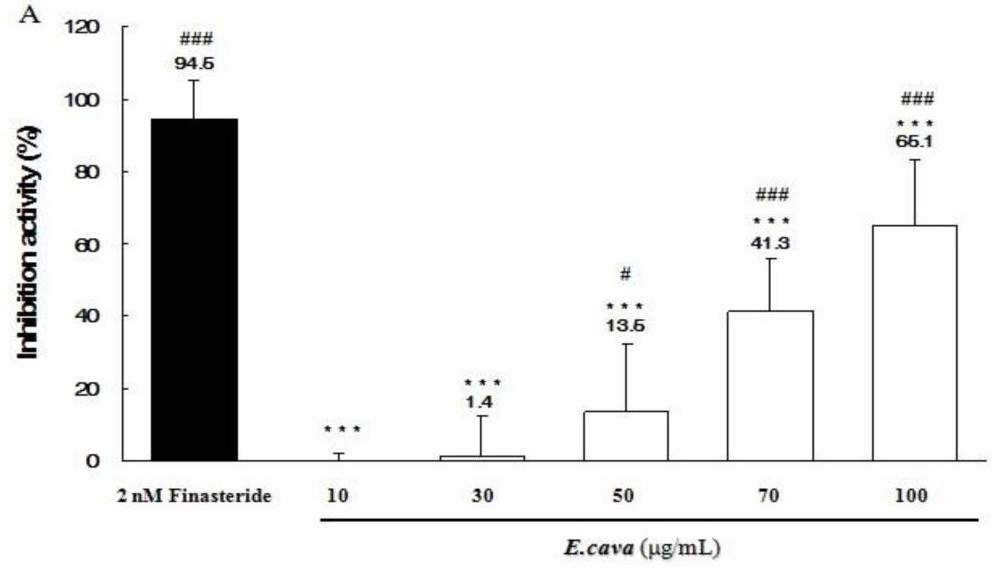
Figure 4: Inhibition activity of Ecklonia cava against 5-ɑ-reductase. Adapted from Figure 5.[18]Kang, J. I., Kim, S. C., Kim, M. K., et al. (2012). Effect of Dieckol, a Component of Ecklonia cava, on the Promotion of Hair Growth. Int J Mol Sci. 13(5). 6407-6423. Available at: … Continue reading Image used in line with the Creative Commons License.
In the same study, daily topical application of 0.4% Ecklonia cava for 33 days stimulated active hair growth in the hair follicles of mice.[19]Kang, J. I., Kim, S. C., Kim, M. K., et al. (2012). Effect of Dieckol, a Component of Ecklonia cava, on the Promotion of Hair Growth. Int J Mol Sci. 13(5). 6407-6423. Available at: … Continue reading Although hair growth was not as substantial as in mice receiving 5% minoxidil, the study shows the potential of topical Ecklonia cava as a natural hair loss ingredient.
However, clinical trials in humans showing the effectiveness of Ecklonia cava as a DHT blocker and hair loss product are unfortunately absent. Until then, Ecklonia cava can only be stated as an effective DHT blocker in vitro (in the test tube).
Our evidence score – 8/100 (shampoo)
Example Ecklonia cava shampoos:
- Zenluca Hair Growth Stimulating Shampoo – €19,95 ($23.38)
- Neofollics Hair Growth Stimulating Shampoo – $32.84
4. Oleanolic Acid Shampoo
Oleanolic acid is a natural compound found in many plants, fruits, and herbs. It is a natural inhibitor of 5-ɑ-reductase. At a 2014 conference, researchers reported that formulations of 3% oleanolic acid were found to inhibit 5-ɑ-reductase by 68% and inactivated 54% of testosterone conversion to DHT.[20]Ashtiani, H. A., Ehsani, A. H., Brikbin, B., Krimlou, Z., Pouya, F. B. (no date). Effectiveness of the formulation that containing oleanolic acid 3% on inhibition of 5-and#945; reductase activity on … Continue reading
While this report might sound positive, the research has not been submitted for peer review and publication. Thus, the robustness of these findings is questionable.
There is, however, in vivo evidence to support the DHT-blocking activity of oleanolic acid. In a study using mice, topical oleanolic acid was found to not only promote hair growth but to also reduce the levels of 5-ɑ-reductase and DHT in blood.[21]Zhang, B., Zhang, W., Luo, J., et al. (2023). Effects of oleanolic acid on hair growth in mouse dorsal skin mediated via regulation of inflammatory cytokines. J Appl Biomed. 21(1). 48-57. Available … Continue reading
Clinical evidence with humans is also available. In a trial examining the effectiveness of a topical hair loss lotion that included oleanolic acid, participants were found to have reduced hair shedding.[22]Garre Contreras, A., Piquero-Casals, J., Trullas, C., Martinez, G. (2018). Efficacy and Safety of a New Topical Hair Loss-Lotion Containing Oleanolic Acid, Apigenin, Biotinyl Tripeptide-1, … Continue reading Of course, this was a multi-ingredient lotion, so it is hard to attribute this to the effect of oleanolic acid alone. However, this does suggest topical application of oleanolic acid could be promising as a hair loss ingredient, and clinical trials with an oleanolic acid shampoo are warranted.
Our evidence score – 7/100 (shampoo)
Example oleanolic acid shampoos:
- Nourkrin Shampoo – $16.53
- Keeps Thickening Shampoo – $24
- DS Laboratories RADIA Purifying Shampoo for Dry, Sensitive or Irritated Scalp – $32
5. Green Tea Extract Shampoo
Green tea is a very common herbal remedy and has a multifaceted role as a DHT blocker.
Laboratory studies show that green tea extract can bind androgen receptors, preventing the binding of DHT.[23]Siddiqui, I. A., Asim, M., Hafeez, B. B., Adhami, V. M., Tarapore, R. S., Mukhtar, H. (2011). Green tea polyphenol EGCG blunts androgen receptor function in prostate cancer. FASEB J. 25(4). … Continue reading This would reduce the downstream impact of DHT-mediated hair loss.
Green tea extract has also been shown to be a 5-ɑ-reductase inhibitor in test tubes. However, when testing whether green tea extract could also inhibit 5-ɑ-reductase within cells, this was found not to be the case.[24]Hiipakka, R. A., Zhang, H. Z., Dai, W., Dai, Q., Liao, S. (2002). Structure-activity relationships for inhibition of human 5alpha-reductases by polyphenols. Biochem Pharmacol. 63(6). 1165-1176. … Continue reading,[25]Liao, S. S., Hiipakka, R. A. (1995). Selective-Inhibition of Steroid 5 α-Reductase Isozymes by Tea Epicatechin-3-Gallate and Epigallocatechin-3-Gallate. Biochem Biophys Res Commun. 214(3). 833-838. … Continue reading
What cell studies do show, however, is that green tea extract can dampen the downstream effects of DHT. In hair follicle cells, green tea extract can protect against DHT-induced death and lack of growth.[26]Shin, S., Kim, K., Lee, M. J., et al. (2016). Epigallocatechin Gallate-Mediated Alteration of the MicroRNA Expression Profile in 5α-Dihydrotestosterone-Treated Human Dermal Papilla Cells. Ann … Continue reading
The DHT-blocking mechanisms characterised for green tea appear to translate to in vivo DHT-blocking. Dietary intake of green tea, along with soy compounds, was found to reduce DHT levels in mice. However, intake of green tea alone was found to actually increase DHT.[27]Zhou, J. R., Yu, L., Zhong, Y., Blackburn, G. L. (2003). Soy Phytochemicals and Tea Bioactive Components Synergistically Inhibit Androgen-Sensitive Human Prostate Tumors in Mice. J Nutr. 133(2). … Continue reading This suggests whole green tea, instead of green tea extract, may not effectively block DHT.
For now, there is a lack of large, randomized controlled trials to indicate whether green tea extract, whether topical or oral, can effectively block DHT in humans. Thus, in a shampoo, its role is best considered mechanistically possible but not yet proven.
Our evidence score – 6/100 (shampoo)
Example green tea extract shampoos:
- DrFormulas Best DHT Blocker Shampoo – $20.41
- Keeps Thickening Shampoo – $24
- Neofollics Hair Growth Stimulating Shampoo – $32.84
6. Sulforaphane Shampoo
Sulforaphane is a plant-derived compound known as a phytochemical. It is known for its antioxidant, anti-inflammatory, and even potential anti-cancer properties, and may have a novel mechanism for promoting hair growth as well.
In the laboratory, sulforaphane has been shown to increase the concentration of an enzyme that can degrade DHT, known as 3α-hydroxysteroid dehydrogenase.[28]Park, Y., Choi, K., Kim, H., Lee, J., Park, G., Kim, J., (2021). Sulforaphane, L-Menthol, and Dexpanthenol as a Novel Active Cosmetic Ingredient Composition for Relieving Hair Loss Symptoms. … Continue reading
But does this mean it can actually promote hair growth? In the same study, the hair growth potential of sulforaphane as a conditioner in those with androgenic alopecia was examined in an 18-week clinical trial.
The trial found that there was an 87% increase in visual hair growth at the crown and forehead line, and an increase in the number of hair follicles. While this was found to be statistically significant, it should be noted that this only translated to a difference of +2 hairs on average at 18 weeks compared to day one.
To make conclusions about the potential of sulforaphane against hair loss, we need more robust clinical trials. We also need more evidence of its use as a shampoo; the trial above used sulforaphane as a conditioner, where it would have had minimal contact with the scalp compared with a shampoo.
Figure 4: Five images per time point showing the scalp at baseline (0 week) and following use of a sulforaphane conditioner for 6, 12, and 18 weeks. Adapted from Figure 5.[29]Park, Y., Choi, K., Kim, H., Lee, J., Park, G., Kim, J., (2021). Sulforaphane, L-Menthol, and Dexpanthenol as a Novel Active Cosmetic Ingredient Composition for Relieving Hair Loss Symptoms. … Continue reading. Image obtained in line with the Creative Commons License.
If you want to learn more about sulforaphane for hair loss, read our article here.
Our evidence score – 4/100 (shampoo)
Currently, there are no sulforaphane shampoos on the market.
7. Melatonin Shampoo
Melatonin is not a traditional DHT blocker. It does not inhibit 5‑α‑reductase or bind with androgen receptors. Instead, melatonin appears to reduce the DNA changes that occur when androgen receptors are activated.[30]Hao, L., Dong, Y., Zhang, J. J., et al. (2022). Melatonin decreases androgen-sensitive prostate cancer growth by suppressing SENP1 expression. Transl Androl Urol. 11(1). 91-103. Available at: … Continue reading
This has been studied in relation to prostate cancer, but it could also mean that when DHT binds androgen receptors, the receptors are not able to signal DNA changes that may result in hair loss.
Melatonin has also been shown to reduce androgen levels in cells of the ovary.[31]Yu, K., Wang, R. X., Li, M. H., et al. (2019). Melatonin Reduces Androgen Production and Upregulates Heme Oxygenase-1 Expression in Granulosa Cells from PCOS Patients with Hypoestrogenia and … Continue reading Although not hair follicle cells, this suggests melatonin could similarly reduce androgens (like DHT) at the scalp.
Unfortunately, there isn’t any evidence to show that application of melatonin results in reduced blood DHT levels, but topical application of 0.1% melatonin has shown to decrease the rate of active hair loss for patients with early androgenic alopecia. However, not all results were statistically significant.[32]Fischer, T.W., Burmeister, G., Schmidt, H.W. and Elsner, P. (2004). Melatonin increases anagen hair rate in women with androgenetic alopecia or diffuse alopecia. British Journal of Dermatology. … Continue reading
A subsequent study analysing the results of five clinical studies using topical melatonin concluded that, overall, melatonin is an effective ingredient for androgenic alopecia. Leave-on, topical melatonin was found to not only be safe but also increase hair density, reduce hair loss, and increase hair strength.[33]Fischer, T. W., Trüeb, R. M., Hänggi, G., Innocenti, M., Elsner, P. (2012). Topical Melatonin for Treatment of Androgenetic Alopecia. Int J Trichology. 4(4). 236-245. Available at: … Continue reading
Whether a rinse-off melatonin formula could produce similar results is not yet clear, but the topical evidence thus far indicates that melatonin could be a beneficial ingredient for androgenic alopecia.
Our evidence score – 4/100
Example melatonin shampoos:
- As I am Rosemary Shampoo – $9.99
- RevivSerums RevivHair Stimulating Shampoo – $29.00
- Kenogen Hair Growth Shampoo – $59.00
8. Saw Palmetto Shampoo
Saw palmetto is a plant native to the United States. In the laboratory, extracts of saw palmetto have been found to inhibit the activity of 5‑α‑reductase.[34]Blair, H. A. (2022). Hexanic Extract of Serenoa repens (Permixon®): A Review in Symptomatic Benign Prostatic Hyperplasia. Drugs Aging. 39(3). 235-243. Available at: … Continue reading,[35]Buonocore, D., Verri, M., Cattaneo, L., Arnica, S., Ghitti, M., Dossena, M. (2018). Serenoa repens extracts: In vitro study of the 5α-reductase activity in a co-culture model for Benign Prostatic … Continue reading The effectiveness of saw palmetto has also been shown outside the lab. Oral administration of saw palmetto extracts at 320 mg per day has been shown to reduce DHT levels in male participants, confirming that saw palmetto can indeed inhibit 5‑α‑reductase when ingested.[36]Di Silverio, F., Monti, S., Sciarra, A., et al. (1998). Effects of long-term treatment with Serenoa repens (Permixon®) on the concentrations and regional distribution of androgens and epidermal … Continue reading
In clinical trials, the topical application of saw palmetto for hair loss has received mixed results. Application of saw palmetto as a lotion has shown to marginally increase hair number compared to a placebo lotion after 50 weeks in those with androgenic alopecia.[37]Morganti, P., Fabrizi, G., James, B., Bruno, C. (1998). Effect of gelatin-cystine and serenoa repens extract on free radicals level and hair growth. Journal of Applied Cosmetology. 16, 57-64. … Continue reading. It has also been observed that androgenic alopecia patients had improved hair strength and slightly thicker hair after application of a saw palmetto oil for 16 weeks.[38]Sudeep, H.V., Rashmi, S., Jestin, T.V., Richards, A., Gouthamchandra, K., Shyamprasad, K. (2023). Oral and Topical Administration of a Standardized Saw Palmetto Oil Reduces Hair Fall and Improves the … Continue reading
Based on the evidence, saw palmetto seems a promising natural ingredient for promoting hair growth. But it should be considered that both of the outlined trials appeared to count terminal hairs (i.e., long, thick hairs that contribute to hair fullness) as well as vellus hairs (i.e., fine “peach fuzz” hairs that don’t contribute to hair fullness), and use a leave-on formula, so the results are only tentative and do not justify the purchase of a rinse-off saw palmetto shampoo.
However, the foundation is there for future clinical studies to build on these results and provide the proof-of-concept evidence needed to determine whether a saw palmetto shampoo can be effective against hair loss.
Our evidence score – 4/100 (shampoo)
Example saw palmetto shampoos:
- DrFormulas Best DHT Blocker Shampoo – $20.41
- Advanced Trichology DHT-Blocking Shampoo – $27.95
- Shapiro MD DHT Fighting Shampoo – $39.95
9. Pumpkin Seed Oil Shampoo
In the laboratory, pumpkin seed oil has been identified as a moderate inhibitor of 5-α-reductase and can interact with androgen receptors, preventing the conversion of testosterone to DHT and the binding of DHT. At 5 mg per mL, pumpkin seed oil could inhibit 5-α-reductase 70-95%.[39]Heim, S., Seibt, S., Stier, H., Moré, M. I. (2018). Uromedic® Pumpkin Seed Derived Δ7-Sterols, Extract and Oil Inhibit 5α-Reductases and Bind to Androgen Receptor in Vitro. Pharmacol Pharm. 9(6). … Continue reading
There are no studies demonstrating that pumpkin seed oil reduces DHT levels in humans. Administration of pumpkin seed oil extracts to rats has shown to reduce 5-α-reductase levels, showing that the outcomes of laboratory experiments in vitro are matched in vivo.[40]Kang, X. C., Chen, T., Zhou, J. L., et al. (2021). Phytosterols in hull-less pumpkin seed oil, rich in ∆7-phytosterols, ameliorate benign prostatic hyperplasia by lowing 5α-reductase and … Continue reading
In a clinical trial of 60 women with androgenic alopecia, topical application of a pumpkin seed oil foam for three months increased the number of regrowing hairs compared to baseline, but not as much as 5% minoxidil. It should be noted that upright growing hairs aren’t the best endpoint for assessing outcomes, since these come and go with the natural hair cycle. Additionally, this study featured no placebo group, so whether these results were substantial against no treatment at all is unknown.[41]Ibrahim, I. M., Hasan, M. S., Elsabaa, K. I., Elsaie, M. L. (2021). Pumpkin seed oil vs. minoxidil 5% topical foam for the treatment of female pattern hair loss: A randomized comparative trial. J … Continue reading
Nonetheless, the trial suggests topical pumpkin seed oil has the potential to support hair growth, but without further clinical studies, it is simply a marketing ingredient, not a science-backed one.
Our evidence score – 4/100 (shampoo)
Example pumpkin seed oil shampoos:
- BosleyMD Revive Nourishing Shampoo – $21.25
- Roman Revive Shampoo – $24
- Botanical Green Care Saw Palmetto & Cayenne Anti-Hair Loss Shampoo – $36.99
10. Rosemary Oil Shampoo
Rosemary oil is an essential oil and a common ingredient in products marketed towards hair loss.
In the laboratory, rosemary oil extract has been found to inhibit the activity of 5-ɑ-reductase. Rosemary oil extract has also been shown to potentially prevent the interaction of DHT with androgen receptors, both effects resulting in improved hair growth in mice compared to control.[42]Murata, K., Noguchi, K., Kondo, M., et al. (2013). Promotion of hair growth by Rosmarinus officinalis leaf extract. Phytother Res PTR. 27(2). 212-217. Available at: https://doi.org/10.1002/ptr.4712
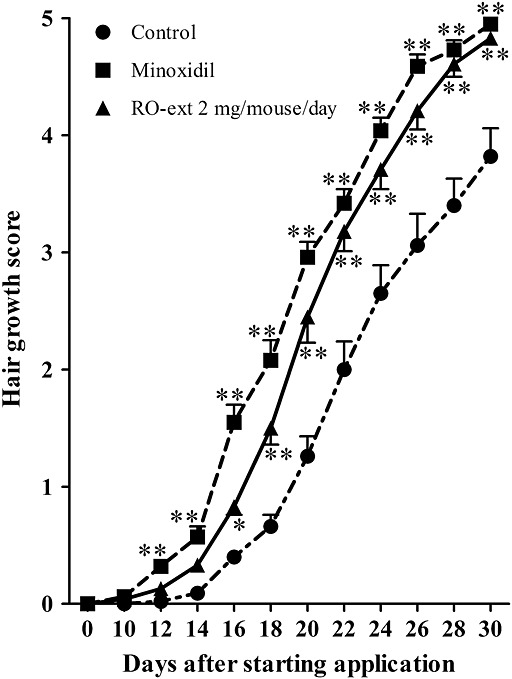
Figure 3: Effect of rosemary oil extract (RO-ext) and 1% minoxidil on hair regrowth in mice compared against control groups with no treatment. Adapted from Figure 4.[43]Murata, K., Noguchi, K., Kondo, M., et al. (2013). Promotion of hair growth by Rosmarinus officinalis leaf extract. Phytother Res PTR. 27(2). 212-217. Available at: https://doi.org/10.1002/ptr.4712 Image obtained in line with the Creative Commons License.
Research is needed to test whether the same effect occurs within humans, although clinical trials with this essential oil do indicate that rosemary oil works similarly within the body.
Namely, a clinical trial with androgenic alopecia patients has shown that rosemary oil can increase hair count by a similar amount to 2% minoxidil following topical application for six months. However, while the results sound great, increases were not substantial in either group compared to baseline hair counts.[44]Panahi, Y., Taghizadeh, M., Marzony, E. T., & Sahebkar, A. (2015). Rosemary oil vs minoxidil 2% for the treatment of androgenetic alopecia: a randomized comparative trial. Skinmed. 13(1). … Continue reading This would suggest:
- Rosemary oil only marginally improves hair count
- There may be quality issues with the data and conclusions, as minoxidil should significantly and progressively support hair growth over this time frame.
As it stands, there is some evidence to suggest that rosemary oil might have some action on DHT, but further clinical studies are needed to validate these results and indicate whether rosemary oil could be equally as effective when applied as a shampoo.
Our evidence score – 4/100 (shampoo)
Example rosemary oil shampoos:
- Ulo Thickening Shampoo – $21.75
- Dandrene Exfoliating Anti-Dandruff Shampoo – $32
- Neofollics Scalp Therapy Exfoliating Shampoo – $32.84
Is a DHT-Blocking Shampoo Worth It?
Unlike supplements or leave-on topical products, shampoos have a short contact time with the scalp and are rinsed off quickly. Shampoos are also often used inconsistently. This does not give ample time or enough repeated exposure for ingredients to properly absorb into the scalp and affect hair growth.
Some DHT-blocking ingredients show promise when used topically. However, there is limited evidence, laboratory or clinical, to show that they would have the same effect in a shampoo, except for ketoconazole.
DHT-blocking shampoos contain a range of herbal extracts that may help hair look healthier and feel softer. If you find your DHT-blocking shampoo gives your hair a physical appearance boost, feel free to keep using it. However, the evidence for the use of DHT-blocking shampoos in hair loss regimens does not stack up with claims of hair regrowth when used alone.
If you are interested in DHT-blocking, seek out FDA-approved oral DHT blockers such as finasteride, dutasteride, bicalutamide, flutamide, or spironolactone. If you want a chemical-free formula, find topical lotions, serums, or oils with DHT-blocking ingredients instead of shampoos. Both of these formulations offer longer contact time in and outside the body.
However, DHT-blocking shampoos could be used alongside FDA-approved hair loss treatments or leave-on products with DHT-blocking ingredients if you choose, just do not rely on these shampoos alone to treat hair loss.
Final Remarks
When considering a DHT-blocking shampoo, ingredient choice matters more than marketing. Ingredients like ketoconazole have the best evidence behind them to support their use in an anti-hair loss product.
But it’s not just the ingredients that matter, it’s the formulation as well. DHT blockers are more often incorporated into supplements and FDA-approved medications. This allows the ingredients to work from deep inside the body. Shampoos instead rely on repeated, short-term exposure to deliver the ingredients.
Shampoo exposure like this may influence local DHT levels at the scalp, generally improve the scalp environment, and slow the progression of androgenic alopecia, but it will not act as a re-growth formula, and use of shampoo is unlikely to resolve androgenic alopecia when used alone.
References[+]
References ↑1 Ustuner, E. T. (2013). Cause of Androgenic Alopecia: Crux of the Matter. Plast Reconstr Surg Glob Open. 1(7). e64. Available at: https://doi.org/10.1097/GOX.0000000000000005 ↑2 Sekhavat, H., Bar Yehuda, S., Asotra, S. (2025). Using the Mechanisms of Action Involved in the Pathogenesis of Androgenetic Alopecia to Treat Hair Loss. Int J Mol Sci. 26(21). 10712. Available at: https://doi.org/10.3390/ijms262110712 ↑3 Perez, H.B.S. (2004). Ketoconazole as an Adjunct to Finasteride in the Treatment of Androgenetic Alopecia in Men. Medical Hypotheses. 62(1). 112-115. Available at: https://doi.org/10.1016/s0306-9877(03)00264-0 ↑4 Khandpur, S., Suman, M., Reddy, B.S. (2002). Comparative Efficacy of Various Treatment Regimens for Androgenetic Alopecia in Men. Journal of Dermatology. 29(8). 489-498. Available at: https://doi.org/10.1111/j.1346-8138.2002.tb00314.x ↑5 Rafi, A.W., Katz, R.M. (2011). Pilot Study of 15 Patients Receiving a New Treatment Regimen for Androgenic Alopecia: The Effects of Atopy on AGA. ISRN Dermatology. 2011. 241953. Available at: https://doi.org/10.5402/2011/241953 ↑6 Prohic, A., Simic, D., Sadikovic, T.J., Krupalija-Fazlic, M. (2014). Distribution of Malassezia Species on Healthy Human Skin in Bosnia and Herzegovina: Correlation With Body Part, Age and Gender. Iranian Journal of Microbiology. 6(4). 253-262 ↑7 Piérard-Franchimont, C., De Doncker, P., Cauwenbergh, G., Piérard, G.E. (1998). Ketoconazole Shampoo: Effect of Long-Term Use in Androgenic Alopecia. Dermatology. 196(4). 474-477. Available at: https://doi.org/10.1159/000017954 ↑8 Hugo Perez, B. S. (2004). Ketocazole as an adjunct to finasteride in the treatment of androgenetic alopecia in men. Med Hypotheses. 62(1). 112-115. Available at: https://doi.org/10.1016/S0306-9877(03)00264-0 ↑9 Piérard-Franchimont, C., De Doncker, P., Cauwenbergh, G., Piérard, G. E. (1998). Ketoconazole Shampoo: Effect of Long-Term Use in Androgenic Alopecia. Dermatology. 196(4). 474-477. Available at: https://doi.org/10.1159/000017954 ↑10 Fields, J. R., Vonu, P. M., Monir, R. L., Schoch, J. J. (2020). Topical ketoconazole for the treatment of androgenetic alopecia: A systematic review. Dermatol Ther. 33(1). e13202. Available at: https://doi.org/10.1111/dth.13202 ↑11 Murata, K., Takeshita, F., Samukawa, K., Tani, T. and Matsuda, H. (2012). Effects of ginseng rhizome and ginsenoside Ro on testosterone 5α-reductase and hair re-growth in testosterone-treated mice. Phytotherapy Research. 26(1). 48–53. Available at: https://doi.org/10.1002/ptr.3511 ↑12 Park, J. Y., Park, W. Y., Song, G., et al. (2023). Panax ginseng C.A. meyer alleviates benign prostatic hyperplasia while preventing finasteride-induced side effects. Front Pharmacol. 14. Available at: https://doi.org/10.3389/fphar.2023.1039622 ↑13 Park, H. K., Kim, S. K., Lee, S. W., et al. (2017). A herbal formula, comprising Panax ginseng and bee-pollen, inhibits development of testosterone-induced benign prostatic hyperplasia in male Wistar rats. Saudi J Biol Sci. 24(7). 1555-1561. Available at: https://doi.org/10.1016/j.sjbs.2015.10.020 ↑14 Kim, J.H., Yi, S.M., Choi, J.E. and Son, S.W. (2009). Study of the efficacy of Korean red ginseng in the treatment of androgenic alopecia. Journal of Ginseng Research. 33(3). 223–228. Available at: https://doi.org/10.5142/JGR.2009.33.3.223 ↑15 Ryu, H.J., Yoo, M.G. and Son, S.W. (2014). The efficacy of 3% minoxidil vs. combined 3% minoxidil and Korean red ginseng in treating female pattern alopecia. International Journal of Dermatology. 53(6). e340–e342. Available at: https://doi.org/10.1111/ijd.12359 ↑16 Park, G. H., Park, K. Y., Cho, H. I., et al. (2015). Red Ginseng Extract Promotes the Hair Growth in Cultured Human Hair Follicles. J Med Food. 18(3). 354-362. Available at: https://doi.org/10.1089/jmf.2013.3031 ↑17, ↑18, ↑19 Kang, J. I., Kim, S. C., Kim, M. K., et al. (2012). Effect of Dieckol, a Component of Ecklonia cava, on the Promotion of Hair Growth. Int J Mol Sci. 13(5). 6407-6423. Available at: https://doi.org/10.3390/ijms13056407 ↑20 Ashtiani, H. A., Ehsani, A. H., Brikbin, B., Krimlou, Z., Pouya, F. B. (no date). Effectiveness of the formulation that containing oleanolic acid 3% on inhibition of 5-and#945; reductase activity on skin of patients with acne. J Clin Exp Dermatol Res. Available at: https://doi.org/10.4172/2155-9554.S1.015 ↑21 Zhang, B., Zhang, W., Luo, J., et al. (2023). Effects of oleanolic acid on hair growth in mouse dorsal skin mediated via regulation of inflammatory cytokines. J Appl Biomed. 21(1). 48-57. Available at: https://doi.org/10.32725/jab.2023.003 ↑22 Garre Contreras, A., Piquero-Casals, J., Trullas, C., Martinez, G. (2018). Efficacy and Safety of a New Topical Hair Loss-Lotion Containing Oleanolic Acid, Apigenin, Biotinyl Tripeptide-1, Diaminopyrimidine Oxide, Adenosine, Biotin and Ginkgo biloba in Patients with Androgenetic Alopecia and Telogen effluvium: A Six-month Open-Label Prospective Clinical Study. J Cosmetol Trichology. 04. Available at: https://doi.org/10.4172/2471-9323.1000132 ↑23 Siddiqui, I. A., Asim, M., Hafeez, B. B., Adhami, V. M., Tarapore, R. S., Mukhtar, H. (2011). Green tea polyphenol EGCG blunts androgen receptor function in prostate cancer. FASEB J. 25(4). 1198-1207. Available at: https://doi.org/10.1096/fj.10-167924 ↑24 Hiipakka, R. A., Zhang, H. Z., Dai, W., Dai, Q., Liao, S. (2002). Structure-activity relationships for inhibition of human 5alpha-reductases by polyphenols. Biochem Pharmacol. 63(6). 1165-1176. Available at: https://doi.org/10.1016/s0006-2952(02)00848-1 ↑25 Liao, S. S., Hiipakka, R. A. (1995). Selective-Inhibition of Steroid 5 α-Reductase Isozymes by Tea Epicatechin-3-Gallate and Epigallocatechin-3-Gallate. Biochem Biophys Res Commun. 214(3). 833-838. Available at: https://doi.org/10.1006/bbrc.1995.2362 ↑26 Shin, S., Kim, K., Lee, M. J., et al. (2016). Epigallocatechin Gallate-Mediated Alteration of the MicroRNA Expression Profile in 5α-Dihydrotestosterone-Treated Human Dermal Papilla Cells. Ann Dermatol. 28(3). 327-334. Available at: https://doi.org/10.5021/ad.2016.28.3.327 ↑27 Zhou, J. R., Yu, L., Zhong, Y., Blackburn, G. L. (2003). Soy Phytochemicals and Tea Bioactive Components Synergistically Inhibit Androgen-Sensitive Human Prostate Tumors in Mice. J Nutr. 133(2). 516-521. Available at: https://doi.org/10.1093/jn/133.2.516 ↑28, ↑29 Park, Y., Choi, K., Kim, H., Lee, J., Park, G., Kim, J., (2021). Sulforaphane, L-Menthol, and Dexpanthenol as a Novel Active Cosmetic Ingredient Composition for Relieving Hair Loss Symptoms. Cosmetics. 8(3). 63. Available at: https://doi.org/10.3390/cosmetics8030063 ↑30 Hao, L., Dong, Y., Zhang, J. J., et al. (2022). Melatonin decreases androgen-sensitive prostate cancer growth by suppressing SENP1 expression. Transl Androl Urol. 11(1). 91-103. Available at: https://doi.org/10.21037/tau-21-1110 ↑31 Yu, K., Wang, R. X., Li, M. H., et al. (2019). Melatonin Reduces Androgen Production and Upregulates Heme Oxygenase-1 Expression in Granulosa Cells from PCOS Patients with Hypoestrogenia and Hyperandrogenia. Oxid Med Cell Longev. 2019. 8218650. Available at: https://doi.org/10.1155/2019/8218650 ↑32 Fischer, T.W., Burmeister, G., Schmidt, H.W. and Elsner, P. (2004). Melatonin increases anagen hair rate in women with androgenetic alopecia or diffuse alopecia. British Journal of Dermatology. 150(2). 341–345. Available at: https://doi.org/10.1111/j.1365-2133.2004.05685.x ↑33 Fischer, T. W., Trüeb, R. M., Hänggi, G., Innocenti, M., Elsner, P. (2012). Topical Melatonin for Treatment of Androgenetic Alopecia. Int J Trichology. 4(4). 236-245. Available at: https://doi.org/10.4103/0974-7753.111199 ↑34 Blair, H. A. (2022). Hexanic Extract of Serenoa repens (Permixon®): A Review in Symptomatic Benign Prostatic Hyperplasia. Drugs Aging. 39(3). 235-243. Available at: https://doi.org/10.1007/s40266-022-00924-3 ↑35 Buonocore, D., Verri, M., Cattaneo, L., Arnica, S., Ghitti, M., Dossena, M. (2018). Serenoa repens extracts: In vitro study of the 5α-reductase activity in a co-culture model for Benign Prostatic Hyperplasia. Arch Ital Urol Androl Organo Uff Soc Ital Ecogr Urol E Nefrol. 90(3). 199-202. Available at: https://doi.org/10.4081/aiua.2018.3.199 ↑36 Di Silverio, F., Monti, S., Sciarra, A., et al. (1998). Effects of long-term treatment with Serenoa repens (Permixon®) on the concentrations and regional distribution of androgens and epidermal growth factor in benign prostatic hyperplasia. The Prostate. 37(2). 77-83. Available at: https://doi.org/10.1002/(sici)1097-0045(19981001)37:2<77::aid-pros3>3.0.co;2-i ↑37 Morganti, P., Fabrizi, G., James, B., Bruno, C. (1998). Effect of gelatin-cystine and serenoa repens extract on free radicals level and hair growth. Journal of Applied Cosmetology. 16, 57-64. Available at: https://www.researchgate.net/publication/294672324_Effect_of_gelatin-cystine_and_serenoa_repens_extract_on_free_radicals_level_and_hair_growth ↑38 Sudeep, H.V., Rashmi, S., Jestin, T.V., Richards, A., Gouthamchandra, K., Shyamprasad, K. (2023). Oral and Topical Administration of a Standardized Saw Palmetto Oil Reduces Hair Fall and Improves the Hair Growth in Androgenetic Alopecia Subjects – A 16-Week Randomized, Placebo-Controlled Study. Clin Cosmet Investig Dermatol. 16, 3251-3266. Available at: https://doi.org/10.2147/CCID.S435795 ↑39 Heim, S., Seibt, S., Stier, H., Moré, M. I. (2018). Uromedic® Pumpkin Seed Derived Δ7-Sterols, Extract and Oil Inhibit 5α-Reductases and Bind to Androgen Receptor in Vitro. Pharmacol Pharm. 9(6). 193-207. Available at: https://doi.org/10.4236/pp.2018.96015 ↑40 Kang, X. C., Chen, T., Zhou, J. L., et al. (2021). Phytosterols in hull-less pumpkin seed oil, rich in ∆7-phytosterols, ameliorate benign prostatic hyperplasia by lowing 5α-reductase and regulating balance between cell proliferation and apoptosis in rats. Food Nutr Res. 65. 10.29219/fnr.v65.7537. Available at: https://doi.org/10.29219/fnr.v65.7537 ↑41 Ibrahim, I. M., Hasan, M. S., Elsabaa, K. I., Elsaie, M. L. (2021). Pumpkin seed oil vs. minoxidil 5% topical foam for the treatment of female pattern hair loss: A randomized comparative trial. J Cosmet Dermatol. 20(9). 2867-2873. Available at: https://doi.org/10.1111/jocd.13976 ↑42 Murata, K., Noguchi, K., Kondo, M., et al. (2013). Promotion of hair growth by Rosmarinus officinalis leaf extract. Phytother Res PTR. 27(2). 212-217. Available at: https://doi.org/10.1002/ptr.4712 ↑43 Murata, K., Noguchi, K., Kondo, M., et al. (2013). Promotion of hair growth by Rosmarinus officinalis leaf extract. Phytother Res PTR. 27(2). 212-217. Available at: https://doi.org/10.1002/ptr.4712 ↑44 Panahi, Y., Taghizadeh, M., Marzony, E. T., & Sahebkar, A. (2015). Rosemary oil vs minoxidil 2% for the treatment of androgenetic alopecia: a randomized comparative trial. Skinmed. 13(1). 15–21. Available at: https://pubmed.ncbi.nlm.nih.gov/25842469/ Here’s a story we see all the time. You’ve been using finasteride, saw some initial improvement or stabilization, but now your hair regrowth is plateauing, you’re still noticing miniaturization, and wondering whether it’s time to switch to dutasteride.
On the surface, the logic is simple. Dutasteride suppresses DHT more than finasteride, and in head-to-head studies, it usually improves hair counts and thickness more. But switching doesn’t just change potential results. It changes how long the drug continues to suppress DHT after discontinuation, how quickly you can evaluate whether it’s helping (or causing side effects), and how easily you can adjust or exit the treatment if needed.
Many people think of this switch as changing one variable. In reality, switching from finasteride to dutasteride can involve changing multiple variables at once: oral versus topical delivery, dose equivalence, absorption variability, drug persistence (half-life), transition strategy, and expectations for timelines. Each of these can alter both outcomes and tolerability.
This article breaks down the real-world trade-offs of switching from finasteride to dutasteride, compares the most common transition scenarios (oral-to-oral, topical-to-topical, and cross-route switches), explains what to expect, and offers our perspective on which decisions are evidence-based and which require a little more skepticism.
Interested in Oral Dutasteride?
Oral Dutasteride Hair gains bigger than finasteride? Dutasteride makes this possible, if prescribed*
Take the next step in your hair regrowth journey. Get started today with a provider who can prescribe a topical solution tailored for you.
*Only available in the U.S. Prescriptions not guaranteed. Restrictions apply. Off-label products are not endorsed by the FDA.
Biology of Finasteride and Dutasteride
DHT is the key androgen driving follicular miniaturization in androgenic alopecia (AGA). An enzyme called 5α‑reductase (5AR) in the hair follicle converts testosterone to DHT. Because DHT is known to drive hair loss progression, many treatments for AGA target 5AR to reduce scalp DHT levels.[1]Asfour, L., Cranwell, W., & Sinclair, R. (2023). Male androgenetic alopecia. *Endotext [Internet].* Available at: https://www.ncbi.nlm.nih.gov/books/NBK278957/ Dutasteride blocks both Type I and Type II 5AR, leading to more DHT suppression than finasteride, which only targets Type II.
Oral finasteride is most commonly prescribed at 1 mg daily for AGA, while oral dutasteride is typically taken at 0.5 mg daily. Topical formulations were developed later to change the risk profile without affecting the mechanism. Instead of lowering DHT systemically by default, topical finasteride was designed to concentrate drug activity in the scalp while limiting how much reaches the bloodstream. Topical dutasteride represents the newest and least mature category, but evidence is promising. Because dutasteride is more potent than finasteride, even very low topical concentrations (around 0.01-0.05%) can meaningfully suppress scalp DHT.

Figure 1. The structures of finasteride and dutasteride.[2]Wikimedia Commons. (n.d.). Azasteroid Pharmaceuticals [Image]. *Wikimedia Commons.* Available at: https://commons.wikimedia.org/wiki/File:Azasteroid_Pharmaceuticals.png (Accessed: November 2025) Image in the Public Domain.
Switching Scenarios
There are many treatment options for both dutasteride and finasteride, each with different trade-offs. We’ll compare the available clinical evidence across formulations and break down the most common switching scenarios, highlighting four core considerations: expected efficacy, side-effect profile, commitment and washout dynamics, and strength of evidence.
Key Takeaways:
- Oral finasteride to oral dutasteride: the most evidence-backed upgrade.
- Oral finasteride to topical dutasteride: one study suggests improvement, but we’re skeptical about the data.
- Topical finasteride to topical dutasteride: largely guesswork, with no direct comparative trials.
- Topical finasteride to oral dutasteride: no comparative studies, but surrogate evidence suggests a gain in efficacy.
- Oral dutasteride to topical finasteride: no direct studies, but surrogate data suggests a likely loss in efficacy.
These answers can all change when you account not just for drug switches or formulation switches, but also the dose.
Oral Finasteride to Oral Dutasteride
This is the cleanest and most evidence-supported switch. Four major comparative randomized controlled trials (RCTs) provide direct comparisons between oral finasteride and oral dutasteride at commonly used doses.
Efficacy
Here is a summary of the clinical trials that compare oral finasteride and dutasteride treatment directly:
Study Study Design and Population Treatments Study #1[3]Olsen, E. A., Hordinsky, M., Whiting, D., Stough, D., Hobbs, S., Ellis, M. L., Wilson, T., Rittmaster, R. S., & Dutasteride Alopecia Research Team. (2006). The importance of dual 5α-reductase … Continue reading Randomized, placebo-controlled, double-blinded trial. 415 men with male pattern hair loss aged 21-45 years old; 24 weeks. 5 mg oral finasteride; 0.05, 0.1, 0.5, or 2.5 mg oral dutasteride; placebo. Study #2[4]Harcha, W. G., Barboza Martínez, J., Tsai, T.-F., Katsuoka, K., Kawashima, M., Tsuboi, R., Barnes, A., Ferron-Brady, G., & Chetty, D. (2014). A randomized, active- and placebo-controlled study … Continue reading Randomized, placebo-controlled, double-blinded trial. 917 men with AGA aged 20-50; 24 weeks. 1 mg oral finasteride; 0.02, 0.1, or 0.5 mg oral dutasteride; placebo Study #3[5]Shanshanwal, S. J., & Dhurat, R. S. (2017). Superiority of dutasteride over finasteride in hair regrowth and reversal of miniaturization in men with androgenetic alopecia: a randomized controlled … Continue reading Open-label, randomized study; no placebo control. 90 men with AGA aged 18-40; 24 weeks. 1 mg oral finasteride; 0.5 mg oral dutasteride. Study #4[6]Choi, G.-S., Sim, W.-Y., Kang, H., Huh, C. H., Lee, Y. W., Shantakumar, S., Ho, Y.-F., et al. (2022). Long-term effectiveness and safety of dutasteride versus finasteride in patients with male … Continue reading Retrospective chart review. 600 men over 18 with AGA. 1 mg oral finasteride; 0.5 mg oral dutasteride. Across these studies, dutasteride consistently outperformed finasteride on hair parameters:
- Target-area hair counts: In Study #1 the proportion of participants with at least a 10% increase in hair counts was 41% for finasteride (5 mg), 48% for dutasteride (0.5 mg) and 56% for dutasteride (2.5 mg).[7]Olsen, E. A., Hordinsky, M., Whiting, D., Stough, D., Hobbs, S., Ellis, M. L., Wilson, T., Rittmaster, R. S., & Dutasteride Alopecia Research Team. (2006). The importance of dual 5α-reductase … Continue reading In Study #3, dutasteride (0.5 mg) significantly increased total hair count and decreased thin hair count per cm2 compared to finasteride (1 mg).[8]Shanshanwal, S. J., & Dhurat, R. S. (2017). Superiority of dutasteride over finasteride in hair regrowth and reversal of miniaturization in men with androgenetic alopecia: a randomized controlled … Continue reading Notably, Study #2 showed that dutasteride (0.5 mg) significantly increased terminal hair count compared to finasteride (1 mg).[9]Harcha, W. G., Barboza Martínez, J., Tsai, T.-F., Katsuoka, K., Kawashima, M., Tsuboi, R., Barnes, A., Ferron-Brady, G., & Chetty, D. (2014). A randomized, active- and placebo-controlled study … Continue reading
- Hair shaft diameter: Study #2 demonstrated that dutasteride (0.5 mg) was statistically superior to finasteride (1 mg) in increasing hair width.[10]Harcha, W. G., Barboza Martínez, J., Tsai, T.-F., Katsuoka, K., Kawashima, M., Tsuboi, R., Barnes, A., Ferron-Brady, G., & Chetty, D. (2014). A randomized, active- and placebo-controlled study … Continue reading
- Global photographic assessment: Across studies, investigators were more likely to rate dutasteride (0.5 mg) users as “improved” or “markedly improved” compared to those receiving finasteride (1 mg).[11]Choi, G.-S., Sim, W.-Y., Kang, H., Huh, C. H., Lee, Y. W., Shantakumar, S., Ho, Y.-F., et al. (2022). Long-term effectiveness and safety of dutasteride versus finasteride in patients with male … Continue reading
- DHT suppression: In Study #1, serum DHT levels were significantly lower with dutasteride (0.5 mg and 2.5 mg) than with finasteride (5 mg). Additionally, finasteride (5mg) decreased scalp DHT by 41%, while dutasteride (0.5 mg) decreased it by 51%, and dutasteride (2.5 mg) decreased it by 79%.[12]Olsen, E. A., Hordinsky, M., Whiting, D., Stough, D., Hobbs, S., Ellis, M. L., Wilson, T., Rittmaster, R. S., & Dutasteride Alopecia Research Team. (2006). The importance of dual 5α-reductase … Continue reading
Important caveat: Most RCTs lasted only 24 weeks. Finasteride continues to produce gains for up to 48 months in longer studies, so some of dutasteride’s apparent advantage may reflect faster onset rather than an infinite ceiling of benefit. However, longer-term observational data suggest that dutasteride maintains superiority on global classification scales.
Side-Effects
The most frequently discussed side effects of finasteride and dutasteride include:
- Sexual side effects – These include decreased libido, erectile dysfunction, and ejaculation disorders. Across randomized trials, these effects occur in a minority of users (generally in the single-digit percentages), appear most often early in treatment, and frequently resolve spontaneously, even while continuing therapy.[13]Hirshburg, J. M., Kelsey, P. A., Therrien, C. A., Gavino, A. C., & Reichenberg, J. S. (2016). Adverse effects and safety of 5-alpha reductase inhibitors (finasteride, dutasteride): a systematic … Continue reading
- Breast-related effects – Breast tenderness or enlargement has been reported, but rates are low across both drugs and typically comparable between finasteride and dutasteride.
- Other reported effects: Fatigue, mood changes, or nonspecific symptoms are occasionally reported, but these occur inconsistently, lack clear dose–response relationships, and are difficult to separate from background rates and expectation effects.
Across clinical trials, overall side-effect rates were similar for finasteride and dutasteride, averaging approximately 8-9% for both drugs. Notably, a 2019 systematic review and meta-analysis found no significant difference in adverse event rates between the two treatments, including for sexual side effects such as altered libido, erectile dysfunction, and ejaculation disorders.[14]Zhou, Z., Song, S., Gao, Z., Wu, J., Ma, J., Cui, Y. (2019). The Efficacy And Safety Of Dutasteride Compared With Finasteride In Treating Men With Androgenetic Alopecia: A Systematic Review And … Continue reading
The key difference may not be how often side effects occur, but how long drug-induced hormonal changes persist after stopping treatment. Because dutasteride remains biologically active far longer than finasteride, any changes may take longer to unwind after stopping.
Commitment & Washout Dynamics
In this article, when we discuss commitment or washout dynamics, we are referring to how long a drug continues to suppress DHT after it is stopped, not how long hair regrowth or side effects persist. This reflects how quickly the body can clear the medication and return toward baseline hormone activity once therapy is discontinued.
Dutasteride involves a higher level of commitment than finasteride because it remains biologically active for far longer. Oral dutasteride (0.5 mg daily) has a half-life of around 4-5 weeks, meaning drug activity can persist for months after discontinuation, whereas oral finasteride has a half-life of roughly 6-8 hours.
This means that dose changes or discontinuation of dutasteride lead to much slower changes in systemic DHT suppression compared with finasteride. Dutasteride is not a “try it and see how you feel in two weeks” medication. Its pharmacologic effects unwind gradually, requiring a substantially higher level of decision commitment.
Evidence Strength: Strong
Overall, the oral finasteride to oral dutasteride switch is the most evidence-supported pathway in terms of both efficacy and safety. This consistent superiority in hair outcomes is why oral dutasteride is often considered when finasteride results plateau.
If you’re a member and would like to learn more about oral dutasteride, read our ultimate guide here.
Oral Finasteride to Topical Dutasteride
At the end of 2025, the first RCT involving 135 men with AGA comparing oral finasteride (1 mg) to topical dutasteride (0.01-0.05%) over 24 weeks was published.[15]Panuganti, V.K., Kumar Madala, P., Ramalingayya Grandhi, V., Varma Alluri, C., Mohammad, J., Rao, K.S.S.V.V., Reddy Dundigalla, M., (2025). A Randomized, Double-Blind, Placebo and Active Controlled … Continue reading
The study suggested that topical dutasteride (0.05%) outperformed oral finasteride, which would represent a major shift in how we think about treatment escalation.
But, after we took a closer look at the paper, we think the findings should be interpreted with caution due to multiple concerns with their methodology.
Efficacy
In the study, several hair parameters appeared to improve more in the topical dutasteride (0.05%) group than in those receiving oral finasteride (1 mg). The authors reported an average increase of +75 hairs per cm² with topical dutasteride compared to +41 hairs per cm² with oral finasteride. Additionally, 69% of participants using topical dutasteride were rated as “improved” on global photographic assessment, compared with 21% in the oral finasteride group.
However, we think these results are likely inflated. Here are two of the major problems with this study:
#1 Baseline hair counts defy biology
The study reports baseline densities of 300+ hairs per cm² in balding men. For context, healthy, non-balding scalps have around 100-250 hairs per cm², whereas men with Norwood III-V AGA typically have around 25-100 hairs per cm² in the vertex.
This suggests they likely counted vellus hairs, mis-measured the sampling area, or used unreliable manual counting methods. This could significantly inflate improvements.
#2 The measurement circle moves
In the published images, the target circles change location, size, and shape, they appear hand-drawn, and they clearly do not track the same exact scalp area over time.
A 1-2 mm shift can change hair counts by 50%+. The study’s reported gains (10-30%) fall well within the error range of sloppy circle placement, meaning the entire efficacy signal could be measurement noise.
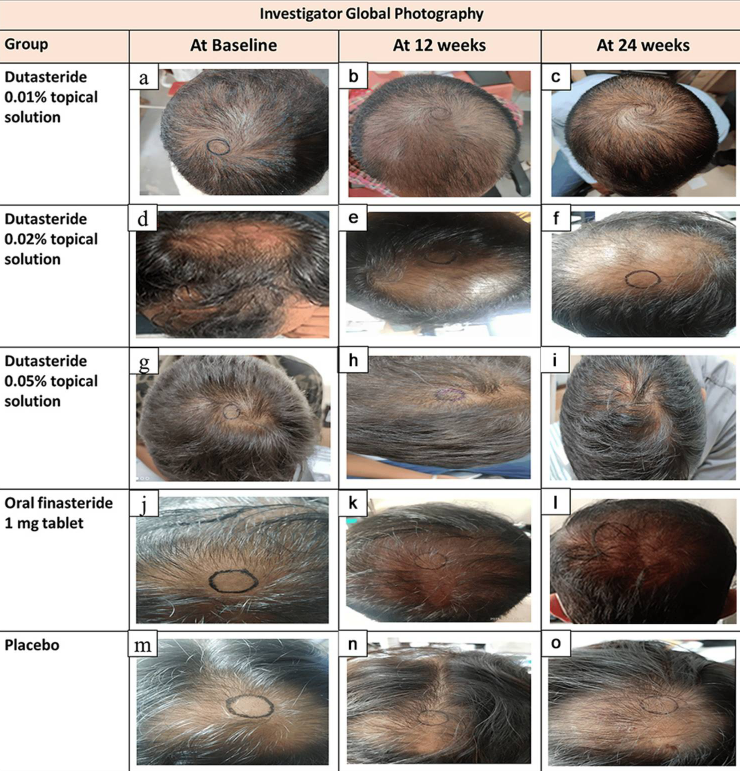
Figure 2. Representative hair growth images. Adapted from Figure 2.[16]Panuganti, V.K., Kumar Madala, P., Ramalingayya Grandhi, V., Varma Alluri, C., Mohammad, J., Rao, K.S.S.V.V., Reddy Dundigalla, M., (2025). A Randomized, Double-Blind, Placebo and Active Controlled … Continue reading Image used under Creative Commons License.
Side-Effects
Despite large hair-growth claims, systemic hormone changes were minimal. Serum DHT change for oral finasteride was between -11% to -27%, and -9% to -11% for topical dutasteride (0.05%). Plasma dutasteride levels were mostly near the quantification limit, but some samples spiked to 2,555 pg/mL, and dutasteride remained detectable at day 168 while participants were still receiving treatment. This suggests that average exposure was low, but absorption may be unpredictable in some users.
Commitment & Washout Dynamics
While participants were actively using topical dutasteride, most had very low drug levels in the blood, but a small number showed noticeable absorption. This means that applying dutasteride to the scalp does not completely prevent it from entering the bloodstream, and individual responses can vary.
Because the study did not measure drug levels after treatment was stopped, it does not tell us how long topical dutasteride continues to have effects once discontinued. So although average exposure appears lower than with oral finasteride, the length of time its effects persist after stopping remains uncertain.
Evidence Strength: Moderate (but controversial)
This is the first RCT that compared oral finasteride directly with topical dutasteride alone, but it had major pitfalls, including implausible baseline hair counts, unreliable target area placement, and results that contradict years of real-world outcomes. These flaws reduce our confidence in this study’s efficacy claims
If you’d like to read more about our interpretation of the 2025 study comparing oral finasteride to topical dutasteride, read our article here.
Topical Finasteride to Topical Dutasteride
Currently, there are no head-to-head studies comparing topical finasteride with topical dutasteride. That means outcomes are highly dependent on formulation choices, and most conclusions in this switch category are informed speculation rather than solid evidence.
Efficacy
Because there are no comparative trials, we cannot say with confidence that topical dutasteride is more effective than topical finasteride. Any perceived improvement would depend on:
- Drug concentration
- Vehicle (alcohol, liposomal, foam, etc.)
- Volume applied per use
- Application frequency
- Individual scalp absorption
In other words, this switch should be viewed as an experiment, not an upgrade supported by clinical data.
Side-Effects
Topical application does not guarantee that finasteride or dutasteride will remain confined to the scalp. Both agents can suppress serum DHT depending on formulation, dose, vehicle, and application frequency. As a result, systemic effects are still possible, particularly when higher concentrations or larger application volumes are used.[17]Caserini, M., Radicioni, M., Leuratti, C., Annoni, O., & Palmieri, R. (2014). A novel finasteride 0.25% topical solution for androgenetic alopecia: pharmacokinetics and effects on plasma androgen … Continue reading
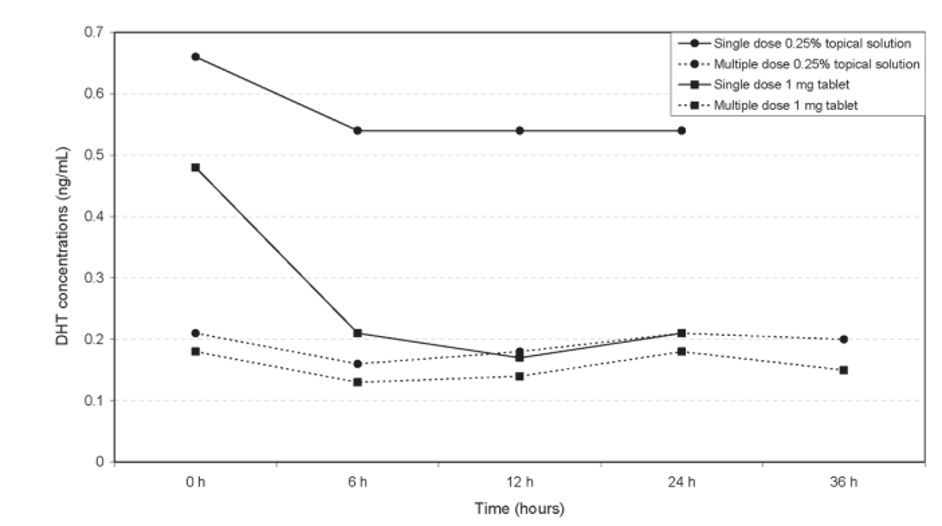
Figure 3. Multiple daily doses of topical finasteride can reduce serum DHT more than a single dose. Adapted from Figure 3.[18]Caserini, M., Radicioni, M., Leuratti, C., Annoni, O., & Palmieri, R. (2014). A novel finasteride 0.25% topical solution for androgenetic alopecia: pharmacokinetics and effects on plasma androgen … Continue reading
Commitment & Washout Dynamics
Topical finasteride generally leads to lower overall drug exposure than oral finasteride, with smaller reductions in serum DHT, suggesting a shorter washout window and greater flexibility with dose adjustments.[19]Piraccini, B. M., Blume-Peytavi, U., Scarci, F., Jansat, J. M., Falqués, M., Otero, R., Tamarit, M. L., et al. (2022). Efficacy and safety of topical finasteride spray solution for male androgenetic … Continue reading
Topical dutasteride still uses a drug with a long half-life and strong binding to 5AR. However, in the trial comparing oral finasteride (1 mg) to topical dutasteride (0.05%), systemic exposure and serum DHT suppression were modest, suggesting that at these doses most of its effect is likely occurring in the scalp rather than through prolonged whole-body exposure.[20]Panuganti, V.K., Kumar Madala, P., Ramalingayya Grandhi, V., Varma Alluri, C., Mohammad, J., Rao, K.S.S.V.V., Reddy Dundigalla, M., (2025). A Randomized, Double-Blind, Placebo and Active Controlled … Continue reading
This implies that topical dutasteride (0.05%) is less committing than oral dutasteride (0.5 mg daily), but may still be more committing than low-dose topical finasteride, especially at higher concentrations or with frequent application, because of dutasteride’s pharmacology. That said, this remains an inference rather than a proven conclusion.
Evidence Strength: Weak
Due to the lack of clinical studies comparing topical finasteride with topical dutasteride, the evidence base for making the switch between these two topical therapies is limited. Any decision to make the switch should be treated as a dose-dependent experiment rather than an evidence-backed upgrade.
Topical Finasteride to Oral Dutasteride
There are no direct comparative studies for this switch. Still, using surrogate data from Study #1-4 comparing oral finasteride to oral dutasteride, we can reasonably expect a gain in efficacy for many users. This transition moves from a variable, dose-dependent topical regimen to a potent and consistently studied systemic DHT-suppression strategy.
While this switch is likely to improve hair outcomes, it also represents a meaningful change in drug exposure. It involves moving from a formulation that often limits systemic absorption to one that produces sustained, whole-body DHT suppression with a drug that remains biologically active for weeks. As a result, dose adjustments and discontinuation lead to slower changes in hormone suppression, and any unwanted effects may take longer to resolve after stopping.
Oral Dutasteride to Topical Finasteride
There are also no head-to-head studies for changing from oral dutasteride to topical finasteride. But we can infer that switching from oral dutasteride to topical finasteride will have the opposite effect to what was seen in Study #1-4 comparing oral finasteride to oral dutasteride.
Switching from oral dutasteride to topical finasteride will likely result in a loss of efficacy for many people, as there will be both a reduction in pharmacologic potency and a move from systemic exposure to a less predictable topical delivery system.
From an exposure standpoint, this switch may generally reduce overall systemic drug levels and shorten the washout window. Topical finasteride typically lowers serum DHT less than oral dutasteride and clears the body more quickly, meaning that changes in dosing or discontinuation tend to result in faster shifts in biological activity.
How To Make the Decision to Switch
Step 1: Are you stable and satisfied using finasteride?
Yes: Don’t fix what isn’t broken. If your hair is stable or slowly improving, the safest move is often staying the course and reassessing with standardized photos every 3-6 months.
No: Go to Step 2.
Step 2: Is the priority more efficacy, or minimizing downside risk?
Efficacy priority: The most evidence-backed switch is oral finasteride to oral dutasteride. This switch is best suited for those with aggressive or rapidly progressing AGA, extensive miniaturization, or those who have clearly plateaued after a consistent finasteride trial.
Risk priority: Consider optimizing finasteride (dose/frequency) or adding adjuncts (minoxidil/microneedling). Finasteride remains the more forgiving option due to its shorter half-life and easier dose adjustment.
Step 3: Do you tolerate oral 5AR inhibitors?
Yes: Oral dutasteride is the cleaner evidence path for improved efficacy.
No: Topical options can work, but treat them as dose-dependent experiments rather than guaranteed upgrades.
If you’d like more information on oral versus topical dutasteride, take a look at our article here.
Step 4: Set the evaluation window before you switch.
Don’t judge a switch in 6-8 weeks. Commit to 6-12 months and take standardized photographs to track your progress.
Avoid switching (or be extra cautious) if:
- You’re trying to conceive soon.
- You’ve previously experienced severe side effects when using 5AR inhibitors.
- You prefer treatments that leave your system quickly if something goes wrong.
Our Final Thoughts
Both finasteride and dutasteride offer real benefits, but each comes with distinct trade-offs. If you’re considering switching, it’s critical to focus on what the evidence actually supports. Currently, the only switch backed by high-quality comparative data is oral finasteride to oral dutasteride, making it the most evidence-based upgrade.
That said, this path comes with a higher level of commitment. Because dutasteride persists in the body for weeks, drug-induced hormonal changes unwind more slowly, which may delay how quickly unwanted effects fade after stopping. Other switching scenarios currently don’t have robust clinical evidence, so they should be approached with caution and treated as informed experiments rather than proven upgrades.
If you’d like a deeper breakdown of finasteride versus dutasteride, read our ultimate guide here.
References[+]
References ↑1 Asfour, L., Cranwell, W., & Sinclair, R. (2023). Male androgenetic alopecia. *Endotext [Internet].* Available at: https://www.ncbi.nlm.nih.gov/books/NBK278957/ ↑2 Wikimedia Commons. (n.d.). Azasteroid Pharmaceuticals [Image]. *Wikimedia Commons.* Available at: https://commons.wikimedia.org/wiki/File:Azasteroid_Pharmaceuticals.png (Accessed: November 2025) ↑3 Olsen, E. A., Hordinsky, M., Whiting, D., Stough, D., Hobbs, S., Ellis, M. L., Wilson, T., Rittmaster, R. S., & Dutasteride Alopecia Research Team. (2006). The importance of dual 5α-reductase inhibition in the treatment of male pattern hair loss: results of a randomized placebo-controlled study of dutasteride versus finasteride. *Journal of the American Academy of Dermatology.* 55(6). 1014–1023. Available at: https://doi.org/10.1016/j.jaad.2006.05.007 ↑4, ↑9, ↑10 Harcha, W. G., Barboza Martínez, J., Tsai, T.-F., Katsuoka, K., Kawashima, M., Tsuboi, R., Barnes, A., Ferron-Brady, G., & Chetty, D. (2014). A randomized, active- and placebo-controlled study of the efficacy and safety of different doses of dutasteride versus placebo and finasteride in the treatment of male subjects with androgenetic alopecia. *Journal of the American Academy of Dermatology.* 70(3). 489–498. Available at: https://doi.org/10.1016/j.jaad.2013.10.049 ↑5 Shanshanwal, S. J., & Dhurat, R. S. (2017). Superiority of dutasteride over finasteride in hair regrowth and reversal of miniaturization in men with androgenetic alopecia: a randomized controlled open-label, evaluator-blinded study. *Indian Journal of Dermatology, Venereology and Leprology.* 83. 47. Available at: https://doi.org/10.4103/0378-6323.188652 ↑6, ↑11 Choi, G.-S., Sim, W.-Y., Kang, H., Huh, C. H., Lee, Y. W., Shantakumar, S., Ho, Y.-F., et al. (2022). Long-term effectiveness and safety of dutasteride versus finasteride in patients with male androgenic alopecia in South Korea: a multicentre chart review study. *Annals of Dermatology.* 34(5). 349. Available at: https://doi.org/10.5021/ad.22.027 ↑7, ↑12 Olsen, E. A., Hordinsky, M., Whiting, D., Stough, D., Hobbs, S., Ellis, M. L., Wilson, T., Rittmaster, R. S., & Dutasteride Alopecia Research Team. (2006). The importance of dual 5α-reductase inhibition in the treatment of male pattern hair loss: results of a randomized placebo-controlled study of dutasteride versus finasteride. *Journal of the American Academy of Dermatology.* 55(6). 1014–1023. Available at: https://doi.org/10.1016/j.jaad.2006.05.007 ↑8 Shanshanwal, S. J., & Dhurat, R. S. (2017). Superiority of dutasteride over finasteride in hair regrowth and reversal of miniaturization in men with androgenetic alopecia: a randomized controlled open-label, evaluator-blinded study. *Indian Journal of Dermatology, Venereology and Leprology.* 83. 47. Available at: https://doi.org/10.4103/0378-6323.188652 ↑13 Hirshburg, J. M., Kelsey, P. A., Therrien, C. A., Gavino, A. C., & Reichenberg, J. S. (2016). Adverse effects and safety of 5-alpha reductase inhibitors (finasteride, dutasteride): a systematic review. *The Journal of Clinical and Aesthetic Dermatology.* 9(7). 56–62. Available at: https://pmc.ncbi.nlm.nih.gov/articles/PMC5023004/ ↑14 Zhou, Z., Song, S., Gao, Z., Wu, J., Ma, J., Cui, Y. (2019). The Efficacy And Safety Of Dutasteride Compared With Finasteride In Treating Men With Androgenetic Alopecia: A Systematic Review And Meta-Analysis. Clinical Interventions in Aging. 14. 399-406. Available at: https://doi.org/10.2147/CIA.S192435 ↑15 Panuganti, V.K., Kumar Madala, P., Ramalingayya Grandhi, V., Varma Alluri, C., Mohammad, J., Rao, K.S.S.V.V., Reddy Dundigalla, M., (2025). A Randomized, Double-Blind, Placebo and Active Controlled Phase II Study to Evaluate the Safety and Efficacy of Novel Dutasteride Topical Solution (0.01%, 0.02%, and 0.05% w/v) in Male Subjects With Androgenetic Alopecia. Cureus. 17(8). e89309. Available at: https://doi.org/10.7759/cureus.89309 ↑16, ↑20 Panuganti, V.K., Kumar Madala, P., Ramalingayya Grandhi, V., Varma Alluri, C., Mohammad, J., Rao, K.S.S.V.V., Reddy Dundigalla, M., (2025). A Randomized, Double-Blind, Placebo and Active Controlled Phase II Study to Evaluate the Safety and Efficacy of Novel Dutasteride Topical Solution (0.01%, 0.02%, and 0.05% w/v) in Male Subjects With Androgenetic Alopecia. Cureus. 17(8). e89309. Available at: https://doi.org/10.7759/cureus.89309 ↑17 Caserini, M., Radicioni, M., Leuratti, C., Annoni, O., & Palmieri, R. (2014). A novel finasteride 0.25% topical solution for androgenetic alopecia: pharmacokinetics and effects on plasma androgen levels in healthy male volunteers. *International Journal of Clinical Pharmacology and Therapeutics.* 52(10). 842–849. Available at: https://doi.org/10.5414/CP202119 ↑18 Caserini, M., Radicioni, M., Leuratti, C., Annoni, O., & Palmieri, R. (2014). A novel finasteride 0.25% topical solution for androgenetic alopecia: pharmacokinetics and effects on plasma androgen levels in healthy male volunteers. *International Journal of Clinical Pharmacology and Therapeutics.* 52(10). 842–849. Available at: https://doi.org/10.5414/CP202119 ↑19 Piraccini, B. M., Blume-Peytavi, U., Scarci, F., Jansat, J. M., Falqués, M., Otero, R., Tamarit, M. L., et al. (2022). Efficacy and safety of topical finasteride spray solution for male androgenetic alopecia: a phase III, randomized, controlled clinical trial. *Journal of the European Academy of Dermatology and Venereology.* 36(2). 286–294. Available at: https://doi.org/10.1111/jdv.17738 Oral finasteride remains the most clinically validated medication for androgenic alopecia (AGA). Over 20 years of trials and follow-up data show consistent, predictable outcomes in slowing miniaturization and restoring density, particularly in the vertex and mid-scalp.
Yet, despite this wealth of data, online forums and “miracle” before-and-after photos often distort expectations. These transformations represent the upper end of the response curve, while most users experience more moderate, steady results that unfold over months to years.
This article explores what realistic regrowth looks like with oral finasteride, how to interpret finasteride before and after photos critically, and what to expect when used correctly and consistently.
Oral Finasteride From our partners at UloPersonalize Your Oral Finasteride
Clinically-proven DHT control. Personalize your oral finasteride formula. Prescribed 100% online. Choose a multi-month plan and get up to 25% plus a free gift bundle.
Free full-size gifts with 3-month+ plans Prescribed online, shipped to your door Finasteride 1 mgDecades of data
*Only available in the U.S. Prescription requires an online medical consultation at no extra cost. Off-label products are not endorsed by the FDA. Free gifts included with select multi-month plans while supplies last. Ulo is a partner of Perfect Hair Health; we may earn a commission on purchases.
What is Oral Finasteride?
Oral finasteride is a type II 5ɑ-reductase inhibitor that reduces the conversion of testosterone to dihydrotestosterone (DHT), the key androgen responsible for hair follicle miniaturization in AGA.
Originally approved by the FDA at a dose of 1 mg for male pattern hair loss, oral finasteride has since become widely known as the gold-standard treatment for hair loss. Its primary mechanism is systemic DHT suppression, lowering circulating levels by roughly 60-70% and scalp DHT by up to 65%.[1]Caserini, M., Radicioni, M., Leuratti, C., Terragni, E., Iorizzo, M., Palmieri, R. (2016). Effects of a novel finasteride 0.25% topical solution on scalp and serum dihydrotestosterone in healthy men … Continue reading
Mechanism of Action
As mentioned above, finasteride is a competitive inhibitor of the 5ɑ-reductase enzyme, specifically targeting the type II (and to a lesser extent, type III) isoenzymes.[2]Zito, P.M., Bistas, K.G., Patel, P., Syed, K. (2024). Finasteride. In: StatPearls [Internet]. Treasure Island (FL): StatPearls Publishing. Available from: https://www.ncbi.nlm.nih.gov/books/NBK513329/
Treatment with finasteride leads to a significant decrease in both scalp and serum DHT concentrations. This effect is dose-dependent and has been observed as early as 28 days after starting treatment.[3]Dallob, A.L., Sadick, N.S., Unger, W., Lipert, S., Geissler, L.A., Gregoire, S.L., Nguyen, H.H., Moore, E.C., Tanaka, W.K. (1994). The effect of finasteride, a 5 alpha-reductase inhibitor, on scalp … Continue reading Lower DHT levels in the scalp prevent androgen-dependent miniaturization of hair follicles, promoting the maintenance and improvement of hair follicle size and number in the anagen (growth) phase.
Unlike topical formulations, oral finasteride exerts a systemic effect. More comprehensive, but also more likely to cause side effects in sensitive individuals.
Adverse Effects
The most commonly reported adverse effects of oral finasteride are sexual in nature, including decreased libido, erectile dysfunction, and reduced ejaculatory volume. These occur in a range of users depending on the study and determination of what a side effect is (<1% to 25%).[4]Traish, A.M., Hassani, J., Guay, A.T., Zitzmann, M., Hansen, M.L. (2011). Adverse side effects of 5ɑ-reductase inhibitors therapy: persistent diminished libido and erectile dysfunction and … Continue reading
Other potential side effects include psychological and neuropsychiatric effects and post-finasteride syndrome (PFS). PFS refers to persistent sexual, neurological, and physical symptoms that continue after stopping finasteride. However, the existence and prevalence of PFS are debated, with some studies suggesting a possible genetic predisposition.[5]Gupta, A.K., Talukder, M., Keene, S.A., Bamimore, M.A. (2025). Is the safety of finasteride correlated with its route of administration: topical versus oral? A pharmacovigilance study with data from … Continue reading
You can read in more depth about the potential side effects in our oral finasteride ultimate guide.
Why Expectation Setting Matters
Finasteride is powerful and predictable, but even the best data can get lost when you see incredible results online. Online before-and-after posts tend to showcase outliers, individuals who happen to respond at the extreme high end of the efficacy curve.
Meanwhile, clinical averages show that:
- Most men stop or reverse their hair loss progression.
- Around 65-80% experience visible thickening after 12-24 months.
- Only a small subset achieves “complete restoration”.
Unrealistic expectations can lead to disappointment, early discontinuation, or cycling through treatments unnecessarily. Grounding expectations in clinical probabilities rather than forum anecdotes helps users stay consistent long enough to see results.
What’s Possible ≠ What’s Probable
While oral finasteride can produce impressive regrowth, most users experience gradual thickening and stabilization rather than dramatic restoration.
Treatment outcomes typically follow a distribution pattern:
- A minority are “hyper responders”, achieving rapid and substantial visible improvement.
- The majority notice moderate, progressive gains, such as fuller density or slowed shedding.
- A smaller subset experience arrest of hair loss but remain unsatisfied with new hair growth.[6]Dhurat, R., Mathapati, S. (2015). Response to Microneedling Treatment in Men with Androgenetic Alopecia Who Failed to Respond to Conventional Therapy. Indian Journal of Dermatology. 60(3). 260-263. … Continue reading
Factors influencing response:
- Age and duration of hair loss: Finasteride efficacy is higher in younger patients and those with less advanced disease at treatment initiation.[7]Camacho, F.M., Garcia-Hernandez, M.J., Fernandez-Crehuet, J.L. (2008). Value of hormonal levels in patients with male androgenetic alopecia treated with finasteride: better response in patients under … Continue reading Starting treatment at age 40 or higher is an independent risk factor for insufficient efficacy.[8]Yoshitake, T., Takeda, A., Ohki, K., Inoue, Y., Yamawaki, T., Otsuka, S., Akimoto, M., Nemoto, M., Shimakura, Y., Sato, A. (2015). Five-year efficacy of finasteride in 801 Japanese men with … Continue reading
- Consistency: Missing doses or cycling off can interrupt the stabilization of hair loss.
- Adjunct therapies: Combining finasteride with other therapies like topical minoxidil can improve results.[9]Hu, R., Xu, F., Sheng, Y., Qi, S., Han, Y., Miao, Y., Rui, W., Yang, Q. (2015). Combined treatment with oral finasteride and topical minoxidil in male androgenetic alopecia: a randomized and … Continue reading
- Genetics: Variations in the androgen receptor (AR) gene sensitivity affect responsiveness.[10]Keene, S., Goren A. (2011). Therapeutic hotline. Genetic variations in the androgen receptor gene and finasteride response in women with androgenetic alopecia mediated by epigenetics. Dermatologic … Continue reading
Strong Evidence = Predictable Results
Unlike many newer (and even potentially stronger acting treatments), oral finasteride benefits from decades of standardized data, making outcomes highly predictable. A good example of this is comparing finasteride to dutasteride. Finasteride is extremely well-studied; therefore, we can usually predict the type of results we will see. Dutasteride, on the other hand, has studies showing it can outperform even the likes of finasteride in terms of hair regrowth. But the number of clinical studies is lacking, meaning that it is more difficult to predict a consistent outcome.

Figure 1: For dutasteride, a wide, shallow curve represents a much wider spread of outcomes. For finasteride, a narrow bell curve shows predictable outcomes.
This predictability helps clinicians set clear, realistic expectations and provides users with confidence that consistency will lead to steady results.
Real Case Studies: Oral Finasteride Before and After
The examples below help see what’s possible and do not represent what every user should expect. They are purely anecdotal and not independently verified by us or any qualified third party.
Case Summary #1: Male (23), 3 Months on Oral Finasteride 1 mg (then every other day) + Topical Minoxidil Foam (twice daily)
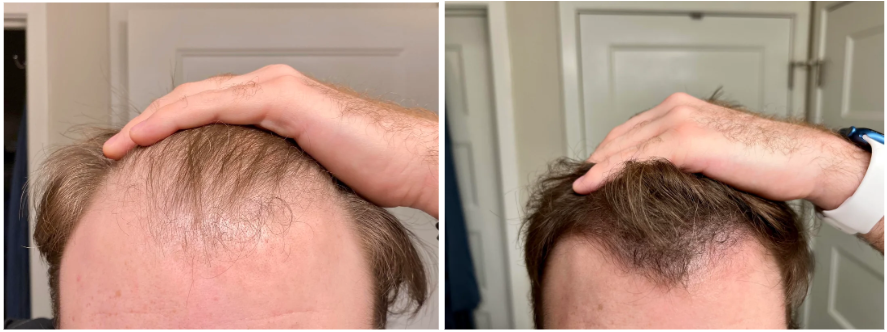
Source: u/Prize-Leg2544 via r/tressless.
This 23-year-old male took oral finasteride 1 mg daily for 2 months before titrating down to 1 mg every other day due to side effects. He also applied topical minoxidil foam twice daily, initially to the whole scalp but later exclusively to the hairline. He noted an initial shedding phase and early side effects on finasteride in the first month of treatment. In the second month, he described visible thickening while still on 1 mg daily. By month 3, he reduced finasteride to every other day and continued with minoxidil to maintain the progress. He reported marked improvement in hairline and density over the 3 months.
The user also described early transient effects, including testicular ache (first week), watery semen, heightened libido, and less intense orgasm, which resolved after dialing the finasteride down to every other day.
Case Summary #2: Male (25), 1-Year Course of Finasteride (1 mg) + Topical Minoxidil (1–2x Daily) + Monthly Dermarolling
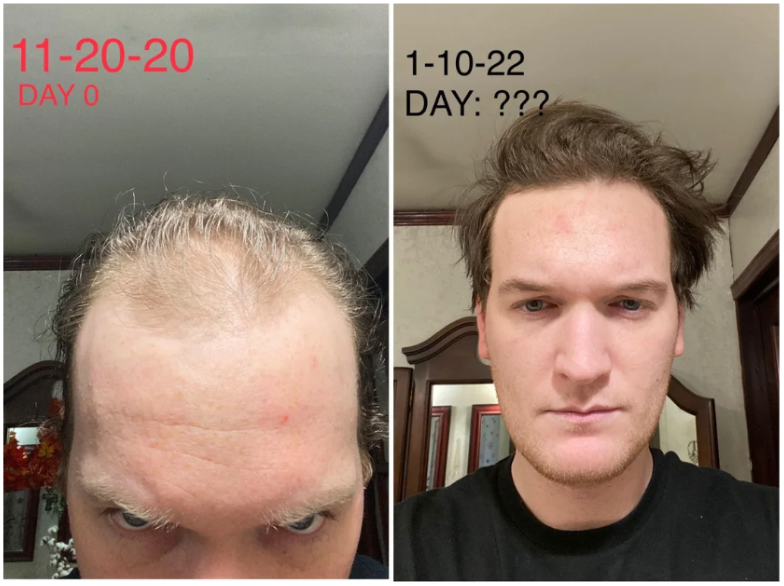
Source: u/zacboring via r/malehairadvice.
This male Redditor started treatment at age 24 after severe crown thinning since he was about 18. His one-year course consisted of finasteride 1 mg daily (generic), topical liquid minoxidil 1–2/day, and dermarolling roughly monthly (post-shower, before nightly minoxidil). He supplemented with vitamin D and occasional biotin, and he regularly used argan oil after showers to limit flaking.
The patient noted a strong early response, but felt his results peaked roughly halfway into treatment. He stopped minoxidil for 1 month and missed some doses in the months leading up to the post. His photos indicated a significant improvement in density compared to baseline, particularly at the hairline and the top. He noted more coverage at the crown but felt it was still noticeably weaker than desired. The patient reported no sexual side effects or skin issues.Case Summary #3: Male (24), 6 Months on Oral Finasteride 1 mg Daily + Oral Minoxidil 2.5 mg Daily
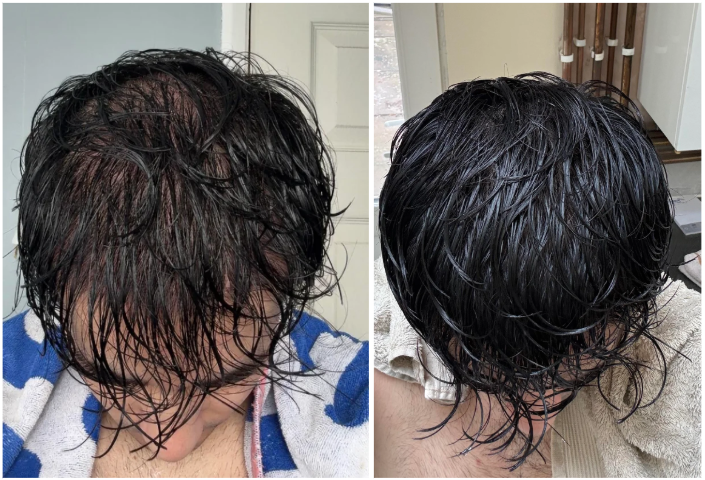
Source: u/LongjumpingDurian429 via r/tressless.
This 24-year-old male’s intervention consisted of oral finasteride 1 mg once daily and oral minoxidil 2.5 mg once daily. The user noted the emergence of small baby hairs at the hairline and temples at month 2 of treatment. By months 4-5, he reported noticeable thickening, with longer eyelashes and denser eyebrows. By month 6, the user showed clear improvement, as evidenced by his wet-hair photos and day-to-day density. He reported visible density gains at the hairline with better coverage under bright light, with his crown improved from baseline, though not fully closed. He reported no side effects, apart from brief mild erectile difficulty early on that resolved.
Case Summary #4: Male (25), 3 Months on Oral Finasteride 1 mg Daily + Oral Minoxidil 2.5 mg Daily (added at month 2) + Ketoconazole Shampoo 3x/week + Microneedling 1.5 mm Weekly
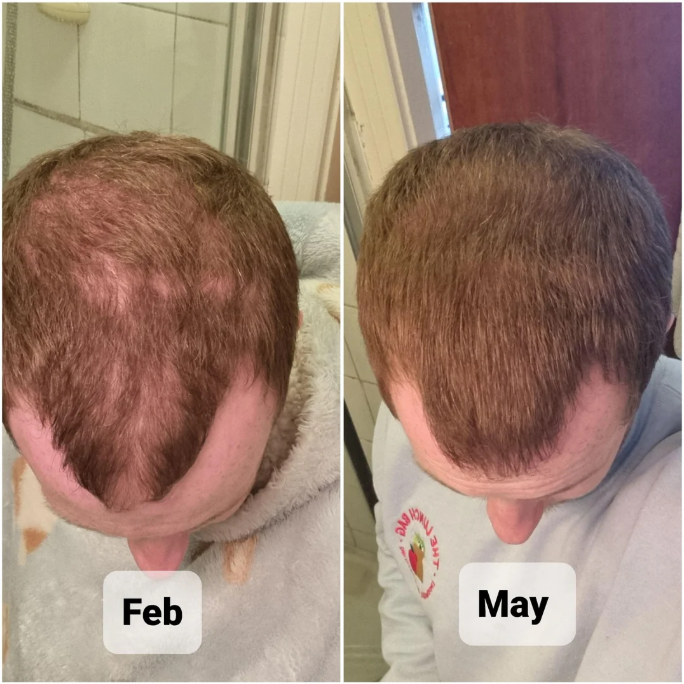
Source: u/Buchaill-Bo via r/tressless.
This 24-year-old male’s intervention was oral finasteride 1 mg daily for 3 months, oral minoxidil 2.5 mg daily (added 2 weeks before the 3-month update), ketoconazole shampoo (Nizoral) about three times weekly, and dermaroller 1.5 mm once weekly over the whole scalp.
The user described gradual thickening over the 3-month finasteride course, with minoxidil introduced at month 2.5. He reported a noticeable improvement in density at the hairline and mid-scalp compared with baseline. He described a possible mild libido reduction on finasteride and thinning of the eyebrows thinned on finasteride, which appeared fuller after starting minoxidil. He reported no other significant effects.
Case Summary #5: Male (38), 7 Months on Oral Finasteride + Topical Finasteride + Topical Minoxidil + Weekly Microneedling
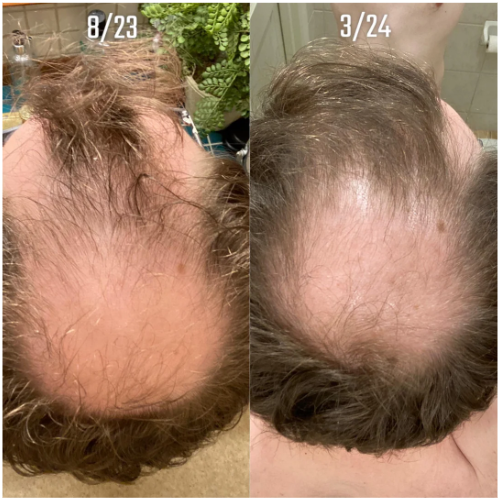
Source: u/Moonrocks321 via r/tressless.
This 38-year-old male started the current treatment with oral finasteride 1 mg daily and topical minoxidil (strength/frequency not specified). He added topical finasteride (concentration not specified) and weekly microneedling at 0.25 mm in month 5. The patient reported a slight but noticeable improvement vs. baseline at month 5 and, at month 7, likewise described his progress as modest. In the 7 months, he achieved stabilization with modest density improvement, most visible anteriorly, with the crown remaining limited. He reported no side effects from finasteride and minoxidil.
Case Summary #6: Male (28), 10 Years on Oral Finasteride + 4–5 Months on Oral Minoxidil
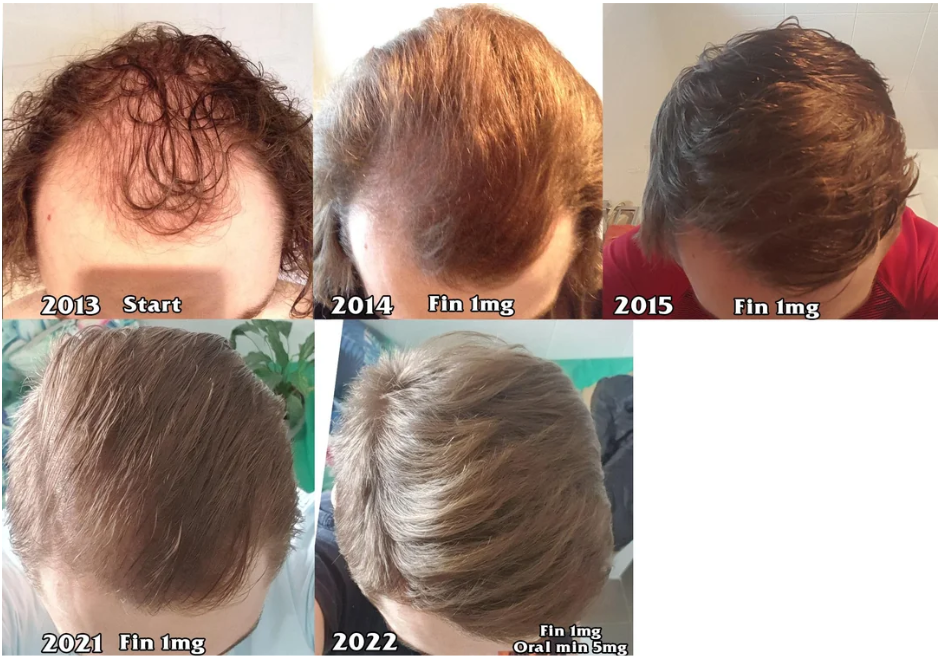
Source: u/DatBronzeGuy via r/tressless.
This 28-year-old male reported on his 10-year treatment progress on oral finasteride 1 mg daily, before adding oral minoxidil 2.5 mg twice daily 4-5 months before the progress report. He confirmed no dermarolling or topical agent application. The patient reported that, between the ages of 18 and 27, he was on finasteride monotherapy, achieving significant regrowth and strong maintenance. Towards the end of that period, he reported subtle renewed thinning, prompting him to add oral minoxidil. Within 4 months thereafter, his hair density and thickness nearly doubled.
He reported good tolerance to finasteride with no noticeable side effects. He added that oral minoxidil caused mild generalized hypertrichosis (slightly darker chest/back hair, fuller beard, higher cheek/temple hairs), but was otherwise tolerated.
Case Summary #7: Male (28), 2–3 Months on Oral Finasteride 1 mg Monotherapy
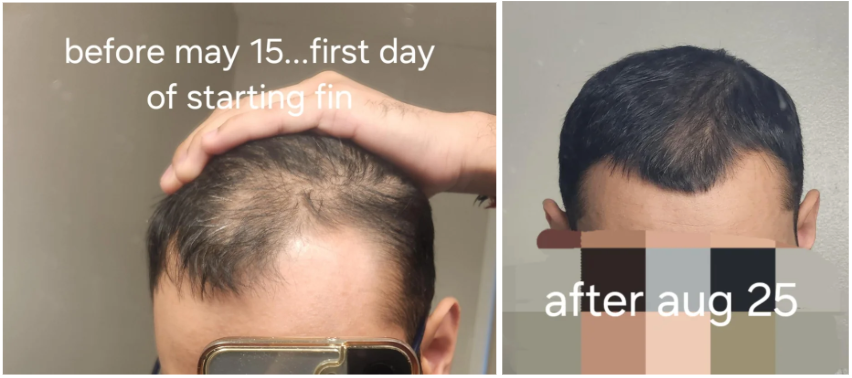
Source: u/danish0001 via r/tressless.
This 28-year-old male’s intervention included oral finasteride 1 mg daily, weekly microneedling with dermastamp 1.0–1.5 mm, and supplementation with vitamin D3 + K2, zinc, folate, magnesium glycinate, and ketoconazole 2% shampoo. Additionally, he made lifestyle adjustments, including going to the gym 2x/week and starting a higher-protein diet.
He noted a mild shedding phase in the first month of treatment. By month 2, he described the first visible tiny regrowth after a buzz cut, by which point the shedding had reduced. Overall, the patient described early regrowth at the hairline and thinning zones. He reported no side effects on finasteride 1 mg daily, stating that libido and energy have remained unchanged or improved.
Case Summary #8: Male (unspecified age), 3 Years on Oral Finasteride 1 mg Daily + Topical Minoxidil

Source: u/AthleteAfraid7844 via r/tressless.
This male Redditor’s intervention over 3 years was oral finasteride 1 mg daily and topical minoxidil (strength not specified).
In the first year, he noted steady cosmetic improvement, followed by continued thickening and maintenance of gains over years 2-3. Overall, the user reported substantial density gain, with perceived improvement in the hairline and temples over time. He mentioned no significant side effects and confirmed his sex drive had remained unchanged throughout treatment. He noted that the minoxidil sometimes caused dandruff and that on finasteride, he required greater mental focus to push weight-lifting sets to failure.
Case Summary #9: Male (early 30s), 3.5 Months on Oral Finasteride 1.25 mg Daily
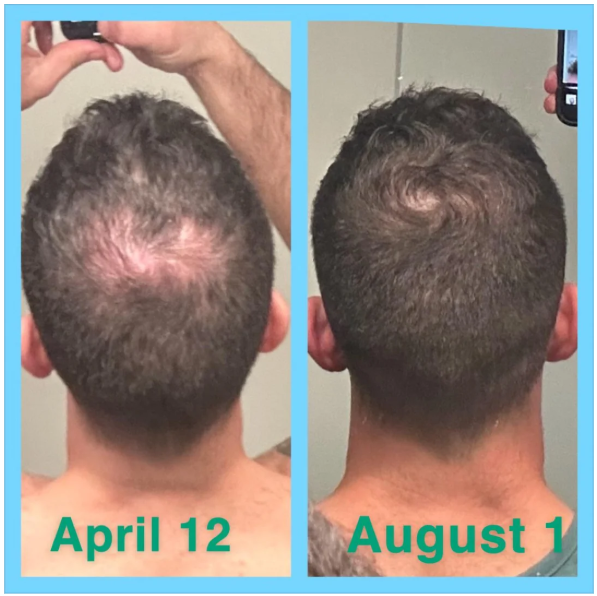
Source: u/Ill-Foundation2637 via r/tressless.
This male, in his early 30s, opted for a treatment consisting of oral finasteride monotherapy at 1.25 mg daily (5 mg tablets quartered). He described a mild daily shedding phase within the first month of treatment. By month 2.5, he reported his first visible thickening. At the 3.5-month progress report, the user achieved a fuller crown with reduced scalp show-through. He reported no side effects.
Case Summary #10: Male (25), 5.5 Months on Oral Finasteride 1.25 mg Daily + Oral Minoxidil 5 mg Daily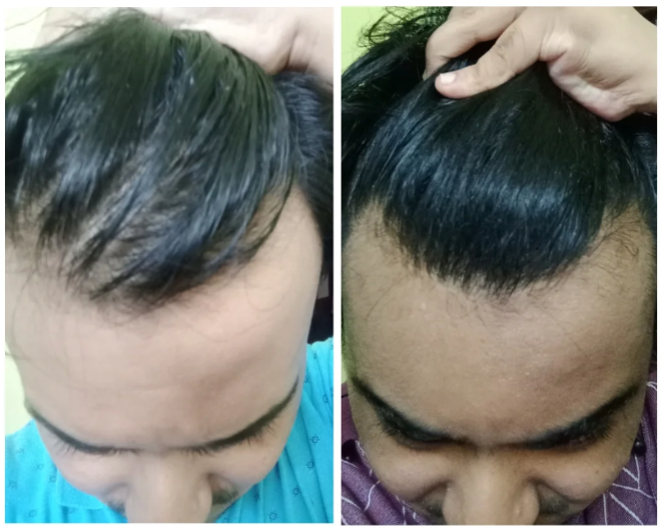
Source: u/Dantheghost012 via r/tressless.
This 25-year-old South Asian male’s intervention was oral finasteride 1.25 mg daily (5 mg tablets quartered) and oral minoxidil, starting at 2.5 mg daily, titrated to 5 mg after 3 months. He described a substantial shedding phase, particularly in the first 3 weeks of month 3. The following month, he reported progressive thickening and density gains with improved coverage. As of month 5.5, he is still improving and continuing both agents unchanged. Overall, he reported a marked increase in density, with a thicker texture, and the crown and hairline both looked fuller than baseline. He reported no side effects on either dose level for finasteride or oral minoxidil.
Probable Regrowth Timeline
Based on the available research (which you can take a look at with our research tables here), we have created a probable hair regrowth timeline.
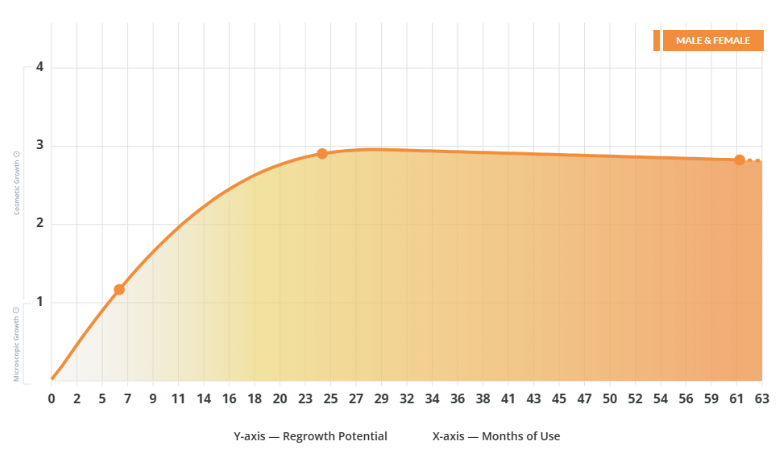
Figure 2: Typical regrowth for oral finasteride 1 mg.
Months 0-3: Adjustment Phase
In the first three months, most users experience minimal visible change. Finasteride actively lowers scalp and serum DHT levels, initiating follicle recovery. Some users notice a temporary increase in shedding as older hairs are shed to make way for new growth, while others observe subtle stabilization of hair loss.
Months 3-6: Reduction in Shedding
By this stage, a clear reduction in hair shedding often becomes noticeable. Although visible thickening remains limited for many, the treatment is beginning to normalize hair cycling. Early responders may report small areas of improved density, particularly in the crown or vertex.
Months 6-12: Early Cosmetic Improvements
Between 6 and 12 months, most responders start to see visible regrowth. Hair density gradually improves, strands appear thicker, and areas of thinning begin to fill in. The crown region typically shows improvement sooner than the frontal hairline, which tends to respond more slowly. Continued adherence is essential during this phase to sustain progress.
Months 12-24: Peak Response Period
During the second year, responders generally achieve their maximum results. Hair density, coverage, and stabilization reach their highest levels, with further visible gains possible in some individuals. Those starting with more advanced thinning usually experience consolidation rather than full growth.
Months 24+: Maintenance and Long-Term Stability
After two years, most users reach a plateau in visible improvement. Continued daily use of finasteride is needed to preserve these gains, as stopping the medication often results in gradual hair loss returning to baseline within 6-12 months. Some people combine treatments at this point to achieve further outcomes.
For most users, oral finasteride provides progressive, steady improvements over time, with long-term commitment being the key to maintaining results.
Setting Realistic Expectations
It’s important to set realistic expectations when starting any treatment. Finasteride primarily stabilizes hair loss during the early months, with noticeable growth typically developing later in the treatment course. True cosmetic improvement usually unfolds gradually over 12 to 24 months rather than weeks, reflecting the natural pace of the hair growth cycle.
Clinical trials suggest that most men experience visible thickening and halting of progression rather than full restoration, effectively “turning back the clock” by two to five years in terms of density and coverage.[11]Kaufman, K.D., Olson, E.A., Whiting, D., Savin, R., DeVillez, R., Bergfeld, W., Price, V.H., Van Neste, D., Roberts, J.L., Hordinsky, M., Shapiro, J., Binkowitz, B., Gormley, G.J. (1998). Finasteride … Continue reading,[12]Price, V.H., Roberts, J.L., Hordinsky, M., Olsen, E.A., Savin, R., Bergfeld, W., Fiedler, V., Lucky, A., Whiting, D.A., Pappas, F., Culbertson, J., Kotey, P., Meehan, A., Waldstreicher, J. (2000). … Continue reading,[13]Rossi, A., Mari, E., Scarno, M., Garelli, V., Maxia, C., Scali, E., Iorio, A., Carlesimo, M. (2012). Comparative effectiveness of finasteride vs Serenoa repens in male androgenetic alopecia: a … Continue reading
Consistent photographic tracking using identical lighting and angles can help visualize these incremental gains. Long-term adherence is crucial, as discontinuation typically leads to renewed miniaturization and hair loss within several months of stopping treatment.
Practical Takeaways
- Oral finasteride remains the most effective DHT blocker for male AGA
- Decades of clinical data make results highly predictable and durable
- The safety profile is well-established, with sexual side effects uncommon and often reversible
- Combining treatments can improve outcomes, especially for advanced loss.
Final Thoughts
Oral finasteride remains the most extensively studied and clinically validated treatment for androgenic alopecia, offering predictable outcomes for most users through gradual thickening, stabilization of shedding, and preservation of existing hair rather than dramatic restoration. While newer options like oral minoxidil are gaining popularity, they remain off-label despite growing supportive evidence and should be used under medical supervision.
The key to achieving and maintaining meaningful results lies in consistency, patience, and realistic expectations, recognizing that hair regrowth is a slow, cumulative process measured over months and years. By grounding expectations in clinical evidence rather than anecdotal extremes, patients can make informed, balanced decisions and stay committed to a long-term plan that maximizes both safety and effectiveness.
References[+]
References ↑1 Caserini, M., Radicioni, M., Leuratti, C., Terragni, E., Iorizzo, M., Palmieri, R. (2016). Effects of a novel finasteride 0.25% topical solution on scalp and serum dihydrotestosterone in healthy men with androgenetic alopecia. International Journal of Clinical Pharmacology and Therapeutics. 54(1). 19-27. Available at: https://doi.org/10.5414/CP202467 ↑2 Zito, P.M., Bistas, K.G., Patel, P., Syed, K. (2024). Finasteride. In: StatPearls [Internet]. Treasure Island (FL): StatPearls Publishing. Available from: https://www.ncbi.nlm.nih.gov/books/NBK513329/ ↑3 Dallob, A.L., Sadick, N.S., Unger, W., Lipert, S., Geissler, L.A., Gregoire, S.L., Nguyen, H.H., Moore, E.C., Tanaka, W.K. (1994). The effect of finasteride, a 5 alpha-reductase inhibitor, on scalp skin testosterone and dihydrotestosterone concentrations in patients with male pattern baldness. Journal of Clinical Endocrinology and Metabolism. 79(3). 703-706. Available at: https://doi.org/10.1210/jcem.79.3.8077349 ↑4 Traish, A.M., Hassani, J., Guay, A.T., Zitzmann, M., Hansen, M.L. (2011). Adverse side effects of 5ɑ-reductase inhibitors therapy: persistent diminished libido and erectile dysfunction and depression in a subset of patients. The Journal of Sexual Medicine. 872-884. Available at: https://doi.org/10.1111/j.1743-6109.2010.02157.x ↑5 Gupta, A.K., Talukder, M., Keene, S.A., Bamimore, M.A. (2025). Is the safety of finasteride correlated with its route of administration: topical versus oral? A pharmacovigilance study with data from the United States Food and Drug Administration adverse event reporting system. International Journal of Dermatology. Available at: https://doi.org/10.1111/ijd.17957 ↑6 Dhurat, R., Mathapati, S. (2015). Response to Microneedling Treatment in Men with Androgenetic Alopecia Who Failed to Respond to Conventional Therapy. Indian Journal of Dermatology. 60(3). 260-263. Available at: https://doi.org/10.4103/0019-5154.156361 ↑7 Camacho, F.M., Garcia-Hernandez, M.J., Fernandez-Crehuet, J.L. (2008). Value of hormonal levels in patients with male androgenetic alopecia treated with finasteride: better response in patients under 26 years old. British Journal of Dermatology. 158(5). 1121-1124. Available at: https://doi.org/10.1111/j.1365-2133.2008.08509.x. ↑8 Yoshitake, T., Takeda, A., Ohki, K., Inoue, Y., Yamawaki, T., Otsuka, S., Akimoto, M., Nemoto, M., Shimakura, Y., Sato, A. (2015). Five-year efficacy of finasteride in 801 Japanese men with androgenetic alopecia. The Journal of Dermatology. 42(7). 735-738. Available at: https://doi.org/10.1111/1346-8138.12890 ↑9 Hu, R., Xu, F., Sheng, Y., Qi, S., Han, Y., Miao, Y., Rui, W., Yang, Q. (2015). Combined treatment with oral finasteride and topical minoxidil in male androgenetic alopecia: a randomized and comparative study in Chinese patients. Dermatologic Therapy. 28(5). 303-308. Available at: https://doi.org/10.1111/dth.12246 ↑10 Keene, S., Goren A. (2011). Therapeutic hotline. Genetic variations in the androgen receptor gene and finasteride response in women with androgenetic alopecia mediated by epigenetics. Dermatologic Therapy. 24(2). 296-300. Available at: https://doi.org/10.1111/j.1529-8019.2011.01407.x. ↑11 Kaufman, K.D., Olson, E.A., Whiting, D., Savin, R., DeVillez, R., Bergfeld, W., Price, V.H., Van Neste, D., Roberts, J.L., Hordinsky, M., Shapiro, J., Binkowitz, B., Gormley, G.J. (1998). Finasteride in the treatment of men with androgenetic alopecia. Finasteride Male Pattern Hair Loss Study Group. Journal of the American Academy of Dermatology. 39(4 Pt 1), 578-589. Available at: https://doi.org/10.1016/s0190-9622(98)70007-6 ↑12 Price, V.H., Roberts, J.L., Hordinsky, M., Olsen, E.A., Savin, R., Bergfeld, W., Fiedler, V., Lucky, A., Whiting, D.A., Pappas, F., Culbertson, J., Kotey, P., Meehan, A., Waldstreicher, J. (2000). Lack of efficacy of finasteride in postmenopausal women with androgentic alopecia. Journal of the American Academy of Dermatology. 43(5 Pt 1). 768-776. Available at: https://doi.org/10.1067/mjd.2000.107953 ↑13 Rossi, A., Mari, E., Scarno, M., Garelli, V., Maxia, C., Scali, E., Iorio, A., Carlesimo, M. (2012). Comparative effectiveness of finasteride vs Serenoa repens in male androgenetic alopecia: a two-year study. International Journal of Immunopathology and Pharmacology. 25(4). 1167-1173. Available at: https://doi.org/10.1177/039463201202500435 Finasteride is a prescription medication originally created to treat benign prostatic hyperplasia (BPH), and now commonly used to treat androgenic alopecia (AGA). It achieves this through targeting 5α‑reductase (5AR), an enzyme that converts testosterone to dihydrotestosterone (DHT), lowering levels of DHT in the scalp. DHT is the key androgen driving follicular miniaturization and is known to drive hair loss. Therefore, the finasteride-induced reduction of DHT results in increased hair growth.[1]Asfour L, Cranwell W, Sinclair R, (2023), Male Androgenetic Alopecia. In: Feingold KR, Adler RA, Ahmed SF, et al., editors, Endotext [Internet], South Dartmouth (MA): MDText.com, Inc.; Available at: … Continue reading
Despite the high amount of evidence supporting finasteride use, many users are concerned about starting due to its potential side effects, including a loss of libido and erectile dysfunction.[2]Diviccaro, S., Melcangi, R.C., Giatti, S. (2019). Post-finasteride syndrome: an emerging clinical problem. Neurobiology of Stress. 12. 100209. Available at: https://doi.org/10.1016/j.ynstr.2019.100209 Many people presume that these side effects, to some extent, are caused by finasteride’s effects on male hormones. In fact, many people presume that these side effects are caused by finasteride lowering testosterone.
The potential for the finasteride mechanism to lower testosterone levels is a common fear; however, the sexual side effects observed in a minority of finasteride users do not occur due to a finasteride-induced reduction in testosterone. Paradoxically, finasteride causes a rise in testosterone, yet occasional sexual side effects are still seen.
In this article, we will discuss whether finasteride lowers testosterone and what the mechanisms are behind sexual side effects in finasteride users.
Interested in Oral Finasteride?
Oral finasteride & minoxidil available, if prescribed*
Take the next step in your hair regrowth journey. Get started today with a provider who can prescribe a topical solution tailored for you.
*Only available in the U.S. Prescriptions not guaranteed. Restrictions apply. Off-label products are not endorsed by the FDA.
How Does Finasteride Work?
AGA is one of the most common hair loss disorders in the world, and is most often characterized as the progressive miniaturization of hair follicles – induced by androgen sensitivity. Activation of the androgen receptor shortens the growth phase of the hair cycle, increases rates of hair shedding, and upon reentry into anagen, affected hairs are often thinner than in the previous cycle. This eventually leads to visible hair loss that is chronic and progressive; without treatment, it worsens over months, years, and decades.[3]Ho, C.H., Sood, T., Zito, P.M., (2024), Androgenetic Alopecia. Available at: https://www.ncbi.nlm.nih.gov/books/NBK430924/ (Accessed: 07 January 2026)
DHT is the key androgen driving follicular miniaturization. When free testosterone comes into contact with an enzyme called 5AR, that free testosterone is converted into another hormone – DHT – which then binds to hair follicle sites and initiates a cascade that results in hair shedding and hair follicle miniaturization. Both 5AR and DHT have been shown to be elevated in balding areas of the scalp compared to the hair-containing scalp.[4]Dallob, A.L., Sadick, N.S., Unger, W., Lipert, S., Geissler, L.A., Gregoire, S.L., Nguyen, H.H., Moore, E.C. and Tanaka, W.K. (1994). The Effect of Finasteride, a 5 Alpha-Reductase Inhibitor, on … Continue reading
Effect of Finasteride on DHT Suppression
Finasteride suppression of DHT can be fit to a non-linear (logarithmic) dose-response curve, i.e., even very low levels of finasteride (≤0.2 mg/day) can produce near-maximal suppression of DHT in both the serum and the scalp.[5]Drake, L., Hordinsky, M., Fiedler, V., Swinehart, J., Unger, W.P., Cotterill, P.C., Thiboutot, D.M., Lowe, N., Jacobson, C., Whiting, D., Stieglitz, S., Kraus, S.J., Griffin, E.I., Weiss, D., … Continue reading The majority of its inhibitory action is achieved at low doses, with higher dosing only providing marginal additional effects.
Clinical trials have demonstrated that finasteride treatment decreases levels of DHT in the serum by 71-72% and in the scalp by 64-69%.[6]Drake, L., Hordinsky, M., Fiedler, V., Swinehart, J., Unger, W.P., Cotterill, P.C., Thiboutot, D.M., Lowe, N., Jacobson, C., Whiting, D., Stieglitz, S., Kraus, S.J., Griffin, E.I., Weiss, D., … Continue reading
Clinical Effectiveness
The clinical effectiveness of finasteride in improving hair growth has been demonstrated in multiple clinical trials. It has been shown to improve hair growth and slow further hair loss across 1-year, 2-year, and 5-year clinical trials, with 65% of finasteride-treated men demonstrating increased hair count at 5 years compared to 0% of the placebo-treated (sugar pill group) men.[7]Finasteride Male Pattern Hair Loss Study Group. (2002). Long-Term (5-Year) Multinational Experience With Finasteride 1 mg in the Treatment of Men With Androgenetic Alopecia. Eur J Dermatol. 12:38-49. … Continue reading,[8]Shapiro, J., Kaufman, K.D. (2003). Use of Finasteride in the Treatment of Men With Androgenetic Alopecia (Male Pattern Hair Loss). J Investig Dermatol Symp Proc. 8(1):20-23. Available at: … Continue reading
Does Finasteride Lower Testosterone?
The belief that finasteride lowers testosterone is common. However, there is no evidence supporting this. In fact, research has actually shown that finasteride treatment increases levels of testosterone.
A four-year clinical trial investigating the safety and efficacy of finasteride in patients with BPH demonstrated a ~15% rise in testosterone in the serum compared to the placebo group.[9]Roehrborn, C., Lee, M., Meehan, A., Waldstreicher, J. (2003). Effects Of Finasteride On Serum Testosterone And Body Mass Index In Men With Benign Prostatic Hyperplasia. Urology. 62(5). 894–899. … Continue reading Additional trials have also reported a moderate rise in testosterone (5-33%; not dose-dependent).[10]Drake, L., Hordinsky, M., Fiedler, V., Swinehart, J., Unger, W.P., Cotterill, P.C., Thiboutot, D.M., Lowe, N., Jacobson, C., Whiting, D., Stieglitz, S., Kraus, S.J., Griffin, E.I., Weiss, D., … Continue reading,[11]Uygur, M.C., Arık, A.İ., Altuğ, U., Erol, D., (1998). Effects Of The 5α-Reductase Inhibitor Finasteride On Serum Levels Of Gonadal, Adrenal, And Hypophyseal Hormones And Its Clinical … Continue reading,[12]Amory, J.K., Wang, C., Swerdloff, R.S., Anawalt, B.D., Matsumoto, A.M., Bremner, W.J., Walker, S.E., Haberer, L.J. and Clark, R.V. (2007). The Effect Of 5α-Reductase Inhibition With Dutasteride And … Continue reading
Although the rise in testosterone was significantly different between finasteride- and placebo-treated individuals, levels of testosterone consistently remained within the normal physiological range. The increase in testosterone was identified in women as well as men, and was found to be more pronounced in men with low baseline testosterone.[13]Albasher, G., Bin-Jumah, M., Alfarraj, S., Al-Otibi, F., Al-Sultan, N.K., Alarifi, S., Alkahtani, S. and Al-Qahtani, W.S. (2020). Prolonged Use Of Finasteride-Induced Gonadal Sex Steroids … Continue reading,[14]Roehrborn, C., Lee, M., Meehan, A., Waldstreicher, J. (2003). Effects Of Finasteride On Serum Testosterone And Body Mass Index In Men With Benign Prostatic Hyperplasia. Urology. 62(5). 894–899. … Continue reading However, not all patients tested experienced this rise in testosterone.
The evidence therefore supports a short-term rise in testosterone on finasteride treatment, while remaining within the physiological range. Many of these studies were carried out in relation to BPH, where the finasteride doses are higher (generally 5 mg vs 1 mg), so the impact of finasteride for AGA treatment is likely to be even lower.
Why Does Testosterone Increase When DHT Falls?
The inhibition of the 5AR enzyme results in the blocking of the DHT production pathway, resulting in the testosterone that would otherwise have been converted to DHT remaining as testosterone. No large increases in testosterone are seen, as not only do negative feedback adjustments occur, but free testosterone is also thought to be redistributed within the androgen pathway, where it is converted into estradiol.
Can the Rise in Testosterone Have Sexual Side Effects?
The moderate rise in testosterone identified in individuals taking finasteride does not result in a rise above the physiological range, making sexual side effects directly as a result of the rise in testosterone unlikely. In general, a moderate rise in testosterone levels improves sexual function. This appears to contradict the well-characterized (though uncommon) sexual side effects of finasteride treatment. Therefore, another mechanism must be at work to induce these sexual side effects.
Finasteride Sexual Side Effects
What are the Sexual Side Effects of Finasteride?
Sexual side effects have been reported in a small minority of users. These include:
- Erectile dysfunction
- Ejaculatory dysfunction
- Loss of libido
While these symptoms often improve or resolve on their own, persistent sexual dysfunction has been reported in a very small number of finasteride users, in a condition known as post-finasteride syndrome.[15]Hirshburg, J.M., Kelsey, P.A., Therrien, C.A., Gavino, A.C. and Reichenberg, J.S. (2016). Adverse Effects And Safety Of 5-Alpha Reductase Inhibitors (Finasteride, Dutasteride): A Systematic Review. … Continue reading However, reports of this condition are controversial, and conflicting results are seen in different studies. If you are interested in learning more, see our article exploring post-finasteride syndrome.
What is the Prevalence of Sexual Side Effects?
In controlled clinical trials, sexual side effects of taking finasteride are uncommon, but exact estimates vary depending on the dose, study design, and population receiving treatment.
- In a 4-year, randomized, placebo-controlled clinical trial assessing the prevalence of sexual adverse experiences (AEs) on the treatment of BPH with 5 mg of finasteride, 15% of finasteride-treated and 7% of placebo-treated men had sexual AEs within the first year, indicating an increase in AEs in the finasteride group. However, no differences between placebo- and finasteride-treated AEs were seen in years 2-4.[16]Wessells, H., Roy, J., Bannow, J., Grayhack, J., Matsumoto, A.M., Tenover, L., Herlihy, R., Fitch, W., Labasky, R., Auerbach, S., Parra, R., Rajfer, J., Culbertson, J., Lee, M., Bach, M.A. and … Continue reading
- A meta-analysis (a study where data from multiple independent studies are analyzed) of 15 clinical trials where AGA was treated with 1 mg of finasteride found that only 5.31% of users had adverse sexual effects compared to 3.05% of those taking a placebo.[17]Lee, S., Lee, Y.B., Choe, S.J. and Lee, W. (2019). Adverse Sexual Effects Of Treatment With Finasteride Or Dutasteride For Male Androgenetic Alopecia: A Systematic Review And Meta-Analysis. Acta … Continue reading
- A different meta-analysis of 17 clinical trials found that men taking finasteride had a 1.29 times higher risk of underactive sexual desire or a 1.47 times higher risk of erectile dysfunction.[18]Corona, G., Tirabassi, G., Santi, D., Maseroli, E., Gacci, M., Dicuio, M., Sforza, A., Mannucci, E. and Maggi, M. (2017). Sexual Dysfunction In Subjects Treated With Inhibitors Of 5α-Reductase For … Continue reading
Meta-analyses and studies with a high number of participants are the gold standard for assessing the risk of sexual side effects. Smaller studies have put the incidence of sexual side effects higher; however, these results should be interpreted with caution due to the limitations of the clinical trials.
Further caution should be taken due to the “nocebo” phenomenon, where a patient may experience negative symptoms or worse outcomes due to their being informed that the product may cause them harm.
A small study investigating this phenomenon in patients treated for BPH with 5 mg finasteride found that the group who received counseling on the sexual side effects (i.e., were informed of these side effects) demonstrated a significantly higher proportion of sexual side effects than the group who did not receive counseling (43.6% vs. 15.3%).[19]Mondaini, N., Gontero, P., Giubilei, G., Lombardi, G., Cai, T., Gavazzi, A. and Bartoletti, R. (2007). Finasteride 5 mg And Sexual Side Effects: How Many Of These Are Related To A Nocebo Phenomenon? … Continue reading
Care should also be taken when interpreting information on natural health websites and online forums, as the perceived prevalence of sexual side effects may seem incredibly high on these. This may occur due to multiple reasons, including:
- Fearmongering due to the desire to sell natural remedies claiming to be sexual side-effect-free (which often isn’t true).
- Users are more likely to post in anger about issues with the product, whereas those content with the product are less likely to post (the “Yelp Effect”).
Why do Sexual Side Effects Occur Despite Higher Testosterone?
As discussed above, increased testosterone (within the physiological range) enhances sexual function. However, despite the slightly raised testosterone seen in men taking finasteride, sexual side effects still occur. Below are three main pathways through which these side effects have been suggested to occur. Please consider that none of these mechanisms have been conclusively proven, and are only suggestions as to how sexual side effects may be occurring.
DHT Depletion
DHT is a potent androgen, binding the androgen receptor with greater strength than testosterone. DHT and testosterone can bind to androgen receptors in the corpora cavernosa (erectile tissue in the penis), causing an upregulation in nitric oxide production and resulting in increased blood flow into the penis and an erection.
It has been suggested that susceptible individuals experiencing decreased levels of DHT on finasteride treatment experience a reduction in nitric oxide production, limiting blood flow into the penis, and, consequently, in erectile dysfunction.[20]Clapauch, R. (2011). Finasteride and Erectile Dysfunction: Fact or Fiction? Brasília Medical (Medical Experience). 48(4), pp.422–427. Available at: … Continue reading,[21]Erdemir, F., Harbin, A. and Hellstrom, W.J.G. (2008). 5-Alpha Reductase Inhibitors And Erectile Dysfunction: The Connection. The Journal Of Sexual Medicine. 5(12), pp.2917–2924. Available at: … Continue reading
DHT is also an important contributor to secretory function and semen volume, as controlled by two glands – the prostate and seminal vesicles. These glands are androgen-dependent. DHT is the primary androgen involved, but testosterone can compensate for reduced DHT.[22]Anitha, B., Inamadar, A.C., Ragunatha, S. (2009). Finasteride-Its Impact on Sexual Function and Prostate Cancer. J Cutan Aesthet Surg. 2(1):12–16. Available at: … Continue reading,[23]Cai, L.Q., Fratianni, C.M., Gautier, T., Imperato-McGinley, J. (1994). Dihydrotestosterone Regulation of Semen in Male Pseudohermaphrodites with 5 Alpha-Reductase-2 Deficiency. Journal of Clinical … Continue reading
Finasteride treatment does not cause low semen or ejaculatory volume in all users, but this does appear in rare cases. This ejaculatory dysfunction could occur as a result of testosterone not sufficiently compensating for DHT’s role in secretory function.
Neurosteroids in the Central Nervous System
In addition to its ability to convert testosterone to DHT, 5AR is also important in the conversion of other molecules into neurosteroids. Neurosteroids are steroids synthesized within the central nervous system (CNS; formed of the brain and spinal cord) that play a key role in controlling activity within the CNS, including anxiety, stress, and depression.
Treatment with 5AR inhibitors, such as finasteride, can cause a decrease in active neurosteroids within the CNS and altered transmission of certain signals within the brain. This disrupted neurosteroid signaling has been suggested as a potential cause of the decreased libido side effect that is occasionally seen in users of finasteride.[24]Irwig, M.S. (2014), Persistent Sexual and Nonsexual Adverse Effects of Finasteride in Younger Men. Sex Med Rev. 2(1):24–35. Available at: https://doi.org/10.1002/smrj.19,[25]Traish, A.M., Hassani, J., Guay, A.T., Zitzmann, M., Hansen, M.L. (2011). Adverse Side Effects of 5 Alpha-Reductase Inhibitors Therapy: Persistent Diminished Libido and Erectile Dysfunction and … Continue reading
Androgen Redistribution
As discussed above, the inhibition of 5AR results in less testosterone being converted into DHT and a mild rise in testosterone. It has been suggested that the increase in free testosterone may be compensated for through androgen redistribution via conversion to estradiol (an estrogen).
Estradiol levels show a minor rise in finasteride users of approximately 15% (while remaining within physiological reference ranges).[26]U.S. Food and Drug Administration, (2022), Propecia (Finasteride) Tablets Label. Available at: https://www.accessdata.fda.gov/drugsatfda_docs/label/2022/020788s030lbl.pdf (Accessed: 07 January 2026) For those with a genetic predisposition to high estrogen or whose diets, lifestyles, and environments have elevated their estrogen levels, a finasteride-induced further rise in estrogen may be sufficient for the development of gynecomastia (the development of male breast tissue).
How Can We Reduce the Risk of Sexual Side Effects?
The first step if side effects occur is to speak to your primary care physician to ensure that side effects are recorded and appropriate management steps are taken. If side effects are severe or rapidly worsening, you should immediately see your physician. The strategies discussed below are only applicable if mild to moderate side effects are experienced, and should only be carried out under clinical supervision. More information on finasteride-associated side effects can be found in our articles on topical finasteride and reducing side effects.
- Lowering your daily dose of finasteride
Finasteride produces the majority of its DHT-lowering effects at relatively low doses. The standard finasteride daily dose is 1 mg. Due to its non-linear dose-response curve, lower doses can still have significant effects on lowering serum and scalp DHT and enhancing hair growth.
Finasteride side effects are often dose-sensitive, meaning that lowering the daily dose could be a first step to reducing side effects, without a significant loss in benefits.
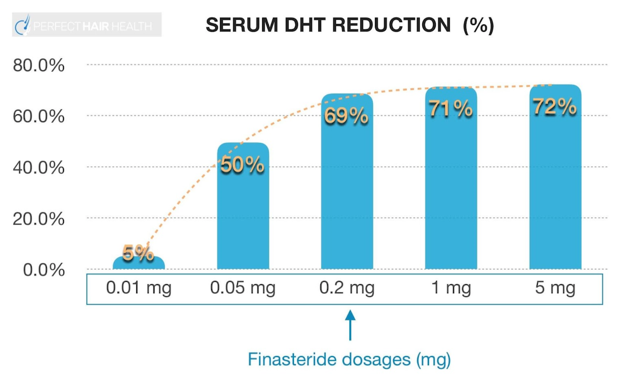
Figure 1. The non-linear dose response curve of finasteride shows that increasing the concentration of the treatment does not translate to an increased reduction in serum DHT.
- Lowering the frequency of dosing
Mild flexibility in finasteride dosing also allows for carefully controlled alterations in dosing frequency. Finasteride has a relatively short half-life (time taken for the amount of drug in the body to halve), but does accumulate with repeated doses.[27]Steiner, J.F. (1996). Clinical Pharmacokinetics and Pharmacodynamics of Finasteride. Clinical Pharmacokinetics. 30(1):16–27. Available at: https://doi.org/10.2165/00003088-199630010-00002
As a result, the frequency of finasteride dosing can be reduced to 1 mg three times per week or 0.5 mg every other day (once steady-state suppression has been achieved) while maintaining sufficient DHT inhibition for significant hair growth effects.
This has the potential to reduce finasteride-associated side effects, particularly sexual side effects associated with hormonal changes.
- Switching to a topical finasteride
Topical, as opposed to oral, formulations deliver the drug directly to the scalp without extensive systemic circulation and therefore reduce overall drug exposure.
Randomized clinical trials have been carried out to assess the effectiveness of oral vs topical finasteride. These have demonstrated comparable clinical benefits, including hair count, hair thickness, and size of bald area.[28]Hajheydari, Z., Akbari, J., Saeedi, M., Shokoohi, L. (2009). Comparing the Therapeutic Effects of Finasteride Gel and Tablet in Treatment of the Androgenetic Alopecia. Indian Journal of Dermatology, … Continue reading,[29]Bhura, M. (2013). Comparative Analysis of Topical and Oral Finasteride in Androgenetic Alopecia: Impact on Hair Growth, Systemic Absorption, and Adverse Effects. Indian Journal of Basic and Applied … Continue reading
Topical application lowers the amount of systemic drug, resulting in reduced side effects. Studies have shown that sexual side effects, in particular, are improved when using finasteride topically instead of orally.[30]Piraccini, B.M., Blume-Peytavi, U., Scarci, F., Jansat, J.M., Falqués, M., Otero, R., Tamarit, M.L., Galván, J., Tebbs, V., Massana, E., Topical Finasteride Study Group. (2022). Efficacy and Safety … Continue reading
Interested in Topical Finasteride?
Low-dose & full-strength finasteride available, if prescribed*
Take the next step in your hair regrowth journey. Get started today with a provider who can prescribe a topical solution tailored for you.
*Only available in the U.S. Prescriptions not guaranteed. Restrictions apply. Off-label products are not endorsed by the FDA.
The beneficial effects of topical finasteride require consistent, measured application and strong adherence to the prescribed application regimen. As such, users who are not experiencing side effects may find it easier to use oral finasteride instead.
- Using PDE5 inhibitors to manage sexual side-effects
PDE5 inhibitors can be used to treat erectile dysfunction by relaxing the blood vessels so as to allow increased blood flow into the penis. The effectiveness of these drugs is well studied, and they have also been shown to improve erectile function specifically in men taking finasteride.[31]Casabé, A., Roehrborn, C.G., Da Pozzo, L.F., Zepeda, S., Henderson, R.J., Sorsaburu, S., Henneges, C., Wong, D.G. & Viktrup, L. (2014). Efficacy and Safety of the Coadministration of Tadalafil … Continue reading
While PDE5 inhibitors improve erectile performance and sexual confidence, they do not address other sexual side effects of finasteride, such as libido or ejaculatory volume. In addition, as prescription medications, they should only be used under clinical supervision to reduce the risk of drug interactions.
Final Thoughts
Finasteride does not lower testosterone. In fact, clinical evidence consistently demonstrates that the reduced conversion of testosterone into DHT causes a modest increase in serum testosterone, which remains within the normal physiological ranges. Concerns about finasteride causing testosterone deficiency are therefore not supported by the scientific literature.
Sexual side effects, while real, occur only in a small minority of users and are unlikely to be caused by changes in testosterone. Instead, they are more likely linked to DHT depletion in androgen-sensitive tissues, altered neurosteroid signaling, androgen distribution, or the “nocebo” effect.
For most users, finasteride is effective and well-tolerated. For those who do experience side effects, strategies like dose adjustment or switching to topical use under the guidance of your physician may improve tolerability while maintaining benefits.
References[+]
References ↑1 Asfour L, Cranwell W, Sinclair R, (2023), Male Androgenetic Alopecia. In: Feingold KR, Adler RA, Ahmed SF, et al., editors, Endotext [Internet], South Dartmouth (MA): MDText.com, Inc.; Available at: https://www.ncbi.nlm.nih.gov/books/NBK278957/ (Accessed: 05 January 2026) ↑2 Diviccaro, S., Melcangi, R.C., Giatti, S. (2019). Post-finasteride syndrome: an emerging clinical problem. Neurobiology of Stress. 12. 100209. Available at: https://doi.org/10.1016/j.ynstr.2019.100209 ↑3 Ho, C.H., Sood, T., Zito, P.M., (2024), Androgenetic Alopecia. Available at: https://www.ncbi.nlm.nih.gov/books/NBK430924/ (Accessed: 07 January 2026) ↑4 Dallob, A.L., Sadick, N.S., Unger, W., Lipert, S., Geissler, L.A., Gregoire, S.L., Nguyen, H.H., Moore, E.C. and Tanaka, W.K. (1994). The Effect of Finasteride, a 5 Alpha-Reductase Inhibitor, on Scalp Skin Testosterone and Dihydrotestosterone Concentrations in Patients with Male Pattern Baldness. J Clin Endocrinol Metab. 79(3), pp.703-706. Available at: https://doi.org/10.1210/jcem.79.3.8077349 ↑5, ↑6, ↑10 Drake, L., Hordinsky, M., Fiedler, V., Swinehart, J., Unger, W.P., Cotterill, P.C., Thiboutot, D.M., Lowe, N., Jacobson, C., Whiting, D., Stieglitz, S., Kraus, S.J., Griffin, E.I., Weiss, D., Carrington, P., Gencheff, C., Cole, G.W., Pariser, D.M., Epstein, E.S., Tanaka, W., Dallob, A.D., Vandormael, K., Geissler, L. and Waldstreicher, J. (1999). The Effects of Finasteride on Scalp Skin and Serum Androgen Levels in Men with Androgenetic Alopecia. J Am Acad Dermatol. 41(4), pp.550-554. Available at: https://pubmed.ncbi.nlm.nih.gov/10495374/ ↑7 Finasteride Male Pattern Hair Loss Study Group. (2002). Long-Term (5-Year) Multinational Experience With Finasteride 1 mg in the Treatment of Men With Androgenetic Alopecia. Eur J Dermatol. 12:38-49. Available at: https://pubmed.ncbi.nlm.nih.gov/11809594/ ↑8 Shapiro, J., Kaufman, K.D. (2003). Use of Finasteride in the Treatment of Men With Androgenetic Alopecia (Male Pattern Hair Loss). J Investig Dermatol Symp Proc. 8(1):20-23. Available at: https://www.sciencedirect.com/science/article/pii/S0022202X15529357 ↑9, ↑14 Roehrborn, C., Lee, M., Meehan, A., Waldstreicher, J. (2003). Effects Of Finasteride On Serum Testosterone And Body Mass Index In Men With Benign Prostatic Hyperplasia. Urology. 62(5). 894–899. Available at: https://pubmed.ncbi.nlm.nih.gov/14624915/ ↑11 Uygur, M.C., Arık, A.İ., Altuğ, U., Erol, D., (1998). Effects Of The 5α-Reductase Inhibitor Finasteride On Serum Levels Of Gonadal, Adrenal, And Hypophyseal Hormones And Its Clinical Significance: A Prospective Clinical Study. Steroids. 63(4). 208–213. Available at: https://www.sciencedirect.com/science/article/abs/pii/S0039128X98000051 ↑12 Amory, J.K., Wang, C., Swerdloff, R.S., Anawalt, B.D., Matsumoto, A.M., Bremner, W.J., Walker, S.E., Haberer, L.J. and Clark, R.V. (2007). The Effect Of 5α-Reductase Inhibition With Dutasteride And Finasteride On Semen Parameters And Serum Hormones In Healthy Men. The Journal Of Clinical Endocrinology & Metabolism. 92(5), pp.1659–1665. Available at: https://doi.org/10.1210/jc.2006-2203 ↑13 Albasher, G., Bin-Jumah, M., Alfarraj, S., Al-Otibi, F., Al-Sultan, N.K., Alarifi, S., Alkahtani, S. and Al-Qahtani, W.S. (2020). Prolonged Use Of Finasteride-Induced Gonadal Sex Steroids Alterations, DNA Damage And Menstrual Bleeding In Women. Bioscience Reports. 40(2), BSR20191434. Available at: https://pmc.ncbi.nlm.nih.gov/articles/PMC7007407/ ↑15 Hirshburg, J.M., Kelsey, P.A., Therrien, C.A., Gavino, A.C. and Reichenberg, J.S. (2016). Adverse Effects And Safety Of 5-Alpha Reductase Inhibitors (Finasteride, Dutasteride): A Systematic Review. Journal Of Clinical Aesthetic Dermatology. 9(7), pp.56–62. Available at: https://pmc.ncbi.nlm.nih.gov/articles/PMC5023004/ ↑16 Wessells, H., Roy, J., Bannow, J., Grayhack, J., Matsumoto, A.M., Tenover, L., Herlihy, R., Fitch, W., Labasky, R., Auerbach, S., Parra, R., Rajfer, J., Culbertson, J., Lee, M., Bach, M.A. and Waldstreicher, J. (2003). Incidence And Severity Of Sexual Adverse Experiences In Finasteride And Placebo-Treated Men With Benign Prostatic Hyperplasia. Urology. 61(3), pp.579–584. Available at: https://pubmed.ncbi.nlm.nih.gov/12639651/ ↑17 Lee, S., Lee, Y.B., Choe, S.J. and Lee, W. (2019). Adverse Sexual Effects Of Treatment With Finasteride Or Dutasteride For Male Androgenetic Alopecia: A Systematic Review And Meta-Analysis. Acta Dermato-Venereologica. 99(1), pp.12–17. Available at: https://pubmed.ncbi.nlm.nih.gov/30206635/ ↑18 Corona, G., Tirabassi, G., Santi, D., Maseroli, E., Gacci, M., Dicuio, M., Sforza, A., Mannucci, E. and Maggi, M. (2017). Sexual Dysfunction In Subjects Treated With Inhibitors Of 5α-Reductase For Benign Prostatic Hyperplasia: A Comprehensive Review And Meta-Analysis. Andrology. 5(4), pp.671–678. Available at: https://doi.org/10.1111/andr.12353 ↑19 Mondaini, N., Gontero, P., Giubilei, G., Lombardi, G., Cai, T., Gavazzi, A. and Bartoletti, R. (2007). Finasteride 5 mg And Sexual Side Effects: How Many Of These Are Related To A Nocebo Phenomenon? Journal Of Sexual Medicine. 4(6), pp.1708–1712. Available at: https://pubmed.ncbi.nlm.nih.gov/17655657/ ↑20 Clapauch, R. (2011). Finasteride and Erectile Dysfunction: Fact or Fiction? Brasília Medical (Medical Experience). 48(4), pp.422–427. Available at: https://rbm.org.br/details/247/en-US/finasteride-and-erectile-dysfunction–fact-or-fiction ↑21 Erdemir, F., Harbin, A. and Hellstrom, W.J.G. (2008). 5-Alpha Reductase Inhibitors And Erectile Dysfunction: The Connection. The Journal Of Sexual Medicine. 5(12), pp.2917–2924. Available at: https://doi.org/10.1111/j.1743-6109.2008.01001.x ↑22 Anitha, B., Inamadar, A.C., Ragunatha, S. (2009). Finasteride-Its Impact on Sexual Function and Prostate Cancer. J Cutan Aesthet Surg. 2(1):12–16. Available at: https://doi.org/10.4103/0974-2077.53093 ↑23 Cai, L.Q., Fratianni, C.M., Gautier, T., Imperato-McGinley, J. (1994). Dihydrotestosterone Regulation of Semen in Male Pseudohermaphrodites with 5 Alpha-Reductase-2 Deficiency. Journal of Clinical Endocrinology & Metabolism. 79(2):409–414. Available at: https://doi.org/10.1210/jcem.79.2.8045956 ↑24 Irwig, M.S. (2014), Persistent Sexual and Nonsexual Adverse Effects of Finasteride in Younger Men. Sex Med Rev. 2(1):24–35. Available at: https://doi.org/10.1002/smrj.19 ↑25 Traish, A.M., Hassani, J., Guay, A.T., Zitzmann, M., Hansen, M.L. (2011). Adverse Side Effects of 5 Alpha-Reductase Inhibitors Therapy: Persistent Diminished Libido and Erectile Dysfunction and Depression in a Subset of Patients. Journal of Sexual Medicine. 8(3). Available at: https://pmc.ncbi.nlm.nih.gov/articles/PMC4064044/ ↑26 U.S. Food and Drug Administration, (2022), Propecia (Finasteride) Tablets Label. Available at: https://www.accessdata.fda.gov/drugsatfda_docs/label/2022/020788s030lbl.pdf (Accessed: 07 January 2026) ↑27 Steiner, J.F. (1996). Clinical Pharmacokinetics and Pharmacodynamics of Finasteride. Clinical Pharmacokinetics. 30(1):16–27. Available at: https://doi.org/10.2165/00003088-199630010-00002 ↑28 Hajheydari, Z., Akbari, J., Saeedi, M., Shokoohi, L. (2009). Comparing the Therapeutic Effects of Finasteride Gel and Tablet in Treatment of the Androgenetic Alopecia. Indian Journal of Dermatology, Venereology and Leprology. 75(1):47–51. Available at: https://pubmed.ncbi.nlm.nih.gov/19172031/ ↑29 Bhura, M. (2013). Comparative Analysis of Topical and Oral Finasteride in Androgenetic Alopecia: Impact on Hair Growth, Systemic Absorption, and Adverse Effects. Indian Journal of Basic and Applied Medical Research. 3(1):436–444. Available at: https://www.ijbamr.com/assets/images/issues/pdf/71nag2_6w0c1i_34kUVI_YI8x3j_177107.pdf (Accessed: 07 January 2026) ↑30 Piraccini, B.M., Blume-Peytavi, U., Scarci, F., Jansat, J.M., Falqués, M., Otero, R., Tamarit, M.L., Galván, J., Tebbs, V., Massana, E., Topical Finasteride Study Group. (2022). Efficacy and Safety of Topical Finasteride Spray Solution for Male Androgenetic Alopecia: A Phase III, Randomized, Controlled Clinical Trial. Journal of the European Academy of Dermatology and Venereology. 36(2):286–294. Available at: https://doi.org/10.1111/jdv.17738 ↑31 Casabé, A., Roehrborn, C.G., Da Pozzo, L.F., Zepeda, S., Henderson, R.J., Sorsaburu, S., Henneges, C., Wong, D.G. & Viktrup, L. (2014). Efficacy and Safety of the Coadministration of Tadalafil Once Daily with Finasteride for 6 Months in Men with Lower Urinary Tract Symptoms and Prostatic Enlargement Secondary to Benign Prostatic Hyperplasia. Journal of Urology. 191(3), pp. 727–733. Available at: https://www.auajournals.org/doi/10.1016/j.juro.2013.09.059 Minoxidil has been a cornerstone of hair-loss treatment for decades, and the options have expanded well beyond over-the-counter 2% and 5% topicals. Low-dose oral minoxidil has become increasingly common off-label, especially for people who struggle with topical routines or don’t respond well to them.
As a result, many people find themselves re-evaluating their approach and thinking about switching to oral minoxidil. We’ll break down how the oral and topical formulations compare and outline when a switch is likely to help.
Oral Minoxidil From our partners at UloInterested in Oral Minoxidil?
Get growing with a once-daily pill for growth support with no application, drying time, or residue. Prescribed 100% online. Choose a multi-month plan and get up to 25% plus a free gift bundle.
Free full-size gifts with 3-month+ plans Prescribed online, shipped to your door
Once dailyNo topical application*Only available in the U.S. Prescription requires an online medical consultation at no extra cost. Off-label products are not endorsed by the FDA. Free gifts included with select multi-month plans while supplies last. Ulo is a partner of Perfect Hair Health; we may earn a commission on purchases.
How Does Minoxidil Work?
Topical and oral minoxidil both work through the same basic mechanisms. At a biological level, minoxidil alters the hair cycle by shortening the resting (telogen) phase and promoting earlier entry into the growth (anagen) phase. This increases the proportion of follicles actively producing hair at any given time. Minoxidil also enlarges miniaturized hair follicles, resulting in thicker, longer hair shafts.[1]Messenger, A. G., & Rundegren, J. (2004). Minoxidil: mechanisms of action on hair growth. British Journal of Dermatology. 150(2). 186–194. Available at: … Continue reading
Beyond hair-cycle effects, minoxidil influences several signaling and support pathways within the follicle. It increases local blood flow, activates the Wnt/β-catenin signaling pathway involved in follicular cell proliferation and differentiation, and appears to have cytoprotective and anti-inflammatory effects, in part by increasing prostaglandin E2 production.
What is the Difference Between Topical and Oral Minoxidil?
Where topical and oral minoxidil meaningfully diverge is not in what the drug does once active, but in how it becomes active and reaches the follicle.
Topical minoxidil must first penetrate the scalp barrier and then be converted into its active form within the hair follicle itself. This conversion depends on local sulfotransferase enzyme activity, which varies between individuals and even between scalp regions. As a result, exposure to active minoxidil can be highly variable, even when application is consistent.
Oral minoxidil, by contrast, is absorbed through the gastrointestinal tract and converted to its active form primarily in the liver, where sulfotransferase activity is abundant and consistent. The active drug is then delivered to hair follicles via the bloodstream, largely bypassing both the scalp barrier and variability in local enzymatic activation.
These differences in activation and delivery are what make switching between topical and oral formulations clinically meaningful.
Why Do People Switch Between Minoxidil Forms?
Switching is rarely about chasing a small theoretical advantage. Most switches happen for one of three reasons:
1. Convenience and Adherence
Topical minoxidil can work well in trials, but adherence is hard in real life. Many people struggle with twice-daily application for months, and discontinuation rates in real-world settings are high, with the most commonly cited reason being a lack of compliance (i.e., people couldn’t maintain their treatment regimen).[2]Shadi, Z. (2023). Compliance to topical minoxidil and reasons for discontinuation among patients with androgenetic alopecia. Dermatology and Therapy. 13(5). 1157–1169. Available at: … Continue reading
Topical minoxidil can also present cosmetic challenges that influence long-term adherence. Liquid solutions may leave the hair feeling greasy or stiff, create visible residue or flaking that can resemble dandruff, and interfere with hairstyling, particularly in people with longer hair or finer textures.
Oral minoxidil is simpler, usually a once-daily pill, and for many people, that alone changes outcomes.
2. Inconsistent Response to Topical Therapy
Some people use topical minoxidil correctly for long enough and still see little benefit. This can happen even when everything “looks right” on paper. The second most cited reason for discontinuing topical minoxidil was unsatisfactory results, and clinical data have shown that response rates are high in the first 3-6 months, but drop after a year or longer of use.[3]Olsen, E. A., Weiner, M. S., Amara, I. A., & DeLong, E. R. (1990). Five-year follow-up of men with androgenetic alopecia treated with topical minoxidil. *Journal of the American Academy of … Continue reading
3. Side Effects
The side effects most commonly associated with topical minoxidil are local rather than systemic, reflecting the fact that only a small fraction of the applied drug enters the bloodstream. The most frequently reported issues include scalp irritation, dryness, flaking, itching, and contact dermatitis. In many cases, these reactions are driven less by minoxidil itself and more by the vehicle used to deliver it, particularly formulations containing propylene glycol.[4]Olsen, E. A., DeLong, E. R., & Weiner, M. S. (1987). Long-term follow-up of men with male pattern baldness treated with topical minoxidil. Journal of the American Academy of Dermatology. 16(3). … Continue reading
Minoxidil is also toxic to pets, and even small exposures to topical or oral products can cause severe, sometimes fatal cardiovascular events. Because topical formulations can be harder to control, and need to be handled with care, some users may switch to oral formulations to decrease the risk of accidental exposure.[5]Tater, K. C., Gwaltney-Brant, S., & Wismer, T. (2021). Topical minoxidil exposures and toxicoses in dogs and cats: 211 cases (2001–2019). *Journal of the American Animal Hospital Association.* … Continue reading
Propylene glycol is included in many liquid formulations to enhance solubility and penetration, but it is a well-known irritant and contact sensitizer. In susceptible individuals, this can lead to erythema, scaling, burning, or eczematous dermatitis, particularly with twice-daily use.
Oral minoxidil produces a different side-effect profile because it is systemically absorbed and pharmacologically active throughout the body. At the low doses used for hair loss, it is generally well tolerated, but adverse effects occur more frequently than with topical formulations and tend to be dose-dependent.
The most common side effect is hypertrichosis, or unwanted hair growth outside the scalp, including on the face. This was reported in 15% of 1404 users in a follow-up study.[6]Vañó-Galván, S., Pirmez, R., Hermosa-Gelbard, A., Moreno-Arrones, Ó. M., Saceda-Corralo, D., Rodrigues-Barata, R., Jimenez-Cauhe, J., et al. (2021). Safety of low-dose oral minoxidil for hair … Continue reading
Hypertrichosis is typically more of an issue for women taking minoxidil, for whom hair on the face and body may be off-putting.
Other common side effects reported in the follow-up study included lightheadedness (1.7%), fluid retention (1.3%), tachycardia (elevated heart rate, 0.9%), and headache (0.4%). Serious cardiovascular complications are rare at the low doses used for hair loss and have been reported primarily in higher-dose antihypertensive use or in individuals with pre-existing cardiovascular disease.
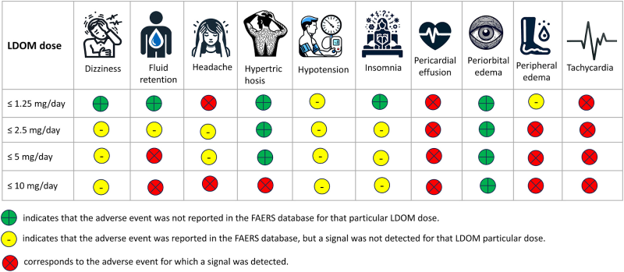
Figure 1. Occurrence of adverse events in individuals taking low-dose oral minoxidil (LDOM), as reported in the FDA Adverse Event Reporting System. Adapted from Figure 1.[7]Gupta, A. K., Bamimore, M. A., Abdel-Qadir, H., Williams, G., Tosti, A., Piguet, V., & Talukder, M. (2025). Low-dose oral minoxidil and associated adverse events: analyses of the FDA Adverse … Continue reading Image used under Creative Commons License.
If you’re concerned about minoxidil side effects, check out our article on 10 ways to reduce them.
Why Oral Minoxidil Might Work Better for Some
Topical minoxidil relies heavily on follicular sulfotransferase activity (notably SULT1A1). Lower activity is associated with weaker response.[8]Pietrauszka, K., & Bergler-Czop, B. (2022). Sulfotransferase SULT1A1 activity in hair follicle, a prognostic marker of response to the minoxidil treatment in patients with androgenetic alopecia: … Continue reading
As such, minoxidil’s “ceiling” isn’t the same for everyone: people with lower SULT1A1 activity will generally not respond as well.
Similarly, the penetration of topical minoxidil through the scalp is essential for it to function. This can depend on a range of factors, including the type of formulation, scalp health, contact time, and application technique.
Oral minoxidil bypasses these barriers to absorption. It is absorbed through the gastrointestinal tract and converted into its active form primarily in the liver, where sulfotransferase activity is abundant. Systemic activation makes exposure more uniform across the scalp and less dependent on follicular enzyme variability.
Oral Minoxidil vs Topical Minoxidil
So what does the clinical evidence tell us about the efficacy of the two approaches?
Both topical and oral minoxidil are supported by robust clinical evidence demonstrating their effectiveness in treating hair loss, including androgenic alopecia (AGA).[9]Jaén, P., & Arias-Santiago, S. (n.d.). Efficacy and safety of oral minoxidil 5 mg daily during 24-week treatment in male androgenetic alopecia. Available at: … Continue reading,[10]Panchaprateep, R., & Lueangarun, S. (2020). Efficacy and safety of oral minoxidil 5 mg once daily in the treatment of male patients with androgenetic alopecia: an open-label and global … Continue reading,[11]Silva, M. N. E., Ramos, P. M., Silva, M. R., Silva, R. N. E., & Raposo, N. R. B. (2022). Randomized clinical trial of low-dose oral minoxidil for the treatment of female pattern hair loss: 0.25 … Continue reading,[12]Sinclair, R. D. (2018). Female pattern hair loss: a pilot study investigating combination therapy with low-dose oral minoxidil and spironolactone. *International Journal of Dermatology.* 57(1). … Continue reading,[13]Olsen, E. A., Dunlap, F. E., Funicella, T., Koperski, J. A., Swinehart, J. M., Tschen, E. H., & Trancik, R. J. (2002). A randomized clinical trial of 5% topical minoxidil versus 2% topical … Continue reading,[14]Adil, A., & Godwin, M. (2017). The effectiveness of treatments for androgenetic alopecia: a systematic review and meta-analysis. *Journal of the American Academy of Dermatology.* 77(1). … Continue reading
Direct head-to-head comparisons, however, are less common.
Direct Comparisons in Men
A 2024 randomized clinical trial compared 5 mg oral minoxidil once daily vs 5% topical minoxidil twice daily for 24 weeks in men with AGA. They found no significant difference in hair outcomes overall, but oral trended higher for density and showed significantly greater improvement in photographic assessment at the crown.[15]Penha, M. A., Miot, H. A., Kasprzak, M., & Ramos, P. M. (2024). Oral minoxidil vs topical minoxidil for male androgenetic alopecia: a randomized clinical trial. JAMA Dermatology. 160(6). … Continue reading
This matches the broader trend seen across male oral minoxidil studies at 2.5-5 mg daily: more consistent, dose-dependent results with cosmetic relevance.[16]Panchaprateep, R., & Lueangarun, S. (2020). Efficacy and safety of oral minoxidil 5 mg once daily in the treatment of male patients with androgenetic alopecia: an open-label and global … Continue reading
Direct Comparisons in Women
As we’ve already noted, doses for women tend to be lower than for men, typically 1 mg daily versus 5 mg daily, so as to avoid hypertrichosis.
The first direct comparison in women comes from a 24-week randomized, open comparative study conducted in Brazil, which evaluated oral minoxidil 1 mg once daily versus topical minoxidil 5% solution applied once daily in women aged 18–65 with pattern hair loss.[17]Ramos, P. M., Melo, D. F., Radwanski, H., Cortez de Almeida, R. F., & Miot, H. A. (2023). Female-pattern hair loss: therapeutic update. Anais Brasileiros de Dermatologia. 98. 506–519. Available … Continue reading
After 24 weeks, terminal hair density increased by 12% in the oral minoxidil group and 7.2% in the topical group. While this improvement favored oral therapy, the difference was not statistically significant.
Side-effect patterns differed in expected ways. Hypertrichosis was reported in 27% of women taking oral minoxidil, compared with 4% in the topical group.
A similar trial comparing 1mg oral minoxidil to 5% topical minoxidil also found no statistically significant differences between the two groups in hair diameter. They did, however, report improvement in photographic assessment in the topical group.[18]Asilian, A., Farmani, A., & Saber, M. (2024). Clinical efficacy and safety of low-dose oral minoxidil versus topical solution in the improvement of androgenetic alopecia: a randomized controlled … Continue reading
Lower doses of oral minoxidil for women may reduce its efficacy compared to topical treatments, which are typically applied at similar concentrations to men (5%).
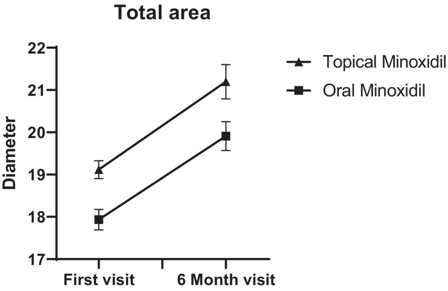
Figure 2. Improvements in average hair diameter were comparable between 5% topical solution or 1 mg/day oral minoxidil over a six-month study period. Adapted from Figure 2.[19]Asilian, A., Farmani, A., & Saber, M. (2024). Clinical efficacy and safety of low-dose oral minoxidil versus topical solution in the improvement of androgenetic alopecia: a randomized controlled … Continue reading Image used under Creative Commons License.
What About Higher Concentrations of Topical Minoxidil?
As we’ve seen, most clinical research focuses on 5% topical minoxidil. However, in practice, many people use higher concentrations of minoxidil, with 7-8% being common, and sometimes concentrations as high as 10-15% are employed as a more aggressive treatment.
What’s more, minoxidil is often paired with tretinoin/retinoic acid, which enhances activation and penetration of the drug. While there is limited clinical data on such pairings, anecdotal evidence from our members suggests that this combination could help to optimize topical minoxidil’s efficacy.
We see that 7-8% minoxidil paired with 0.005-0.02% retinoic acid appears to outperform 5 mg oral minoxidil, even in cases of diffuse thinning.
For comprehensive information about using retinoic acid for hair loss, check out our ultimate guide.
Anecdotal evidence from our members also suggests that higher concentrations of topical minoxidil (10-15%) can generate similar results to 5 mg oral minoxidil.
Is there a clear winner?
In short, no. A 2025 meta-analysis comparing topical and oral minoxidil found no significant difference between approaches overall, which reflects how much outcomes depend on dose, population, and study design.[20]Fazal, F., Malik, B. H., Malik, H. M., Sabir, B., Mustafa, H., Ahmed, M., Abid, A., Adil, M. L., Shafi, U., & Saad, M. (2025). Can oral minoxidil be the game changer in androgenetic alopecia? A … Continue reading
It is important to note that adherence to a strict routine in trials is typically well enforced, and topical treatments are applied with consistent volumes at consistent times. This doesn’t necessarily reflect how people use topical minoxidil in the real world.
On the other hand, many users find that they can optimize a topical approach by increasing the strength or frequency of application, or by adding enhancer ingredients like tretinoin/retinoic acid. If you’re using such a combination therapy, you might, in fact, see worse results when switching to oral.
When Switching From Topical to Oral Makes the Most Sense
Switching to oral minoxidil is most rational when the limiting factor is activation or adherence, or when topical treatment isn’t delivering the results you expect.
Good Candidates for Switching to Oral Minoxidil
If systemic exposure is acceptable from a safety and tolerability standpoint, there are circumstances in which switching from an oral to a topical formulation makes sense.
Poor topical responders – If you’ve used topical minoxidil consistently for 6-12 months and can reasonably say adherence wasn’t the problem, oral is a logical next step because it bypasses follicular enzyme variability.[21]Pietrauszka, K., & Bergler-Czop, B. (2022). Sulfotransferase SULT1A1 activity in hair follicle, a prognostic marker of response to the minoxidil treatment in patients with androgenetic alopecia: … Continue reading
Diffuse or Advanced Thinning – As larger areas of the scalp are affected, ensuring even coverage requires more time, higher product volumes, and careful technique, which many people struggle to sustain long term. Missed areas and uneven delivery are common and can limit results even when follicles remain responsive.
Oral minoxidil avoids these practical constraints by delivering the drug systemically, allowing uniform exposure across the entire scalp and making treatment easier to scale as hair loss progresses.
Convenience-driven adherence problems – When adherence is the primary issue, oral minoxidil often has a practical advantage. Topical therapy requires regular scalp application, drying time, and styling time, all of which can erode consistency over months or years of use. Missed applications are common and can reduce effectiveness. Oral minoxidil makes consistent long-term use more achievable for many people.
Scalp Inflammation – Inflammation of the scalp occurs in a high proportion of individuals with AGA, with seborrheic dermatitis being common. If you’re pairing minoxidil with inflammatory treatments like retinoic acid, this can exacerbate underlying chronic inflammation and prevent regrowth.
Scalp inflammation decreases the efficacy of topical minoxidil.[22]Whiting, D. A. (1993). Diagnostic and predictive value of horizontal sections of scalp biopsy specimens in male pattern androgenetic alopecia. *Journal of the American Academy of Dermatology.* 28(5). … Continue reading Switching to oral minoxidil, or even removing the inflammatory component from your treatment, can help improve underlying inflammation.
People Who Should Be Cautious Switching
Anyone with cardiovascular disease, kidney issues, fluid retention tendencies, low blood pressure, or unexplained palpitations should be conservative and involve a clinician before starting or escalating oral minoxidil.[23]Gupta, A. K., Bamimore, M. A., Abdel-Qadir, H., Williams, G., Tosti, A., Piguet, V., & Talukder, M. (2025). Low-dose oral minoxidil and associated adverse events: analyses of the FDA Adverse … Continue reading
When Switching From Oral to Topical Makes the Most Sense
There are also times when switching from topical oral minoxidil might be a sensible decision. These will most commonly occur when side effects have made use difficult or intolerable.
You might also consider an optimized topical approach, incorporating enhancers such as tretinoin/retinoic acid or increasing topical dosage. Anecdotal experiences of our members suggest these topical combinations can outperform low-dose oral minoxidil.
If you’’re interested in topical minoxidil for, check out our articles for men and women on the best products currently available.
Hair Shedding: Should You Be Concerned?
When people start a new hair loss treatment, shedding events are common. This includes treatments that are working! ‘Treatment-induced telogen effluvium shedding’ is the term used to describe this phenomenon, and can actually be a good predictor of whether minoxidil treatment will work down the line.[24]Bi, L., Kan, H., Wang, J., Ding, Y., Huang, Y., Wang, C., & Fan, W. (2025). Whether the transient hair shedding phase exist after minoxidil treatment and does it predict treatment efficacy? A … Continue reading
However, it’s hard to tell if shedding when you switch treatments is a positive sign, or if it’s a indicator of decreased efficacy. These cases are referred to as a ‘treatment withdrawal telogen effluvium shed’, and won’t lead to improvement in the future.
Information from our members indicates that shedding after switching from topical to oral minoxodil tends to fall into the latter camp: shedding is a result of the treatment working less well.
Be aware of shedding after switching treatments, as it could be an indicator that your new treatment isn’t working as well.
You can read more about minoxidil shedding in our comprehensive article.
How to Switch
There’s no universally validated switching protocol supported by large controlled trials. But there are sensible principles that reduce avoidable problems.
-
Avoid Abrupt Stop and Start Changes
Minoxidil works by keeping follicles in a growth-supportive environment. Abrupt discontinuation can allow hairs that were being prolonged in anagen to shed as cycles normalize.
-
Expect a Transition Period
Whether switching to oral or topical, you’re changing local concentrations and the consistency of follicular exposure. That can mean a temporary shed or plateau before stabilization, so don’t judge too early.
-
Be Patient and Track Longterm Changes
As with all hair loss treatments, consistency is key. Because minoxidil primarily influences hair-cycle timing rather than creating new follicles, benefits accrue gradually and are best assessed over 6–12 months of consistent use. Tracking progress with standardized photographs, consistent lighting, and fixed time intervals can help distinguish true treatment effects from normal cycle-related variation.
If you experience severe adverse effects, you should discontinue treatment and speak to a clinician.
Final Thoughts
Switching between topical and oral minoxidil should be a deliberate and strategic decision guided by potential reasons your current approach isn’t working. The evidence consistently shows that both topical and oral minoxidil can be effective, but their real-world performance is shaped by adherence, activation, dose, side effects, and how well the treatment fits into your life.
For people with limited topical response, inconsistent application, or large areas of thinning, oral minoxidil can provide more uniform exposure and better long-term consistency. However, real-world experience and member data suggest that higher-strength topical formulations (7–8%), especially when paired with penetration or activation enhancers like retinoic acid, often produce stronger results.
In some cases, these optimized topical approaches appear to match or even outperform low-dose oral minoxidil. For people who tolerate topical therapy well and can maintain consistency, increasing topical strength may be a more effective next step than switching to oral treatment.
Ultimately, switching treatments always carries trade-offs and some risk. The safest path forward is deliberate, not reactive: avoid abrupt changes, allow sufficient time to assess outcomes, and monitor both hair and systemic responses carefully.
References[+]
References ↑1 Messenger, A. G., & Rundegren, J. (2004). Minoxidil: mechanisms of action on hair growth. British Journal of Dermatology. 150(2). 186–194. Available at: https://doi.org/10.1111/j.1365-2133.2004.05785.x ↑2 Shadi, Z. (2023). Compliance to topical minoxidil and reasons for discontinuation among patients with androgenetic alopecia. Dermatology and Therapy. 13(5). 1157–1169. Available at: https://doi.org/10.1007/s13555-023-00919-x ↑3 Olsen, E. A., Weiner, M. S., Amara, I. A., & DeLong, E. R. (1990). Five-year follow-up of men with androgenetic alopecia treated with topical minoxidil. *Journal of the American Academy of Dermatology.* 22(4). 643–646. Available at: https://doi.org/10.1016/0190-9622(90)70089-Z ↑4 Olsen, E. A., DeLong, E. R., & Weiner, M. S. (1987). Long-term follow-up of men with male pattern baldness treated with topical minoxidil. Journal of the American Academy of Dermatology. 16(3). 688–695. Available at: https://doi.org/10.1016/S0190-9622(87)70089-9 ↑5 Tater, K. C., Gwaltney-Brant, S., & Wismer, T. (2021). Topical minoxidil exposures and toxicoses in dogs and cats: 211 cases (2001–2019). *Journal of the American Animal Hospital Association.* 57(5). 225–231. Available at: https://doi.org/10.5326/jaaha-ms-7154 ↑6 Vañó-Galván, S., Pirmez, R., Hermosa-Gelbard, A., Moreno-Arrones, Ó. M., Saceda-Corralo, D., Rodrigues-Barata, R., Jimenez-Cauhe, J., et al. (2021). Safety of low-dose oral minoxidil for hair loss: a multicenter study of 1404 patients. Journal of the American Academy of Dermatology. 84(6). 1644–1651. Available at: https://doi.org/10.1016/j.jaad.2021.02.054 ↑7 Gupta, A. K., Bamimore, M. A., Abdel-Qadir, H., Williams, G., Tosti, A., Piguet, V., & Talukder, M. (2025). Low-dose oral minoxidil and associated adverse events: analyses of the FDA Adverse Event Reporting System (FAERS) with a focus on pericardial effusions. *Journal of Cosmetic Dermatology.* 24(1). e16574. Available at: https://doi.org/10.1111/jocd.16574 ↑8, ↑21 Pietrauszka, K., & Bergler-Czop, B. (2022). Sulfotransferase SULT1A1 activity in hair follicle, a prognostic marker of response to the minoxidil treatment in patients with androgenetic alopecia: a review. Advances in Dermatology and Allergology / Postępy Dermatologii i Alergologii. 39(3). 472–478. Available at: https://doi.org/10.5114/ada.2020.99947 ↑9 Jaén, P., & Arias-Santiago, S. (n.d.). Efficacy and safety of oral minoxidil 5 mg daily during 24-week treatment in male androgenetic alopecia. Available at: https://www.researchgate.net/profile/Suparuj-Lueangarun/publication/319006716_Efficacy_and_safety_of_oral_minoxidil_5_mg_daily_during_24-week_treatment_in_male_androgenetic_alopecia/links/5b46f1690f7e9b4637cde38b/Efficacy-and-safety-of-oral-minoxidil-5-mg-daily-during-24-week-treatment-in-male-androgenetic-alopecia.pdf ↑10 Panchaprateep, R., & Lueangarun, S. (2020). Efficacy and safety of oral minoxidil 5 mg once daily in the treatment of male patients with androgenetic alopecia: an open-label and global photographic assessment. *Dermatology and Therapy.* 10(6). 1345–1357. Available at: https://doi.org/10.1007/s13555-020-00448-x ↑11 Silva, M. N. E., Ramos, P. M., Silva, M. R., Silva, R. N. E., & Raposo, N. R. B. (2022). Randomized clinical trial of low-dose oral minoxidil for the treatment of female pattern hair loss: 0.25 mg versus 1 mg. 396–399. Available at: https://doi.org/10.1016/j.jaad.2022.01.017 ↑12 Sinclair, R. D. (2018). Female pattern hair loss: a pilot study investigating combination therapy with low-dose oral minoxidil and spironolactone. *International Journal of Dermatology.* 57(1). 104–109. Available at: https://doi.org/10.1111/ijd.13838 ↑13 Olsen, E. A., Dunlap, F. E., Funicella, T., Koperski, J. A., Swinehart, J. M., Tschen, E. H., & Trancik, R. J. (2002). A randomized clinical trial of 5% topical minoxidil versus 2% topical minoxidil and placebo in the treatment of androgenetic alopecia in men. *Journal of the American Academy of Dermatology.* 47(3). 377–385. Available at: https://doi.org/10.1067/mjd.2002.124088 ↑14 Adil, A., & Godwin, M. (2017). The effectiveness of treatments for androgenetic alopecia: a systematic review and meta-analysis. *Journal of the American Academy of Dermatology.* 77(1). 136–141. Available at: https://doi.org/10.1016/j.jaad.2017.02.054 ↑15 Penha, M. A., Miot, H. A., Kasprzak, M., & Ramos, P. M. (2024). Oral minoxidil vs topical minoxidil for male androgenetic alopecia: a randomized clinical trial. JAMA Dermatology. 160(6). 600–605. Available at: https://doi:10.1001/jamadermatol.2024.0284 ↑16 Panchaprateep, R., & Lueangarun, S. (2020). Efficacy and safety of oral minoxidil 5 mg once daily in the treatment of male patients with androgenetic alopecia: an open-label and global photographic assessment. Dermatology and Therapy. 10(6). 1345–1357. Available at: https://doi.org/10.1007/s13555-020-00448-x ↑17 Ramos, P. M., Melo, D. F., Radwanski, H., Cortez de Almeida, R. F., & Miot, H. A. (2023). Female-pattern hair loss: therapeutic update. Anais Brasileiros de Dermatologia. 98. 506–519. Available at: https://doi.org/10.1016/j.abd.2022.09.006 ↑18 Asilian, A., Farmani, A., & Saber, M. (2024). Clinical efficacy and safety of low-dose oral minoxidil versus topical solution in the improvement of androgenetic alopecia: a randomized controlled trial. Journal of Cosmetic Dermatology. 23(3). 949–957. Available at: https://doi.org/10.1111/jocd.16086 ↑19 Asilian, A., Farmani, A., & Saber, M. (2024). Clinical efficacy and safety of low-dose oral minoxidil versus topical solution in the improvement of androgenetic alopecia: a randomized controlled trial. *Journal of Cosmetic Dermatology.* 23(3). 949–957. Available at: https://doi.org/10.1111/jocd.16086 ↑20 Fazal, F., Malik, B. H., Malik, H. M., Sabir, B., Mustafa, H., Ahmed, M., Abid, A., Adil, M. L., Shafi, U., & Saad, M. (2025). Can oral minoxidil be the game changer in androgenetic alopecia? A comprehensive review and meta-analysis comparing topical and oral minoxidil for treating androgenetic alopecia. Skin Health and Disease. vzaf009. Available at: https://doi.org/10.1093/skinhd/vzaf009 ↑22 Whiting, D. A. (1993). Diagnostic and predictive value of horizontal sections of scalp biopsy specimens in male pattern androgenetic alopecia. *Journal of the American Academy of Dermatology.* 28(5). 755–763. Available at: https://doi.org/10.1016/0190-9622(93)70106-4 ↑23 Gupta, A. K., Bamimore, M. A., Abdel-Qadir, H., Williams, G., Tosti, A., Piguet, V., & Talukder, M. (2025). Low-dose oral minoxidil and associated adverse events: analyses of the FDA Adverse Event Reporting System (FAERS) with a focus on pericardial effusions. Journal of Cosmetic Dermatology. 24(1). e16574. Available at: https://doi.org/10.1111/jocd.16574 ↑24 Bi, L., Kan, H., Wang, J., Ding, Y., Huang, Y., Wang, C., & Fan, W. (2025). Whether the transient hair shedding phase exist after minoxidil treatment and does it predict treatment efficacy? A retrospective study in androgenetic alopecia patients. *Journal of Dermatological Treatment.* 36(1). 2480739. Available at: https://doi.org/10.1080/09546634.2025.2480739 IngredientsPharmaceuticalsNatural RemediesCompany Reviews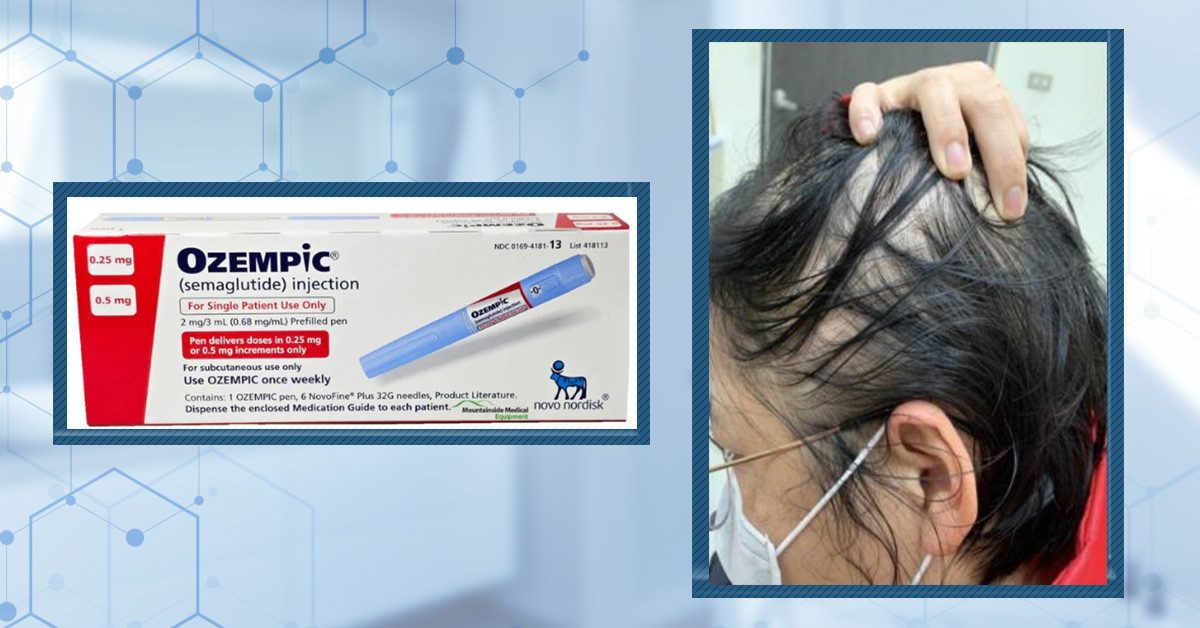 By Cassie Hopton, PhDMay 22, 2026
Does Semaglutide Cause Hair Loss?
GLP-1 medications like semaglutide have transformed obesity and diabetes treatment, helping millions lose weight and improve metabolic health. But some users report an unexpected side effect: hair shedding. Is semaglutide actually responsible? In this article, we explore the scientific evidence, the...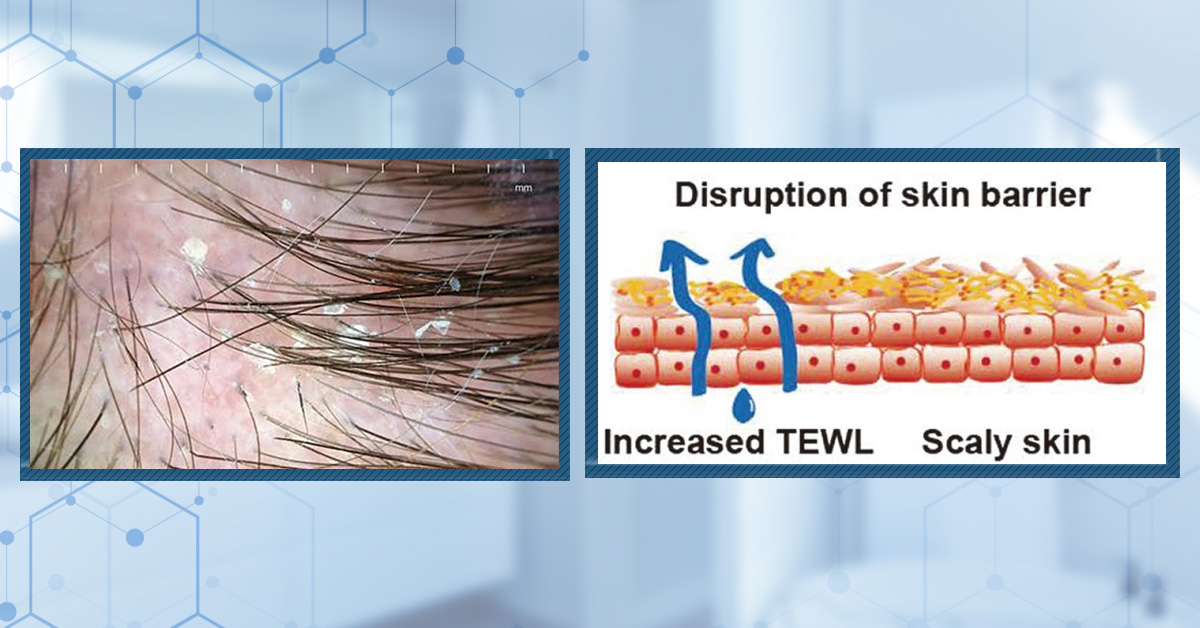 By Cassie Hopton, PhDMay 15, 2026
Does Dandruff Cause Hair Loss?
Dandruff is more than a cosmetic nuisance: it often reflects scalp inflammation that can disrupt the hair cycle. While dandruff itself doesn’t directly cause hair loss, it may trigger shedding and worsen conditions like pattern hair loss. Understanding the root cause of dandruff and treating it effe... By Perfect Hair Health TeamMay 15, 2026
Topical Finasteride: The Best Dosage for Maximizing Regrowth and Minimizing Side Effects
Since earning FDA approval in 1997, Finasteride has been one of the most widely used hair loss drugs. To avoid potential sexual side effects, many opt for topical finasteride in hopes of isolating the drug’s DHT-reducing effects on the scalp. However, at certain doses, topical finasteride can enter ...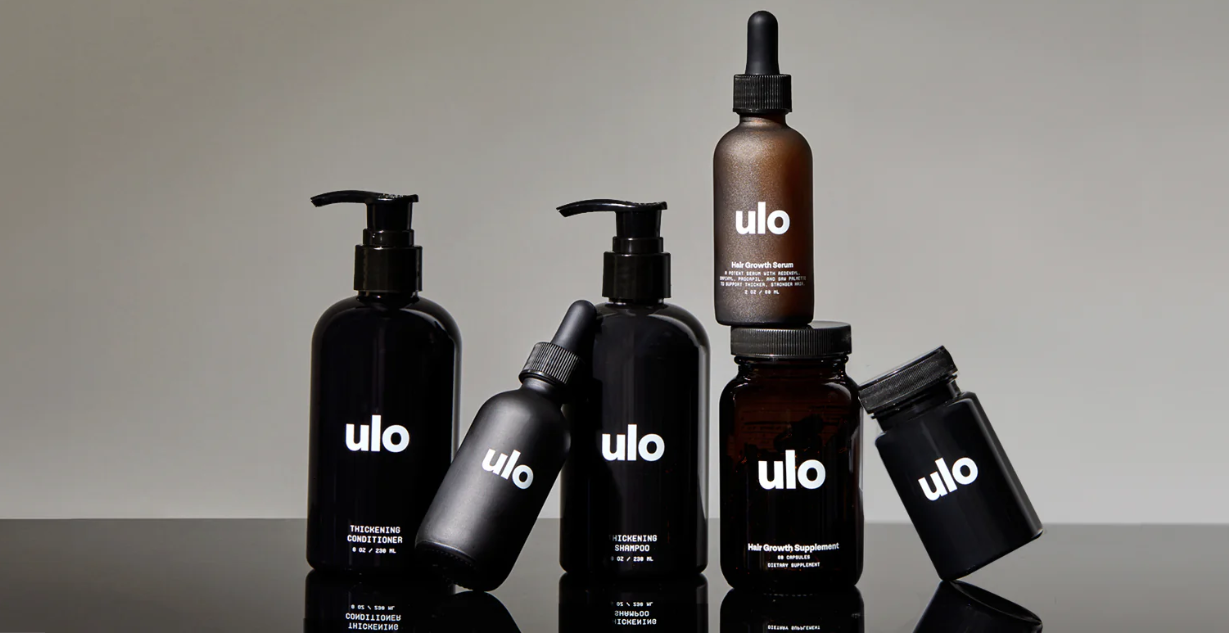 By Dr. Michael WilliamsMay 9, 2026
Ulo Review: #1 Customized Hair Loss Treatment in 2026
Ulo, co-founded by Perfect Hair Health, was created to address long-standing issues in the hair loss industry, from unsafe formulations to misleading personalization claims. In this review, we examine whether Ulo’s evidence-first, highly customizable approach truly sets a new benchmark for hair loss...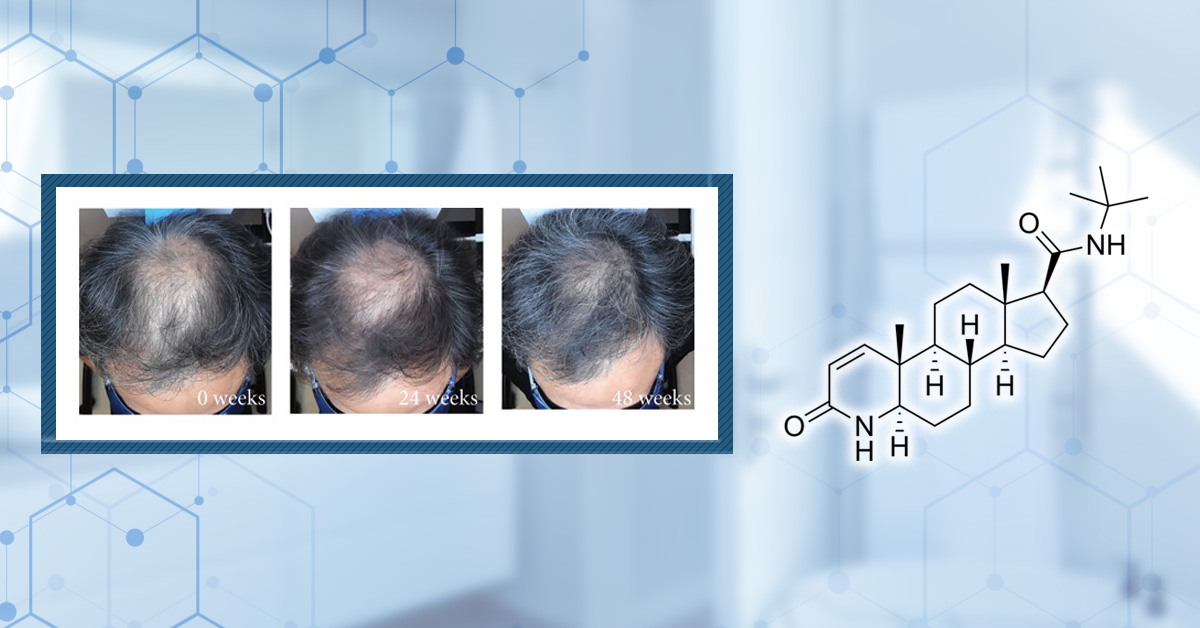 By Sophie Grice, PhDMay 8, 2026
10 Best Hair Loss Treatments for Men
If you are at the start of your hair-loss journey, figuring out where to begin can feel overwhelming. There is no shortage of products and treatments that promise results, but not all of them are worth your time and money. In this article, we break down 10 of the best hair loss treatments for men, i...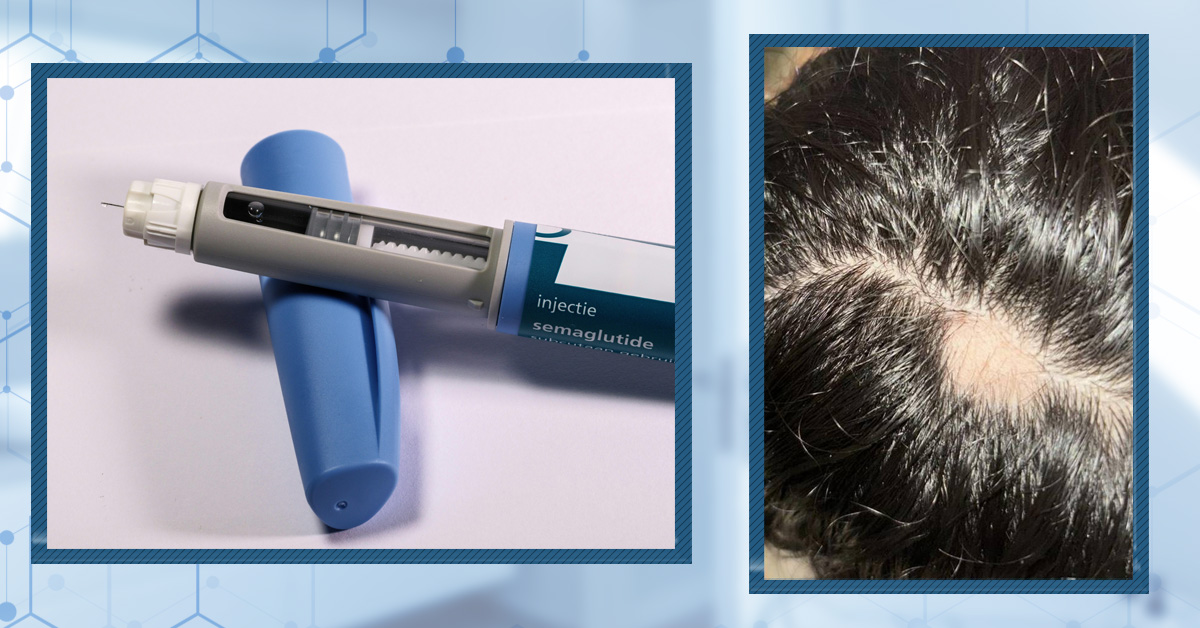 By Catherine Kennedy, PhDMay 1, 2026
Does Ozempic Cause Hair Loss?
GLP-1 medications like Ozempic are transforming weight-loss treatment. But viral posts and patient reports have raised concerns about unexpected hair shedding, and emerging research hints there may be something to it. But what does the science really show? We unpack the latest evidence to examine wh...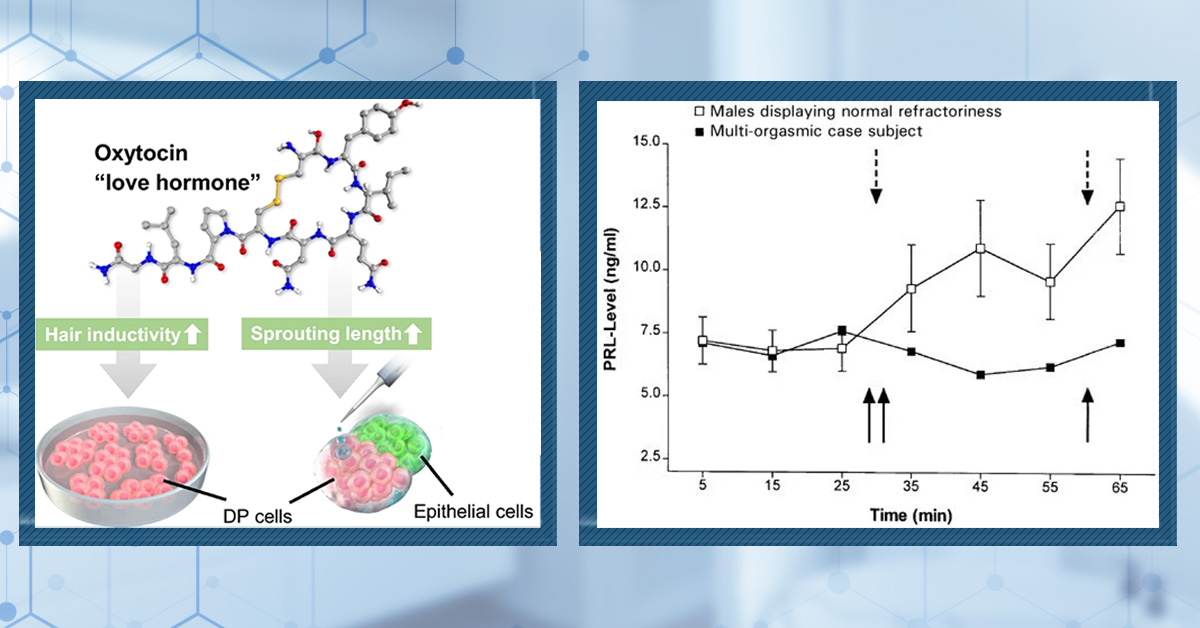 By Dr. Michael WilliamsApr 30, 2026
Does Masturbation Cause Hair Loss?
Theories about the causes of hair loss abound online. A potential link with masturbation is among the more curious of these ideas. Interestingly, there is a range of molecular mechanisms that may form the biological basis for the connection between masturbation and hair loss. But do they stand up to...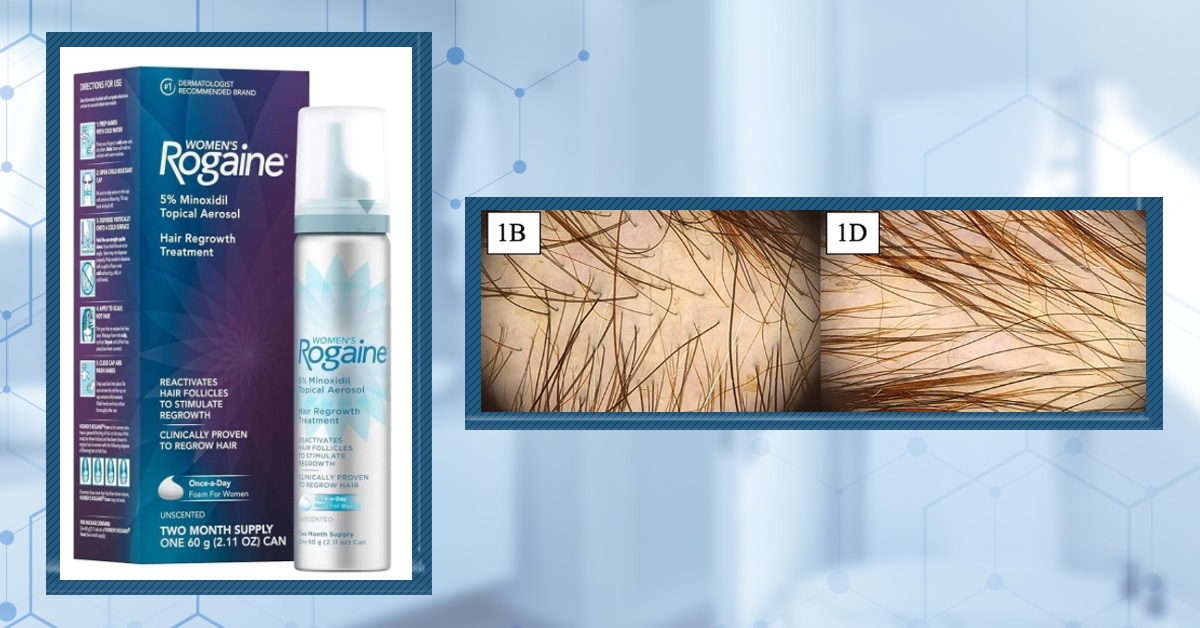 By Cassie Hopton, PhDApr 24, 2026
6 Best Hair Loss Treatments for Women
Female pattern hair loss treatments vary widely in effectiveness, safety, and suitability across life stages. In this evidence-based guide, we review six of the best options for women, from minoxidil to low-level laser therapy, explaining how they work, the clinical evidence behind them, key safety ...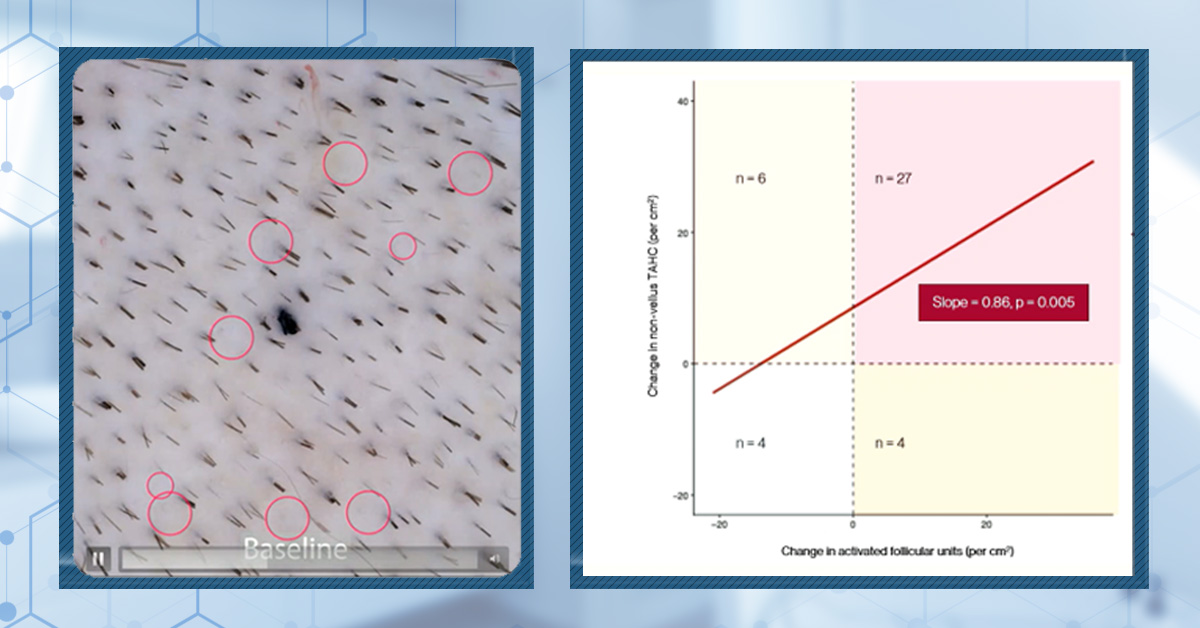 By Dr. Michael WilliamsApr 17, 2026
A New Way to Regrow Hair? Inside the Science of PP-405
PP-405 is a novel topical hair loss treatment developed by Pelage Pharmaceuticals. By targeting the hair follicle stem cell metabolism, the drug aims to “wake up” dormant hair follicle stem cells and drive new hair growth. Early clinical trial results have generated significant excitement, but with ... By Sarah King, PhDApr 17, 2026
AMP-303 Hair Injections: How Strong is the Evidence?
AMP-303 is a novel injectable hair loss treatment developed by Amplifica Holdings Group, a company founded by the scientists behind the ‘hairy mole’ discovery that made headlines in 2023. With first-in-human trial results showing promising hair regrowth after a single treatment cycle, it... - Mission Statement