- About
- Mission Statement
Education. Evidence. Regrowth.
- Education.
Prioritize knowledge. Make better choices.
- Evidence.
Sort good studies from the bad.
- Regrowth.
Get bigger hair gains.
Team MembersPhD's, resarchers, & consumer advocates.
- Rob English
Founder, researcher, & consumer advocate
- Research Team
Our team of PhD’s, researchers, & more
Editorial PolicyDiscover how we conduct our research.
ContactHave questions? Contact us.
Before-Afters- Transformation Photos
Our library of before-after photos.
- — Jenna, 31, U.S.A.
I have attached my before and afters of my progress since joining this group...
- — Tom, 30, U.K.
I’m convinced I’ve recovered to probably the hairline I had 3 years ago. Super stoked…
- — Rabih, 30’s, U.S.A.
My friends actually told me, “Your hairline improved. Your hair looks thicker...
- — RDB, 35, New York, U.S.A.
I also feel my hair has a different texture to it now…
- — Aayush, 20’s, Boston, MA
Firstly thank you for your work in this field. I am immensely grateful that...
- — Ben M., U.S.A
I just wanted to thank you for all your research, for introducing me to this method...
- — Raul, 50, Spain
To be honest I am having fun with all this and I still don’t know how much...
- — Lisa, 52, U.S.
I see a massive amount of regrowth that is all less than about 8 cm long...
Client Testimonials150+ member experiences.
 Scroll DownPopular Treatments
- Treatments
Popular treatments. But do they work?
- Finasteride
- Oral
- Topical
- Dutasteride
- Oral
- Topical
- Mesotherapy
- Minoxidil
- Oral
- Topical
- Ketoconazole
- Shampoo
- Topical
- Low-Level Laser Therapy
- Therapy
- Microneedling
- Therapy
- Platelet-Rich Plasma Therapy (PRP)
- Therapy
- Scalp Massages
- Therapy
 More
More
IngredientsTop-selling ingredients, quantified.
- Saw Palmetto
- Redensyl
- Melatonin
- Caffeine
- Biotin
- Rosemary Oil
- Lilac Stem Cells
- Hydrolyzed Wheat Protein
- Sodium Lauryl Sulfate
 More
More
ProductsThe truth about hair loss "best sellers".
- Minoxidil Tablets
Xyon Health
- Finasteride
Strut Health
- Hair Growth Supplements
Happy Head
- REVITA Tablets for Hair Growth Support
DS Laboratories
- FoliGROWTH Ultimate Hair Neutraceutical
Advanced Trichology
- Enhance Hair Density Serum
Fully Vital
- Topical Finasteride and Minoxidil
Xyon Health
- HairOmega Foaming Hair Growth Serum
DrFormulas
- Bio-Cleansing Shampoo
Revivogen MD
- more
Key MetricsStandardized rubrics to evaluate all treatments.
- Evidence Quality
Is this treatment well studied?
- Regrowth Potential
How much regrowth can you expect?
- Long-Term Viability
Is this treatment safe & sustainable?
Free Research- Free Resources
Apps, tools, guides, freebies, & more.
- Free CalculatorTopical Finasteride Calculator
- Free Interactive GuideInteractive Guide: What Causes Hair Loss?
- Free ResourceFree Guide: Standardized Scalp Massages
- Free Course7-Day Hair Loss Email Course
- Free DatabaseIngredients Database
- Free Interactive GuideInteractive Guide: Hair Loss Disorders
- Free DatabaseTreatment Guides
- Free Lab TestsProduct Lab Tests: Purity & Potency
- Free Video & Write-upEvidence Quality Masterclass
- Free Interactive GuideDermatology Appointment Guide
- More
Articles100+ free articles.
-
9 Best Shampoos for Sensitive Scalp
-
12 Best Shampoos for Greasy Hair
-
Can Miniaturized Hair Follicles Recover, or Is There a Point of No Return?
-
Sublingual Minoxidil: More Hair Growth, Less Sides?
-
Happy Head Review: 5 Concerns With The Brand
-
Can a Blood DHT Test Tell You Whether You Have AGA?
-
ABS-201: Can Blocking the Prolactin Receptor Regrow Hair?
-
Best Topical Finasteride: 5 Top Products of 2026
PublicationsOur team’s peer-reviewed studies.
- Microneedling and Its Use in Hair Loss Disorders: A Systematic Review
- Use of Botulinum Toxin for Androgenic Alopecia: A Systematic Review
- Conflicting Reports Regarding the Histopathological Features of Androgenic Alopecia
- Self-Assessments of Standardized Scalp Massages for Androgenic Alopecia: Survey Results
- A Hypothetical Pathogenesis Model For Androgenic Alopecia:Clarifying The Dihydrotestosterone Paradox And Rate-Limiting Recovery Factors
Menu- AboutAbout
- Mission Statement
Education. Evidence. Regrowth.
- Team Members
PhD's, resarchers, & consumer advocates.
- Editorial Policy
Discover how we conduct our research.
- Contact
Have questions? Contact us.
- Before-Afters
Before-Afters- Transformation Photos
Our library of before-after photos.
- Client Testimonials
Read the experiences of members
Before-Afters/ Client Testimonials- Popular Treatments
-
ArticlesMusely Reviews for Hair Loss: Are They Trustworthy?
First Published May 29 2026Last Updated Oct 3 2026Company Reviews Researched & Written By:Cassie Hopton, PhD
 Reviewed By:Rob English, Medical Editor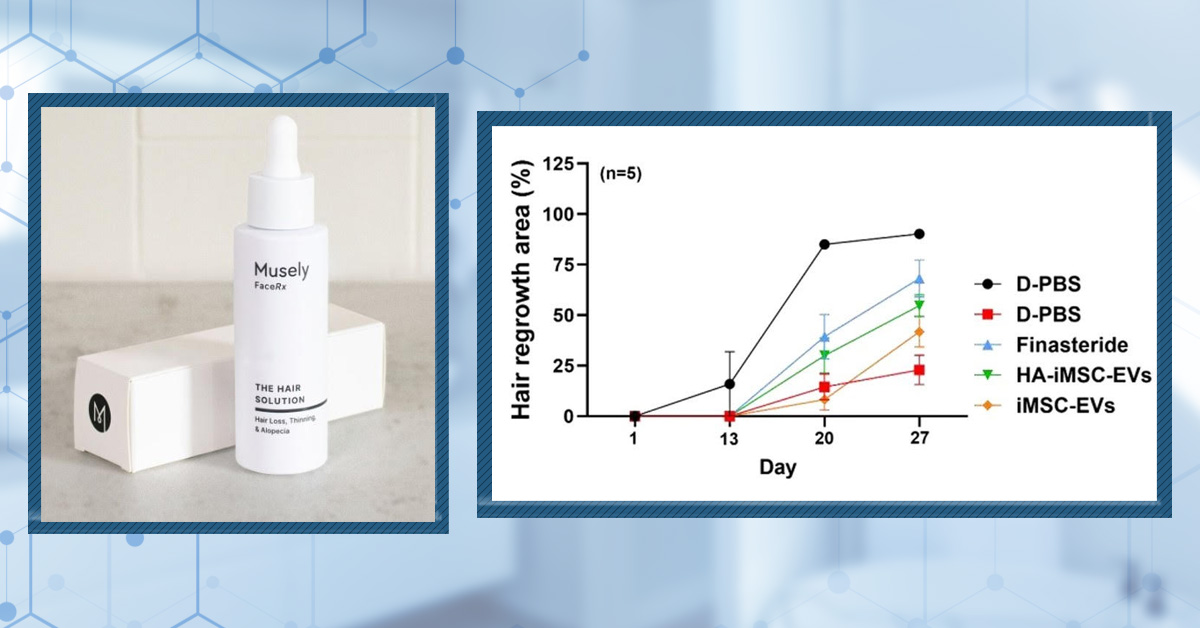
Want help with your hair regrowth journey?
Get personalized support, product recommendations, video calls, and more from our researchers, trichologists, and PhD's dedicated to getting you the best possible outcomes.
Learn MoreArticle Summary
Musely promises affordable, convenient prescription hair loss treatments, but how well do those claims hold up under scientific scrutiny? This in-depth review breaks down Musely’s topical and oral formulas, examines the evidence behind each ingredient. If you’re considering Musely for hair loss, this article will help you decide whether it’s a smart investment.
Full Article
Founded in 2013 as a social app sharing lifestyle and beauty tips, Musely has now evolved into a major telehealth service that provides prescription hair loss treatments for both men and women, among other health-related formulas.
The company emphasizes affordability and accessibility, describing its products as “highly concentrated” and significantly more accessible than traditional healthcare options. These claims reflect a broader shift within telehealth, where convenience and scalability have made treatment more widely available.
However, increased accessibility also makes it more important to evaluate how well these treatments align with clinical evidence, safety considerations, and individual patient needs. In this article, we examine Musely’s hair loss offerings, break down the science behind their ingredients, and assess whether their approach supports effective and responsible long-term hair loss management.
Topical Dutasteride From our partners at UloGet Personalized Topical Dutasteride
Get maximum DHT control in a targeted topical solution. Customize your formula to you and get prescribed 100% online. Choose a multi-month plan and get up to 30% plus a free gift bundle.
Free full-size gifts with 3-month+ plans Prescribed online, shipped to your door Dual 5-AR inhibitionMax DHT control
*Only available in the U.S. Prescription requires an online medical consultation at no extra cost. Off-label products are not endorsed by the FDA. Free gifts included with select multi-month plans while supplies last. Ulo is a partner of Perfect Hair Health; we may earn a commission on purchases.
Key takeaways
- Musely offers oral and topical formulations for hair loss treatment, some with ingredients that have shown to be clinically effective (like minoxidil and dutasteride).
- While some ingredients are well-supported, others have limited or emerging evidence.
- Most treatments are fixed formulations, with unclear flexibility for dose adjustments or ingredient modifications.
- Follow-up care appears to rely partly on automated systems, which may not suit all users.
What Does Musely Offer?
In addition to prescription products for anti-aging, menopause, and skin health, Musely offers both oral and topical hair loss prescriptions (“Rx”) for men and women.
Notably, the site lists these products for “aging hair”, even though hair loss from androgenic alopecia can occur at any age after puberty. The products feature some ingredients that have clinical backing, but others are more questionable.
The three product offerings by Musely for both men and women are:
- The Hair Topical Solution – Classic ($33/month)
- The Hair Topical Solution – Modern ($36/month)
- The Hair Topical Solution – Bundle (includes The Hair Topical Solution – Classic and The Hair Topical Solution – Modern, $69/month)
- The Hair Pill ($32/month)
The Hair Topical Solution – Classic ($33/Month)
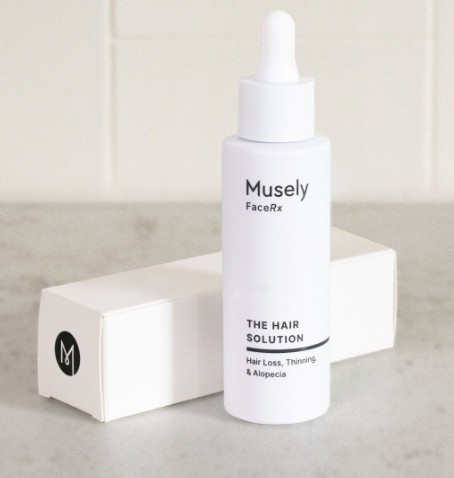
Figure 1: Musely’s The Topical Hair Solution.
Formulation
Described as a “cutting-edge topical hair growth solution”, the formulation of the Hair Topical Solution – Classic is similar for men and women. Both include 8% Minoxidil, 0.3% dutasteride, 0.01% tretinoin, 2% ketoconazole, and 1% hydrocortisone, but the women’s formulation also includes 0.075% spironolactone.
It is a solution, and users are directed to apply 0.5-1 dropperful of the product once per day. Musely claims “patients typically experience a noticeable reduction in hair loss within just 3-6 months, and regrowth within 6-12 months”.
What the Science Says
8% Minoxidil
Topical minoxidil was FDA approved for male androgenic alopecia in 1988.[1]Suchonwanit, P., Thammarucha, S., Leerunyakul, K. (2019). Minoxidil and Its Use in Hair Disorders: A Review. Drug Design, Development and Therapy. 13. 2777–2786. Available at: … Continue reading The mechanism of action includes promoting local vasodilation, supporting the production of factors involved in hair growth, and shortening the resting phase in hair follicles, promoting earlier entry into the growth phase.[2]Messenger, A. G., & Rundegren, J. (2004). Minoxidil: mechanisms of action on hair growth. British Journal of Dermatology. 150(2). 186–194. Available at: … Continue reading
Overall, there is an extensive number of clinical trials showing that minoxidil can promote hair regrowth after use for 4 to 12 months, with some showing that minoxidil can promote regrowth by 50-70%.[3]Olsen, E.A., DeLong, E.R., Weiner, M.S. (1987). Long-Term Follow-Up of Men with Male Pattern Baldness Treated with Topical Minoxidil. Journal of the American Academy of Dermatology. 16(3). 688–695. … Continue reading,[4]Olsen, E.A., Whiting, D., Bergfeld, W. (2007). A Multicenter, Randomized, Placebo-Controlled, Double-Blind Clinical Trial of a Novel Formulation of 5% Minoxidil Topical Foam Versus Placebo in the … Continue reading,[5]Hasanzadeh, H., Nasrollahi, S.A., Halavati, N., Saberi, M., Firooz, A. (2016). Efficacy and Safety of 5% Minoxidil Topical Foam in Male Pattern Hair Loss Treatment and Patient Satisfaction. Acta … Continue reading[6]Van Neste, D. (2020). Placebo-Controlled Dose-Effect Studies with Topical Minoxidil 2% or 5% in Male-Patterned Hair Loss Treated with Oral Finasteride Employing an Analytical and Exhaustive Study … Continue reading
While the efficacy is clear, the clinical benefit of minoxidil above 5% is mixed. However, so is the quality of studies.[7]Singh, S., Patil, A., Kianfar, N., Waśkiel‐Burnat, A., Rudnicka, L., Sinclair, R., Goldust, M., (2022). Does Topical Minoxidil at Concentrations Higher Than 5% Provide Additional Clinical Benefit? … Continue reading
The best quality data comes from a randomized clinical trial assessing hair growth using a phototrichogram (the gold standard), which showed that 15% minoxidil increased hair count more than 5% minoxidil in males with androgenic alopecia.[8]Goldust, M. (2020). British Journal of Dermatology. 183(S1). 88–93(abstract BH107). Available at: https://doi.org/10.1111/bjd.19091
Data like this suggests that Musely’s 8% minoxidil offering may be the answer for those looking to level up their minoxidil routine.
0.3% Dutasteride
Dutasteride is an FDA-approved medication for benign prostate hyperplasia but is also an off-label medication for male androgenic alopecia. It works by acting as a “DHT blocker” – it inhibits type I and type II 5-ɑ-reductase, the enzyme responsible for creating the androgen hormone dihydrotestosterone (DHT).[9]Arif, T., Dorjay, K., Adil, M., Sami, M., (2017). Dutasteride in Androgenetic Alopecia: An Update. Current Clinical Pharmacology. 12(1). Available at: 10.2174/1574884712666170310111125. DHT impacts hair growth, and high levels can cause miniaturization of the hair follicles that ultimately leads to weaker, finer, and non-growing hair. DHT is not only the primary cause of androgenic alopecia, but the levels of this hormone are often higher in those with this condition.[10]Ustuner, E. T. (2013). Cause of Androgenic Alopecia: Crux of the Matter. Plast Reconstr Surg Glob Open. 1(7). e64. Available at: https://doi.org/10.1097/GOX.0000000000000005,[11]Sekhavat, H., Bar Yehuda, S., Asotra, S. (2025). Using the Mechanisms of Action Involved in the Pathogenesis of Androgenetic Alopecia to Treat Hair Loss. Int J Mol Sci. 26(21). 10712. Available at: … Continue reading
Dutasteride, applied topically, could therefore help to combat hair loss by reducing DHT levels on the scalp. Currently, the evidence for the use of topical dutasteride is limited and not all studies are of high quality, but overall the results tentatively indicate that topical dutasteride can improve hair loss outcomes for both men and women with androgenic alopecia.[12]Panuganti, V.K., Kumar Madala, P., Ramalingayya Grandhi, V., Varma Alluri, C., Mohammad, J., Rao, K.S.S.V.V., Reddy Dundigalla, M. (2025). A Randomized, Double-Blind, Placebo And Active Controlled … Continue reading,[13]Nada, E.A., Sharkawy, R.E., Maged, W.M., & Elmagd, M.A. (2018). Topical dutasteride with microneedling in treatment of male androgenetic alopecia. Southern Medical Journal, 22, 387-400,[14]Sánchez-Meza, E., Ocampo-Candiani, J., Gómez-Flores, M., Herz-Ruelas, M.E., Ocampo-Garza, J., Orizaga-Y-Quiroga, T.L., Martínez-Moreno, A., Ocampo-Garza, S.S., (2022). Microneedling Plus Topical … Continue reading,[15]Cedirian, S., Pampaloni, F., Quadrelli, F., Rapparini, L., Bruni, F., Martelli, G., Piraccini, B.M., Starace, M., (2025). Efficacy of Skin Patting and Iontophoresis With Dutasteride Gel in Male and … Continue reading
Importantly, topical dutasteride application appears to only modestly reduce serum DHT levels – in other words, topical application has limited systemic absorption (whole body absorption) when used appropriately.[16]Panuganti, V.K., Kumar Madala, P., Ramalingayya Grandhi, V., Varma Alluri, C., Mohammad, J., Rao, K.S.S.V.V., Reddy Dundigalla, M. (2025). A Randomized, Double-Blind, Placebo And Active Controlled … Continue reading,[17]Nada, E.A., Sharkawy, R.E., Maged, W.M., & Elmagd, M.A. (2018). Topical dutasteride with microneedling in treatment of male androgenetic alopecia. Southern Medical Journal, 22, 387-400 Systemic absorption is associated with several side effects, so minimizing this is a great benefit. However, any change in serum DHT levels is considered inappropriate for use in women who hope to conceive. We’ll discuss this more later.
0.01% Tretinoin
Tretinoin (also known as retinoic acid) is a metabolite of vitamin A.
In the clinic, once-daily application of 5% minoxidil and 0.01% tretinoin was found to be just as effective and safe as twice-daily 5% minoxidil in men with androgenic alopecia.[18]Shin, H.S., Won, C.H., Lee, S.H., Kwon, O.S., Kim, K.H., Eun, H.C. (2007). Efficacy of 5% Minoxidil Versus Combined 5% Minoxidil and 0.01% Tretinoin for Male Pattern Hair Loss. American Journal of … Continue reading This evidence suggests that tretinoin enhances the penetration of minoxidil, and when combined with minoxidil, could offer a convenient way to tackle androgenic alopecia for those looking for low-effort routines. The combination of minoxidil and tretinoin in Musely’s formulation could therefore prove beneficial.
To find out more, read our article on tretinoin here.
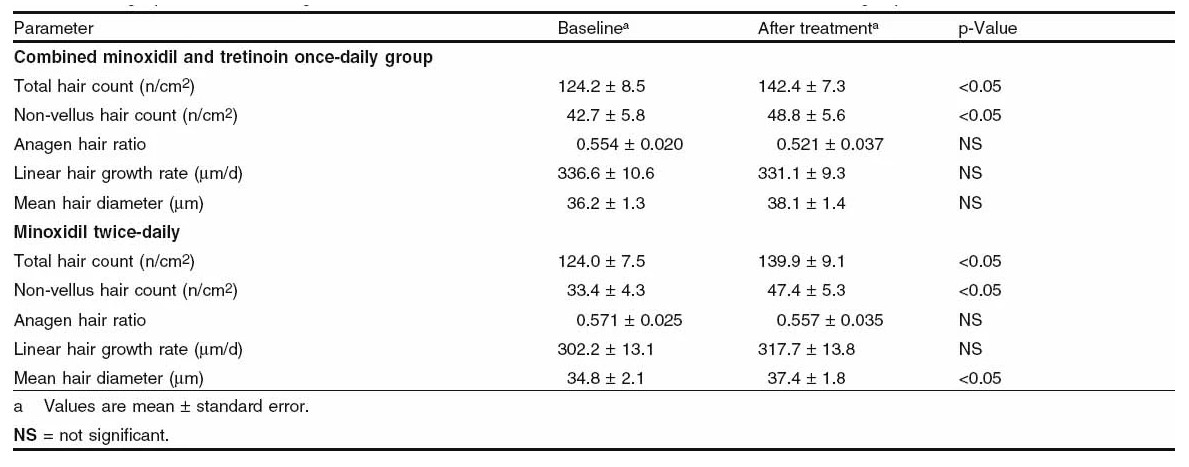
Figure 2: Hair growth parameters measured at baseline and after treatment for 18 weeks with once daily 5% minoxidil and 0.01% tretinoin, or 5% minoxidil twice daily. Adapted from Table 3.[19]Shin, H.S., Won, C.H., Lee, S.H., Kwon, O.S., Kim, K.H., Eun, H.C. (2007). Efficacy of 5% Minoxidil Versus Combined 5% Minoxidil and 0.01% Tretinoin for Male Pattern Hair Loss. American Journal of … Continue reading Image used in line with the Creative Commons License.
0.075% Spironolactone
This is only included in the women’s formulation. Spironolactone is an off-label hair loss medication. In the laboratory, it has shown to have DHT-blocking properties.[20]Corvol, P., Michaud, A., Menard, J., Freifeld, M., Mahoudeau, J., (1975). Antiandrogenic Effect Of Spirolactones: Mechanism Of Action. Endocrinology. 97(1). 52-58. Available at: … Continue reading It may also reduce the production of testosterone, and thus indirectly reduce DHT levels, but this evidence is tentative for now.[21]Menard, R.H., Stripp, B., Gillette, J.R. (1974). Spironolactone And Testicular Cytochrome P-450: Decreased Testosterone Formation In Several Species And Changes In Hepatic Drug Metabolism. … Continue reading,[22]Kossor, D.C., Kominami, S., Takemori, S., Colby, H.D. (1992). Destruction Of Testicular Cytochrome P-450 By 7α-Thiospironolactone Is Catalyzed By The 17α-Hydroxylase. The Journal Of Steroid … Continue reading
Spironolactone is known to cause unwanted feminization effects in males (e.g., enlarged breasts, redistribution of body fat), so it’s clear why this ingredient was left out for the men’s product.[23]Carone, L., Oxberry, S.G., Twycross, R., Charlesworth, S., Mihalyo, M., Wilcock, A. (2017). Spironolactone. Journal of Pain and Symptom Management. 53(2). 288–292. Available at: … Continue reading,[24]Haynes, B.A., Mookadam, F. (2009). Male Gynecomastia. Mayo Clinic Proceedings. 84(8). 672. Available at: https://doi.org/10.4065/84.8.672
For women, spironolactone is an off-label treatment for androgenic alopecia. Studies thus far have investigated topical spironolactone at concentrations of 1% and 5%. These studies show mixed results, and are of mixed quality in terms of study designs, but overall show that topical spironolactone could have promise as a combination therapy with other hair loss treatments.[25]Abdel-Raouf, H., Aly, U.F., Medhat, W., Ahmed, S.S., Abdel-Aziz, R.T.A. (2021). A Novel Topical Combination Of Minoxidil And Spironolactone For Androgenetic Alopecia: Clinical, Histopathological, And … Continue reading,[26]Al Sayed, N.M., El Morsy, E.H., Hussein, T.M., Hassan, E.M., (2025). Clinical And Trichoscopic Evaluations Of Topical Finasteride 1%, Topical Spironolactone 5%, And Minoxidil 5% In Female Pattern … Continue reading,[27]Ammar, A.M., Elshahid, A.R., Abdel-Dayem, H.A., Mohamed, A.A., Elsaie, M.L. (2022). Dermoscopic Evaluation Of The Efficacy Of Combination Of Topical Spironolactone 5% And Minoxidil 5% Solutions In … Continue reading
In terms of Musely’s formulation, 0.075% is a very low concentration. No studies show that this concentration could produce any meaningful results in hair growth.
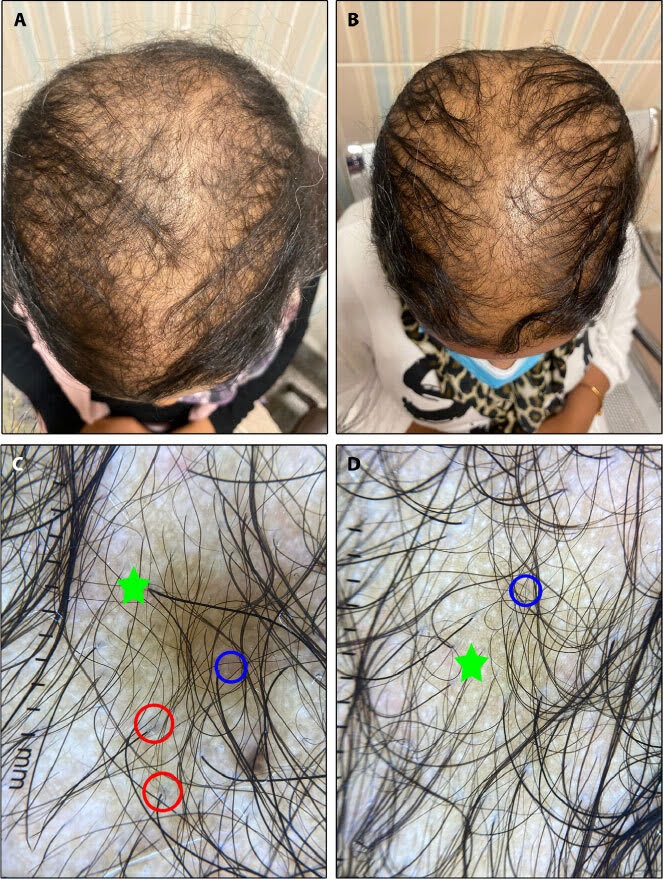
Figure 3: Scalp images at the pre-treatment stage (A) and post-treatment with 5% spironolactone for 12 weeks (B). Adapted from Figure 2.[28]Al Sayed, N.M., El Morsy, E.H., Hussein, T.M., Hassan, E.M., (2025). Clinical And Trichoscopic Evaluations Of Topical Finasteride 1%, Topical Spironolactone 5%, And Minoxidil 5% In Female Pattern … Continue reading Image used in line with the Creative Commons License.
2% Ketoconazole
Ketoconazole started as an antifungal medication for skin, but research now shows it may act to tackle hair loss as well. The anti-fungal properties of ketoconazole can help reduce inflammatory yeast and fungi that may promote hair shedding and accelerate the progression of androgenic alopecia.[29]Piérard-Franchimont, C., De Doncker, P., Cauwenbergh, G., Piérard, G.E. (1998). Ketoconazole Shampoo: Effect of Long-Term Use in Androgenic Alopecia. Dermatology. 196(4). 474-477. Available at: … Continue reading
Research also shows ketoconazole can lower 5-ɑ-reductase activity and block DHT binding to androgen receptors (a step that initiates hair follicle miniaturization) has made it a hot topic in the world of hair loss treatments.[30]Hugo Perez, B. S. (2004). Ketocazole as an adjunct to finasteride in the treatment of androgenetic alopecia in men. Med Hypotheses. 62(1). 112-115. Available at: … Continue reading
The clinical evidence of topical 2% ketoconazole suggests that this medication is effective at increasing hair diameter and supporting clinical improvement in those with androgenic alopecia.[31]Piérard-Franchimont, C., De Doncker, P., Cauwenbergh, G., Piérard, G. E. (1998). Ketoconazole Shampoo: Effect of Long-Term Use in Androgenic Alopecia. Dermatology. 196(4). 474-477. Available at: … Continue reading,[32]Fields, J. R., Vonu, P. M., Monir, R. L., Schoch, J. J. (2020). Topical ketoconazole for the treatment of androgenetic alopecia: A systematic review. Dermatol Ther. 33(1). e13202. Available at: … Continue reading
Although promising, these clinical studies vary in their strength of study design. To support these findings further, we need more studies showing the impact of 2% ketoconazole on terminal hair counts (i.e., the thick, long hair that actually contributes to hair density) using objective phototrichogram assessments.
1% Hydrocortisone
Hydrocortisone is a corticosteroid used to treat inflammation. Hair loss companies typically use this ingredient to dampen inflammation caused by other irritants in their own products (like propylene glycol). Sustained use of corticosteroids is dangerous. They can cause hormonal changes, skin thinning, skin pigmentation changes, and spider veins.[33]Aschoff, R., Schmitt, J., Knuschke, P., Koch, E., Bräutigam, M., Meurer, M. (2011). Evaluation of the Atrophogenic Potential of Hydrocortisone 1% Cream and Pimecrolimus 1% Cream in Uninvolved … Continue reading
Inactive ingredients
The inactive ingredients of this formulation include ethyl alcohol and propylene glycol. These molecules are added as “carrier agents” that increase the absorption of active ingredients. This may sound beneficial, but these carrier agents in particular are also known skin irritants.[34]Lachenmeier, D.W., (2008). Safety Evaluation of Topical Applications of Ethanol on the Skin and Inside the Oral Cavity. Journal of Occupational Medicine and Toxicology. 3. 26. Available at: … Continue reading,[35]Trancik, R.J., Maibach, H.I., (1982). Propylene Glycol: Irritation or Sensitization? Contact Dermatitis. 8(3). 185–189. Available at: https://doi.org/10.1111/j.1600-0536.1982.tb04180.x,[36]Patel, K., Palmer, A., Nixon, R., (2023). Allergic Contact Dermatitis From Propylene Glycol: A Case Series From Australia. Contact Dermatitis. 89(2). 79–84. Available at: … Continue reading
Some companies may use corticosteroids to offset the detrimental effects of ethyl alcohol and propylene glycol. There are non-irritating carrier agents available, and these should be prioritized in formulations like this one
Safety and Effectiveness
There is a strong combination of potent ingredients that will help a lot of people. For example, the strengths used for minoxidil, tretinoin, and ketoconazole are suitable for hair regrowth, and the combination of minoxidil and tretinoin has shown to be clinically effective. With these ingredients, it is not unfounded that patients could “experience a noticeable reduction in hair loss within just 3-6 months, and regrowth within 6-12 months”.
Musely correctly states that hydrocortisone is a “mild steroid used to treat redness, itching, and inflammation of the skin”, but they do not fully clarify the potential detrimental effects of long term use.
The most notable ingredient is topical dutasteride in the women’s formulation. As mentioned earlier, topical dutasteride application can reduce serum DHT levels. Even though the reduction was modest, this suggests systemic absorption.[37]Panuganti, V.K., Kumar Madala, P., Ramalingayya Grandhi, V., Varma Alluri, C., Mohammad, J., Rao, K.S.S.V.V., Reddy Dundigalla, M. (2025). A Randomized, Double-Blind, Placebo And Active Controlled … Continue reading,[38]Nada, E.A., Sharkawy, R.E., Maged, W.M., & Elmagd, M.A. (2018). Topical dutasteride with microneedling in treatment of male androgenetic alopecia. Southern Medical Journal, 22, 387-400 As a DHT blocker, dutasteride poses a serious toxicity risk to the development of male fetuses, and even low doses are considered a risk. So, dutasteride is not typically recommended for women capable of conceiving. While we feel that Musely could do more to make this clear on their website, we hope that these dangers are made apparent during the prescription process.
The Hair Topical Solution – Modern ($36/Month)
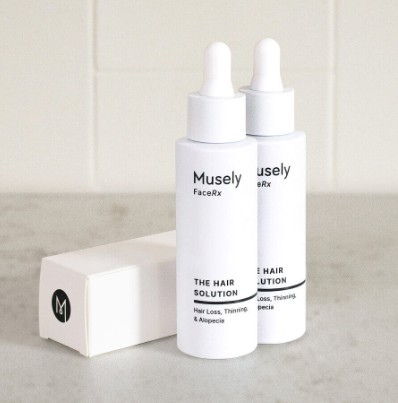
Figure 4: Musely’s Hair Bundle option, which includes The Hair Topical Solution – Modern.
Formulation
The Hair Topical Solution – Modern includes a more inventive ingredient list. Described as a “cutting-edge topical hair growth solution”, the formulation includes induced pluripotent stem cell (iPSC) exosomes at 250 million per bottle, 0.1% melatonin, 0.5% caffeine, 0.004% latanoprost, 1% cetirizine, and 0.2% biotin.
The formulation is the same for men and women, and the application and hair regrowth claims made for this product are the same as those for The Hair Topical Solution – Classic.
What the Science Says
iPSC Exosomes
Think of iPSCs as reset cells. Scientists take an ordinary adult cell (like a skin cell) and rewind it so it can become many different cell types. That’s an iPSC. Exosomes are the tiny packages that those cells send out. They’re microscopic bubbles filled with helpful materials that act as information (like proteins, fats) that other cells can read and respond to. For example, these exosomes may direct other cells to repair or regenerate themselves, or to reduce inflammation.
So in this way, exosomes could (in theory) command hair cells at the scalp to regenerate and grow.
Evidence in vivo (in living organisms) indicates that extracellular vesicles (which includes exosomes) from iPSC could improve hair regrowth in mice, although not as strongly as finasteride.[39]Oh, H.G., Jung, M., Jeong, S.Y., Kim, J., Han, S.D., Kim, H., Lee, S., Lee, Y., You, H., Park, S., Kim, E.A., Kim, T.M., Kim, S., (2024). Improvement of Androgenic Alopecia by Extracellular Vesicles … Continue reading However, in this study, extracellular vesicles were injected, not topically applied like in Musely’s formulation. So far, there is no research to indicate that topical application of exosomes could be beneficial to hair regrowth.
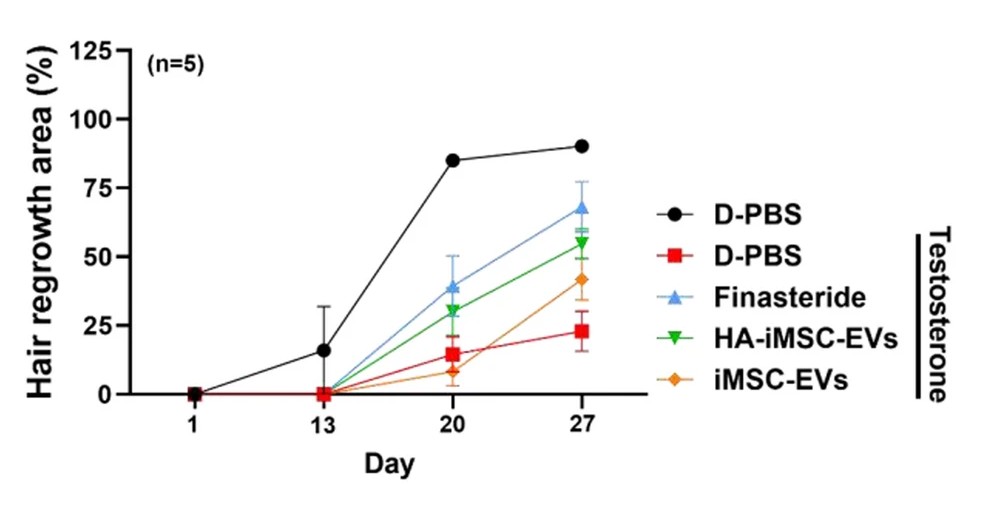
Figure 5: Hair regrowth area (%) in testosterone-induced androgenic alopecia mice treated with either Dulbecco’s phosphate buffered saline (D-PBS), finasteride, hyaluronic acid and extracellular vesicles (EVs, such as exosomes) from iPSC-derived mesenchymal stem cells, or EVs from iPSC-derived mesenchymal stem cells alone for up to 27 days. Adapted from Figure 4.[40]Oh, H.G., Jung, M., Jeong, S.Y., Kim, J., Han, S.D., Kim, H., Lee, S., Lee, Y., You, H., Park, S., Kim, E.A., Kim, T.M., Kim, S., (2024). Improvement of Androgenic Alopecia by Extracellular Vesicles … Continue reading Image used under Creative Commons license.
0.1% Melatonin
Melatonin is a hormone. In the body, it is known to support deep sleep and eliminate harmful free radicals, and in vitro (in the test tube) evidence in prostate cells suggests it could also have anti-androgen (i.e., anti-DHT) activity.[41]Liu, V.W.S., Yau, W.L., Tam, C.W., Yao, K.-M., Shiu, S.Y.W. (2017). Melatonin Inhibits Androgen Receptor Splice Variant-7 (AR-V7)-Induced Nuclear Factor-Kappa B (NF-κB) Activation and NF-κB … Continue reading,[42]Mayo, J.C., Hevia, D., Quiros-Gonzalez, I., et al. (2017). IGFBP3 and MAPK/ERK Signaling Mediates Melatonin-Induced Anti-Tumor Activity in Prostate Cancer. Journal of Pineal Research. 62. e12373. … Continue reading Melatonin has not yet shown to have this activity in humans, but the finding has led to the thought that melatonin could act against androgenic alopecia nonetheless.
So far, there is not a great deal of stringent clinical evidence for the use of topical melatonin, but the studies out there show it may be safe and effective for androgenic alopecia.[43]Fischer, T.W., Burmeister, G., Schmidt, H.W., Elsner, P. (2004). Melatonin Increases Anagen Hair Rate in Women with Androgenetic Alopecia or Diffuse Alopecia: Results of a Pilot Randomized Controlled … Continue reading[44]Fischer, T.W., Trüeb, R.M., Hänggi, G., Innocenti, M., Elsner, P. (2012). Topical Melatonin for Treatment of Androgenetic Alopecia. International Journal of Trichology. 4(4). 236–245. Available … Continue reading However, more studies with larger sample sizes and more stringent methods (i.e., use of a control group, counting of terminal hairs) are needed before strong conclusions or claims can be made.
0.5% Caffeine
There is in vitro evidence that topical caffeine could help to prolong the anagen phase of hair (the hair growth phase), increase the growth factor IGF-1, and improve blood flow, all of which promote hair growth.[45]Völker, J.M., Koch, N., Becker, M., Klenk, A., (2020). Caffeine and Its Pharmacological Benefits in the Management of Androgenetic Alopecia: A Review. Skin Pharmacology and Physiology. 33(3). … Continue reading
Likewise, there are clinical studies showing that leave-on caffeine as low as 0.2% could support hair growth, although the quality of the evidence is often low.[46]Dressler, C., Blumeyer, A., Rosumeck, S., Arayesh, A., Nast, A. (2017). Efficacy of Topical Caffeine in Male Androgenetic Alopecia. Journal der Deutschen Dermatologischen Gesellschaft. 15(7). … Continue reading,[47]Dhurat, R., Chitallia, J., May, T.W., Jayaraaman, A.M., Madhukara, J., Anandan, S., Vaidya, P., Klenk, A., (2017). An Open-Label Randomized Multicenter Study Assessing the Noninferiority of a … Continue reading
We discuss caffeine for hair loss in this article.
0.004% Latanoprost
Latanoprost is a glaucoma medication that has been repurposed as a hair loss treatment after users reported eyelash hair growth. This may be because it simulates the hormone prostaglandin F2ɑ, which has been related to cellular growth and vasodilation, both of which promote hair growth.[48]English, R., Ruiz, S., (2021). Conflicting Reports Regarding the Histopathological Features of Androgenic Alopecia: Are Biopsy Location, Hair Diameter Diversity, and Relative Hair Follicle … Continue reading,[49]Sasaki, S., Hozumi, Y., Kondo, S., (2005). Influence of Prostaglandin F2alpha and Its Analogues on Hair Regrowth and Follicular Melanogenesis in a Murine Model. Experimental Dermatology. 14(5). … Continue reading
Latanoprost as a treatment for androgenic alopecia has limited clinical evidence behind it. One clinical study showed that application of 0.005% latanoprost could result in statistically significant hair count improvements versus a placebo group in some users with androgenic alopecia, particularly if combined with 5% minoxidil.[50]Bloch, L., Escudeiro, C., Sarruf, F., Valente, N., (2018). Latanoprost and Minoxidil: Comparative Double-Blind, Placebo-Controlled Study for the Treatment of Hair Loss. Surgical and Cosmetic … Continue reading However, the study design was poor, and only 19-36% of users were found to have regrowth.
Aside from disappointing clinical evidence, there is also a safety concern. After a year of use, latanoprost has been found to cause pigment changes in the iris of glaucoma patients.[51]Teus, M.A., Arranz-Márquez, E., Lucea-Suescun, P., (2002). Incidence of Iris Colour Change in Latanoprost Treated Eyes. British Journal of Ophthalmology. 86(10). 1085–1088. Available at: … Continue reading We do not yet know if or to what extent latanoprost can spread systemically with topical application, or whether latanoprost may cause colour changes to the scalp over time.
If you’re interested in learning more about latanoprost for hair loss, you can read our article about it here.
1% Cetirizine
Cetirizine is an allergy medication, and may reduce inflammation and a hormone associated with hair loss, prostaglandin D2.[52]Charlesworth, E.N., Kagey-Sobotka, A., Norman, P.S., Lichtenstein, L.M., (1989). Effect of Cetirizine on Mast Cell-Mediator Release and Cellular Traffic During the Cutaneous Late-Phase Reaction. … Continue reading
From the clinical evidence, it appears that application of 1% cetirizine topically can improve hair growth, hair density, and hair thickness in those with androgenic alopecia. However, the evidence so far is limited, with no evidence of efficacy beyond 6 months of use.[53]Zaky, M.S., Abo Khodeir, H., Ahmed, H.-A., Elsaie, M.L., (2021). Therapeutic Implications of Topical Cetirizine 1% in Treatment of Male Androgenetic Alopecia: A Case-Controlled Study. Journal of … Continue reading,[54]Hossein Mostafa, D., Samadi, A., Niknam, S., Nasrollahi, S.A., Guishard, A., Firooz, A., (2021). Efficacy of Cetirizine 1% Versus Minoxidil 5% Topical Solution in the Treatment of Male Alopecia: A … Continue reading,[55]Bassiouny, E.A., El-Samanoudy, S.I., Abbassi, M.M., Nada, H.R., Farid, S.F., (2023). Comparison Between Topical Cetirizine With Minoxidil Versus Topical Placebo With Minoxidil in Female Androgenetic … Continue reading You can read more about cetirizine as a hair loss treatment in our article.
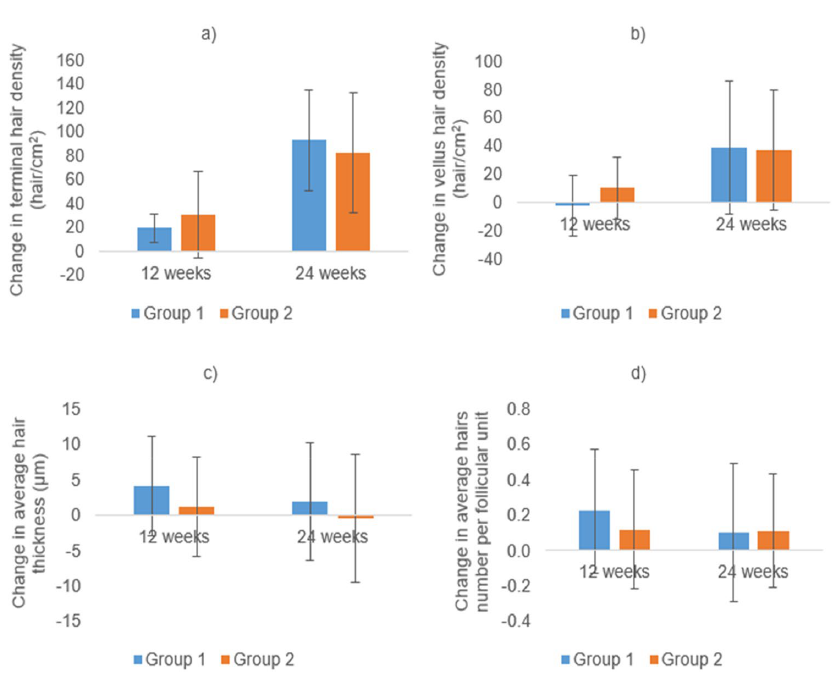
Figure 6: Changes in hair-related parameters relative to baseline in participants that took minoxidil (5%) and cetirizine (1%) in combination (Group 1) or minoxidil (5%) alone (Group 2). Adapted from Figure 4.[56]Bassiouny, E.A., El-Samanoudy, S.I., Abbassi, M.M., Nada, H.R., Farid, S.F., (2023). Comparison Between Topical Cetirizine With Minoxidil Versus Topical Placebo With Minoxidil in Female Androgenetic … Continue reading Image used in line with the Creative Commons License.
Interested in Topical Cetirizine?
Support your hair with full-strength topical cetirizine, if prescribed*
Take the next step in your hair regrowth journey. Get started today with a provider who can prescribe a topical solution tailored for you.
*Only available in the U.S. Prescriptions not guaranteed. Restrictions apply. Off-label products are not endorsed by the FDA.
0.2% Biotin
Biotin is a nutrient and antioxidant.[57]Sghaier, R., Zarrouk, A., Nury, T., Badreddine, I., O’Brien, N., Mackrill, J.J., Vejux, A., Samadi, M., Nasser, B., Caccia, C., Leoni, V., Moreau, T., Cherkaoui-Malki, M., Salhedine Masmoudi, … Continue reading
Outside of those born with biotin deficiency (which is extremely rare), there is no high-quality, clinical evidence to show that biotin helps with hair loss in those with androgenic alopecia.[58]Yelich, A., Jenkins, H., Holt, S., Miller, R. (2024). Biotin for Hair Loss: Teasing Out the Evidence. Journal of Clinical and Aesthetic Dermatology. 17(8). 56–61. Available at: … Continue reading There is also no evidence that topical application of biotin can provide antioxidant benefits.
Inactive ingredients
As with The Hair Topical Solution – Classic, the Modern version also contains the known skin irritants propylene glycol and ethyl alcohol as inactive ingredients.
Safety and Effectiveness
Some of the claims made for each ingredient of the Modern formulation are less supported by evidence than those for the Classic formulation. For this reason, we will go through each ingredient claim separately.
Claim: iPSC exosomes “nourish hair follicles, and promote a healthier scalp for stronger, thicker hair growth”
Conclusion: Further trials would be required to demonstrate efficacy in humans.
Claim: Melatonin “protects hair follicles from damage caused by stress and harmful environmental factors”
Conclusion: The mechanism of action in humans is not known, but there is evidence to support hair regrowth in humans.
Claim: Caffeine “stimulates hair roots, boosts scalp circulation, and fights DHT hormones that shrink follicles and cause hair loss”
Conclusion: Trials in humans would be needed to support these claims, but there is some in vitro evidence.
Claim: Latanoprost “prolongs the growth phase of hair follicles, promoting longer thicker hair”
Conclusion: Latanoprost may act to promote hair growth this way, but it has not yet been confirmed, and clinical studies showing this effect in humans show mixed results. There are also safety concerns associated with long-term use of latanoprost.
Claim: Cetirizine “soothes hair follicles, reducing inflammation to support stronger, thicker hair growth”
Conclusion: Evidence suggests that cetirizine can reduce inflammation.
Claim: Biotin is “an antioxidant with anti-inflammatory and anti-aging properties”
Conclusion: Biotin is an antioxidant, but there is only evidence for these effects when taken orally, not applied topically.
The Hair Pill ($32/Month)
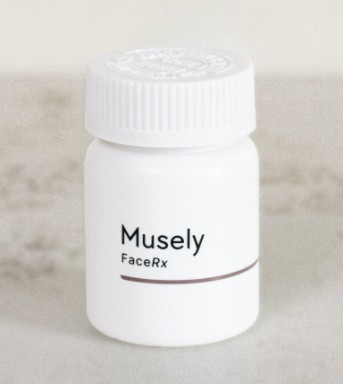
Figure 7: Musely’s The Hair Pill.
Formulation
We will now move on to the oral hair loss treatment available with Musely. The Hair Pill is a daily pill that comes in a few different varieties:
- Bloom: 1 mg minoxidil and 0.4 mg dutasteride (for men and women over 45)
- Bloom+: 2 mg minoxidil and 0.4 g dutasteride (for men and women over 45)
- Sprout: 1 mg minoxidil and 60 mg spironolactone (for women under 45)
- Growth: 1 mg minoxidil (for men and women at any age)
- Growth+: 2 mg minoxidil (for men and women at any age)
What the Science Says
1-2 mg Minoxidil
Generally, oral minoxidil at this level is considered an effective medication for androgenic alopecia, and the clinical evidence backs this up.[59]Jaén, P., & Arias-Santiago, S. (n.d.). Efficacy and safety of oral minoxidil 5 mg daily during 24-week treatment in male androgenetic alopecia. Available at: … Continue reading,[60]Panchaprateep, R., & Lueangarun, S. (2020). Efficacy and safety of oral minoxidil 5 mg once daily in the treatment of male patients with androgenetic alopecia: an open-label and global … Continue reading,[61]Silva, M. N. E., Ramos, P. M., Silva, M. R., Silva, R. N. E., & Raposo, N. R. B. (2022). Randomized clinical trial of low-dose oral minoxidil for the treatment of female pattern hair loss: 0.25 … Continue reading,[62]Sinclair, R. D. (2018). Female pattern hair loss: a pilot study investigating combination therapy with low-dose oral minoxidil and spironolactone. *International Journal of Dermatology.* 57(1). … Continue reading
Because oral minoxidil undergoes systemic absorption, users report hypertrichosis, or unwanted hair growth outside the scalp, including on the face. Other commonly reported side effects include lightheadedness, fluid retention, an elevated heart rate, and headache.[63]Vañó-Galván, S., Pirmez, R., Hermosa-Gelbard, A., Moreno-Arrones, Ó. M., Saceda-Corralo, D., Rodrigues-Barata, R., Jimenez-Cauhe, J., et al. (2021). Safety of low-dose oral minoxidil for hair … Continue reading
If you’re currently using topical minoxidil and are interested in the oral formulation, read our article to understand if this switch is right for you.
60 mg Spironolactone
As with The Hair Topical Solution – Classic, Musely offers spironolactone in the women’s formulation of The Hair Pill (the Sprout option).
For women with androgenic alopecia, the efficacy and safety of oral spironolactone have been studied across doses from 25 mg per day to 200 mg per day. Musely’s spironolactone offering is on the low end.
So far, there is only low-quality clinical evidence documenting the use of 25-50 mg/day spironolactone for androgenic alopecia. This data suggests daily intake could reduce hair loss severity.[64]Sinclair, R.D. (2018). Female pattern hair loss: a pilot study investigating combination therapy with low-dose oral minoxidil and spironolactone. International Journal of Dermatology. 57(1). … Continue reading,[65]Devjani, S., Ezemma, O., Jothishankar, B., Saberi, S., Kelley, K.J., Senna, M.M. (2024). Efficacy Of Low-Dose Spironolactone For Hair Loss In Women. 23(3). E91. Available at: … Continue reading However, it is important to note that the methodologies of some of these studies are lacking. This is because:
- There were no placebo controls
- Hair density was determined visually
- Hair shedding was self-reported in some cases
- Only one of these studies is a clinical trial, the other is a retrospective study
So, whether oral spironolactone at this level is actually effective for treating hair loss is not currently known.
It is notable that Musely indicates the Sprout option containing spironolactone is best for women under 45. This is because the risk of hyperkalemia (too much potassium in the blood) increases with age, and spironolactone itself can also induce hyperkalemia, so it is best used by those with a reduced risk.
0.4 mg Dutasteride
Several high-quality studies show that oral dutasteride at 0.1-0.5 mg per day is effective for the treatment of androgenic alopecia, and could even rival oral finasteride in terms of efficacy and safety.[66]Olsen, E.A., Hordinsky, M., Whiting, D., Stough, D., Hobbs, S., Ellis, M.L., Wilson, T., Rittmaster, R.S., (2006). The Importance of Dual 5alpha-Reductase Inhibition in the Treatment of Male Pattern … Continue reading,[67]Choi, G.S., Sim, W.Y., Kang, H., Huh, C.H., Lee, Y.W., Shantakumar, S., Ho, Y.F., Oh, E.J., Duh, M.S., Cheng, W.Y., Bobbili, P., Thompson-Leduc, P., Ong, G., (2022). Long-Term Effectiveness and … Continue reading,[68]Shanshanwal, S.J.S., Dhurat, R.S., (2017). Superiority of Dutasteride Over Finasteride in Hair Regrowth and Reversal of Miniaturization in Men With Androgenetic Alopecia: A Randomized Controlled … Continue reading,[69]Gubelin Harcha, W., Barboza Martínez, J., Tsai, T.-F., Katsuoka, K., Kawashima, M., Tsuboi, R., Barnes, A., Ferron-Brady, G., Chetty, D., (2014). A Randomized, Active- and Placebo-Controlled Study … Continue reading While longer trials are needed, the evidence so far indicates dutasteride is a promising treatment for androgenic alopecia. In light of this, an oral dutasteride offering by Musely makes sense, particularly when many telehealth providers just offer finasteride.
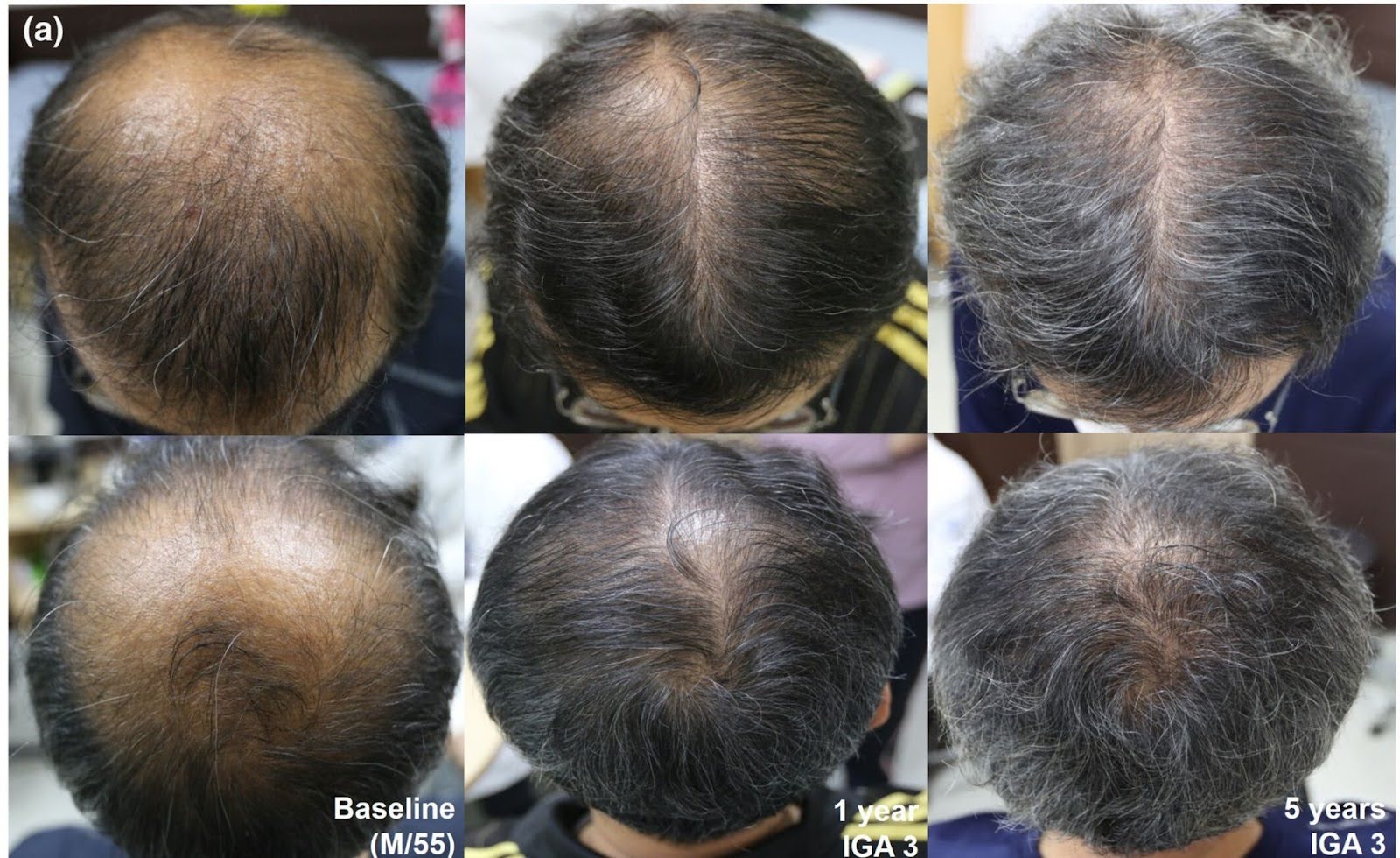
Figure 8: Hair density images at baseline, 1 year, and 5 years after treatment with oral dutasteride at 0.5 mg. Adapted from Figure 2.[70]Choi, S., Kwon, S.-H., Sim, W.-Y., Lew, B.-L., (2024). Long-Term Efficacy And Safety Of Dutasteride 0.5 Mg In Korean Men With Androgenetic Alopecia: 5-Year Data Demonstrating Clinical Improvement … Continue reading Image used in line with the Creative Commons License.
Compounding Oral Dutasteride: Is It Effective?
Dutasteride does not dissolve well in water and relies on fat-based carriers (like lipids) for effective absorption in the body. Because of this, commercially approved versions of the drug are formulated as lipid-containing soft-gel capsules, not conventional compressed tablets.
However, some telehealth platforms supply dutasteride in compounded oral capsules that lack these lipids. In these preparations, dutasteride is often used in powdered form and combined with additional compounds, such as oral minoxidil and vitamins, within a single capsule. This type of formulation may impair how much of the drug is absorbed into circulation.
To find out more, we performed a proof-of-concept experiment to evaluate whether these compounded capsules result in lower biological activity. A single participant ingested 1.5 mg of powdered dutasteride (three capsules of 0.5 mg each), after which serum DHT levels were measured after 12 hours. Based on existing pharmacologic data, dutasteride at doses as low as 1 mg would ordinarily be expected to reduce circulating DHT levels by approximately 80-90%.[71]Gisleskog, P. O., Hermann, D., Hammarlund‐Udenaes, M., & Karlsson, M. O. (1998). A model for the turnover of dihydrotestosterone in the presence of the irreversible 5α‐reductase inhibitors … Continue reading
Contrary to expectations, the observed reduction in DHT was only 13.6%. At this level of suppression, the therapeutic impact of dutasteride would likely be minimal. Although definitive conclusions require larger, peer-reviewed investigations, these preliminary findings raise concerns about the effectiveness of certain compounded dutasteride products currently in circulation.
Musely compounds the Hair Pill containing dutasteride with minoxidil, as well as vitamin C, vitamin D3 and vitamin B9, in a cellulose capsule. Given our results, this raises questions on the potential effectiveness of this formulation.
Safety and Effectiveness
It is typical for oral medications to come with a larger list of side effects due to systemic absorption. This is true for the Musely Hair Pill, but it is also a sign that the product contains active ingredients.
The efficacy of minoxidil and dutasteride is well documented. However, we would like to see greater transparency around how they compound their dutasteride to be sure that it isn’t losing efficacy.
Areas Where Musely Could Improve
While Musely offers a range of tried-and-tested solutions in an accessible and user-friendly package, there are still some areas where we feel they could improve.
1. More Flexibility in Formulation Design
Hair loss treatment is rarely one-size-fits-all. Some users do better starting at lower doses, others need to remove irritating ingredients, and some may eventually need stronger or alternative options if results plateau. Greater flexibility in ingredient selection, dosing, and escalation pathways could make Musely’s platform more adaptable to real-world patient needs.
2. Stronger Transparency Around Why Ingredients Are Included
Some of Musely’s formulations include well-established ingredients, while others rely on ingredients with limited or emerging evidence. In these cases, clearer explanations of why a specific ingredient was chosen, what level of evidence supports it, and what users should realistically expect would improve trust.
This is especially important in formulations that include newer or less widely adopted compounds. When a product contains ingredients that are still under investigation, users benefit from understanding whether those ingredients are considered core drivers of results or more experimental additions.
3. Clearer Communication Around Safety Considerations
Several Musely products include ingredients that may require closer attention depending on the user’s sex, age, fertility plans, scalp sensitivity, or tolerance for systemic side effects. While some of these concerns may be addressed during the prescribing process, clearer communication upfront would help users make more informed decisions before beginning treatment.
4. More Direct Medical Oversight During Follow-Up
Telehealth can improve access to care, but follow-up support matters just as much as the initial prescription. Musely’s model appears to rely at least partly on automated or semi-automated systems for check-ins. That may work well for routine updates, but some users may prefer more direct clinician involvement when navigating side effects, uncertain progress, or treatment adjustments.
The Ulo Solution: Safe, Effective Treatments Personal to You
We launched Ulo in response to the many problems that have arisen in the telehealth industry.
For years, we advocated for better formulations and practices across the hair industry, but we saw no improvement in telehealth services. So, we decided to fix these problems ourselves by creating Ulo. With Ulo, we offer consumers products that not only respect scientific evidence but are truly personalized to them.
- Science versus marketing? Ulo only uses ingredients (including doses and combinations) that have scientific evidence behind them. No marketing ploys.
- Safety? Ulo only uses ingredients that have human safety and efficacy data behind them.
- Customization? With Ulo, you can adjust your dose to one that suits you and your goals, and you can change this at any time.
- Personalization? If you don’t tolerate minoxidil well, don’t worry. You can personalize your oral or topical hair loss formula with ingredients you know work for you. Extensive oral and topical options are available.
- Medical oversight? With Ulo, you speak one-on-one with a board-certified physician and get support throughout your experience, and it’s never with an AI bot!
Ulo is the science-backed and patient-first answer to those seeking to go on a hair growth journey that not only maximizes results but also safety.
Final Remarks
Musely offers a convenient and accessible entry point into prescription hair loss treatment, with several formulations built around clinically supported ingredients.
At the same time, there are important considerations. Some formulations rely on emerging or less-established ingredients, personalization appears limited, and aspects of medical oversight and transparency could be strengthened.
For users seeking a simple, all-in-one approach, Musely may be a reasonable option. For those who value flexibility, detailed transparency, or highly tailored treatment plans, it may be worth comparing alternative providers before making a decision.
References[+]
References ↑1 Suchonwanit, P., Thammarucha, S., Leerunyakul, K. (2019). Minoxidil and Its Use in Hair Disorders: A Review. Drug Design, Development and Therapy. 13. 2777–2786. Available at: https://doi.org/10.2147/DDDT.S214907 ↑2 Messenger, A. G., & Rundegren, J. (2004). Minoxidil: mechanisms of action on hair growth. British Journal of Dermatology. 150(2). 186–194. Available at: https://doi.org/10.1111/j.1365-2133.2004.05785.x ↑3 Olsen, E.A., DeLong, E.R., Weiner, M.S. (1987). Long-Term Follow-Up of Men with Male Pattern Baldness Treated with Topical Minoxidil. Journal of the American Academy of Dermatology. 16(3). 688–695. Available at: https://doi.org/10.1016/S0190-9622(87)70089-9 ↑4 Olsen, E.A., Whiting, D., Bergfeld, W. (2007). A Multicenter, Randomized, Placebo-Controlled, Double-Blind Clinical Trial of a Novel Formulation of 5% Minoxidil Topical Foam Versus Placebo in the Treatment of Androgenetic Alopecia in Men. Journal of the American Academy of Dermatology. 57(5). 767–774. Available at: https://doi.org/10.1016/j.jaad.2007.04.012 ↑5 Hasanzadeh, H., Nasrollahi, S.A., Halavati, N., Saberi, M., Firooz, A. (2016). Efficacy and Safety of 5% Minoxidil Topical Foam in Male Pattern Hair Loss Treatment and Patient Satisfaction. Acta Dermatovenerologica Alpina, Pannonica et Adriatica. 25(3). 41–44. Available at: https://doi.org/10.15570/actaapa.2016.12 ↑6 Van Neste, D. (2020). Placebo-Controlled Dose-Effect Studies with Topical Minoxidil 2% or 5% in Male-Patterned Hair Loss Treated with Oral Finasteride Employing an Analytical and Exhaustive Study Protocol. Skin Research and Technology. 26(4). 542–557. Available at: https://doi.org/10.1111/srt.12827 ↑7 Singh, S., Patil, A., Kianfar, N., Waśkiel‐Burnat, A., Rudnicka, L., Sinclair, R., Goldust, M., (2022). Does Topical Minoxidil at Concentrations Higher Than 5% Provide Additional Clinical Benefit? Clinical and Experimental Dermatology. 47(11). 1951–1955. Available at: https://doi.org/10.1111/ced.15338 ↑8 Goldust, M. (2020). British Journal of Dermatology. 183(S1). 88–93(abstract BH107). Available at: https://doi.org/10.1111/bjd.19091 ↑9 Arif, T., Dorjay, K., Adil, M., Sami, M., (2017). Dutasteride in Androgenetic Alopecia: An Update. Current Clinical Pharmacology. 12(1). Available at: 10.2174/1574884712666170310111125 ↑10 Ustuner, E. T. (2013). Cause of Androgenic Alopecia: Crux of the Matter. Plast Reconstr Surg Glob Open. 1(7). e64. Available at: https://doi.org/10.1097/GOX.0000000000000005 ↑11 Sekhavat, H., Bar Yehuda, S., Asotra, S. (2025). Using the Mechanisms of Action Involved in the Pathogenesis of Androgenetic Alopecia to Treat Hair Loss. Int J Mol Sci. 26(21). 10712. Available at: https://doi.org/10.3390/ijms262110712 ↑12, ↑16, ↑37 Panuganti, V.K., Kumar Madala, P., Ramalingayya Grandhi, V., Varma Alluri, C., Mohammad, J., Rao, K.S.S.V.V., Reddy Dundigalla, M. (2025). A Randomized, Double-Blind, Placebo And Active Controlled Phase II Study To Evaluate The Safety And Efficacy Of Novel Dutasteride Topical Solution (0.01%, 0.02%, And 0.05% W/V) In Male Subjects With Androgenetic Alopecia. Cureus. 17(8). e89309. Available at: https://doi.org/10.7759/cureus.89309 ↑13, ↑17, ↑38 Nada, E.A., Sharkawy, R.E., Maged, W.M., & Elmagd, M.A. (2018). Topical dutasteride with microneedling in treatment of male androgenetic alopecia. Southern Medical Journal, 22, 387-400 ↑14 Sánchez-Meza, E., Ocampo-Candiani, J., Gómez-Flores, M., Herz-Ruelas, M.E., Ocampo-Garza, J., Orizaga-Y-Quiroga, T.L., Martínez-Moreno, A., Ocampo-Garza, S.S., (2022). Microneedling Plus Topical Dutasteride Solution for Androgenetic Alopecia: A Randomized Placebo-Controlled Study. Journal of the European Academy of Dermatology and Venereology. 36(10). e806–e808. Available at: https://doi.org/10.1111/jdv.18285 ↑15 Cedirian, S., Pampaloni, F., Quadrelli, F., Rapparini, L., Bruni, F., Martelli, G., Piraccini, B.M., Starace, M., (2025). Efficacy of Skin Patting and Iontophoresis With Dutasteride Gel in Male and Menopausal Female Androgenetic Alopecia: A Pilot Study. Dermatology and Therapy (Heidelberg). 15(11). 3419–3424. Available at: https://doi.org/10.1007/s13555-025-01532-w ↑18 Shin, H.S., Won, C.H., Lee, S.H., Kwon, O.S., Kim, K.H., Eun, H.C. (2007). Efficacy of 5% Minoxidil Versus Combined 5% Minoxidil and 0.01% Tretinoin for Male Pattern Hair Loss. American Journal of Clinical Dermatology. 8(5). 285–290. Available at: https://doi.org/10.2165/00128071-200708050-00003 ↑19 Shin, H.S., Won, C.H., Lee, S.H., Kwon, O.S., Kim, K.H., Eun, H.C. (2007). Efficacy of 5% Minoxidil Versus Combined 5% Minoxidil and 0.01% Tretinoin for Male Pattern Hair Loss. American Journal of Clinical Dermatology. 8(5). 285–290. Available at: https://doi.org/10.2165/00128071-200708050-00003 ↑20 Corvol, P., Michaud, A., Menard, J., Freifeld, M., Mahoudeau, J., (1975). Antiandrogenic Effect Of Spirolactones: Mechanism Of Action. Endocrinology. 97(1). 52-58. Available at: https://doi.org/10.1210/endo-97-1-52 ↑21 Menard, R.H., Stripp, B., Gillette, J.R. (1974). Spironolactone And Testicular Cytochrome P-450: Decreased Testosterone Formation In Several Species And Changes In Hepatic Drug Metabolism. Endocrinology. 94(6). 1628-1636. Available at: https://doi.org/10.1210/endo-94-6-1628 ↑22 Kossor, D.C., Kominami, S., Takemori, S., Colby, H.D. (1992). Destruction Of Testicular Cytochrome P-450 By 7α-Thiospironolactone Is Catalyzed By The 17α-Hydroxylase. The Journal Of Steroid Biochemistry And Molecular Biology. 42(3–4). 421-424. Available at: https://doi.org/10.1016/0960-0760(92)90147-B ↑23 Carone, L., Oxberry, S.G., Twycross, R., Charlesworth, S., Mihalyo, M., Wilcock, A. (2017). Spironolactone. Journal of Pain and Symptom Management. 53(2). 288–292. Available at: https://doi.org/10.1016/j.jpainsymman.2016.12.320 ↑24 Haynes, B.A., Mookadam, F. (2009). Male Gynecomastia. Mayo Clinic Proceedings. 84(8). 672. Available at: https://doi.org/10.4065/84.8.672 ↑25 Abdel-Raouf, H., Aly, U.F., Medhat, W., Ahmed, S.S., Abdel-Aziz, R.T.A. (2021). A Novel Topical Combination Of Minoxidil And Spironolactone For Androgenetic Alopecia: Clinical, Histopathological, And Physicochemical Study. Dermatologic Therapy. 34(1). e14678. Available at: https://doi.org/10.1111/dth.14678 ↑26 Al Sayed, N.M., El Morsy, E.H., Hussein, T.M., Hassan, E.M., (2025). Clinical And Trichoscopic Evaluations Of Topical Finasteride 1%, Topical Spironolactone 5%, And Minoxidil 5% In Female Pattern Hair Loss Treatment. Dermatology Practical And Conceptual. 15(1). 4698. Available at: https://doi.org/10.5826/dpc.1501a4698 ↑27 Ammar, A.M., Elshahid, A.R., Abdel-Dayem, H.A., Mohamed, A.A., Elsaie, M.L. (2022). Dermoscopic Evaluation Of The Efficacy Of Combination Of Topical Spironolactone 5% And Minoxidil 5% Solutions In The Treatment Of Androgenetic Alopecia: A Cross Sectional-Comparative Study. Journal Of Cosmetic Dermatology. 21(11). 5790-5799. Available at: https://doi.org/10.1111/jocd.15328 ↑28 Al Sayed, N.M., El Morsy, E.H., Hussein, T.M., Hassan, E.M., (2025). Clinical And Trichoscopic Evaluations Of Topical Finasteride 1%, Topical Spironolactone 5%, And Minoxidil 5% In Female Pattern Hair Loss Treatment. Dermatology Practical And Conceptual. 15(1). 4698. Available at: https://doi.org/10.5826/dpc.1501a4698 ↑29 Piérard-Franchimont, C., De Doncker, P., Cauwenbergh, G., Piérard, G.E. (1998). Ketoconazole Shampoo: Effect of Long-Term Use in Androgenic Alopecia. Dermatology. 196(4). 474-477. Available at: https://doi.org/10.1159/000017954 ↑30 Hugo Perez, B. S. (2004). Ketocazole as an adjunct to finasteride in the treatment of androgenetic alopecia in men. Med Hypotheses. 62(1). 112-115. Available at: https://doi.org/10.1016/S0306-9877(03)00264-0 ↑31 Piérard-Franchimont, C., De Doncker, P., Cauwenbergh, G., Piérard, G. E. (1998). Ketoconazole Shampoo: Effect of Long-Term Use in Androgenic Alopecia. Dermatology. 196(4). 474-477. Available at: https://doi.org/10.1159/000017954 ↑32 Fields, J. R., Vonu, P. M., Monir, R. L., Schoch, J. J. (2020). Topical ketoconazole for the treatment of androgenetic alopecia: A systematic review. Dermatol Ther. 33(1). e13202. Available at: https://doi.org/10.1111/dth.13202 ↑33 Aschoff, R., Schmitt, J., Knuschke, P., Koch, E., Bräutigam, M., Meurer, M. (2011). Evaluation of the Atrophogenic Potential of Hydrocortisone 1% Cream and Pimecrolimus 1% Cream in Uninvolved Forehead Skin of Patients with Atopic Dermatitis Using Optical Coherence Tomography. Experimental Dermatology. 20(10). 832–836. Available at: https://doi.org/10.1111/j.1600-0625.2011.01335.x ↑34 Lachenmeier, D.W., (2008). Safety Evaluation of Topical Applications of Ethanol on the Skin and Inside the Oral Cavity. Journal of Occupational Medicine and Toxicology. 3. 26. Available at: https://doi.org/10.1186/1745-6673-3-26 ↑35 Trancik, R.J., Maibach, H.I., (1982). Propylene Glycol: Irritation or Sensitization? Contact Dermatitis. 8(3). 185–189. Available at: https://doi.org/10.1111/j.1600-0536.1982.tb04180.x ↑36 Patel, K., Palmer, A., Nixon, R., (2023). Allergic Contact Dermatitis From Propylene Glycol: A Case Series From Australia. Contact Dermatitis. 89(2). 79–84. Available at: https://doi.org/10.1111/cod.14325 ↑39 Oh, H.G., Jung, M., Jeong, S.Y., Kim, J., Han, S.D., Kim, H., Lee, S., Lee, Y., You, H., Park, S., Kim, E.A., Kim, T.M., Kim, S., (2024). Improvement of Androgenic Alopecia by Extracellular Vesicles Secreted From Hyaluronic Acid-Stimulated Induced Mesenchymal Stem Cells. Stem Cell Research and Therapy. 15(1). 287. Available at: https://doi.org/10.1186/s13287-024-03906-x ↑40 Oh, H.G., Jung, M., Jeong, S.Y., Kim, J., Han, S.D., Kim, H., Lee, S., Lee, Y., You, H., Park, S., Kim, E.A., Kim, T.M., Kim, S., (2024). Improvement of Androgenic Alopecia by Extracellular Vesicles Secreted From Hyaluronic Acid-Stimulated Induced Mesenchymal Stem Cells. Stem Cell Research and Therapy. 15(1). 287. Available at: https://doi.org/10.1186/s13287-024-03906-x ↑41 Liu, V.W.S., Yau, W.L., Tam, C.W., Yao, K.-M., Shiu, S.Y.W. (2017). Melatonin Inhibits Androgen Receptor Splice Variant-7 (AR-V7)-Induced Nuclear Factor-Kappa B (NF-κB) Activation and NF-κB Activator-Induced AR-V7 Expression in Prostate Cancer Cells: Potential Implications for the Use of Melatonin in Castration-Resistant Prostate Cancer (CRPC) Therapy. International Journal of Molecular Sciences. 18. 1130. Available at: https://doi.org/10.3390/ijms18061130 ↑42 Mayo, J.C., Hevia, D., Quiros-Gonzalez, I., et al. (2017). IGFBP3 and MAPK/ERK Signaling Mediates Melatonin-Induced Anti-Tumor Activity in Prostate Cancer. Journal of Pineal Research. 62. e12373. Available at: https://doi.org/10.1111/jpi.12373 ↑43 Fischer, T.W., Burmeister, G., Schmidt, H.W., Elsner, P. (2004). Melatonin Increases Anagen Hair Rate in Women with Androgenetic Alopecia or Diffuse Alopecia: Results of a Pilot Randomized Controlled Trial. British Journal of Dermatology. 150(2). 341–345. Available at: https://doi.org/10.1111/j.1365-2133.2004.05685.x ↑44 Fischer, T.W., Trüeb, R.M., Hänggi, G., Innocenti, M., Elsner, P. (2012). Topical Melatonin for Treatment of Androgenetic Alopecia. International Journal of Trichology. 4(4). 236–245. Available at: https://doi.org/10.4103/0974-7753.111199 ↑45 Völker, J.M., Koch, N., Becker, M., Klenk, A., (2020). Caffeine and Its Pharmacological Benefits in the Management of Androgenetic Alopecia: A Review. Skin Pharmacology and Physiology. 33(3). 93–109. Available at: https://doi.org/10.1159/000508228 ↑46 Dressler, C., Blumeyer, A., Rosumeck, S., Arayesh, A., Nast, A. (2017). Efficacy of Topical Caffeine in Male Androgenetic Alopecia. Journal der Deutschen Dermatologischen Gesellschaft. 15(7). 734–741. Available at: https://doi.org/10.1111/ddg.13271 ↑47 Dhurat, R., Chitallia, J., May, T.W., Jayaraaman, A.M., Madhukara, J., Anandan, S., Vaidya, P., Klenk, A., (2017). An Open-Label Randomized Multicenter Study Assessing the Noninferiority of a Caffeine-Based Topical Liquid 0.2% Versus Minoxidil 5% Solution in Male Androgenetic Alopecia. Skin Pharmacology and Physiology. 30(6). 298–305. Available at: https://doi.org/10.1159/000481141 ↑48 English, R., Ruiz, S., (2021). Conflicting Reports Regarding the Histopathological Features of Androgenic Alopecia: Are Biopsy Location, Hair Diameter Diversity, and Relative Hair Follicle Miniaturization Partly to Blame? Clinical, Cosmetic and Investigational Dermatology. 14. 357–365. Available at: https://doi.org/10.2147/CCID.S306157 ↑49 Sasaki, S., Hozumi, Y., Kondo, S., (2005). Influence of Prostaglandin F2alpha and Its Analogues on Hair Regrowth and Follicular Melanogenesis in a Murine Model. Experimental Dermatology. 14(5). 323–328. Available at: https://doi.org/10.1111/j.0906-6705.2005.00270.x ↑50 Bloch, L., Escudeiro, C., Sarruf, F., Valente, N., (2018). Latanoprost and Minoxidil: Comparative Double-Blind, Placebo-Controlled Study for the Treatment of Hair Loss. Surgical and Cosmetic Dermatology. 10. Available at: https://doi.org/10.5935/scd1984-8773.20181011015 ↑51 Teus, M.A., Arranz-Márquez, E., Lucea-Suescun, P., (2002). Incidence of Iris Colour Change in Latanoprost Treated Eyes. British Journal of Ophthalmology. 86(10). 1085–1088. Available at: https://doi.org/10.1136/bjo.86.10.1085 ↑52 Charlesworth, E.N., Kagey-Sobotka, A., Norman, P.S., Lichtenstein, L.M., (1989). Effect of Cetirizine on Mast Cell-Mediator Release and Cellular Traffic During the Cutaneous Late-Phase Reaction. Journal of Allergy and Clinical Immunology. 83(5). 905–912. Available at: https://doi.org/10.1016/0091-6749(89)90104-8 ↑53 Zaky, M.S., Abo Khodeir, H., Ahmed, H.-A., Elsaie, M.L., (2021). Therapeutic Implications of Topical Cetirizine 1% in Treatment of Male Androgenetic Alopecia: A Case-Controlled Study. Journal of Cosmetic Dermatology. 20. 1154–1159. Available at: https://doi.org/10.1111/jocd.13940 ↑54 Hossein Mostafa, D., Samadi, A., Niknam, S., Nasrollahi, S.A., Guishard, A., Firooz, A., (2021). Efficacy of Cetirizine 1% Versus Minoxidil 5% Topical Solution in the Treatment of Male Alopecia: A Randomized, Single-blind Controlled Study. Journal of Pharmacy & Pharmaceutical Sciences. 24. 191–199. Available at: https://doi.org/10.18433/jpps31456 ↑55 Bassiouny, E.A., El-Samanoudy, S.I., Abbassi, M.M., Nada, H.R., Farid, S.F., (2023). Comparison Between Topical Cetirizine With Minoxidil Versus Topical Placebo With Minoxidil in Female Androgenetic Alopecia: A Randomized, Double-Blind, Placebo-Controlled Study. Archives of Dermatological Research. 315. 1293–1304. Available at: https://doi.org/10.1007/s00403-022-02512-2 ↑56 Bassiouny, E.A., El-Samanoudy, S.I., Abbassi, M.M., Nada, H.R., Farid, S.F., (2023). Comparison Between Topical Cetirizine With Minoxidil Versus Topical Placebo With Minoxidil in Female Androgenetic Alopecia: A Randomized, Double-Blind, Placebo-Controlled Study. Archives of Dermatological Research. 315. 1293–1304. Available at: https://doi.org/10.1007/s00403-022-02512-2 ↑57 Sghaier, R., Zarrouk, A., Nury, T., Badreddine, I., O’Brien, N., Mackrill, J.J., Vejux, A., Samadi, M., Nasser, B., Caccia, C., Leoni, V., Moreau, T., Cherkaoui-Malki, M., Salhedine Masmoudi, A., Lizard, G., (2019). Biotin Attenuation of Oxidative Stress, Mitochondrial Dysfunction, Lipid Metabolism Alteration and 7β-Hydroxycholesterol-Induced Cell Death in 158N Murine Oligodendrocytes. Free Radical Research. 53(5). 535–561. Available at: https://doi.org/10.1080/10715762.2019.1612891 ↑58 Yelich, A., Jenkins, H., Holt, S., Miller, R. (2024). Biotin for Hair Loss: Teasing Out the Evidence. Journal of Clinical and Aesthetic Dermatology. 17(8). 56–61. Available at: https://pmc.ncbi.nlm.nih.gov/articles/PMC11324195/ ↑59 Jaén, P., & Arias-Santiago, S. (n.d.). Efficacy and safety of oral minoxidil 5 mg daily during 24-week treatment in male androgenetic alopecia. Available at: https://www.researchgate.net/profile/Suparuj-Lueangarun/publication/319006716_Efficacy_and_safety_of_oral_minoxidil_5_mg_daily_during_24-week_treatment_in_male_androgenetic_alopecia/links/5b46f1690f7e9b4637cde38b/Efficacy-and-safety-of-oral-minoxidil-5-mg-daily-during-24-week-treatment-in-male-androgenetic-alopecia.pdf ↑60 Panchaprateep, R., & Lueangarun, S. (2020). Efficacy and safety of oral minoxidil 5 mg once daily in the treatment of male patients with androgenetic alopecia: an open-label and global photographic assessment. *Dermatology and Therapy.* 10(6). 1345–1357. Available at: https://doi.org/10.1007/s13555-020-00448-x ↑61 Silva, M. N. E., Ramos, P. M., Silva, M. R., Silva, R. N. E., & Raposo, N. R. B. (2022). Randomized clinical trial of low-dose oral minoxidil for the treatment of female pattern hair loss: 0.25 mg versus 1 mg. 396–399. Available at: https://doi.org/10.1016/j.jaad.2022.01.017 ↑62 Sinclair, R. D. (2018). Female pattern hair loss: a pilot study investigating combination therapy with low-dose oral minoxidil and spironolactone. *International Journal of Dermatology.* 57(1). 104–109. Available at: https://doi.org/10.1111/ijd.13838 ↑63 Vañó-Galván, S., Pirmez, R., Hermosa-Gelbard, A., Moreno-Arrones, Ó. M., Saceda-Corralo, D., Rodrigues-Barata, R., Jimenez-Cauhe, J., et al. (2021). Safety of low-dose oral minoxidil for hair loss: a multicenter study of 1404 patients. *Journal of the American Academy of Dermatology.* 84(6). 1644–1651. Available at: https://doi.org/10.1016/j.jaad.2021.02.054 ↑64 Sinclair, R.D. (2018). Female pattern hair loss: a pilot study investigating combination therapy with low-dose oral minoxidil and spironolactone. International Journal of Dermatology. 57(1). 104–109. Available at: https://doi.org/10.1111/ijd.13838 ↑65 Devjani, S., Ezemma, O., Jothishankar, B., Saberi, S., Kelley, K.J., Senna, M.M. (2024). Efficacy Of Low-Dose Spironolactone For Hair Loss In Women. 23(3). E91. Available at: https://jddonline.com/?post_type=article&p=15021 ↑66 Olsen, E.A., Hordinsky, M., Whiting, D., Stough, D., Hobbs, S., Ellis, M.L., Wilson, T., Rittmaster, R.S., (2006). The Importance of Dual 5alpha-Reductase Inhibition in the Treatment of Male Pattern Hair Loss: Results of a Randomized Placebo-Controlled Study of Dutasteride Versus Finasteride. Journal of the American Academy of Dermatology. 55(6). 1014–1023. Available at: https://doi.org/10.1016/j.jaad.2006.05.007 ↑67 Choi, G.S., Sim, W.Y., Kang, H., Huh, C.H., Lee, Y.W., Shantakumar, S., Ho, Y.F., Oh, E.J., Duh, M.S., Cheng, W.Y., Bobbili, P., Thompson-Leduc, P., Ong, G., (2022). Long-Term Effectiveness and Safety of Dutasteride Versus Finasteride in Patients With Male Androgenic Alopecia in South Korea: A Multicentre Chart Review Study. Annals of Dermatology. 34(5). 349–359. Available at: https://doi.org/10.5021/ad.22.027 ↑68 Shanshanwal, S.J.S., Dhurat, R.S., (2017). Superiority of Dutasteride Over Finasteride in Hair Regrowth and Reversal of Miniaturization in Men With Androgenetic Alopecia: A Randomized Controlled Open-Label, Evaluator-Blinded Study. Indian Journal of Dermatology, Venereology and Leprology. 83. 47–54. Available at: https://doi.org/10.4103/0378-6323.188652 ↑69 Gubelin Harcha, W., Barboza Martínez, J., Tsai, T.-F., Katsuoka, K., Kawashima, M., Tsuboi, R., Barnes, A., Ferron-Brady, G., Chetty, D., (2014). A Randomized, Active- and Placebo-Controlled Study of the Efficacy and Safety of Different Doses of Dutasteride Versus Placebo and Finasteride in the Treatment of Male Subjects With Androgenetic Alopecia. Journal of the American Academy of Dermatology. 70(3). 489–498.e3. Available at: https://doi.org/10.1016/j.jaad.2013.10.049 ↑70 Choi, S., Kwon, S.-H., Sim, W.-Y., Lew, B.-L., (2024). Long-Term Efficacy And Safety Of Dutasteride 0.5 Mg In Korean Men With Androgenetic Alopecia: 5-Year Data Demonstrating Clinical Improvement With Sustained Efficacy. Journal Of Dermatology. 51. 684-690. Available at: https://doi.org/10.1111/1346-8138.17138 ↑71 Gisleskog, P. O., Hermann, D., Hammarlund‐Udenaes, M., & Karlsson, M. O. (1998). A model for the turnover of dihydrotestosterone in the presence of the irreversible 5α‐reductase inhibitors GI198745 and finasteride. Clinical Pharmacology & Therapeutics. 64(6). 636–647. Available at: https://doi.org/10.1016/S0009-9236(98)90054-6 Want help with your hair regrowth journey?
Get personalized support, product recommendations, video calls, and more from our researchers, trichologists, and PhD's dedicated to getting you the best possible outcomes.
Learn More
Cassie Hopton, PhD
Cassie is a multidisciplinary researcher with expertise spanning biochemistry, genetics, and microbiology. She completed a BSc in Biochemistry, including a year-long placement in cancer research, followed by an MScR focused on cyanobacterial genetics. She then earned a PhD in Microbiology at the University of Edinburgh, where her research examined the limits of bacterial survival in ammonia-rich environments.
"... Can’t thank @Rob (PHH) and @sanderson17 enough for allowing me to understand a bit what was going on with me and why all these [things were] happening ... "

 — RDB, 35, New York, U.S.A.
"... There is a lot improvement that I am seeing and my scalp feel alive nowadays... Thanks everyone. "

 — Aayush, 20’s, Boston, MA
"... I can say that my hair volume/thickness is about 30% more than it was when I first started."

 — Douglas, 50’s, Montréal, Canada
Want help with your hair regrowth journey?
Get personalized support, product recommendations, video calls, and more from our researchers, trichologists, and PhD's dedicated to getting you the best possible outcomes.
Join Now - Mission Statement