- About
- Mission Statement
Education. Evidence. Regrowth.
- Education.
Prioritize knowledge. Make better choices.
- Evidence.
Sort good studies from the bad.
- Regrowth.
Get bigger hair gains.
Team MembersPhD's, resarchers, & consumer advocates.
- Rob English
Founder, researcher, & consumer advocate
- Research Team
Our team of PhD’s, researchers, & more
Editorial PolicyDiscover how we conduct our research.
ContactHave questions? Contact us.
Before-Afters- Transformation Photos
Our library of before-after photos.
- — Jenna, 31, U.S.A.
I have attached my before and afters of my progress since joining this group...
- — Tom, 30, U.K.
I’m convinced I’ve recovered to probably the hairline I had 3 years ago. Super stoked…
- — Rabih, 30’s, U.S.A.
My friends actually told me, “Your hairline improved. Your hair looks thicker...
- — RDB, 35, New York, U.S.A.
I also feel my hair has a different texture to it now…
- — Aayush, 20’s, Boston, MA
Firstly thank you for your work in this field. I am immensely grateful that...
- — Ben M., U.S.A
I just wanted to thank you for all your research, for introducing me to this method...
- — Raul, 50, Spain
To be honest I am having fun with all this and I still don’t know how much...
- — Lisa, 52, U.S.
I see a massive amount of regrowth that is all less than about 8 cm long...
Client Testimonials150+ member experiences.
 Scroll DownPopular Treatments
- Treatments
Popular treatments. But do they work?
- Finasteride
- Oral
- Topical
- Dutasteride
- Oral
- Topical
- Mesotherapy
- Minoxidil
- Oral
- Topical
- Ketoconazole
- Shampoo
- Topical
- Low-Level Laser Therapy
- Therapy
- Microneedling
- Therapy
- Platelet-Rich Plasma Therapy (PRP)
- Therapy
- Scalp Massages
- Therapy
 More
More
IngredientsTop-selling ingredients, quantified.
- Saw Palmetto
- Redensyl
- Melatonin
- Caffeine
- Biotin
- Rosemary Oil
- Lilac Stem Cells
- Hydrolyzed Wheat Protein
- Sodium Lauryl Sulfate
 More
More
ProductsThe truth about hair loss "best sellers".
- Minoxidil Tablets
Xyon Health
- Finasteride
Strut Health
- Hair Growth Supplements
Happy Head
- REVITA Tablets for Hair Growth Support
DS Laboratories
- FoliGROWTH Ultimate Hair Neutraceutical
Advanced Trichology
- Enhance Hair Density Serum
Fully Vital
- Topical Finasteride and Minoxidil
Xyon Health
- HairOmega Foaming Hair Growth Serum
DrFormulas
- Bio-Cleansing Shampoo
Revivogen MD
- more
Key MetricsStandardized rubrics to evaluate all treatments.
- Evidence Quality
Is this treatment well studied?
- Regrowth Potential
How much regrowth can you expect?
- Long-Term Viability
Is this treatment safe & sustainable?
Free Research- Free Resources
Apps, tools, guides, freebies, & more.
- Free CalculatorTopical Finasteride Calculator
- Free Interactive GuideInteractive Guide: What Causes Hair Loss?
- Free ResourceFree Guide: Standardized Scalp Massages
- Free Course7-Day Hair Loss Email Course
- Free DatabaseIngredients Database
- Free Interactive GuideInteractive Guide: Hair Loss Disorders
- Free DatabaseTreatment Guides
- Free Lab TestsProduct Lab Tests: Purity & Potency
- Free Video & Write-upEvidence Quality Masterclass
- Free Interactive GuideDermatology Appointment Guide
- More
Articles100+ free articles.
-
ABS-201: Can Blocking the Prolactin Receptor Regrow Hair?
-
Best Topical Finasteride: 5 Top Products of 2026
-
Best Topical Dutasteride: 8 Choices for 2026
-
2.5mg Dutasteride: Before and After Photos [2026]
-
Best Minoxidil for Women: Top 7 Brands of 2026
-
Pumpkin Seed Oil for Hair Growth: Before and After Photos
-
Best Minoxidil for Men: Top Picks for 2026
-
Oral Minoxidil: Before and After Photos [2026]
PublicationsOur team’s peer-reviewed studies.
- Microneedling and Its Use in Hair Loss Disorders: A Systematic Review
- Use of Botulinum Toxin for Androgenic Alopecia: A Systematic Review
- Conflicting Reports Regarding the Histopathological Features of Androgenic Alopecia
- Self-Assessments of Standardized Scalp Massages for Androgenic Alopecia: Survey Results
- A Hypothetical Pathogenesis Model For Androgenic Alopecia:Clarifying The Dihydrotestosterone Paradox And Rate-Limiting Recovery Factors
Menu- AboutAbout
- Mission Statement
Education. Evidence. Regrowth.
- Team Members
PhD's, resarchers, & consumer advocates.
- Editorial Policy
Discover how we conduct our research.
- Contact
Have questions? Contact us.
- Before-Afters
Before-Afters- Transformation Photos
Our library of before-after photos.
- Client Testimonials
Read the experiences of members
Before-Afters/ Client Testimonials- Popular Treatments
-
ArticlesDoes Masturbation Cause Hair Loss?
First Published Apr 30 2026Last Updated Apr 30 2026Miscellaneous Researched & Written By:Dr. Michael Williams
 Reviewed By:Rob English, Medical Editor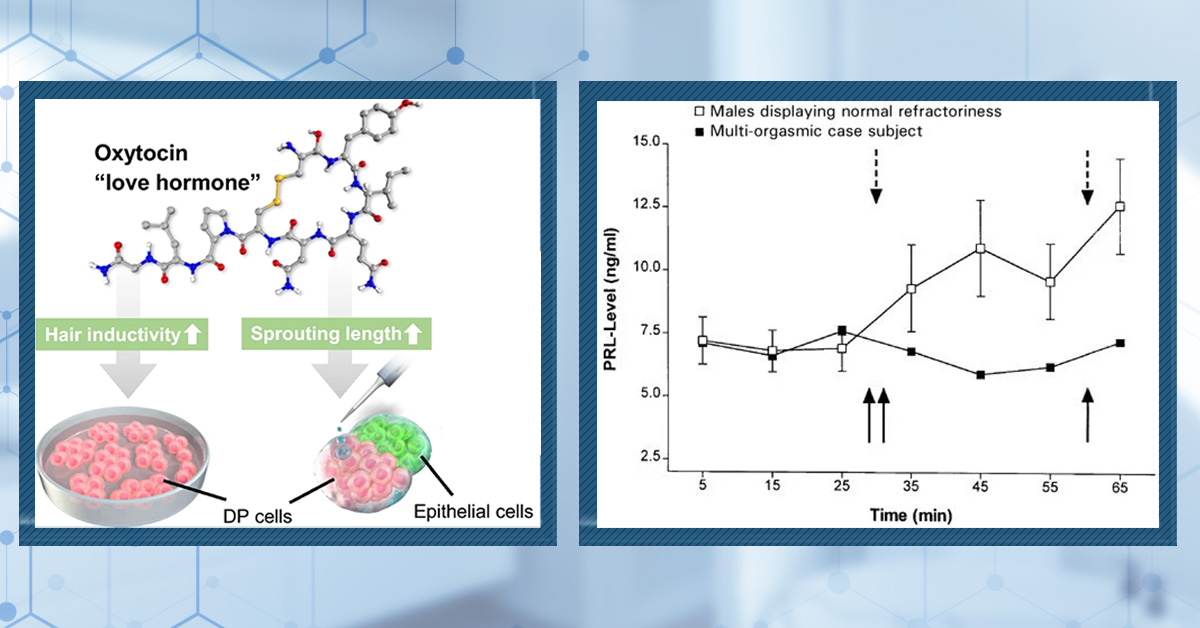
Want help with your hair regrowth journey?
Get personalized support, product recommendations, video calls, and more from our researchers, trichologists, and PhD's dedicated to getting you the best possible outcomes.
Learn MoreArticle Summary
Theories about the causes of hair loss abound online. A potential link with masturbation is among the more curious of these ideas. Interestingly, there is a range of molecular mechanisms that may form the biological basis for the connection between masturbation and hair loss. But do they stand up to scientific scrutiny? We dig into the science behind the most compelling arguments and find out what the evidence actually says.
Full Article
Throughout human history, cultures and systems of medicine have placed enormous importance on the role of semen. In Indian Ayurvedic medicine, semen sits at the top of the hierarchy of bodily fluids, while the ancient Greeks believed it was a precious substance whose production was physiologically costly. In Chinese Taoist philosophy, semen was considered a physical manifestation of jing, one of the three fundamental treasures of the body.[1]Roushan, R., Suthar, M. R. (2019). Shukra dhatu of Ayurveda and its affiliates in modern perspective: a review. *Journal of Advanced Scientific Research.* 10(4). 32–39. Available at: … Continue reading,[2]Aristotle. (350 BC). On the soul. *Infomotions.* Available at: http://infomotions.com/etexts/philosophy/400BC-301BC/aristotle-on-270.htm,[3]Gardner, H. (2025). A clinical and philosophical exploration of Jing 精. *Mayway Herbs.* (Accessed:April 2026) Available at: … Continue reading
In America, 19th- and 20th-century physicians like Sylvester Graham (of Graham cracker fame) and John Harvey Kellogg (of cornflakes fame) believed so strongly that semen loss was medically dangerous that they developed bland foods, in part, to reduce sexual urges.[4]Eschner, K. (2017). Graham crackers were supposed to be a sex drive-suppressing diet food. *Smithsonian Magazine.* Available at: … Continue reading,[5]Mayyasi, A. (2016). The surprising reason why Dr. John Harvey Kellogg invented corn flakes. *Forbes.* (Accessed:April 2026) Available at: … Continue reading
These ideas persist to this day. The modern semen retention movement, most prominent in the online “NoFap” community, has gained a significant following and some coverage in the mainstream media. Proponents of semen retention argue that it can lead to increased testosterone, energy, and mental clarity.[6]Kelly, D. (2021). Nofap: can giving up masturbation really boost men’s testosterone levels? An expert’s view. *The Conversation.* Available at: … Continue reading
Perhaps because of increased interest in the (scientifically unfounded) benefits of semen retention, theories relating masturbation to hair loss have emerged online. While many of these claims are easy to dismiss, some invoke genuine biological mechanisms and can appear superficially convincing. In this article, we’ll examine the most substantial arguments and weigh them against the evidence.
All-Natural Hair Supplement
The top natural ingredients for hair growth, all in one supplement.
Take the next step in your hair growth journey with a world-class natural supplement. Ingredients, doses, & concentrations built by science.
The Prolactin & Hormonal Disruption Argument
Prolactin is a hormone most commonly associated with pregnancy: it’s involved in mammary gland development and lactation, and plays an important role during fetal development. However, prolactin receptors are also expressed directly in human scalp hair follicles, and the skin itself produces prolactin locally, meaning hair follicles are both a target and a source of the hormone.[7]Foitzik, K., Krause, K., Conrad, F., Nakamura, M., Funk, W., Paus, R. (2006). Human scalp hair follicles are both a target and a source of prolactin, which serves as an autocrine and/or paracrine … Continue reading
Chronically high levels of prolactin, characteristic of a condition called hyperprolactinemia, are associated with hair loss in some cases.[8]Ziai, M., Cifuentes, L., Grosber, M., McIntyre, M., Prucha, H., Ring, J. and Chen, W. (2015). Diffuse hair loss associated with hyperprolactinaemia: report of three cases. *Journal of the European … Continue reading Some laboratory studies have demonstrated that prolactin can disrupt hormonal regulation of the hair growth cycle, ultimately acting to shorten the growth phase of hair follicles. Some very recent research, presented at a dermatology conference in 2026, suggests that blocking prolactin may promote hair growth via follicular stem cell activation.[9]Foitzik, K., Krause, K., Conrad, F., Nakamura, M., Funk, W., Paus, R. (2006). Human scalp hair follicles are both a target and a source of prolactin, which serves as an autocrine and/or paracrine … Continue reading,[10]Practical Dermatology. (2026). Prolactin receptor blockade may promote hair growth via follicular stem cell activation. *Practical Dermatology.* (Accessed:April 2026) Available at: … Continue reading
What Does Prolactin Have to Do With Masturbation?
Interestingly, orgasm is one of the most reliable triggers of acute prolactin release, a phenomenon well-documented in both men and women. Critically, prolactin is only released upon orgasm; sexual arousal without orgasm does not produce the same elevation. The surge begins with ejaculation or orgasm and remains elevated for over 60 minutes before returning to baseline.[11]Krysiak, R., Drosdzol-Cop, A., Skrzypulec-Plinta, V., Okopien, B. (2016). Sexual function and depressive symptoms in young women with elevated macroprolactin content: a pilot study. *Endocrine.* … Continue reading
The argument, then, is clear: masturbation increases prolactin, and prolactin causes hair loss.
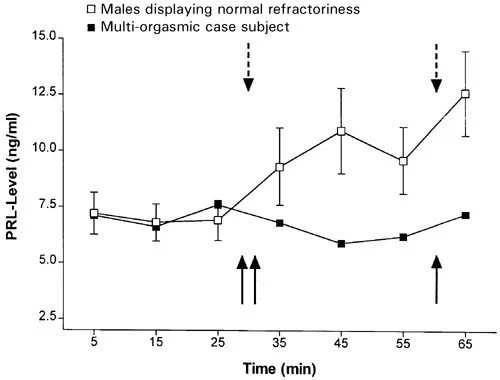
Figure 1. Serum levels of prolactin increase significantly following orgasm (white boxes). Adapted from Figure 1. [12]Haake, P., Exton, M. S., Haverkamp, J., Krämer, M., Leygraf, N., Hartmann, U., Schedlowski, M., & Krüger, T. H. C. (2002). Absence of orgasm-induced prolactin secretion in a healthy … Continue reading
Does the Theory Hold Up to Scrutiny?
An important factor to consider is the levels of prolactin at play. Normal serum prolactin content is around 15-20 ng/ml in men, and around 20-25 ng/ml in women. Spikes associated with intercourse can see levels rise by around 6 ng/ml in men and women.[13]Kaur, J., Bhusal, K. (2025). Hyperprolactinemia. *StatPearls.* Available at: https://www.ncbi.nlm.nih.gov/books/NBK537331/,[14]Brody, S., Krüger, T.H.C. (2006). The post-orgasmic prolactin increase following intercourse is greater than following masturbation and suggests greater satiety. *Biological Psychology.* 71(3). … Continue reading
However, experiments linking prolactin to hair growth regulation have used a concentration of 400 ng/ml. What’s more, hyperprolactinemia, which may be associated with hair loss in a small number of cases, can cause prolactin levels to rise above 50 ng/ml, sometimes exceeding 500 ng/ml. This high concentration is chronic, persisting over the course of many months and years.[15]Kaur, J., Bhusal, K. (2025). Hyperprolactinemia. *StatPearls.* (Accessed:April 2026) Available at: https://www.ncbi.nlm.nih.gov/books/NBK537331/
The physical effort required to maintain chronically high levels of prolactin through intercourse or masturbation alone would be superhuman. Furthermore, the spike in prolactin is actually significantly higher following intercourse than it is from masturbation, meaning the issue would impact highly sexually active individuals to a greater extent.
The Testosterone & DHT Hypothesis
Another hormone that may spike after masturbation and sexual activity is testosterone. Testosterone plays an important role in hair loss, though its direct causal impact is sometimes overstated.
Testosterone is converted to dihydrotestosterone (DHT), which can bind to hair follicles, causing them to shrink and produce thinner, shorter hairs. DHT is widely appreciated as the primary driver of androgenic alopecia (pattern baldness).[16]Kash, N., Leavitt, M., Leavitt, A., Hawkins, S.D., Roopani, R.B. (2021). Clinical patterns of hair loss in men: Is dihydrotestosterone the only culprit? *Dermatologic Clinics.* 39(3). 361–370. … Continue reading This leads some people to the conclusion that more testosterone means increased hair loss.
However, DHT activity at the scalp is determined by a wide range of factors. Only a small fraction of testosterone is converted to DHT, and this process is governed by an enzyme called 5α-reductase (5AR).[17]Salisbury, B.H., Leslie, S.W., Tadi, P. (2024). 5α-reductase inhibitors. *StatPearls.* (Accessed:April 2026) Available at: https://www.ncbi.nlm.nih.gov/books/NBK555930/ Therefore, the level of 5AR at the scalp and the sensitivity of hair follicles to DHT are the main drivers of susceptibility to hair loss, rather than total levels of testosterone.
Still, increasing the total amount of testosterone in circulation will inevitably mean more is available for conversion to DHT. This is apparent in cases where testosterone is artificially boosted, like for athletes using performance-enhancing testosterone.
How Much Does Masturbation Increase Testosterone?
As we saw in the case of prolactin, the increase in testosterone following orgasm is small and transient. There is very limited data available from studies investigating the relationship between sexual activity and testosterone release, while the data that is available doesn’t paint a clear picture.
A 2020 study of only seven men found that testosterone rose progressively from erection to ejaculation before returning to baseline within 10 minutes. Another small study, published in 2021, found no statistically significant change in total testosterone after masturbation.[18]Kobori, Y., Osaka, A., Iwahata, T., Okada, H. (2020). Serum testosterone level rises drastically at the moment of ejaculation. *Fertility and Sterility.* 114(3). e391. Available at: … Continue reading,[19]Isenmann, E., Schumann, M., Notbohm, H. L., Flenker, U., & Zimmer, P. (2021). Hormonal response after masturbation in young healthy men – a randomized controlled cross-over pilot study. *Basic … Continue reading
It is hard, therefore, to make any sort of direct link between masturbation and hair loss related to testosterone. The evidence suggesting that masturbation raises testosterone is limited, and any increases are likely to be small and short-lived. Even in cases of major spikes in testosterone, these are unlikely to be a major contributing factor in hair loss.
The Oxytocin Argument
A related hypothesis connects the release of oxytocin to testosterone activity, and therefore to hair loss. Oxytocin is best known for its role as a neurotransmitter; it is released during physical touch, promotes trust and care in social interactions, reduces stress and anxiety, and is central to the development of pair bonding. As such, oxytocin is sometimes called the ‘love hormone’, though this oversimplifies its complex role in the development of human relationships.[20]Carter, C. S. (2022). Oxytocin and love: Myths, metaphors and mysteries. *Comprehensive Psychoneuroendocrinology.* 9. 100107. Available at: https://doi.org/10.1016/j.cpnec.2021.100107
Importantly, oxytocin levels surge at orgasm for both sexes.
How Does Oxytocin Increase Testosterone?
Some research has suggested that oxytocin stimulates the conversion of testosterone into DHT. This could potentially have a greater impact on hair loss than altering total testosterone levels alone; we’ve already discussed the central role DHT plays in androgenic alopecia.
Increases in DHT in response to oxytocin have mostly been explored in relation to benign prostate hyperplasia and prostate cancer, which are both heavily impacted by androgen signaling. In mouse and cell models, oxytocin can reliably increase DHT in the prostate.[21]Assinder, S. J., Johnson, C., King, K., Nicholson, H. D. (2004). Regulation of 5α-reductase isoforms by oxytocin in the rat ventral prostate. *Endocrinology.* 145(12). 5767–5773. Available at: … Continue reading,[22]Assinder, S.J. (2008). Oxytocin increases 5α‐reductase activity of human prostate epithelial cells, but not stromal cells. *The Prostate.* 68(2). 115–121. Available at: … Continue reading
However, the picture of what’s going on at the scalp is much less clear. A 2023 study using human hair follicle cells in the lab found that oxytocin might actually act to promote hair growth. On the other hand, research published in 2024 found that blocking oxytocin receptors might help hair grow, suggesting that oxytocin signaling may contribute to hair loss.[23]Kageyama, T., Seo, J., Yan, L., Fukuda, J. (2023). Effects of oxytocin on the hair growth ability of dermal papilla cells. *Scientific Reports.* 13(1). 15587. Available at: … Continue reading,[24]Kageyama, T., Seo, J., Yan, L., & Fukuda, J. (2024). Effects of oxytocin receptor agonists on hair growth promotion. *Scientific Reports.* 14(1). 23935. Available at: … Continue reading
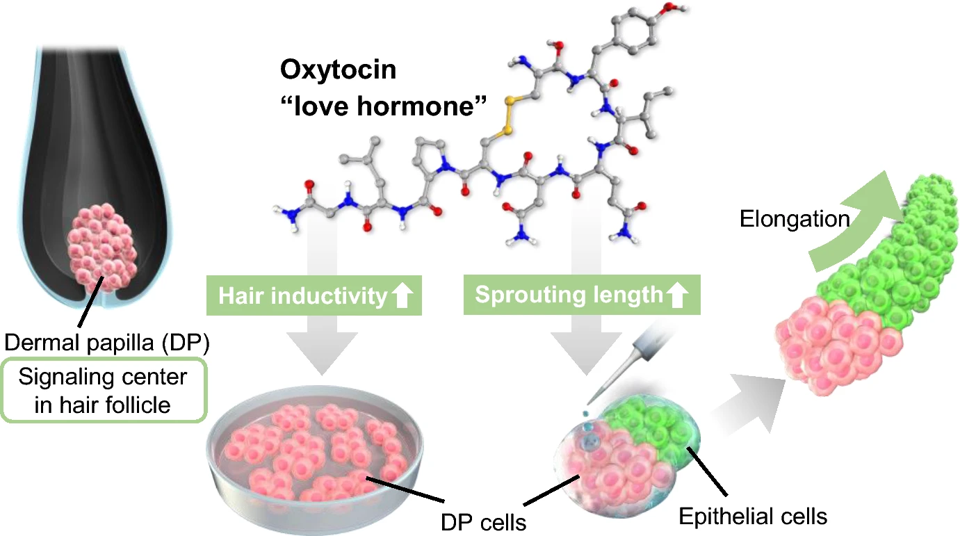
Figure 2. Some cell-based research has suggested that oxytocin can promote hair growth by activating dermal papilla cells in the hair follicle. Adapted from Figure 1.[25]Kageyama, T., Seo, J., Yan, L., Fukuda, J. (2023). Effects of oxytocin on the hair growth ability of dermal papilla cells. *Scientific Reports.* 13(1). 15587. Available at: … Continue reading Image used under Creative Commons License.
Does the Oxytocin Argument Hold Up To Scrutiny?
The mechanism underlying the theory is plausible. Oxytocin does seem to contribute to DHT production, which directly contributes to hair loss.
However, we come across the same problem we saw with prolactin and testosterone. Surges in oxytocin are short-lived, whereas hair loss is a chronic condition that develops over many years. What’s more, there are many parts of everyday life that can cause bursts of oxytocin: personal touch and hugging, petting a dog, massages, shared meals, exercise, music and singing.
It would be impossible to distinguish the contributions of many of life’s small joys to overall oxytocin levels. In this context, singling out masturbation as a direct causative factor is unfounded.
The Stress Argument
Chronic psychological stress is a well-established trigger for telogen effluvium, a form of diffuse hair shedding. Since cortisol, the body’s primary stress hormone, rises during sexual activity, some have argued that frequent masturbation could chronically elevate cortisol levels and trigger this process.[26]Thom, E. (2016). Stress and the hair growth cycle: cortisol-induced hair growth disruption. *Journal of Drugs in Dermatology: JDD.* 15(8). 1001–1004.
The argument has the same fundamental flaw we have seen repeatedly: the cortisol response to sexual activity is acute and short-lived, bearing no resemblance to the kind of sustained, significant stress burden required to cause telogen effluvium. If brief cortisol spikes were sufficient to cause hair loss, exercise would carry the same risk.
In fact, the evidence suggests the opposite: masturbation and orgasm are generally associated with stress reduction.[27]Brody, S. (2006). Blood pressure reactivity to stress is better for people who recently had penile–vaginal intercourse than for people who had other or no sexual activity. *Biological Psychology.* … Continue reading
Is There Any Evidence That Masturbation Causes Hair Loss?
Unfortunately, many of the theories we’ve looked at here are typical of the pseudoscientific, poorly supported arguments that often surround hot-button issues on the internet. They incorporate a foundation of real biology, but make substantial logical leaps in arriving at their conclusions.
The mechanism is often oversimplified and decontextualized: activity A increases molecule B, and molecule B is implicated in hair loss. Therefore, activity A causes hair loss. As we’ve seen, these theories rarely stand up to scrutiny and are not backed up by clinical evidence.
There is currently no clinical evidence that masturbation causes hair loss. Of the few studies that have investigated the connection indirectly, none have found any evidence of a correlation.
Final Thoughts
Discussions around sexual activity and masturbation can evoke strong emotional responses, and our thoughts on these issues are typically tied to broader views on the place of sex in society. Arguments surrounding masturbation and hair loss, and semen retention more broadly, may represent moralistic views on self-control rather than scientific hypotheses built on robust evidence.
There are well-evidenced physical and psychological risks associated with excessive masturbation. However, increased risk of hair loss is not currently one of them. If you are concerned about hair loss, the cause is far more likely to be found in your genetics, your diet, or your stress levels than in your sexual habits.
References[+]
References ↑1 Roushan, R., Suthar, M. R. (2019). Shukra dhatu of Ayurveda and its affiliates in modern perspective: a review. *Journal of Advanced Scientific Research.* 10(4). 32–39. Available at: https://sciensage.info/index.php/JASR/article/view/326 ↑2 Aristotle. (350 BC). On the soul. *Infomotions.* Available at: http://infomotions.com/etexts/philosophy/400BC-301BC/aristotle-on-270.htm ↑3 Gardner, H. (2025). A clinical and philosophical exploration of Jing 精. *Mayway Herbs.* (Accessed:April 2026) Available at: https://www.mayway.com/blogs/articles/a-clinical-and-philosophical-exploration-of-jing ↑4 Eschner, K. (2017). Graham crackers were supposed to be a sex drive-suppressing diet food. *Smithsonian Magazine.* Available at: https://www.smithsonianmag.com/smart-news/graham-crackers-were-supposed-to-be-a-sex-drivesuppressing-diet-food-15675399/ ↑5 Mayyasi, A. (2016). The surprising reason why Dr. John Harvey Kellogg invented corn flakes. *Forbes.* (Accessed:April 2026) Available at: https://www.forbes.com/sites/priceonomics/2016/05/17/the-surprising-reason-why-dr-john-harvey-kellogg-invented-corn-flakes/ ↑6 Kelly, D. (2021). Nofap: can giving up masturbation really boost men’s testosterone levels? An expert’s view. *The Conversation.* Available at: https://theconversation.com/nofap-can-giving-up-masturbation-really-boost-mens-testosterone-levels-an-experts-view-157701 ↑7, ↑9 Foitzik, K., Krause, K., Conrad, F., Nakamura, M., Funk, W., Paus, R. (2006). Human scalp hair follicles are both a target and a source of prolactin, which serves as an autocrine and/or paracrine promoter of apoptosis-driven hair follicle regression. *American Journal of Pathology.* 168(3). 748–756. Available at: https://doi.org/10.2353/ajpath.2006.050468 ↑8 Ziai, M., Cifuentes, L., Grosber, M., McIntyre, M., Prucha, H., Ring, J. and Chen, W. (2015). Diffuse hair loss associated with hyperprolactinaemia: report of three cases. *Journal of the European Academy of Dermatology and Venereology.* 29(3). 607–608. Available at: https://doi.org/10.1111/jdv.12407 ↑10 Practical Dermatology. (2026). Prolactin receptor blockade may promote hair growth via follicular stem cell activation. *Practical Dermatology.* (Accessed:April 2026) Available at: https://practicaldermatology.com/news/prolactin-receptor-blockade-may-promote-hair-growth-via-follicular-stem-cell-activation/2485612/ ↑11 Krysiak, R., Drosdzol-Cop, A., Skrzypulec-Plinta, V., Okopien, B. (2016). Sexual function and depressive symptoms in young women with elevated macroprolactin content: a pilot study. *Endocrine.* 53(1). 291–298. Available at: https://doi.org/10.1007/s12020-015-0839-3 ↑12 Haake, P., Exton, M. S., Haverkamp, J., Krämer, M., Leygraf, N., Hartmann, U., Schedlowski, M., & Krüger, T. H. C. (2002). Absence of orgasm-induced prolactin secretion in a healthy multi-orgasmic male subject. *International Journal of Impotence Research.* 14(2). 133–135. Available at: https://doi.org/10.1038/sj.ijir.3900823 ↑13 Kaur, J., Bhusal, K. (2025). Hyperprolactinemia. *StatPearls.* Available at: https://www.ncbi.nlm.nih.gov/books/NBK537331/ ↑14 Brody, S., Krüger, T.H.C. (2006). The post-orgasmic prolactin increase following intercourse is greater than following masturbation and suggests greater satiety. *Biological Psychology.* 71(3). 312–315. Available at: https://doi.org/10.1016/j.biopsycho.2005.06.008 ↑15 Kaur, J., Bhusal, K. (2025). Hyperprolactinemia. *StatPearls.* (Accessed:April 2026) Available at: https://www.ncbi.nlm.nih.gov/books/NBK537331/ ↑16 Kash, N., Leavitt, M., Leavitt, A., Hawkins, S.D., Roopani, R.B. (2021). Clinical patterns of hair loss in men: Is dihydrotestosterone the only culprit? *Dermatologic Clinics.* 39(3). 361–370. Available at: https://doi.org/10.1016/j.det.2021.03.001 ↑17 Salisbury, B.H., Leslie, S.W., Tadi, P. (2024). 5α-reductase inhibitors. *StatPearls.* (Accessed:April 2026) Available at: https://www.ncbi.nlm.nih.gov/books/NBK555930/ ↑18 Kobori, Y., Osaka, A., Iwahata, T., Okada, H. (2020). Serum testosterone level rises drastically at the moment of ejaculation. *Fertility and Sterility.* 114(3). e391. Available at: https://doi.org/10.1016/j.fertnstert.2020.08.1148 ↑19 Isenmann, E., Schumann, M., Notbohm, H. L., Flenker, U., & Zimmer, P. (2021). Hormonal response after masturbation in young healthy men – a randomized controlled cross-over pilot study. *Basic and Clinical Andrology.* 31(1). 1–7. Available at: https://doi.org/10.1186/s12610-021-00148-2 ↑20 Carter, C. S. (2022). Oxytocin and love: Myths, metaphors and mysteries. *Comprehensive Psychoneuroendocrinology.* 9. 100107. Available at: https://doi.org/10.1016/j.cpnec.2021.100107 ↑21 Assinder, S. J., Johnson, C., King, K., Nicholson, H. D. (2004). Regulation of 5α-reductase isoforms by oxytocin in the rat ventral prostate. *Endocrinology.* 145(12). 5767–5773. Available at: https://doi.org/10.1210/en.2004-0593 ↑22 Assinder, S.J. (2008). Oxytocin increases 5α‐reductase activity of human prostate epithelial cells, but not stromal cells. *The Prostate.* 68(2). 115–121. Available at: https://doi.org/10.1002/pros.20671 ↑23, ↑25 Kageyama, T., Seo, J., Yan, L., Fukuda, J. (2023). Effects of oxytocin on the hair growth ability of dermal papilla cells. *Scientific Reports.* 13(1). 15587. Available at: https://doi.org/10.1038/s41598-023-40521-x ↑24 Kageyama, T., Seo, J., Yan, L., & Fukuda, J. (2024). Effects of oxytocin receptor agonists on hair growth promotion. *Scientific Reports.* 14(1). 23935. Available at: https://doi.org/10.1038/s41598-024-74962-9 ↑26 Thom, E. (2016). Stress and the hair growth cycle: cortisol-induced hair growth disruption. *Journal of Drugs in Dermatology: JDD.* 15(8). 1001–1004. ↑27 Brody, S. (2006). Blood pressure reactivity to stress is better for people who recently had penile–vaginal intercourse than for people who had other or no sexual activity. *Biological Psychology.* 71(2). 214–222. Available at: https://doi.org/10.1016/j.biopsycho.2005.03.005 Want help with your hair regrowth journey?
Get personalized support, product recommendations, video calls, and more from our researchers, trichologists, and PhD's dedicated to getting you the best possible outcomes.
Learn More
Dr. Michael Williams
Michael is a researcher and writer who holds a BSc in Bioscience, an MSc in Regenerative Medicine, and a PhD in Translational Biomedicine. He undertook his PhD research at Houston Methodist Research Institute, Texas, focusing on cell signaling in the ovarian cancer tumor microenvironment. He conducted postdoctoral research at Barts Cancer Institute in London, exploring cellular metabolism in acute myeloid leukemia. He has published work in a range of fields, including oncology, nanomedicine, and cell-based therapeutics.
"... Can’t thank @Rob (PHH) and @sanderson17 enough for allowing me to understand a bit what was going on with me and why all these [things were] happening ... "

 — RDB, 35, New York, U.S.A.
"... There is a lot improvement that I am seeing and my scalp feel alive nowadays... Thanks everyone. "

 — Aayush, 20’s, Boston, MA
"... I can say that my hair volume/thickness is about 30% more than it was when I first started."

 — Douglas, 50’s, Montréal, Canada
Want help with your hair regrowth journey?
Get personalized support, product recommendations, video calls, and more from our researchers, trichologists, and PhD's dedicated to getting you the best possible outcomes.
Join Now - Mission Statement