- About
- Mission Statement
Education. Evidence. Regrowth.
- Education.
Prioritize knowledge. Make better choices.
- Evidence.
Sort good studies from the bad.
- Regrowth.
Get bigger hair gains.
Team MembersPhD's, resarchers, & consumer advocates.
- Rob English
Founder, researcher, & consumer advocate
- Research Team
Our team of PhD’s, researchers, & more
Editorial PolicyDiscover how we conduct our research.
ContactHave questions? Contact us.
Before-Afters- Transformation Photos
Our library of before-after photos.
- — Jenna, 31, U.S.A.
I have attached my before and afters of my progress since joining this group...
- — Tom, 30, U.K.
I’m convinced I’ve recovered to probably the hairline I had 3 years ago. Super stoked…
- — Rabih, 30’s, U.S.A.
My friends actually told me, “Your hairline improved. Your hair looks thicker...
- — RDB, 35, New York, U.S.A.
I also feel my hair has a different texture to it now…
- — Aayush, 20’s, Boston, MA
Firstly thank you for your work in this field. I am immensely grateful that...
- — Ben M., U.S.A
I just wanted to thank you for all your research, for introducing me to this method...
- — Raul, 50, Spain
To be honest I am having fun with all this and I still don’t know how much...
- — Lisa, 52, U.S.
I see a massive amount of regrowth that is all less than about 8 cm long...
Client Testimonials150+ member experiences.
 Scroll DownPopular Treatments
- Treatments
Popular treatments. But do they work?
- Finasteride
- Oral
- Topical
- Dutasteride
- Oral
- Topical
- Mesotherapy
- Minoxidil
- Oral
- Topical
- Ketoconazole
- Shampoo
- Topical
- Low-Level Laser Therapy
- Therapy
- Microneedling
- Therapy
- Platelet-Rich Plasma Therapy (PRP)
- Therapy
- Scalp Massages
- Therapy
 More
More
IngredientsTop-selling ingredients, quantified.
- Saw Palmetto
- Redensyl
- Melatonin
- Caffeine
- Biotin
- Rosemary Oil
- Lilac Stem Cells
- Hydrolyzed Wheat Protein
- Sodium Lauryl Sulfate
 More
More
ProductsThe truth about hair loss "best sellers".
- Minoxidil Tablets
Xyon Health
- Finasteride
Strut Health
- Hair Growth Supplements
Happy Head
- REVITA Tablets for Hair Growth Support
DS Laboratories
- FoliGROWTH Ultimate Hair Neutraceutical
Advanced Trichology
- Enhance Hair Density Serum
Fully Vital
- Topical Finasteride and Minoxidil
Xyon Health
- HairOmega Foaming Hair Growth Serum
DrFormulas
- Bio-Cleansing Shampoo
Revivogen MD
- more
Key MetricsStandardized rubrics to evaluate all treatments.
- Evidence Quality
Is this treatment well studied?
- Regrowth Potential
How much regrowth can you expect?
- Long-Term Viability
Is this treatment safe & sustainable?
Free Research- Free Resources
Apps, tools, guides, freebies, & more.
- Free CalculatorTopical Finasteride Calculator
- Free Interactive GuideInteractive Guide: What Causes Hair Loss?
- Free ResourceFree Guide: Standardized Scalp Massages
- Free Course7-Day Hair Loss Email Course
- Free DatabaseIngredients Database
- Free Interactive GuideInteractive Guide: Hair Loss Disorders
- Free DatabaseTreatment Guides
- Free Lab TestsProduct Lab Tests: Purity & Potency
- Free Video & Write-upEvidence Quality Masterclass
- Free Interactive GuideDermatology Appointment Guide
- More
Articles100+ free articles.
-
Sublingual Minoxidil: More Hair Growth, Less Sides?
-
Can a Blood DHT Test Tell You Whether You Have AGA?
-
ABS-201: Can Blocking the Prolactin Receptor Regrow Hair?
-
Best Topical Finasteride: 5 Top Products of 2026
-
Best Topical Dutasteride: 8 Choices for 2026
-
2.5mg Dutasteride: Before and After Photos [2026]
-
Best Minoxidil for Women: Top 7 Brands of 2026
-
Pumpkin Seed Oil for Hair Growth: Before and After Photos
PublicationsOur team’s peer-reviewed studies.
- Microneedling and Its Use in Hair Loss Disorders: A Systematic Review
- Use of Botulinum Toxin for Androgenic Alopecia: A Systematic Review
- Conflicting Reports Regarding the Histopathological Features of Androgenic Alopecia
- Self-Assessments of Standardized Scalp Massages for Androgenic Alopecia: Survey Results
- A Hypothetical Pathogenesis Model For Androgenic Alopecia:Clarifying The Dihydrotestosterone Paradox And Rate-Limiting Recovery Factors
Menu- AboutAbout
- Mission Statement
Education. Evidence. Regrowth.
- Team Members
PhD's, resarchers, & consumer advocates.
- Editorial Policy
Discover how we conduct our research.
- Contact
Have questions? Contact us.
- Before-Afters
Before-Afters- Transformation Photos
Our library of before-after photos.
- Client Testimonials
Read the experiences of members
Before-Afters/ Client Testimonials- Popular Treatments
-
ArticlesDoes Dandruff Cause Hair Loss?
First Published May 15 2026Last Updated Apr 5 2026Pharmaceutical Researched & Written By:Cassie Hopton, PhD
 Reviewed By:Rob English, Medical Editor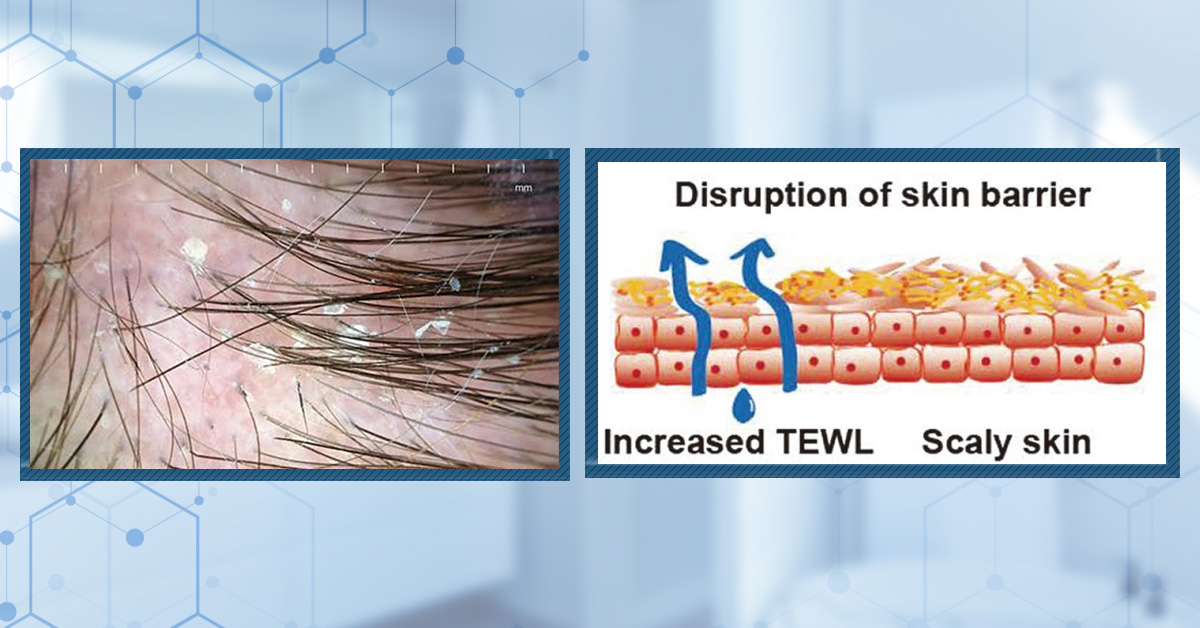
Want help with your hair regrowth journey?
Get personalized support, product recommendations, video calls, and more from our researchers, trichologists, and PhD's dedicated to getting you the best possible outcomes.
Learn MoreArticle Summary
Dandruff is more than a cosmetic nuisance: it often reflects scalp inflammation that can disrupt the hair cycle. While dandruff itself doesn’t directly cause hair loss, it may trigger shedding and worsen conditions like pattern hair loss. Understanding the root cause of dandruff and treating it effectively is key to restoring scalp health and supporting stronger, fuller hair.
Full Article
Dandruff is an extremely common scalp condition that affects up to half of adults worldwide. It’s often dismissed as a minor cosmetic issue causing flakes on dark clothing, an itchy scalp, or the need for medicated shampoo. But many people with persistent dandruff also notice increased hair shedding, raising an important question: can dandruff actually contribute to hair loss?
The relationship between dandruff and hair loss is more complex than it first appears. “Dandruff” is not a single diagnosis but an umbrella term covering several flaking scalp conditions, some of which involve inflammation. This distinction matters because inflammation can disrupt the normal hair growth cycle and interfere with the effectiveness of hair loss treatments. In some cases, dandruff-related inflammation may push hairs prematurely into the shedding phase (telogen effluvium) or exacerbate existing pattern hair loss.
That said, dandruff alone does not guarantee hair loss. Many people experience flaking without any lasting effect on hair density. The key lies in understanding the underlying cause, which could be microbial overgrowth, nutrient imbalance, or inflammatory skin disease. In this article, we’ll explore what dandruff really is, the causes, what current research says about its potential role in hair shedding and hair loss, and how to treat it effectively so that you can optimize your hair regrowth.
Interested in Topical Minoxidil?
High-strength topical minoxidil available, if prescribed*
Take the next step in your hair regrowth journey. Get started today with a provider who can prescribe a topical solution tailored for you.
*Only available in the U.S. Prescriptions not guaranteed. Restrictions apply. Off-label products are not endorsed by the FDA.
What Is Dandruff?
Dandruff is defined by visible scalp flaking caused by increased shedding of outer skin cells. This can cause white, yellow, or grey flakes on the scalp.
Dandruff is typically used as an umbrella term to encompass several conditions that can cause flakiness on the scalp. The types of dandruff and dandruff-like conditions include:
- Dry dandruff: Small, white, or grayish flakes that fall easily from the scalp
- Pityriasis steatoides: Thick, yellowish, greasy flakes that stick to the hair and scalp. The scalp may be itchy, but not red or inflamed.
- Seborrheic dermatitis: Thick, yellowish, greasy flakes and scales. The scalp is inflamed, causing red, greasy, and scaly patches.[1]Borda, L.J., Wikramanayake, T.C. (2015). Seborrheic Dermatitis And Dandruff: A Comprehensive Review. J Clin Investig Dermatol. 3(2). Available at: https://doi.org/10.13188/2373-1044.1000019
- Scalp psoriasis: Itchy, dry, red, and silvery-white plaques on the scalp caused by autoimmune conditions
Because of this, other symptoms may also accompany dandruff. Those with dandruff may experience itchiness, dryness, redness, inflammation, or trichodynia (hair root pain).
Dandruff progresses along a typical timeline that starts at puberty. Peak severity is reached roughly at the age of 20, and dandruff may persist until the age of 50. Beyond 50, the prevalence of dandruff typically declines.[2]Borda, L.J., Wikramanayake, T.C. (2015). Seborrheic Dermatitis And Dandruff: A Comprehensive Review. J Clin Investig Dermatol. 3(2). Available at: https://doi.org/10.13188/2373-1044.1000019
How Common Is It?
Dandruff is an extremely common condition, affecting roughly half of all adults worldwide and at least 50 million Americans.
A study examining populations in the United States and China found that dandruff is most common in people of African American descent, where it affects 81% to 95% of the population. The incidence of dandruff in caucasians is 66% to 82%, while only 30% to 42% of people of Chinese descent are affected by dandruff.[3]Borda, L.J., Wikramanayake, T.C. (2015). Seborrheic Dermatitis And Dandruff: A Comprehensive Review. J Clin Investig Dermatol. 3(2). Available at: https://doi.org/10.13188/2373-1044.1000019
Dandruff vs. Dandruff-Like Conditions
Dandruff is typically used to describe cases where there is flaking on the scalp but no visible inflammation. This is “true” dandruff, an example being pityriasis steatoides.
Seborrheic dermatitis and scalp psoriasis are where inflammation comes into the picture. These conditions are not considered “true” dandruff, but are often described as severe forms of dandruff because they produce dandruff-like symptoms alongside more noticeable irritation.
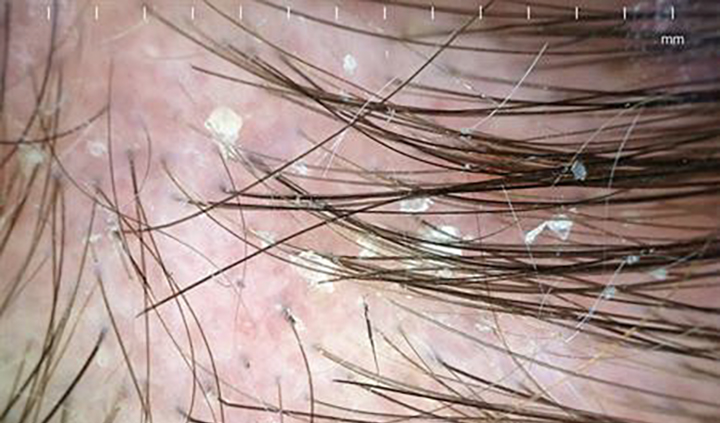
Figure 1: Seborrheic dermatitis of the hairline.
What Causes Dandruff?
Dandruff may be common, but the cause of dandruff is not well understood. For example, there are some aspects of dandruff susceptibility that we still don’t understand.[4]Del Rosso, J.Q. (2011). Adult Seborrheic Dermatitis: A Status Report On Practical Topical Management. J Clin Aesthet Dermatol. 4(5). Available at: https://www.ncbi.nlm.nih.gov/pmc/articles/PMC3100109/
Because dandruff is an umbrella term that can encompass many different conditions, studies have identified several main reasons why dandruff might happen. These studies have shown that flaking occurs alongside microorganism overgrowth, nutrient deficiencies, and autoimmune conditions, potential culprits in causing dandruff.
We’ll go through each of these potential causes of dandruff and explain what the science says about them.
Microorganism Overgrowth
So far, the overgrowth of the fungi Malassezia is one of the best-established factors in causing dandruff.
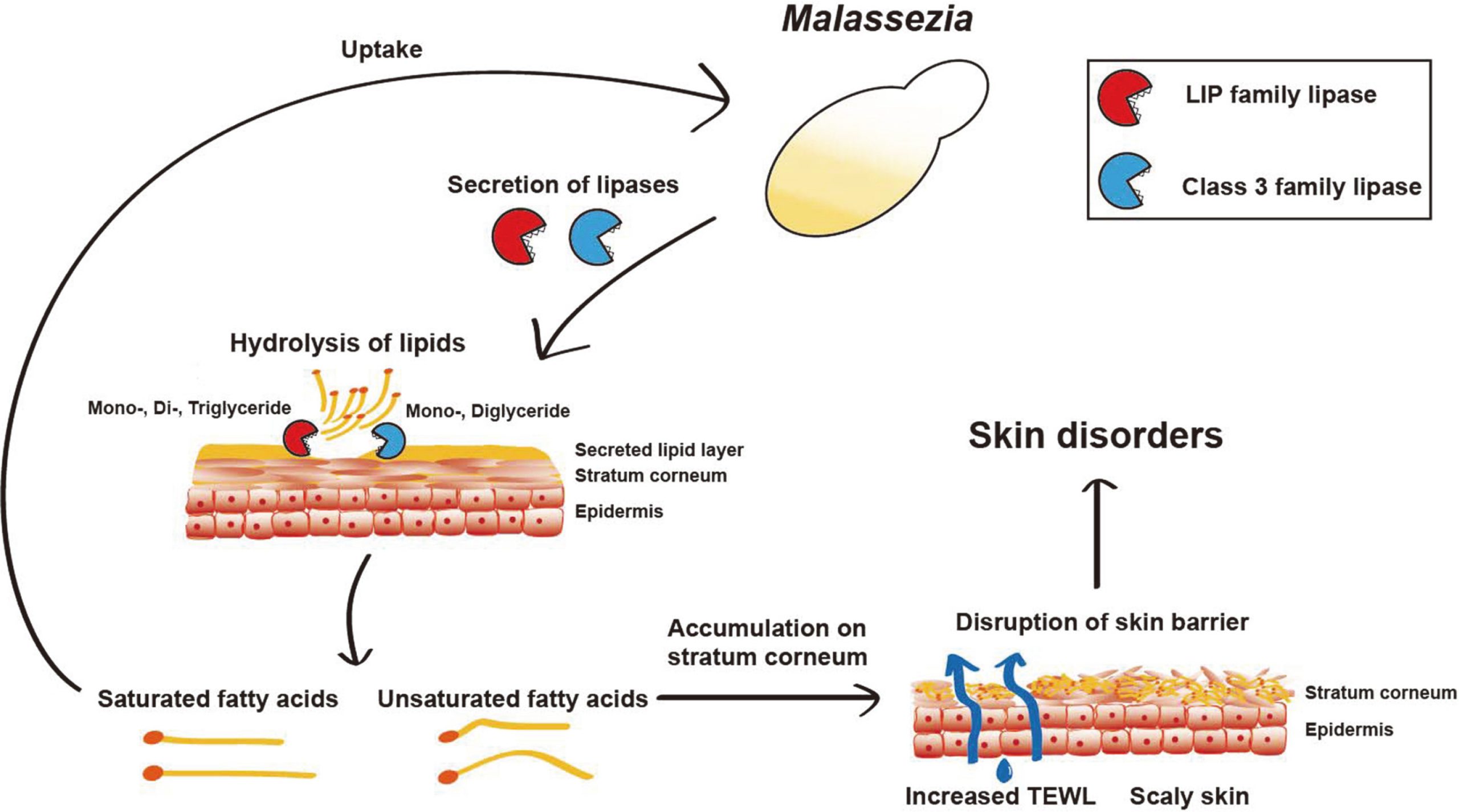
Malassezia is a yeast naturally found on the skin and is not problematic for some scalps. However, some species of Malassezia release enzymes that break down skin sebum (oil), leaving behind toxic molecules like oleic acid (a fatty acid) and reactive oxygen species (unstable, highly reactive oxygen-containing molecules).[5]Jourdain, R., Moga, A., Magiatis, P., Fontanié, M., Velegraki, A., Papadimou, C., Rahoul, V., Guéniche, A., Chopra, T., Gaitanis, G. (2023). Malassezia Restricta-Mediated Lipoperoxidation: A Novel … Continue reading,[6]Park, M., Park, S., Jung, W.H. (2021). Skin Commensal Fungus Malassezia And Its Lipases. J Microbiol Biotechnol. 31(5). 637-644. Available at: https://doi.org/10.4014/jmb.2012.12048
Both of these molecules can irritate the skin:
- Oleic acid: Disrupts the order of skin lipids, making the skin more porous and permeable. This weakens the skin barrier, promoting infiltration of irritants and microorganisms that can lead to infection.[7]Kováčik, A., Kopečná, M., Hrdinová, I., Opálka, L., Boncheva Bettex, M., Vávrová, K. (2023). Time-Dependent Differences In The Effects Of Oleic Acid And Oleyl Alcohol On The Human Skin … Continue reading, [8]Tanojo, H., Boelsma, E., Junginger, H.E., Ponec, M., Boddé, H.E. (1999). In Vivo Human Skin Permeability Enhancement By Oleic Acid: A Laser Doppler Velocimetry Study. J Control Release. 58(1). … Continue reading
- Reactive oxygen species: React with the lipids of skin cells, causing pores that increase skin permeability and weaken the skin barrier.[9]Liu, H.M., Cheng, M.Y., Xun, M.H., Zhao, Z.W., Zhang, Y., Tang, W., Cheng, J., Ni, J., Wang, W. (2023). Possible Mechanisms Of Oxidative Stress-Induced Skin Cellular Senescence, Inflammation, And … Continue reading They can also disrupt the structure and function of skin cells, and trigger inflammation.[10]Sikder, M.M., Li, X., Akumwami, S., Labony, S.A. (2025). Reactive Oxygen Species: Role In Pathophysiology, And Mechanism Of Endogenous And Dietary Antioxidants During Oxidative Stress. Chonnam Med J. … Continue reading,[11]Kim, M.J., Woo, S.W., Kim, M.S., Park, J.E., Hwang, J.K. (2014). Anti-Photoaging Effect Of Aaptamine In UVB-Irradiated Human Dermal Fibroblasts And Epidermal Keratinocytes. Journal Of Asian Natural … Continue reading
The actions of these molecules can therefore encourage irritation, skin dryness, flakiness, and itchiness. With this in mind, it’s by no coincidence that higher levels of Malassezia have been found in people with more severe dandruff.[12]Rudramurthy, S.M., Honnavar, P., Dogra, S., Yegneswaran, P.P., Handa, S., Chakrabarti, A. (2014). Association Of Malassezia Species With Dandruff. Indian J Med Res. 139(3). 431-437. Available at: … Continue reading,[13]Clavaud, C., Jourdain, R., Bar-Hen, A., Tichit, M., Bouchier, C., Pouradier, F., El Rawadi, C., Guillot, J., Ménard-Szczebara, F., Breton, L., Latgé, J.P., Mouyna, I. (2013). Dandruff Is Associated … Continue reading
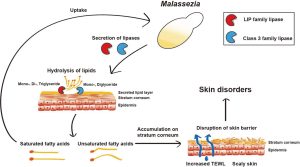
Figure 2: The role of Malassezia in promoting skin disorders (like dandruff). Adapted from Figure 1.[14]Park, M., Park, S., Jung, W.H. (2021). Skin Commensal Fungus Malassezia And Its Lipases. J Microbiol Biotechnol. 31(5). 637-644. Available at: https://doi.org/10.4014/jmb.2012.12048 Image used under the Creative Commons License.
However, it’s not really about the total Malassezia count. It’s about the type of Malassezia species present. For example, counts of Malassezia furfur were found to be the same between people with dandruff and those with healthy scalps.[15]Ashbee, H.R., Ingham, E., Holland, K.T., Cunliffe, W.J. (1993). The Carriage Of Malassezia Furfur Serovars A, B And C In Patients With Pityriasis Versicolor, Seborrhoeic Dermatitis And Controls. … Continue reading In contrast, the counts of Malassezia globosa and Malassezia restricta have been found to be higher on scalps with dandruff.[16]Dawson, T.L. Jr. (2007). Malassezia Globosa And Restricta: Breakthrough Understanding Of The Etiology And Treatment Of Dandruff And Seborrheic Dermatitis Through Whole-Genome Analysis. J Investig … Continue reading
The concept of Malassezia as the primary cause of dandruff is supported by the fact that antifungals often work as a treatment, and improvements in dandruff often correlate with lower Malassezia counts.[17]Piérard-Franchimont, C., Piérard, G.E., Arrese, J.E., De Doncker, P. (2001). Effect Of Ketoconazole 1% And 2% Shampoos On Severe Dandruff And Seborrhoeic Dermatitis: Clinical, Squamometric And … Continue reading
So why do some people have these overgrowths of certain Malassezia species, while others don’t? In truth, we are not entirely sure. It could be that:
- Lowered zinc and vitamin D3 levels, which have been correlated with seborrheic dermatitis, prevent healthier Malassezia diversity.[18]Aktaş Karabay, E., Aksu Çerman, A. (2019). Serum Zinc Levels In Seborrheic Dermatitis: A Case-Control Study. Turk J Med Sci. 49(5). 1503-1508. Available at: https://doi.org/10.3906/sag-1906-72,[19]Rahimi, S., Nemati, N., Shafaei-Tonekaboni, S.S. (2021). Serum Levels Of 25-Hydroxyvitamin D In Patients With Seborrheic Dermatitis: A Case-Control Study. Dermatol Res Pract. 2021. 6623271. Available … Continue reading
- Genetic predispositions leave some with a weakened scalp barrier naturally, opening up the possibility of Malassezia overgrowth.[20]Borda, L.J., Wikramanayake, T.C. (2015). Seborrheic Dermatitis And Dandruff: A Comprehensive Review. J Clin Investig Dermatol. 3(2). Available at: https://doi.org/10.13188/2373-1044.1000019
However, the research so far is limited.
Nutrient Deficiencies
Studies show that deficiencies in vitamin B2, vitamin B3, vitamin B6, and vitamin B7 can cause changes to the skin similar to seborrheic dermatitis and general dermatitis in animals and humans.[21]Jen, M., Yan, A.C. (2010). Syndromes Associated With Nutritional Deficiency And Excess. Clinics In Dermatology. 28(6). 669-685. Available at: https://doi.org/10.1016/j.clindermatol.2010.03.029,[22]Stone, O.J. (1989). Pyridoxine Deficiency And Antagonism Produce Increased Ground Substance Viscosity With Resulting Seborrheic Dermatitis And Increased Tumor Resistance. Med Hypotheses. 30(4). … Continue reading,[23]Redzic, S., Hashmi, M.F., Gupta, V. (2023). Niacin Deficiency. StatPearls [Internet]. Available at: https://www.ncbi.nlm.nih.gov/books/NBK557728/,[24]Balnave, D. (1977). Clinical Symptoms Of Biotin Deficiency In Animals. The American Journal Of Clinical Nutrition. 30(9). 1408-1413. Available at: https://doi.org/10.1093/ajcn/30.9.1408
We have also established that lowered zinc and vitamin D3 levels have been found in those with seborrheic dermatitis. But could nutrient deficiency be a cause of dandruff, or a consequence of Malassezia overgrowth?
Both of these possibilities are plausible, and, unfortunately, we don’t know the answer to this question either.
A cause? Zinc, for example, has anti-inflammatory properties that can reduce sebum production, improve immune response, and initiate wound repair.[25]Demetree, J.W., Safer, L.F., Artis, W.M. (1980). The Effect Of Zinc On The Sebum Secretion Rate. Acta Derm Venereol. 60(2). 166-169. Available at: https://pubmed.ncbi.nlm.nih.gov/6155029/,[26]Lin, P.H., Sermersheim, M., Li, H., Lee, P.H.U., Steinberg, S.M., Ma, J. (2017). Zinc In Wound Healing Modulation. Nutrients. 10(1). 16. Available at: https://doi.org/10.3390/nu10010016,[27]Arribas Lopez, E., Zand, N., Ojo, O., Kochhar, T. (2025). Systematic Review And Meta-Analysis Of The Effect Of Zinc On Wound Healing. BMJ Nutr Prev Health. 8(1). e000952. Available at: … Continue reading,[28]Haase, H., Schomburg, L. (2019). You’d Better Zinc-Trace Element Homeostasis In Infection And Inflammation. Nutrients. 11(9). 2078. Available at: https://doi.org/10.3390/nu11092078 Less sebum means less oleic acid and reactive oxygen species produced by Malassezia. A better immune response means less risk of dandruff-causing infections and a more effective response to irritants.
A consequence? Pathogenic organisms (like Malassezia) are known to compete for nutrients with their host and deplete nutrients at the tissue sites where they grow.[29]Bachman, M.A., Weiser, J.N. (2015). Competition For Metals Among Microbes And Their Host. Trace Metals And Infectious Diseases [Internet]. Available at: https://www.ncbi.nlm.nih.gov/books/NBK569680/,[30]Potrykus, J., Ballou, E.R., Childers, D.S., Brown, A.J.P. (2014). Conflicting Interests In The Pathogen–Host Tug Of War: Fungal Micronutrient Scavenging Versus Mammalian Nutritional Immunity. PLoS … Continue reading The inflammation caused by overgrowth can also increase nutritional demand (to strengthen the immune response).[31]Gupta, S., Read, S.A., Shackel, N.A., Hebbard, L., George, J., Ahlenstiel, G. (2019). The Role Of Micronutrients In The Infection And Subsequent Response To Hepatitis C Virus. Cells. 8(6). 603. … Continue reading,[32]Roth-Walter, F., Berni Canani, R., O’Mahony, L., Peroni, D., Sokolowska, M., Vassilopoulou, E., Venter, C. (2024). Nutrition In Chronic Inflammatory Conditions: Bypassing The Mucosal Block For … Continue reading This creates a situation where pathogenic organisms cause nutrient deficiencies, while also increasing the requirement for more nutrients.
All-Natural Hair Supplement + Topical
The top natural ingredients for hair growth, all in one serum & supplement.
Take the next step in your hair growth journey with a world-class natural serum & supplement. Ingredients, doses, & concentrations built by science.
Autoimmunity
Autoimmunity is when your body’s defense system mistakenly attacks your own healthy cells, causing inflammation. Since inflammation can produce irritation, this helps explain why autoimmune scalp conditions can sometimes be responsible for dandruff-like symptoms.
Several autoimmune or immune-related conditions can produce dandruff-like conditions:
- Scalp eczema: Known to cause dry, itchy, and irritated skin at the scalp, and is often triggered by genetics, environmental factors (i.e., skin barrier dysfunctions, hypersensitivity to irritants, allergens), or microbial imbalances.[33]Magnifico, I., Petronio Petronio, G., Venditti, N., Cutuli, M.A., Pietrangelo, L., Vergalito, F., Mangano, K., Zella, D., Di Marco, R. (2020). Atopic Dermatitis As A Multifactorial Skin Disorder. Can … Continue reading
- Scalp psoriasis: A condition characterized by thick, scaly, itchy, or painful patches of skin. It is often triggered by genetics, infections, stress, or injury.[34]Armstrong, A.W., Read, C. (2020). Pathophysiology, Clinical Presentation, And Treatment Of Psoriasis: A Review. JAMA. 323(19). 1945-1960. Available at: https://doi.org/10.1001/jama.2020.4006
- Scarring alopecia: A disease where the immune system destroys hair follicles, replacing them with scar tissue, causing permanent hair loss often accompanied by severe dandruff-like scales, itching, burning, and pain.[35]Lepe, K., Nassereddin, A., Syed, H.A., et al. (2024). Lichen Planopilaris. StatPearls [Internet]. Available at: https://www.ncbi.nlm.nih.gov/books/NBK470325/
- Seborrheic dermatitis: This is also a condition that isn’t classed as autoimmune. But, studies show that seborrheic dermatitis can produce specific immune dysregulations, which exaggerate inflammation.[36]Navarro Triviño, F.J., Velasco Amador, J.P., Rivera Ruiz, I. (2025). Seborrheic Dermatitis Revisited: Pathophysiology, Diagnosis, And Emerging Therapies-A Narrative Review. Biomedicines. 13(10). … Continue reading
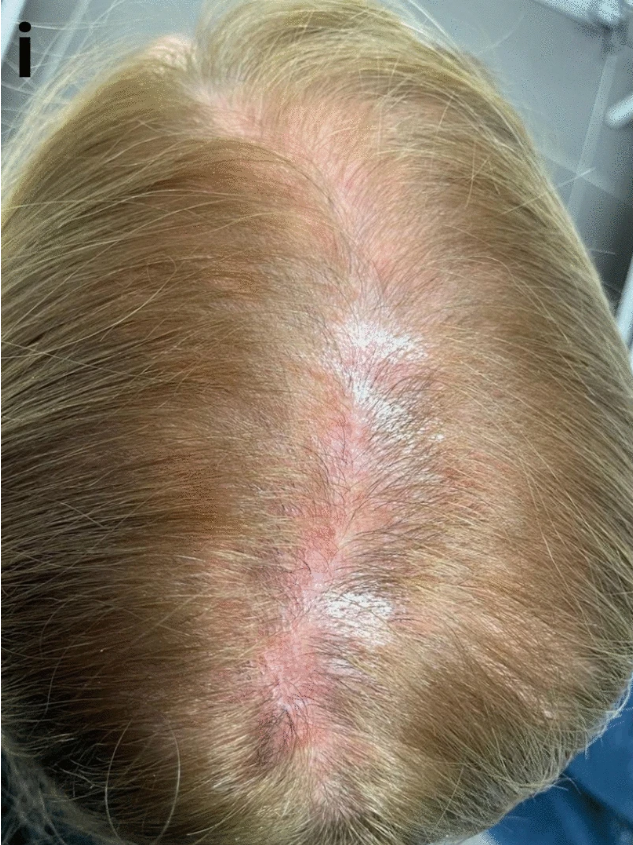
Figure 3: Patient with lichen planopilaris, the most frequent primary scarring alopecia. Adapted from Figure 9.[37]Umar, S., Kan, P., Carter, M.J. (2022). Lichen Planopilaris Responsive To A Novel Phytoactive Botanical Treatment: A Case Series. Dermatology And Therapy. 12. 1697-1710. Available at: … Continue reading Image used under the Creative Commons License.
Dandruff-like symptoms caused by autoimmune conditions tend to be more persistent and treatment-resistant than other causes of dandruff. Why? Because the root cause of the problem is an internal, chronic issue. Compared to an external overgrowth of Malassezia, this makes it a lot harder to treat.
Autoimmune diseases that cause dandruff-like symptoms usually arise in genetically susceptible people after a combination of environmental exposures. Contributing factors may include diet, lifestyle (i.e., activity level), or certain environmental triggers (i.e., allergies, an irritating beauty product).
The typical Western diet of processed foods, sugar, and unhealthy fats, in addition to smoking, are two well‑studied examples that can negatively impact the gut microbiome and keep the body in a low‑grade inflammatory state.[38]Manzel, A., Muller, D.N., Hafler, D.A., Erdman, S.E., Linker, R.A., Kleinewietfeld, M. (2014). Role Of “Western Diet” In Inflammatory Autoimmune Diseases. Curr Allergy Asthma Rep. 14(1). … Continue reading,[39]Perricone, C., Versini, M., Ben-Ami, D., Gertel, S., Watad, A., Segel, M.J., Ceccarelli, F., Conti, F., Cantarini, L., Bogdanos, D.P., Antonelli, A., Amital, H., Valesini, G., Shoenfeld, Y. (2016). … Continue reading This makes it easier for the immune system to start attacking the body’s own tissues in vulnerable people.
Does Dandruff Cause Hair Loss?
This is the big question. The short answer is: we’re not sure. Researchers have not yet identified the exact mechanism by which dandruff connects to hair loss.
Having dandruff does not guarantee hair loss, but inflammation associated with dandruff can increase shedding. We do know that there are two hair loss conditions commonly tied to dandruff:
- Telogen effluvium
- Pattern hair loss
Let’s look deeper into the science behind this.
Dandruff and Telogen Effluvium
Telogen effluvium is a condition where there are too many hairs in the telogen phase, causing premature hair shedding. This usually happens after a “negative event”, like high fever, illness, childbirth (postpartum), severe surgical trauma, sudden weight loss, thyroid issues, iron deficiencies, and starting or stopping medication.[40]Hussain, N., Agarwala, P., Iqbal, K., et al. (2022). A Systematic Review Of Acute Telogen Effluvium, A Harrowing Post-COVID-19 Manifestation. J Med Virol. 94. 1391-1401. Available at: … Continue reading,[41]Bin Dayel, S., Hussein, R.S., Atia, T., Abahussein, O., Al Yahya, R.S., Elsayed, S.H. (2024). Is Thyroid Dysfunction A Common Cause Of Telogen Effluvium?: A Retrospective Study. Medicine. 103(1). … Continue reading,[42]Kang, D.H., Kwon, S.H., Sim, W.Y., Lew, B.L. (2024). Telogen Effluvium Associated With Weight Loss: A Single Center Retrospective Study. Ann Dermatol. 36(6). 384-388. Available at: … Continue reading
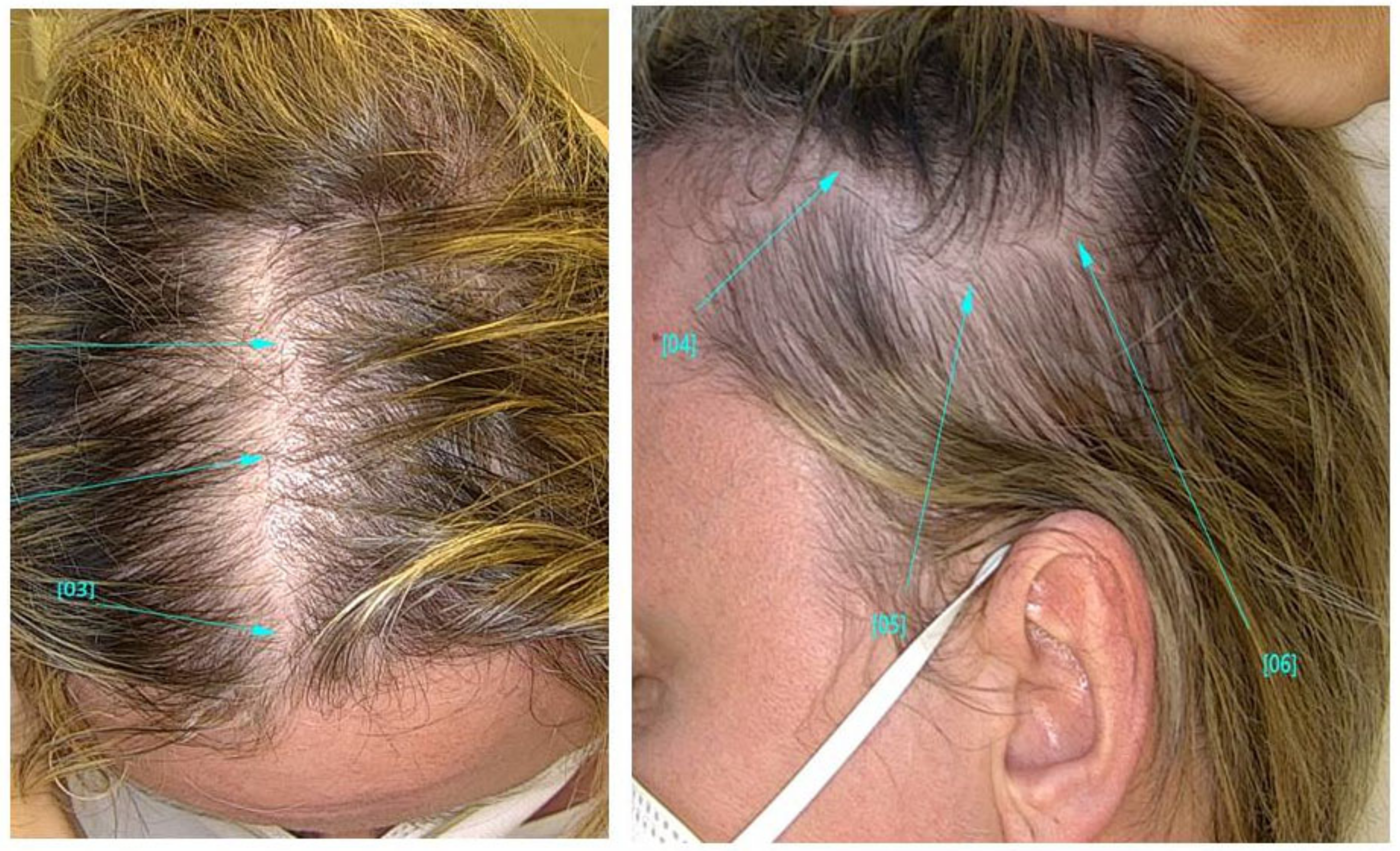
Figure 4: A patient with telogen effluvium following COVID infection. Adapted from Figure 2.[43]Monari, P., Gualdi, G., Bettoni, G., Costa, R., Ragni, G., Zani, F., Bianchi, G., Casella, S., Casella, E., Crippa, M., Calzavara Pinton, P., Di Nicola, M., Porreca, A., Amerio, P., Guizzi, P. … Continue reading Image used under the Creative Commons License.
Hair growth and shedding are a cycle, and by causing premature shedding, telogen effluvium disrupts this cycle, leaving a gap between when hairs fall out and grow in. The good news is that telogen effluvium is temporary, and when the cause is identified, it can be treated appropriately. Usually, hair shedding stops within 3 to 6 months of removing the trigger, and regrowth will occur over the following 3 to 6 months.[44]Malkud, S. (2015). Telogen Effluvium: A Review. J Clin Diagn Res. 9(9). WE01-3. Available at: https://doi.org/10.7860/JCDR/2015/15219.6492
Could dandruff be a “negative event”? Studies show that excess dandruff can, in fact, disrupt the hair cycle. This suggests dandruff may be able to trigger telogen effluvium.
The process from dandruff to hair loss could occur like this:
- Microbes like Malassezia and Propionibacterium acnes colonize the scalp and feed on sebum.
- The toxic by-products (like porphyrins) produced by sebum feeding by Malassezia and P. acnes react with UV radiation and increase free radical activity, causing oxidative stress and inflammation at the scalp.
- The body responds to this stress by producing more sebum and accelerating turnover of the scalps outer skin layer, creating more dead skin cells.
- The additional sebum acts as more food for Malassezia and P. acnes, increasing their numbers.
- The cycle repeats as microbial numbers grow, and inflammation increases.
- Eventually, this chronic inflammation causes hairs to shed before completion of the normal growth cycle (telogen effluvium).
Research shows that Malassezia is associated with hair shedding.[45]Nematian, J., Ravaghi, M., Gholamrezanezhad, A., Nematian, E. (2006). Increased Hair Shedding May Be Associated With The Presence Of Pityrosporum Ovale. Am J Clin Dermatol. 7(4). 263-266. Available … Continue reading
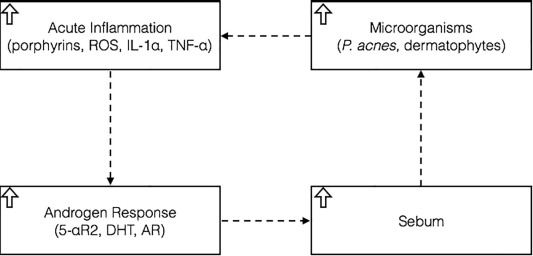
Figure 5: A feedback loop triggering excessive hair shedding. Adapted from Figure 2.[46]English, R.S. (2018). A Hypothetical Pathogenesis Model For Androgenic Alopecia: Clarifying The Dihydrotestosterone Paradox And Rate-Limiting Recovery Factors. Medical Hypotheses. 111. 73-81. … Continue reading Image used under the Creative Commons License.
Dandruff and Pattern Hair Loss
Pattern hair loss is not temporary. Known as androgenic alopecia, this is a chronic, progressive hair loss condition that is triggered by genetics, androgen levels, and the scalp environment.[47]Chen, S., Li, L., Ding, W., Zhu, Y., Zhou, N. (2025). Androgenetic Alopecia: An Update On Pathogenesis And Pharmacological Treatment. Drug Des Devel Ther. 19. 7349-7363. Available at: … Continue reading
Pattern hair loss progresses through cycles of hair growth (the anagen phase) and hair rest (the telogen phase), followed by shedding (the exogen phase). However, in each cycle, the anagen phase becomes shorter, and the telogen phase becomes longer. Over time, a progressively finer hair shaft is produced (follicle miniaturization). Hair follicles need to complete shedding before they miniaturize. So in essence, if there is no hair shedding, there is no follicle miniaturization, and androgenic alopecia will not progress.
We’ve discussed how dandruff could trigger telogen effluvium and excess shedding. It’s reasonable, then, to speculate that this excess shedding could also accelerate hair follicle miniaturization in those with androgenic alopecia. More shedding means more hair follicle miniaturization. This hasn’t been demonstrated in research, but it is a plausible scenario.
For diffuse alopecia conditions (like telogen effluvium), studies show that there is a positive correlation between dandruff severity and the number of hairs in the telogen phase.[48]Piérard-Franchimont, C., Xhauflaire-Uhoda, E., Loussouarn, G., Saint Léger, D., Piérard, G.E. (2006). Dandruff-Associated Smouldering Alopecia: A Chronobiological Assessment Over 5 Years. Clin Exp … Continue reading Perhaps dandruff could also exacerbate telogen phase lengthening caused by androgenic alopecia as well.
So while dandruff does not cause androgenic alopecia, it could exaggerate hair loss caused by this condition, and so addressing any dandruff or inflammation is crucial to support better regrowth outcomes when treating this condition.
Why Resolving Scalp Inflammation Matters for Hair Growth Treatments
There are several FDA-approved treatments for androgenic alopecia. However, inflammation at the scalp could stop these treatments from working effectively.
In a study of 64 men with androgenic alopecia, low-light laser therapy (LLLT) was found to reduce inflammatory molecules at the scalp. Subsequent use of LLLT before 2% minoxidil was found to boost hair regrowth similar to use of 5% minoxidil.[49]Mahe, Y.F., Cheniti, A., Tacheau, C., Antonelli, R., Planard-Luong, L., de Bernard, S., Buffat, L., Barbarat, P., Kanoun-Copy, L. (2021). Low-Level Light Therapy Downregulates Scalp Inflammatory … Continue reading The result was just a correlation (i.e., other factors could have boosted hair regrowth other than reduced inflammation), but suggests a link between lowered inflammation markers and improved hair regrowth outcomes.
This evidence suggests that if you are looking for hair loss treatments and you have dandruff or an inflamed scalp, don’t ignore it! It’s important to treat dandruff and inflammation first, or alongside regrowth regimens.
Identify Your Dandruff Driver
Knowing the cause of your dandruff is the first step in choosing the right treatment.
Do you experience:
- Small, white, powdery, and dry flakes?
- A scalp that feels tight, itchy, and dry?
Likely cause: Dehydrated scalp
Do you experience:
- Large, yellow or white flakes that feel greasy or waxy?
- A scalp feels greasy quickly, and oily hair?
- Intense itching, redness, or scaly patches?
Likely cause: Too much sebum and microbial overgrowth
Do you experience:
- Persistent redness on the scalp?
- Persistent pain in the scalp area?
- Persistent “dandruff” that doesn’t resolve with the use of shampoos?
Likely cause: An underlying autoimmune condition
But you shouldn’t self-diagnose. Speak with a dermatologist if you are experiencing dandruff or dandruff-like symptoms. A healthcare professional can often diagnose dandruff simply by looking at your hair and scalp, and may be able to advise on possible causes.
Treatments That Could Work
Once you’ve identified the likely culprit of your dandruff, you can now seek out the most appropriate treatments. We’ll walk through the different types of treatments available for each cause of dandruff.
For Microorganism-Driven Dandruff
When dandruff is driven by the overgrowth of microorganisms, the aim is to lower the levels of these organisms on the scalp and make it a less hospitable place for them to grow. There are several products available to support this mission.
Zinc pyrithione 1% shampoo
Zinc pyrithione is a potent antimicrobial and antifungal agent. It is a very common ingredient in shampoos targeted at dandruff, like Head & Shoulders products.
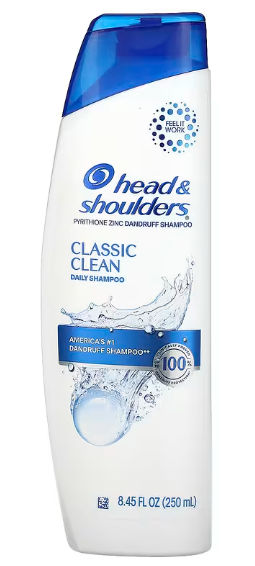
Figure 6: Head & Shoulders shampoo containing zinc pyrithione.
Zinc pyrithione acts in three key ways to disrupt microbial growth:
- It increases the zinc levels and copper levels within individual cells of microbes, like Malassezia, which can damage the structure and formation of iron-sulphur clusters.[50]Park, M., Cho, Y.J., Lee, Y.W., Jung, W.H. (2018). Understanding The Mechanism Of Action Of The Anti-Dandruff Agent Zinc Pyrithione Against Malassezia Restricta. Sci Rep. 8(1). 12086. Available at: … Continue reading,[51]Reeder, N.L., Xu, J., Youngquist, R.S., Schwartz, J.R., Rust, R.C., Saunders, C.W. (2011). The Antifungal Mechanism Of Action Of Zinc Pyrithione. Br J Dermatol. 165 Suppl 2. 9-12. Available at: … Continue reading
- In addition to damaging iron-sulphur clusters, it disrupts the synthesis process for iron-sulphur clusters.[52]Park, M., Cho, Y.J., Lee, Y.W., Jung, W.H. (2018). Understanding The Mechanism Of Action Of The Anti-Dandruff Agent Zinc Pyrithione Against Malassezia Restricta. Sci Rep. 8(1). 12086. Available at: … Continue reading
- It disrupts the production of lipid-eating enzymes (like those needed to “eat” sebum).[53]Park, M., Cho, Y.J., Lee, Y.W., Jung, W.H. (2018). Understanding The Mechanism Of Action Of The Anti-Dandruff Agent Zinc Pyrithione Against Malassezia Restricta. Sci Rep. 8(1). 12086. Available at: … Continue reading
Why is this important? Iron-sulphur clusters are contained within mitochondria, the “powerhouse of the cell”. Iron-sulphur clusters, alongside other cellular components, are needed to produce energy from mitochondria. Without energy, the microbes can not grow or survive.
The clinical evidence shows that zinc pyrithione is effective against dandruff and may even support hair regrowth, possibly by supporting a healthier scalp environment.
Study Subjects and Treatment Outcome Notes Marks et al. 1985.[54]Marks, R., Pearse, A.D., Walker, A.P. (1985). The Effects Of A Shampoo Containing Zinc Pyrithione On The Control Of Dandruff. Br J Dermatol. 112(4). 415-422. Available at: … Continue reading 32 subjects with dandruff, one half of the head was washed with 1% zinc pyrithione and the other half without. Progressive reduction in dandruff on the side of the head washed with zinc pyrithione, and the difference between the placebo side was statistically significant. Small subject number, but results suggest a positive influence that may be generalizable to larger groups. Berger et al. 2003.[55]Berger, R.S., Fu, J.L., Smiles, K.A., Turner, C.B., Schnell, B.M., Werchowski, K.M., Lammers, K.M. (2003). The Effects Of Minoxidil, 1% Pyrithione Zinc And A Combination Of Both On Hair Density: A … Continue reading 200 men with Hamilton-Norwood type III vertex or type IV baldness, treated with either 1% zinc pyrithione, 5% minoxidil, or a combination of both. Minoxidil produced the most substantial outcome, but all treatments resulted in a significant increase in hair counts. The benefit of the 1% pyrithione zinc shampoo used alone tended to be apparent only to the investigator, users did not notice a cosmetic change. Schwartz et al. 2013.[56]Schwartz, J.R., Bacon, R.A., Shah, R., Mizoguchi, H., Tosti, A. (2013). Therapeutic Efficacy Of Anti-Dandruff Shampoos: A Randomized Clinical Trial Comparing Products Based On Potentiated Zinc … Continue reading 620 subjects with scalp flaking, treated with either a “potentiated” zinc pyrithione (a formula that maximizes delivery of zinc pyrithione at the scalp), or a dual-active shampoo containing zinc pyrithione and another antifungal, climbazole Potentiated zinc pyrithione was more effective than the dual-active shampoo at reducing flaking. The treatment was used for 4 weeks, so only short-term benefits can be seen here. Zinc pyrithione shampoos are widely available. You should be able to purchase this shampoo easily over-the-counter at any pharmacy or supermarket.
Ketoconazole 1% or 2% shampoo
Ketoconazole is another antifungal medication. Ketoconazole shampoo is often recommended in conjunction with hair loss products, such as minoxidil or finasteride. This is because it doesn’t just help reduce dandruff, it can also reduce androgens at the scalp, which drive androgenic alopecia.
Ketoconazole fights pathogenic scalp microbes in two key ways:
- It blocks the production of a lipid needed to maintain the outer structure (cell wall) of fungi cells, which ultimately damages them.[57]Tynes, B.E., Johnson, C.D., Vaish, M.H., Abbott, B., Vučenović, J., Varrassi, G., Potharaju, P., Lopez Torres, Y., Lee, Z., Ahmadzadeh, S., Shekoohi, S., Kaye, A.D. (2024). Ketoconazole Shampoo For … Continue reading
- It changes the lipids present on the scalp, and reduces sebum production, both of which block the “food” available for Malassezia overgrowth and promote the growth of more friendly microbes.[58]Goularte-Silva, V., Paulino, L.C. (2022). Ketoconazole Beyond Antifungal Activity: Bioinformatics-Based Hypothesis On Lipid Metabolism In Dandruff And Seborrheic Dermatitis. Exp Dermatol. 31. … Continue reading
Like zinc pyrithione, the clinical evidence for ketoconazole shows that it is an effective treatment against dandruff, with 2% ketoconazole having the greatest impact.
Study Subjects and Treatment Outcome Notes Piérard-Franchimont et al. 2001.[59]Piérard-Franchimont, C., Piérard, G.E., Arrese, J.E., De Doncker, P. (2001). Effect Of Ketoconazole 1% And 2% Shampoos On Severe Dandruff And Seborrhoeic Dermatitis: Clinical, Squamometric And … Continue reading 66 subjects with severe dandruff or seborrhoeic dermatitis, treated with either 1% ketoconazole or 2% ketoconazole Both resulted in clear benefits, but flakiness, Malassezia count, and dandruff score were reduced more with 2% ketoconazo le compared to 1% ketoconazole.
Treatment lasted only 4 weeks. Longer trials are needed to determine whether this is a long-term solution. Also, the results may not be relevant to milder cases. Piérard-Franchimont et al. 2002.[60]Piérard-Franchimont, C., Goffin, V., Decroix, J., Piérard, G.E. (2002). A Multicenter Randomized Trial Of Ketoconazole 2% And Zinc Pyrithione 1% Shampoos In Severe Dandruff And Seborrheic … Continue reading 331 subjects with severe dandruff or seborrhoeic dermatitis, treated with either 1% ketoconazole or 2% ketoconazole Both treatments resulted in clear benefits, but the benefits were greater with 2% ketoconazole. There was a 73% improvement in total dandruff severity score with 2% ketoconazole, and instances of disease reccurrence was fewer. Treatment lasted only 4 weeks. Longer trials are needed to determine whether this is a long-term solution. Also, the results may not be relevant to milder cases. Lorette and Ermosilla 2006.[61]Lorette, G., Ermosilla, V. (2006). Clinical Efficacy Of A New Ciclopiroxolamine/Zinc Pyrithione Shampoo In Scalp Seborrheic Dermatitis Treatment. Eur J Dermatol. 16(5). Available at: … Continue reading 189 subjects with seborrheic dermatitis, treated with either 1.5% ciclopiroxolamine and 1% zinc pyrithione, or 2% ketoconazole All treatments reduced itching, redness, and inflammation, and it was found that both treatments were efficient in treating seborrheic dermatitis. Whether the results are relevant to “true” dandruff cases and cases of milder dandruff is unclear. Ketoconazole at 1% is available over-the-counter, but 2% requires a prescription. If you have mild to moderate dandruff, try 1% zinc pyrithione or 1% ketoconazole shampoo first. If you don’t see results or have more severe dandruff, contact your physician to see whether you can escalate to 2% ketoconzole.
Tea tree oil 5% shampoo
For those who seek out more natural remedies, tea tree oil is a widely used ingredient for treating dandruff naturally. It can be found in shampoos, conditioners, scalp oils, hair masks, lotions, and many other products of this sort.
Tea tree oil contains a compound known as terpinen-4-ol. This compound can disrupt the cell membrane of fungal cells, which disrupts their growth and ability to replicate.[62]Yu, D., Wang, J., Shao, X., Xu, F., Wang, H. (2015). Antifungal Modes Of Action Of Tea Tree Oil And Its Two Characteristic Components Against Botrytis Cinerea. J Appl Microbiol. 119(5). 1253-1262. … Continue reading
Unlike zinc pyrithione or ketoconazole, there is only one study supporting the use of tea tree oil against dandruff. However, it’s a well-designed study, so the validity of the conclusions are strong.
In this randomized, single-blind, and controlled study, 126 subjects with mild to moderate dandruff were treated either with 5% tree tea oil shampoo or a placebo. After 4 weeks, areas of the scalp showed a 41% improvement in severity score with 5% tea tree oil, while just a 11% improvement in the placebo group. Itchiness and greasiness were also significantly reduced with the 5% tea tree oil shampoo.[63]Satchell, A.C., Saurajen, A., Bell, C., Barnetson, R.S. (2002). Treatment Of Dandruff With 5% Tea Tree Oil Shampoo. J Am Acad Dermatol. 47(6). 852-855. Available at: … Continue reading
If you’re interested in trying tea tree oil as a natural solution to dandruff, you can find it at many pharmacies or online, but just make sure the concentration (5%) is clearly stated on the label!
Black seed oil 0.5% topical
Black cumin seed oil, also known as Nigella sativa, is a “trending” ingredient that you may see touted for its anti-aging properties. For dandruff, black cumin seed oil is not known to inhibit the growth of Malassezia like the other products in this list. Instead, it may:
- Reduce inflammation through its active component, thymoquinone.[64]Amin, B., Hosseinzadeh, H. (2016). Black Cumin (Nigella sativa) and Its Active Constituent, Thymoquinone: An Overview on the Analgesic and Anti-inflammatory Effects. Planta Medica 82(01/02):8-16. … Continue reading,[65]Arshad, M.T., Maqsood, S., Ikram, A., Abdullahi, M.A. (2025). Functional, Nutraceutical, And Pharmacological Properties Of Black Seed. Food Science & Nutrition. 13(8). e70725. Available at: … Continue reading
- Support a stronger skin barrier by delivering linoleic acid to the scalp, which stimulates ceramide synthesis (a key skin barrier lipid), thus reducing the impact of inflammatory molecules and microbes.[66]Rahim, M.A., Shoukat, A., Khalid, W., Ejaz, A., Itrat, N., Majeed, I., Koraqi, H., Imran, M., Nisa, M.U., Nazir, A., Alansari, W.S., Eskandrani, A.A., Shamlan, G., Al-Farga, A. (2022). A Narrative … Continue reading,[67]Coderch, L., López, O., de la Maza, A., Parra, J.L. (2003). Ceramides And Skin Function. Am J Clin Dermatol. 4(2). 107-129. Available at: https://doi.org/10.2165/00128071-200304020-00004
These effects counteract the adverse actions of Malassezia.
Unfortunately, there haven’t been any clinical trials testing the effect of black seed oil on subjects with dandruff. But, a randomized, double-blinded pilot study of 20 people with telogen effluvium suggested that this oil could reduce inflammation and hair shedding.[68]Rossi, A., Priolo, L., Iorio, A., Vescarelli, E., Gerardi, M., Campo, D., Nunno, D.D., Ceccarelli, S., Calvieri, S., Angeloni, A., Marchese, C. (2013). Evaluation Of A Therapeutic Alternative For … Continue reading
In the study, subjects were treated either with a topical product containing 0.5% black seed oil and 0.4% lavender oil, or a placebo with only 0.4% lavender oil. After 6 months, the following results were found:
- 90% of subjects using the 0.5% black seed oil and 0.4% lavender oil topical saw an increase in the number of hairs, while 60% of those using the placebo continued to lose hair
- Hair density significantly increased in 70% of subjects using the 0.5% black seed oil and 0.4% lavender oil topical, but only 30% in those using the placebo
- Subjects with scalp inflammation using the 0.5% black seed oil and 0.4% lavender oil topical were found to have total regression of their scalp inflammation, while none of the subjects with inflammation using the placebo saw any resolution to their inflammation
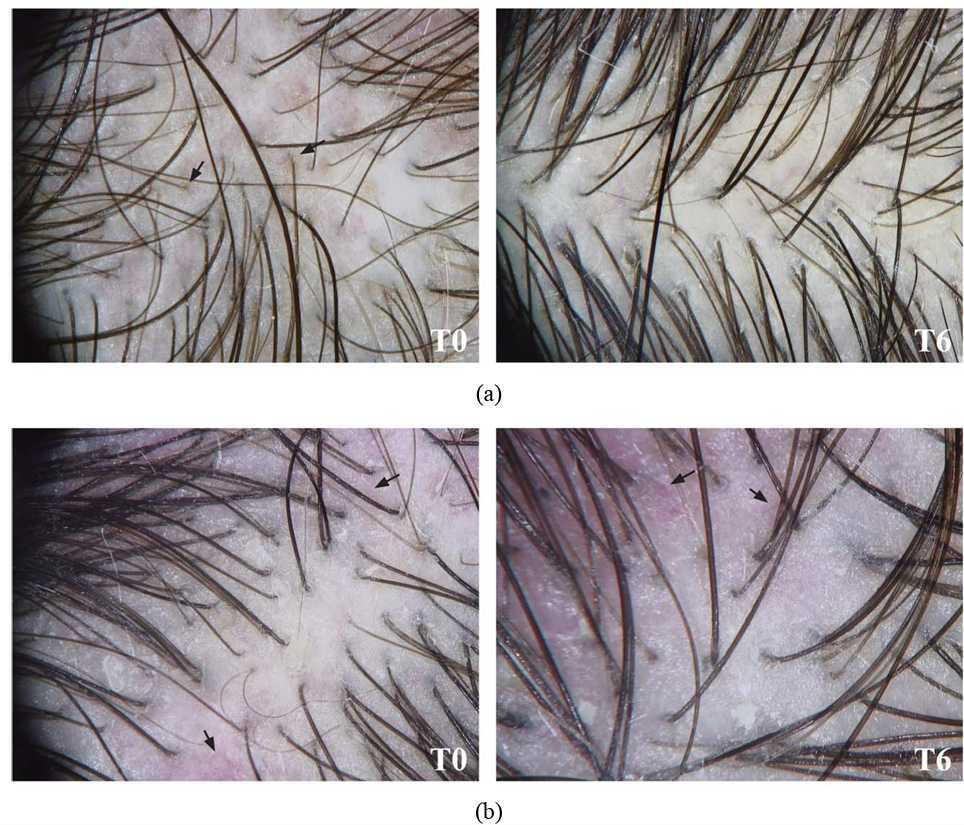
Figure 7: Scalp inflammation at baseline (T0) and after 6 months of treatment (T6) with either black seed oil (a) or a placebo (b). Patients treated with the placebo showed persistent scalp inflammation. Adapted from Figure 2.[69]Rossi, A., Priolo, L., Iorio, A., Vescarelli, E., Gerardi, M., Campo, D., Nunno, D.D., Ceccarelli, S., Calvieri, S., Angeloni, A., Marchese, C. (2013). Evaluation Of A Therapeutic Alternative For … Continue reading Image used under the Creative Commons License.
We know that Malassezia causes inflammation, and that inflammation is related to hair loss, so by counteracting these effects, black seed oil could be an effective addition to any anti-dandruff regimen, or even any anti-hair shedding regimen.
Because the active ingredient is thymoquinone, using black seed oil for dandruff and hair loss is less about the concentration of the black seed oil and more about the overall thymoquinone content in the formula. Since black seed oil is well-tolerated, you could probably go higher than 0.5% and make your own formula at a concentration of 2-5%. This will increase the likelihood that you’re getting enough of this anti-inflammatory compound.
For Nutrient-Linked Dandruff
If your dandruff is due to nutrient deficiencies, the obvious answer is to supplement your diet with foods that contain these missing vitamins, or alternatively look towards taking daily supplements.
We know that those with seborrheic dermatitis have been found with lowered levels of B vitamins, as well as vitamin D3 and zinc.[70]Aktaş Karabay, E., Aksu Çerman, A. (2019). Serum Zinc Levels In Seborrheic Dermatitis: A Case-Control Study. Turk J Med Sci. 49(5). 1503-1508. Available at: https://doi.org/10.3906/sag-1906-72,[71]Rahimi, S., Nemati, N., Shafaei-Tonekaboni, S.S. (2021). Serum Levels Of 25-Hydroxyvitamin D In Patients With Seborrheic Dermatitis: A Case-Control Study. Dermatol Res Pract. 2021. 6623271. Available … Continue reading,[72]Jen, M., Yan, A.C. (2010). Syndromes Associated With Nutritional Deficiency And Excess. Clinics In Dermatology. 28(6). 669-685. Available at: https://doi.org/10.1016/j.clindermatol.2010.03.029,[73]Stone, O.J. (1989). Pyridoxine Deficiency And Antagonism Produce Increased Ground Substance Viscosity With Resulting Seborrheic Dermatitis And Increased Tumor Resistance. Med Hypotheses. 30(4). … Continue reading,[74]Redzic, S., Hashmi, M.F., Gupta, V. (2023). Niacin Deficiency. StatPearls [Internet]. Available at: https://www.ncbi.nlm.nih.gov/books/NBK557728/,[75]Balnave, D. (1977). Clinical Symptoms Of Biotin Deficiency In Animals. The American Journal Of Clinical Nutrition. 30(9). 1408-1413. Available at: https://doi.org/10.1093/ajcn/30.9.1408
There is no clinical evidence to show that supplementation will treat dandruff in those who are nutrient-deficient. However, there is evidence to show that nutrient supplementation can reverse adverse effects in those who are nutrient-deficient.
For example, biotin deficiency is a cause of hair thinning in women who are biotin-deficient. The supplementation of biotin to biotin-deficient individuals has been found to restore hair growth.[76]Patel, D.P., Swink, S.M., Castelo-Soccio, L. (2017). A Review Of The Use Of Biotin For Hair Loss. Skin Appendage Disord. 3(3). 166-169. Available at: https://doi.org/10.1159/000462981 So, it stands to reason that vitamin supplementation may also support the reduction or elimination of dandruff if this is the cause.
If you’re interested in learning more about the connection between nutrient deficiencies and hair loss, read our article here.
For Autoimmune and Inflammatory Dandruff
Unfortunately, if you think you might have dandruff caused by an autoimmune disorder, this is a lot harder to treat. The problem is internal, not just at the surface of the scalp, and the cause of an autoimmune disorder can be both complex and very personal.
Autoimmune disorders are often treated with immunosuppressive drugs. But you can also look at altering your diet, lifestyle, or environment to support a journey back to normalcy.
- Diet: Maintain a diet high in nutrients, and minimize exposure to any food allergens.[77]Mazzucca, C.B., Raineri, D., Cappellano, G., Chiocchetti, A. (2021). How To Tackle The Relationship Between Autoimmune Diseases And Diet: Well Begun Is Half-Done. Nutrients. 13(11). 3956. Available … Continue reading An elimination diet can work well to see which foods may be causing dandruff for you – eliminate a food from your diet for a few weeks and record the results. Blood tests can reveal nutrients that you might be deficient in, but a visit to your doctor may be needed to rule out malabsorption or other disease states causing nutrient deficiency.
- Lifestyle: Incorporate low-grade physical activity into your daily routine, ensure you are having regular sunlight exposure (for vitamin D!), and try to have consistent, high-quality sleep.[78]Blank, M., Israeli, D., Shoenfeld, Y. (2024). Exercise, Autoimmune Diseases And T-Regulatory Cells. Journal Of Autoimmunity. 149. 103317. Available at: https://doi.org/10.1016/j.jaut.2024.103317,[79]Yang, C.Y., Leung, P.S.C., Adamopoulos, I.E. (2013). The Implication Of Vitamin D And Autoimmunity: A Comprehensive Review. Clinical Reviews In Allergy And Immunology. 45. 217-226. Available at: … Continue reading,[80]Hsiao, Y.H., Chen, Y.T., Tseng, C.M., Wu, L.A., Lin, W.C., Su, V.Y.F., Perng, D.W., Chang, S.C., Chen, Y.M., Chen, T.J., Lee, Y.C., Chou, K.T. (2015). Sleep Disorders And Increased Risk Of Autoimmune … Continue reading
- Environment: Reduce your exposure to environmental toxins, like heavy metals, plastic chemicals, and persistent organic pollutants like dioxins and polychlorinated biphenyls, triclosan, and food colorings. Foreign substances like this can increase susceptibility to autoimmune diseases.[81]Pollard, K.M., Christy, J.M., Cauvi, D.M., Kono, D.H. (2018). Environmental Xenobiotic Exposure And Autoimmunity. Current Opinion In Toxicology. 10. 15-22. Available at: … Continue reading You can test for “toxic overload” using blood tests, and can even test your hair for heavy metals to assess your current toxin exposure.
Autoimmune disorders can affect your quality of life. If you think you might have an autoimmune or inflammatory disorder, speak with your physician to discuss suitable treatment routes.
What to Avoid If You Have Dandruff
#1 – Oleic acid
Organisms like Malassezia and P. acnes can break down sebum and produce oleic acid, which we have established can be harmful to the skin barrier. This lipid is not only harmful but can also encourage the growth of microorganisms like these, so it follows that those with dandruff should avoid any topical products containing oleic acid.[82]Trompezinski, S., Weber, S., Cadars, B., Larue, F., Ardiet, N., Chavagnac-Bonneville, M., Sayag, M., Jourdan, E. (2016). Assessment Of A New Biological Complex Efficacy On Dysseborrhea, Inflammation, … Continue reading
Oleic acid can be found naturally in vegetable oils (i.e., olive oil, corn oil, canola oil, avocado oil) and animal fats (i.e., tallow and lard), but you don’t have to avoid eating oleic acid if you have dandruff. There is no evidence to suggest eating oleic acid causes more oleic acid at the scalp, and in fact studies show that eating oleic acid can reduce inflammation and reduce the activity of stearoyl-CoA desaturase (the enzyme that produces oleic acid in the body).[83]Wang, Q., Liu, R., Chang, M., Zhang, H., Jin, Q., Wang, X. (2022). Dietary Oleic Acid Supplementation And Blood Inflammatory Markers: A Systematic Review And Meta-Analysis Of Randomized Controlled … Continue reading,[84]Dobrzyn, P., Pyrkowska, A., Jazurek, M., Dobrzyn, A. (2012). Increased Availability Of Endogenous And Dietary Oleic Acid Contributes To The Upregulation Of Cardiac Fatty Acid Oxidation. … Continue reading
#2 – Allergenic foods
For autoimmune-prone individuals, there may be a particular source driving seborrheic dermatitis, eczema, or scalp psoriasis. In these cases, it may be worthwhile to review your dietary choices and try to determine any potential causes. Anecdotally, several people we have worked with have reported that dietary overhauls (including the elimination of gluten, dairy, and seed oils) significantly improved their dandruff problems.
What If My Dandruff Is Resistant to Treatment?
PHH members with treatment-resistant dandruff have reported success when rotating shampoos with different active ingredients.
An example rotation may look like this:
2% ketoconazole (2-3 days) → selenium sulfide (2-3 days) → coal tar (2-3 days) → zinc pyrithione (2-3 days) → 2% ketoconazole (2-3 days)…
Rotating treatments like these can be effective because each active ingredient targets dandruff in a distinct way, creating a more comprehensive approach to addressing its underlying causes:
- Ketoconazole: Fights pathogenic scalp microbes by inhibiting fungal cell wall synthesis.[85]Borda, L.J., Wikramanayake, T.C. (2015). Seborrheic Dermatitis And Dandruff: A Comprehensive Review. Journal Of Clinical And Investigative Dermatology. 3(2). 10.13188/2373-1044.1000019. Available at: … Continue reading,[86]Koc, E., Arca, E., Kose, O., Akar, A. (2009). An Open, Randomized, Prospective, Comparative Study Of Topical Pimecrolimus 1% Cream And Topical Ketoconazole 2% Cream In The Treatment Of Seborrheic … Continue reading
- Selenium sulfide: Stops the growth and proliferation of cells, and is also keratolytic – it exfoliates the outer layer of skin by breaking down keratin.[87]Borda, L.J., Wikramanayake, T.C. (2015). Seborrheic Dermatitis And Dandruff: A Comprehensive Review. Journal Of Clinical And Investigative Dermatology. 3(2). 10.13188/2373-1044.1000019. Available at: … Continue reading,[88]Danby, F.W., Maddin, W.S., Margesson, L.J., Rosenthal, D. (1993). A Randomized, Double-Blind, Placebo-Controlled Trial Of Ketoconazole 2% Shampoo Versus Selenium Sulfide 2.5% Shampoo In The Treatment … Continue reading
- Coal tar: This is an anti-fungal, anti-inflammatory, and keratolytic compound that can also reduce sebum production.[89]Borda, L.J., Wikramanayake, T.C. (2015). Seborrheic Dermatitis And Dandruff: A Comprehensive Review. Journal Of Clinical And Investigative Dermatology. 3(2). 10.13188/2373-1044.1000019. Available at: … Continue reading,[90]Davies, D., Boorman, G.C., Shuttleworth, D. (1999). Comparative Efficacy Of Shampoos Containing Coal Tar (4.0% W/W; TarmedTM), Coal Tar (4.0% W/W) Plus Ciclopirox Olamine (1.0% W/W; TarmedTM AF) And … Continue reading
- Zinc pyrithione: Interferes with iron-sulfur proteins and energy metabolism in microbes.[91]Borda, L.J., Wikramanayake, T.C. (2015). Seborrheic Dermatitis And Dandruff: A Comprehensive Review. Journal Of Clinical And Investigative Dermatology. 3(2). 10.13188/2373-1044.1000019. Available at: … Continue reading,[92]Reeder, N.L., Xu, J., Youngquist, R.S., Schwartz, J.R., Rust, R.C., Saunders, C.W. (2011). The Antifungal Mechanism Of Action Of Zinc Pyrithione. Br J Dermatol. 165 Suppl 2. 9-12. Available at: … Continue reading
Final Remarks
Dandruff is a multifactorial condition influenced by microbes, the skin barrier, nutrition, and immune activity. Although it does not directly cause permanent hair loss, the inflammation and scalp imbalance associated with dandruff can increase shedding and potentially accelerate pattern hair loss in susceptible individuals. Encouragingly, addressing dandruff often improves overall scalp health and may enhance the effectiveness of hair growth treatments. The most successful strategy is to first identify the underlying driver of dandruff, whether it be microbial, nutritional, or inflammatory, and then select the most appropriate treatment. By doing this, you can build a healthier scalp environment that can support normal hair cycling, and hopefully stronger hair regrowth as well, over time.
References[+]
References ↑1, ↑2, ↑3, ↑20 Borda, L.J., Wikramanayake, T.C. (2015). Seborrheic Dermatitis And Dandruff: A Comprehensive Review. J Clin Investig Dermatol. 3(2). Available at: https://doi.org/10.13188/2373-1044.1000019 ↑4 Del Rosso, J.Q. (2011). Adult Seborrheic Dermatitis: A Status Report On Practical Topical Management. J Clin Aesthet Dermatol. 4(5). Available at: https://www.ncbi.nlm.nih.gov/pmc/articles/PMC3100109/ ↑5 Jourdain, R., Moga, A., Magiatis, P., Fontanié, M., Velegraki, A., Papadimou, C., Rahoul, V., Guéniche, A., Chopra, T., Gaitanis, G. (2023). Malassezia Restricta-Mediated Lipoperoxidation: A Novel Trigger In Dandruff. Acta Derm Venereol. 103. adv00868. Available at: https://doi.org/10.2340/actadv.v103.4808 ↑6, ↑14 Park, M., Park, S., Jung, W.H. (2021). Skin Commensal Fungus Malassezia And Its Lipases. J Microbiol Biotechnol. 31(5). 637-644. Available at: https://doi.org/10.4014/jmb.2012.12048 ↑7 Kováčik, A., Kopečná, M., Hrdinová, I., Opálka, L., Boncheva Bettex, M., Vávrová, K. (2023). Time-Dependent Differences In The Effects Of Oleic Acid And Oleyl Alcohol On The Human Skin Barrier. Mol Pharm. 20(12). 6237-6245. Available at: https://doi.org/10.1021/acs.molpharmaceut.3c00648 ↑8 Tanojo, H., Boelsma, E., Junginger, H.E., Ponec, M., Boddé, H.E. (1999). In Vivo Human Skin Permeability Enhancement By Oleic Acid: A Laser Doppler Velocimetry Study. J Control Release. 58(1). 97-104. Available at: https://doi.org/10.1016/s0168-3659(98)00144-8 ↑9 Liu, H.M., Cheng, M.Y., Xun, M.H., Zhao, Z.W., Zhang, Y., Tang, W., Cheng, J., Ni, J., Wang, W. (2023). Possible Mechanisms Of Oxidative Stress-Induced Skin Cellular Senescence, Inflammation, And Cancer And The Therapeutic Potential Of Plant Polyphenols. Int J Mol Sci. 24(4). Available at: https://doi.org/10.3390/ijms24043755 ↑10 Sikder, M.M., Li, X., Akumwami, S., Labony, S.A. (2025). Reactive Oxygen Species: Role In Pathophysiology, And Mechanism Of Endogenous And Dietary Antioxidants During Oxidative Stress. Chonnam Med J. 61(1). 32-45. Available at: https://doi.org/10.4068/cmj.2025.61.1.32 ↑11 Kim, M.J., Woo, S.W., Kim, M.S., Park, J.E., Hwang, J.K. (2014). Anti-Photoaging Effect Of Aaptamine In UVB-Irradiated Human Dermal Fibroblasts And Epidermal Keratinocytes. Journal Of Asian Natural Products Research. 16(12). 1139-1147. Available at: https://doi.org/10.1080/10286020.2014.983092 ↑12 Rudramurthy, S.M., Honnavar, P., Dogra, S., Yegneswaran, P.P., Handa, S., Chakrabarti, A. (2014). Association Of Malassezia Species With Dandruff. Indian J Med Res. 139(3). 431-437. Available at: https://www.ncbi.nlm.nih.gov/pmc/articles/PMC4069738/ ↑13 Clavaud, C., Jourdain, R., Bar-Hen, A., Tichit, M., Bouchier, C., Pouradier, F., El Rawadi, C., Guillot, J., Ménard-Szczebara, F., Breton, L., Latgé, J.P., Mouyna, I. (2013). Dandruff Is Associated With Disequilibrium In The Proportion Of The Major Bacterial And Fungal Populations Colonizing The Scalp. PLoS One. 8(3). e58203. Available at: https://doi.org/10.1371/journal.pone.0058203 ↑15 Ashbee, H.R., Ingham, E., Holland, K.T., Cunliffe, W.J. (1993). The Carriage Of Malassezia Furfur Serovars A, B And C In Patients With Pityriasis Versicolor, Seborrhoeic Dermatitis And Controls. British Journal Of Dermatology. 129(5). 533-540. Available at: https://doi.org/10.1111/j.1365-2133.1993.tb00480.x ↑16 Dawson, T.L. Jr. (2007). Malassezia Globosa And Restricta: Breakthrough Understanding Of The Etiology And Treatment Of Dandruff And Seborrheic Dermatitis Through Whole-Genome Analysis. J Investig Dermatol Symp Proc. 12(2). 15-19. Available at: https://doi.org/10.1038/sj.jidsymp.5650049 ↑17, ↑59 Piérard-Franchimont, C., Piérard, G.E., Arrese, J.E., De Doncker, P. (2001). Effect Of Ketoconazole 1% And 2% Shampoos On Severe Dandruff And Seborrhoeic Dermatitis: Clinical, Squamometric And Mycological Assessments. Dermatology. 202(2). 171-176. Available at: https://doi.org/10.1159/000051628 ↑18, ↑70 Aktaş Karabay, E., Aksu Çerman, A. (2019). Serum Zinc Levels In Seborrheic Dermatitis: A Case-Control Study. Turk J Med Sci. 49(5). 1503-1508. Available at: https://doi.org/10.3906/sag-1906-72 ↑19, ↑71 Rahimi, S., Nemati, N., Shafaei-Tonekaboni, S.S. (2021). Serum Levels Of 25-Hydroxyvitamin D In Patients With Seborrheic Dermatitis: A Case-Control Study. Dermatol Res Pract. 2021. 6623271. Available at: https://doi.org/10.1155/2021/6623271 ↑21, ↑72 Jen, M., Yan, A.C. (2010). Syndromes Associated With Nutritional Deficiency And Excess. Clinics In Dermatology. 28(6). 669-685. Available at: https://doi.org/10.1016/j.clindermatol.2010.03.029 ↑22, ↑73 Stone, O.J. (1989). Pyridoxine Deficiency And Antagonism Produce Increased Ground Substance Viscosity With Resulting Seborrheic Dermatitis And Increased Tumor Resistance. Med Hypotheses. 30(4). 277-280. Available at: https://doi.org/10.1016/0306-9877(89)90037-6 ↑23, ↑74 Redzic, S., Hashmi, M.F., Gupta, V. (2023). Niacin Deficiency. StatPearls [Internet]. Available at: https://www.ncbi.nlm.nih.gov/books/NBK557728/ ↑24, ↑75 Balnave, D. (1977). Clinical Symptoms Of Biotin Deficiency In Animals. The American Journal Of Clinical Nutrition. 30(9). 1408-1413. Available at: https://doi.org/10.1093/ajcn/30.9.1408 ↑25 Demetree, J.W., Safer, L.F., Artis, W.M. (1980). The Effect Of Zinc On The Sebum Secretion Rate. Acta Derm Venereol. 60(2). 166-169. Available at: https://pubmed.ncbi.nlm.nih.gov/6155029/ ↑26 Lin, P.H., Sermersheim, M., Li, H., Lee, P.H.U., Steinberg, S.M., Ma, J. (2017). Zinc In Wound Healing Modulation. Nutrients. 10(1). 16. Available at: https://doi.org/10.3390/nu10010016 ↑27 Arribas Lopez, E., Zand, N., Ojo, O., Kochhar, T. (2025). Systematic Review And Meta-Analysis Of The Effect Of Zinc On Wound Healing. BMJ Nutr Prev Health. 8(1). e000952. Available at: https://doi.org/10.1136/bmjnph-2024-000952 ↑28 Haase, H., Schomburg, L. (2019). You’d Better Zinc-Trace Element Homeostasis In Infection And Inflammation. Nutrients. 11(9). 2078. Available at: https://doi.org/10.3390/nu11092078 ↑29 Bachman, M.A., Weiser, J.N. (2015). Competition For Metals Among Microbes And Their Host. Trace Metals And Infectious Diseases [Internet]. Available at: https://www.ncbi.nlm.nih.gov/books/NBK569680/ ↑30 Potrykus, J., Ballou, E.R., Childers, D.S., Brown, A.J.P. (2014). Conflicting Interests In The Pathogen–Host Tug Of War: Fungal Micronutrient Scavenging Versus Mammalian Nutritional Immunity. PLoS Pathogens. Available at: https://doi.org/10.1371/journal.ppat.1003910 ↑31 Gupta, S., Read, S.A., Shackel, N.A., Hebbard, L., George, J., Ahlenstiel, G. (2019). The Role Of Micronutrients In The Infection And Subsequent Response To Hepatitis C Virus. Cells. 8(6). 603. Available at: https://doi.org/10.3390/cells8060603 ↑32 Roth-Walter, F., Berni Canani, R., O’Mahony, L., Peroni, D., Sokolowska, M., Vassilopoulou, E., Venter, C. (2024). Nutrition In Chronic Inflammatory Conditions: Bypassing The Mucosal Block For Micronutrients. Allergy. 79(2). 353-383. Available at: https://doi.org/10.1111/all.15972 ↑33 Magnifico, I., Petronio Petronio, G., Venditti, N., Cutuli, M.A., Pietrangelo, L., Vergalito, F., Mangano, K., Zella, D., Di Marco, R. (2020). Atopic Dermatitis As A Multifactorial Skin Disorder. Can The Analysis Of Pathophysiological Targets Represent The Winning Therapeutic Strategy? Pharmaceuticals (Basel). 13(11). 411. Available at: https://doi.org/10.3390/ph13110411 ↑34 Armstrong, A.W., Read, C. (2020). Pathophysiology, Clinical Presentation, And Treatment Of Psoriasis: A Review. JAMA. 323(19). 1945-1960. Available at: https://doi.org/10.1001/jama.2020.4006 ↑35 Lepe, K., Nassereddin, A., Syed, H.A., et al. (2024). Lichen Planopilaris. StatPearls [Internet]. Available at: https://www.ncbi.nlm.nih.gov/books/NBK470325/ ↑36 Navarro Triviño, F.J., Velasco Amador, J.P., Rivera Ruiz, I. (2025). Seborrheic Dermatitis Revisited: Pathophysiology, Diagnosis, And Emerging Therapies-A Narrative Review. Biomedicines. 13(10). 2458. Available at: https://doi.org/10.3390/biomedicines13102458 ↑37 Umar, S., Kan, P., Carter, M.J. (2022). Lichen Planopilaris Responsive To A Novel Phytoactive Botanical Treatment: A Case Series. Dermatology And Therapy. 12. 1697-1710. Available at: https://doi.org/10.1007/s13555-022-00749-3 ↑38 Manzel, A., Muller, D.N., Hafler, D.A., Erdman, S.E., Linker, R.A., Kleinewietfeld, M. (2014). Role Of “Western Diet” In Inflammatory Autoimmune Diseases. Curr Allergy Asthma Rep. 14(1). 404. Available at: https://doi.org/10.1007/s11882-013-0404-6 ↑39 Perricone, C., Versini, M., Ben-Ami, D., Gertel, S., Watad, A., Segel, M.J., Ceccarelli, F., Conti, F., Cantarini, L., Bogdanos, D.P., Antonelli, A., Amital, H., Valesini, G., Shoenfeld, Y. (2016). Smoke And Autoimmunity: The Fire Behind The Disease. Autoimmunity Reviews. 15(4). 354-374. Available at: https://doi.org/10.1016/j.autrev.2016.01.001 ↑40 Hussain, N., Agarwala, P., Iqbal, K., et al. (2022). A Systematic Review Of Acute Telogen Effluvium, A Harrowing Post-COVID-19 Manifestation. J Med Virol. 94. 1391-1401. Available at: https://doi.org/10.1002/jmv.27534 ↑41 Bin Dayel, S., Hussein, R.S., Atia, T., Abahussein, O., Al Yahya, R.S., Elsayed, S.H. (2024). Is Thyroid Dysfunction A Common Cause Of Telogen Effluvium?: A Retrospective Study. Medicine. 103(1). e36803. Available at: https://doi.org/10.1097/MD.0000000000036803 ↑42 Kang, D.H., Kwon, S.H., Sim, W.Y., Lew, B.L. (2024). Telogen Effluvium Associated With Weight Loss: A Single Center Retrospective Study. Ann Dermatol. 36(6). 384-388. Available at: https://doi.org/10.5021/ad.24.043 ↑43 Monari, P., Gualdi, G., Bettoni, G., Costa, R., Ragni, G., Zani, F., Bianchi, G., Casella, S., Casella, E., Crippa, M., Calzavara Pinton, P., Di Nicola, M., Porreca, A., Amerio, P., Guizzi, P. (2022). Post-SARS-CoV-2 Acute Telogen Effluvium: An Expected Complication. Journal Of Clinical Medicine. 11(5). 1234. Available at: https://doi.org/10.3390/jcm11051234 ↑44 Malkud, S. (2015). Telogen Effluvium: A Review. J Clin Diagn Res. 9(9). WE01-3. Available at: https://doi.org/10.7860/JCDR/2015/15219.6492 ↑45 Nematian, J., Ravaghi, M., Gholamrezanezhad, A., Nematian, E. (2006). Increased Hair Shedding May Be Associated With The Presence Of Pityrosporum Ovale. Am J Clin Dermatol. 7(4). 263-266. Available at: https://doi.org/10.2165/00128071-200607040-00008 ↑46 English, R.S. (2018). A Hypothetical Pathogenesis Model For Androgenic Alopecia: Clarifying The Dihydrotestosterone Paradox And Rate-Limiting Recovery Factors. Medical Hypotheses. 111. 73-81. Available at: https://doi.org/10.1016/j.mehy.2017.12.027 ↑47 Chen, S., Li, L., Ding, W., Zhu, Y., Zhou, N. (2025). Androgenetic Alopecia: An Update On Pathogenesis And Pharmacological Treatment. Drug Des Devel Ther. 19. 7349-7363. Available at: https://doi.org/10.2147/DDDT.S542000 ↑48 Piérard-Franchimont, C., Xhauflaire-Uhoda, E., Loussouarn, G., Saint Léger, D., Piérard, G.E. (2006). Dandruff-Associated Smouldering Alopecia: A Chronobiological Assessment Over 5 Years. Clin Exp Dermatol. 31(1). 23-26. Available at: https://doi.org/10.1111/j.1365-2230.2005.02026.x ↑49 Mahe, Y.F., Cheniti, A., Tacheau, C., Antonelli, R., Planard-Luong, L., de Bernard, S., Buffat, L., Barbarat, P., Kanoun-Copy, L. (2021). Low-Level Light Therapy Downregulates Scalp Inflammatory Biomarkers In Men With Androgenetic Alopecia And Boosts Minoxidil 2% To Bring A Sustainable Hair Regrowth Activity. Lasers Surg Med. 53. 1208-1219. Available at: https://doi.org/10.1002/lsm.23398 ↑50, ↑52, ↑53 Park, M., Cho, Y.J., Lee, Y.W., Jung, W.H. (2018). Understanding The Mechanism Of Action Of The Anti-Dandruff Agent Zinc Pyrithione Against Malassezia Restricta. Sci Rep. 8(1). 12086. Available at: https://doi.org/10.1038/s41598-018-30588-2 ↑51, ↑92 Reeder, N.L., Xu, J., Youngquist, R.S., Schwartz, J.R., Rust, R.C., Saunders, C.W. (2011). The Antifungal Mechanism Of Action Of Zinc Pyrithione. Br J Dermatol. 165 Suppl 2. 9-12. Available at: https://doi.org/10.1111/j.1365-2133.2011.10571.x ↑54 Marks, R., Pearse, A.D., Walker, A.P. (1985). The Effects Of A Shampoo Containing Zinc Pyrithione On The Control Of Dandruff. Br J Dermatol. 112(4). 415-422. Available at: https://doi.org/10.1111/j.1365-2133.1985.tb02314.x ↑55 Berger, R.S., Fu, J.L., Smiles, K.A., Turner, C.B., Schnell, B.M., Werchowski, K.M., Lammers, K.M. (2003). The Effects Of Minoxidil, 1% Pyrithione Zinc And A Combination Of Both On Hair Density: A Randomized Controlled Trial. Br J Dermatol. 149(2). 354-362. Available at: https://doi.org/10.1046/j.1365-2133.2003.05435.x ↑56 Schwartz, J.R., Bacon, R.A., Shah, R., Mizoguchi, H., Tosti, A. (2013). Therapeutic Efficacy Of Anti-Dandruff Shampoos: A Randomized Clinical Trial Comparing Products Based On Potentiated Zinc Pyrithione And Zinc Pyrithione/Climbazole. Int J Cosmet Sci. 35(4). 381-387. Available at: https://doi.org/10.1111/ics.12055 ↑57 Tynes, B.E., Johnson, C.D., Vaish, M.H., Abbott, B., Vučenović, J., Varrassi, G., Potharaju, P., Lopez Torres, Y., Lee, Z., Ahmadzadeh, S., Shekoohi, S., Kaye, A.D. (2024). Ketoconazole Shampoo For Seborrheic Dermatitis Of The Scalp: A Narrative Review. Cureus. 16(8). e67532. Available at: https://doi.org/10.7759/cureus.67532 ↑58 Goularte-Silva, V., Paulino, L.C. (2022). Ketoconazole Beyond Antifungal Activity: Bioinformatics-Based Hypothesis On Lipid Metabolism In Dandruff And Seborrheic Dermatitis. Exp Dermatol. 31. 821-822. Available at: https://doi.org/10.1111/exd.14505 ↑60 Piérard-Franchimont, C., Goffin, V., Decroix, J., Piérard, G.E. (2002). A Multicenter Randomized Trial Of Ketoconazole 2% And Zinc Pyrithione 1% Shampoos In Severe Dandruff And Seborrheic Dermatitis. Skin Pharmacol Appl Skin Physiol. 15(6). 434-441. Available at: https://doi.org/10.1159/000066452 ↑61 Lorette, G., Ermosilla, V. (2006). Clinical Efficacy Of A New Ciclopiroxolamine/Zinc Pyrithione Shampoo In Scalp Seborrheic Dermatitis Treatment. Eur J Dermatol. 16(5). Available at: https://pubmed.ncbi.nlm.nih.gov/17101479/ ↑62 Yu, D., Wang, J., Shao, X., Xu, F., Wang, H. (2015). Antifungal Modes Of Action Of Tea Tree Oil And Its Two Characteristic Components Against Botrytis Cinerea. J Appl Microbiol. 119(5). 1253-1262. Available at: https://doi.org/10.1111/jam.12939 ↑63 Satchell, A.C., Saurajen, A., Bell, C., Barnetson, R.S. (2002). Treatment Of Dandruff With 5% Tea Tree Oil Shampoo. J Am Acad Dermatol. 47(6). 852-855. Available at: https://doi.org/10.1067/mjd.2002.122734 ↑64 Amin, B., Hosseinzadeh, H. (2016). Black Cumin (Nigella sativa) and Its Active Constituent, Thymoquinone: An Overview on the Analgesic and Anti-inflammatory Effects. Planta Medica 82(01/02):8-16. Available at: 10.1055/s-0035-1557838 ↑65 Arshad, M.T., Maqsood, S., Ikram, A., Abdullahi, M.A. (2025). Functional, Nutraceutical, And Pharmacological Properties Of Black Seed. Food Science & Nutrition. 13(8). e70725. Available at: https://doi.org/10.1002/fsn3.70725 ↑66 Rahim, M.A., Shoukat, A., Khalid, W., Ejaz, A., Itrat, N., Majeed, I., Koraqi, H., Imran, M., Nisa, M.U., Nazir, A., Alansari, W.S., Eskandrani, A.A., Shamlan, G., Al-Farga, A. (2022). A Narrative Review On Various Oil Extraction Methods, Encapsulation Processes, Fatty Acid Profiles, Oxidative Stability, And Medicinal Properties Of Black Seed (Nigella Sativa). Foods. 11(18). 2826. Available at: https://doi.org/10.3390/foods11182826 ↑67 Coderch, L., López, O., de la Maza, A., Parra, J.L. (2003). Ceramides And Skin Function. Am J Clin Dermatol. 4(2). 107-129. Available at: https://doi.org/10.2165/00128071-200304020-00004 ↑68 Rossi, A., Priolo, L., Iorio, A., Vescarelli, E., Gerardi, M., Campo, D., Nunno, D.D., Ceccarelli, S., Calvieri, S., Angeloni, A., Marchese, C. (2013). Evaluation Of A Therapeutic Alternative For Telogen Effluvium: A Pilot Study. Journal Of Cosmetics, Dermatological Sciences And Applications. 2013. 9-16. Available at: https://file.scirp.org/pdf/JCDSA_2013081513583870.pdf ↑69 Rossi, A., Priolo, L., Iorio, A., Vescarelli, E., Gerardi, M., Campo, D., Nunno, D.D., Ceccarelli, S., Calvieri, S., Angeloni, A., Marchese, C. (2013). Evaluation Of A Therapeutic Alternative For Telogen Effluvium: A Pilot Study. Journal Of Cosmetics, Dermatological Sciences And Applications. 2013. 9-16. Available at:https://file.scirp.org/pdf/JCDSA_2013081513583870.pdf ↑76 Patel, D.P., Swink, S.M., Castelo-Soccio, L. (2017). A Review Of The Use Of Biotin For Hair Loss. Skin Appendage Disord. 3(3). 166-169. Available at: https://doi.org/10.1159/000462981 ↑77 Mazzucca, C.B., Raineri, D., Cappellano, G., Chiocchetti, A. (2021). How To Tackle The Relationship Between Autoimmune Diseases And Diet: Well Begun Is Half-Done. Nutrients. 13(11). 3956. Available at: https://doi.org/10.3390/nu13113956 ↑78 Blank, M., Israeli, D., Shoenfeld, Y. (2024). Exercise, Autoimmune Diseases And T-Regulatory Cells. Journal Of Autoimmunity. 149. 103317. Available at: https://doi.org/10.1016/j.jaut.2024.103317 ↑79 Yang, C.Y., Leung, P.S.C., Adamopoulos, I.E. (2013). The Implication Of Vitamin D And Autoimmunity: A Comprehensive Review. Clinical Reviews In Allergy And Immunology. 45. 217-226. Available at: https://doi.org/10.1007/s12016-013-8361-3 ↑80 Hsiao, Y.H., Chen, Y.T., Tseng, C.M., Wu, L.A., Lin, W.C., Su, V.Y.F., Perng, D.W., Chang, S.C., Chen, Y.M., Chen, T.J., Lee, Y.C., Chou, K.T. (2015). Sleep Disorders And Increased Risk Of Autoimmune Diseases In Individuals Without Sleep Apnea. Sleep. 38(4). 581-586. Available at: https://doi.org/10.5665/sleep.4574 ↑81 Pollard, K.M., Christy, J.M., Cauvi, D.M., Kono, D.H. (2018). Environmental Xenobiotic Exposure And Autoimmunity. Current Opinion In Toxicology. 10. 15-22. Available at: https://doi.org/10.1016/j.cotox.2017.11.009 ↑82 Trompezinski, S., Weber, S., Cadars, B., Larue, F., Ardiet, N., Chavagnac-Bonneville, M., Sayag, M., Jourdan, E. (2016). Assessment Of A New Biological Complex Efficacy On Dysseborrhea, Inflammation, And Propionibacterium Acnes Proliferation. Clinical, Cosmetic And Investigational Dermatology. 9. 233-239. Available at: https://doi.org/10.2147/CCID.S110655 ↑83 Wang, Q., Liu, R., Chang, M., Zhang, H., Jin, Q., Wang, X. (2022). Dietary Oleic Acid Supplementation And Blood Inflammatory Markers: A Systematic Review And Meta-Analysis Of Randomized Controlled Trials. Critical Reviews In Food Science And Nutrition. 62(9). 2508-2525. Available at: https://doi.org/10.1080/10408398.2020.1854673 ↑84 Dobrzyn, P., Pyrkowska, A., Jazurek, M., Dobrzyn, A. (2012). Increased Availability Of Endogenous And Dietary Oleic Acid Contributes To The Upregulation Of Cardiac Fatty Acid Oxidation. Mitochondrion. 12(1). 132-137. Available at: https://doi.org/10.1016/j.mito.2011.05.007 ↑85, ↑87, ↑89, ↑91 Borda, L.J., Wikramanayake, T.C. (2015). Seborrheic Dermatitis And Dandruff: A Comprehensive Review. Journal Of Clinical And Investigative Dermatology. 3(2). 10.13188/2373-1044.1000019. Available at: https://doi.org/10.13188/2373-1044.1000019 ↑86 Koc, E., Arca, E., Kose, O., Akar, A. (2009). An Open, Randomized, Prospective, Comparative Study Of Topical Pimecrolimus 1% Cream And Topical Ketoconazole 2% Cream In The Treatment Of Seborrheic Dermatitis. Journal Of Dermatological Treatment. 20(1). 4-9. Available at: https://doi.org/10.1080/09546630802286993 ↑88 Danby, F.W., Maddin, W.S., Margesson, L.J., Rosenthal, D. (1993). A Randomized, Double-Blind, Placebo-Controlled Trial Of Ketoconazole 2% Shampoo Versus Selenium Sulfide 2.5% Shampoo In The Treatment Of Moderate To Severe Dandruff. Journal Of The American Academy Of Dermatology. 29(6). 1008-1012. Available at: https://doi.org/10.1016/0190-9622(93)70282-X ↑90 Davies, D., Boorman, G.C., Shuttleworth, D. (1999). Comparative Efficacy Of Shampoos Containing Coal Tar (4.0% W/W; TarmedTM), Coal Tar (4.0% W/W) Plus Ciclopirox Olamine (1.0% W/W; TarmedTM AF) And Ketoconazole (2.0% W/W; NizoralTM) For The Treatment Of Dandruff/Seborrhoeic Dermatitis. Journal Of Dermatological Treatment. 10(3). 177-183. Available at: https://doi.org/10.3109/09546639909056025 Want help with your hair regrowth journey?
Get personalized support, product recommendations, video calls, and more from our researchers, trichologists, and PhD's dedicated to getting you the best possible outcomes.
Learn More
Cassie Hopton, PhD
Cassie is a multidisciplinary researcher with expertise spanning biochemistry, genetics, and microbiology. She completed a BSc in Biochemistry, including a year-long placement in cancer research, followed by an MScR focused on cyanobacterial genetics. She then earned a PhD in Microbiology at the University of Edinburgh, where her research examined the limits of bacterial survival in ammonia-rich environments.
"... Can’t thank @Rob (PHH) and @sanderson17 enough for allowing me to understand a bit what was going on with me and why all these [things were] happening ... "

 — RDB, 35, New York, U.S.A.
"... There is a lot improvement that I am seeing and my scalp feel alive nowadays... Thanks everyone. "

 — Aayush, 20’s, Boston, MA
"... I can say that my hair volume/thickness is about 30% more than it was when I first started."

 — Douglas, 50’s, Montréal, Canada
Want help with your hair regrowth journey?
Get personalized support, product recommendations, video calls, and more from our researchers, trichologists, and PhD's dedicated to getting you the best possible outcomes.
Join Now - Mission Statement