- About
- Mission Statement
Education. Evidence. Regrowth.
- Education.
Prioritize knowledge. Make better choices.
- Evidence.
Sort good studies from the bad.
- Regrowth.
Get bigger hair gains.
Team MembersPhD's, resarchers, & consumer advocates.
- Rob English
Founder, researcher, & consumer advocate
- Research Team
Our team of PhD’s, researchers, & more
Editorial PolicyDiscover how we conduct our research.
ContactHave questions? Contact us.
Before-Afters- Transformation Photos
Our library of before-after photos.
- — Jenna, 31, U.S.A.
I have attached my before and afters of my progress since joining this group...
- — Tom, 30, U.K.
I’m convinced I’ve recovered to probably the hairline I had 3 years ago. Super stoked…
- — Rabih, 30’s, U.S.A.
My friends actually told me, “Your hairline improved. Your hair looks thicker...
- — RDB, 35, New York, U.S.A.
I also feel my hair has a different texture to it now…
- — Aayush, 20’s, Boston, MA
Firstly thank you for your work in this field. I am immensely grateful that...
- — Ben M., U.S.A
I just wanted to thank you for all your research, for introducing me to this method...
- — Raul, 50, Spain
To be honest I am having fun with all this and I still don’t know how much...
- — Lisa, 52, U.S.
I see a massive amount of regrowth that is all less than about 8 cm long...
Client Testimonials150+ member experiences.
 Scroll DownPopular Treatments
- Treatments
Popular treatments. But do they work?
- Finasteride
- Oral
- Topical
- Dutasteride
- Oral
- Topical
- Mesotherapy
- Minoxidil
- Oral
- Topical
- Ketoconazole
- Shampoo
- Topical
- Low-Level Laser Therapy
- Therapy
- Microneedling
- Therapy
- Platelet-Rich Plasma Therapy (PRP)
- Therapy
- Scalp Massages
- Therapy
 More
IngredientsTop-selling ingredients, quantified.
- Saw Palmetto
- Redensyl
- Melatonin
- Caffeine
- Biotin
- Rosemary Oil
- Lilac Stem Cells
- Hydrolyzed Wheat Protein
- Sodium Lauryl Sulfate
 More
ProductsThe truth about hair loss "best sellers".
- Minoxidil Tablets
Xyon Health
- Finasteride
Strut Health
- Hair Growth Supplements
Happy Head
- REVITA Tablets for Hair Growth Support
DS Laboratories
- FoliGROWTH Ultimate Hair Neutraceutical
Advanced Trichology
- Enhance Hair Density Serum
Fully Vital
- Topical Finasteride and Minoxidil
Xyon Health
- HairOmega Foaming Hair Growth Serum
DrFormulas
- Bio-Cleansing Shampoo
Revivogen MD
- more
Key MetricsStandardized rubrics to evaluate all treatments.
- Evidence Quality
Is this treatment well studied?
- Regrowth Potential
How much regrowth can you expect?
- Long-Term Viability
Is this treatment safe & sustainable?
Free Research- Free Resources
Apps, tools, guides, freebies, & more.
- Free CalculatorTopical Finasteride Calculator
- Free Interactive GuideInteractive Guide: What Causes Hair Loss?
- Free ResourceFree Guide: Standardized Scalp Massages
- Free Course7-Day Hair Loss Email Course
- Free DatabaseIngredients Database
- Free Interactive GuideInteractive Guide: Hair Loss Disorders
- Free DatabaseTreatment Guides
- Free Lab TestsProduct Lab Tests: Purity & Potency
- Free Video & Write-upEvidence Quality Masterclass
- Free Interactive GuideDermatology Appointment Guide
- More
Articles100+ free articles.
-
Dutasteride for Women: Does It Work for Hair Loss?
-
Liposomal Minoxidil: The Ultimate Guide
-
10 Best Shampoos for Itchy Scalp
-
10 Best Dandruff Shampoos for Men in 2026
-
5 Best Shampoos for Low Porosity Hair
-
7 Best Shampoos for Shedding Hair
-
7 Best Shampoos for Hard Water
-
Liposomal Dutasteride: 8 Most Effective Products of 2026
PublicationsOur team’s peer-reviewed studies.
- Microneedling and Its Use in Hair Loss Disorders: A Systematic Review
- Use of Botulinum Toxin for Androgenic Alopecia: A Systematic Review
- Conflicting Reports Regarding the Histopathological Features of Androgenic Alopecia
- Self-Assessments of Standardized Scalp Massages for Androgenic Alopecia: Survey Results
- A Hypothetical Pathogenesis Model For Androgenic Alopecia:Clarifying The Dihydrotestosterone Paradox And Rate-Limiting Recovery Factors
Menu- AboutAbout
- Mission Statement
Education. Evidence. Regrowth.
- Team Members
PhD's, resarchers, & consumer advocates.
- Editorial Policy
Discover how we conduct our research.
- Contact
Have questions? Contact us.
- Before-Afters
Before-Afters- Transformation Photos
Our library of before-after photos.
- Client Testimonials
Read the experiences of members
Before-Afters/ Client Testimonials- Popular Treatments
-
ArticlesLiposomal Minoxidil: The Ultimate Guide
First Published Nov 25 2026Last Updated Nov 26 2026Pharmaceutical Researched & Written By:Perfect Hair Health Team
 Reviewed By:Rob English, Medical Editor
Want help with your hair regrowth journey?
Get personalized support, product recommendations, video calls, and more from our researchers, trichologists, and PhD's dedicated to getting you the best possible outcomes.
Learn MoreArticle Summary
Minoxidil is one of the most widely used treatments for pattern hair loss. But despite decades of clinical research supporting its effectiveness, plenty of people stop using it. Some experience scalp irritation. Others dislike the greasy residue. And many simply don’t see the results they hoped for. Liposomal minoxidil aims to address these limitations by improving how minoxidil is delivered to hair follicles, where the medication is activated, without relying on alcohol or propylene glycol. Laboratory and animal studies suggest that liposomal delivery can increase follicular drug uptake and improve skin retention, while early human findings with related lipid-based formulations are encouraging. In this article, we’ll explore how liposomal minoxidil works, what the research actually shows, and whether this delivery system might offer advantages over conventional minoxidil formulations.
Full Article
Minoxidil is one of the most extensively studied treatments for pattern hair loss. Topical minoxidil is FDA-approved for androgenetic alopecia, available without a prescription, and backed by decades of clinical research.
And the evidence is compelling. In a 48-week trial involving 393 men, 5% topical minoxidil significantly outperformed both 2% minoxidil and placebo, producing approximately 45% more hair regrowth than the 2% solution.[1]Olsen EA, Dunlap FE, Funicella T, et al. A randomized clinical trial of 5% topical minoxidil versus 2% topical minoxidil and placebo in the treatment of androgenetic alopecia in men. J Am Acad … Continue reading
Liposomal Minoxidil From our partners at UloGet Personalized Liposomal Minoxidil
Minoxidil encapsulated in liposomes for targeted delivery to the follicle. Prescribed 100% online. Choose a multi-month plan and get up to 30% plus a free gift bundle.
Free full-size gifts with 3-month+ plans Prescribed online, shipped to your door Liposomal deliveryTargeted to the follicle
*Only available in the U.S. Prescription requires an online medical consultation at no extra cost. Off-label products are not endorsed by the FDA. Free gifts included with select multi-month plans while supplies last. Ulo is a partner of Perfect Hair Health; we may earn a commission on purchases.
So, we know topical minoxidil works. But that doesn’t mean everyone who starts using it sticks with it.
Some people develop an itchy, flaky, or irritated scalp. Others dislike how conventional solutions leave their hair looking greasy or feeling stiff. And some use minoxidil consistently for months, only to see very little improvement.
In fact, that last group is larger than most people realize. Research suggests that only about 30–40% of people are considered responders to topical minoxidil.[2]Goren A, Castano JA, McCoy J, Bermudez F, Lotti T. Novel enzymatic assay predicts minoxidil response in the treatment of androgenetic alopecia. Dermatol Ther. 2014;27(3):171-173. PMID: 24283387
So, researchers have spent years looking for ways to improve how topical minoxidil is delivered. Specifically, they’ve been trying to develop formulations that:
- Deliver more minoxidil into the hair follicles, where it needs to be activated.
- Keep the medication in the scalp for longer.
- Eliminate the solvents responsible for much of the irritation associated with conventional solutions.
After all, a topical medication is only as useful as its ability to reach the structures we’re trying to treat. Ideally, we’d want as much minoxidil as possible reaching the hair follicles, with minimal irritation and unnecessary systemic absorption.
There are already several ways to deliver topical minoxidil, including solutions, foams, and gels. But one approach stands out among the rest: liposomal minoxidil.
Liposomal minoxidil uses microscopic lipid-based structures to help deliver medication into the scalp. And unlike conventional solutions, these formulations can be made without alcohol or propylene glycol.
But does this actually improve minoxidil delivery? And more importantly, does it translate into better hair growth?
Let’s look at the research.
What Is Liposomal Minoxidil?
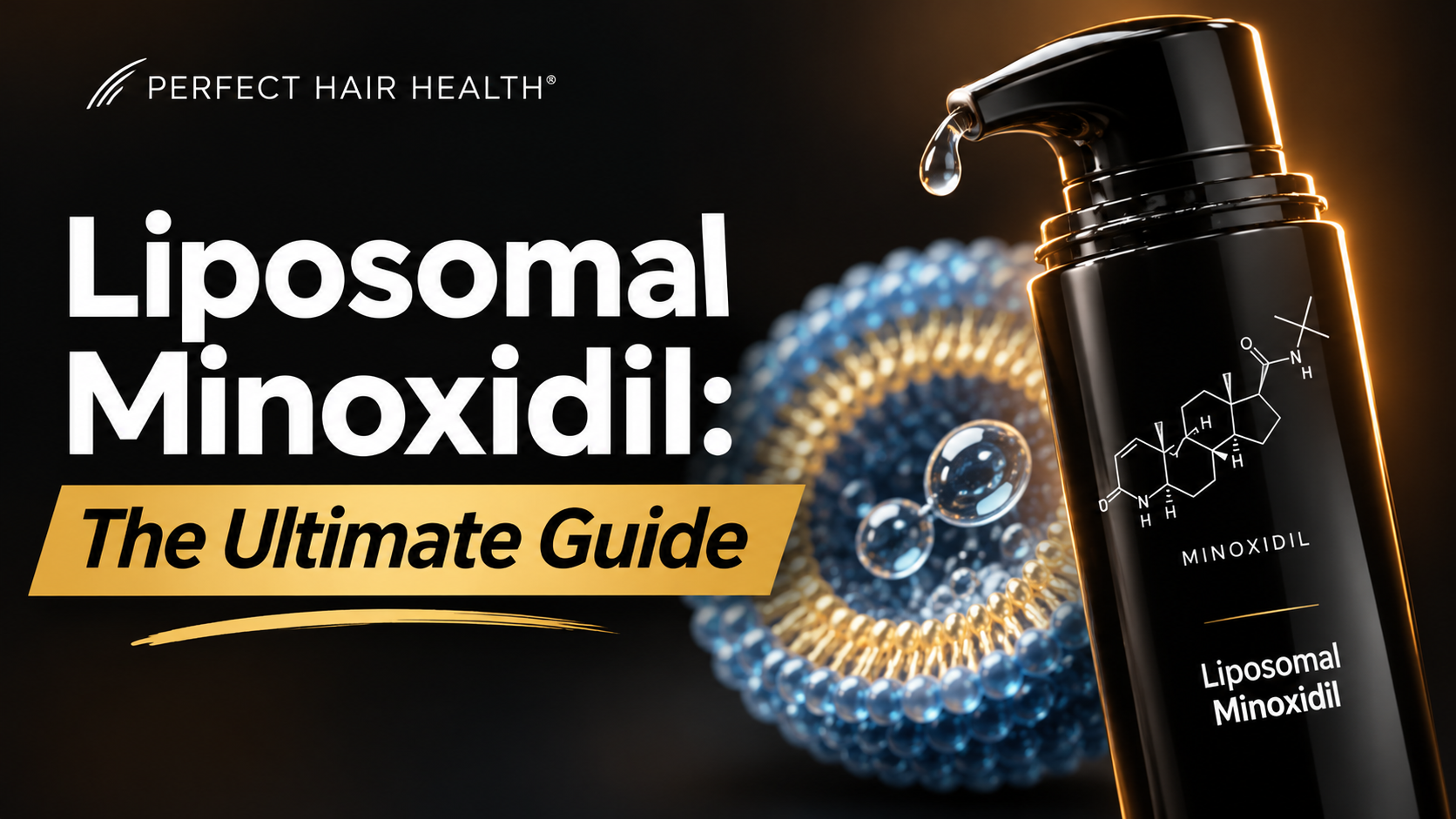
Liposomal minoxidil is a topical minoxidil formulation that uses microscopic structures called liposomes to carry the medication into the scalp. Liposomes are made from phospholipids, a family of fat molecules that also make up the membranes surrounding our cells.
Here’s how they work.
Each phospholipid has a water-attracting head and a water-repelling tail. When these molecules are placed in water, they naturally organize themselves into double-layered structures, forming tiny spheres that can carry medications within their membranes or internal compartments.
The outermost layer of our skin, called the stratum corneum, is held together by a lipid-rich barrier. This barrier does an excellent job of keeping unwanted substances out. But it also makes delivering medication into the skin exceptionally difficult.
Because liposomes are made from similar lipid molecules, they can interact with the skin barrier and help transfer their contents into the skin. Depending on their composition, they may also accumulate around hair follicle openings, allowing medication to be released closer to the structures we’re trying to reach.
For minoxidil, there’s another important advantage.
Minoxidil doesn’t dissolve particularly well in water. That’s why conventional topical solutions rely on solvents like alcohol and propylene glycol to keep the medication dissolved and help it penetrate the skin.[3]Kumar P, Singh SK, Handa V, Kathuria H. Oleic acid nanovesicles of minoxidil for enhanced follicular delivery. Medicines (Basel). 2018;5(3):103. doi:10.3390/medicines5030103
Liposomes offer another way to carry minoxidil. And that means it’s possible to formulate the medication without relying on those conventional solvents. In other words, liposomal delivery could potentially accomplish two things at once: improve how much minoxidil reaches the hair follicles, while eliminating ingredients that commonly contribute to scalp irritation.
How Does Liposomal Minoxidil Work?
To understand why liposomal minoxidil might be beneficial, we first need to understand how minoxidil works.
Minoxidil was originally developed as an oral medication for high blood pressure. But during clinical use, physicians noticed something unexpected: patients were growing more hair. This observation eventually led to the development of topical minoxidil for hair loss.[4]Suchonwanit P, Thammarucha S, Leerunyakul K. Minoxidil and its use in hair disorders: a review. Drug Des Devel Ther. 2019;13:2777-2786. doi:10.2147/DDDT.S214907
Even today, we don’t fully understand every mechanism through which minoxidil stimulates hair growth. But we do know something important about how the medication becomes active.
Minoxidil is what’s known as a prodrug. It needs to be converted into its active form, minoxidil sulfate, by an enzyme called sulfotransferase (SULT1A1). For topical hair growth, this conversion occurs within the hair follicle, particularly in a region called the outer root sheath.
And this matters for two reasons.
First, it helps explain why some people respond exceptionally well to minoxidil while others barely respond at all. Sulfotransferase activity varies considerably between individuals, and people with lower follicular enzyme activity are less likely to experience meaningful improvements.[5]Goren A, Castano JA, McCoy J, Bermudez F, Lotti T. Novel enzymatic assay predicts minoxidil response in the treatment of androgenetic alopecia. Dermatol Ther. 2014;27(3):171-173. PMID: 24283387
Second, for topical minoxidil to work, it needs to reach the follicles where it can be activated. Medication that remains on the surface of the scalp isn’t reaching its intended target, while unnecessary absorption into the bloodstream isn’t the objective of a follicle-targeted topical treatment.
And getting minoxidil into the follicles is harder than you might expect.
In one absorption study using radiolabeled minoxidil, researchers recovered approximately 41–45% of the applied medication from the skin surface, scalp washes, and pillowcases. In other words, a substantial portion of the dose remained outside the skin.[6]Franz TJ. Percutaneous absorption of minoxidil in man. Arch Dermatol. 1985;121(2):203-206.
So, what if we could improve the amount reaching the follicles?
One way to approach this is by changing the vehicle, or the formulation responsible for carrying minoxidil into the skin. We tend to focus almost entirely on the active ingredient in a hair loss treatment. But the ingredients surrounding that medication can influence how much gets absorbed, where it ends up, and how long it remains there.
Instead of simply helping minoxidil penetrate the skin, liposomes may improve its retention within the skin and around the follicles, potentially reducing how much passes completely through.
The goal is straightforward: deliver more minoxidil where it’s needed, and keep it there for longer.
But is there evidence this actually happens?
Let’s look at the studies.
Does Liposomal Minoxidil Work?
Researchers have been investigating liposomes for follicular drug delivery for more than three decades.
One of the earliest studies was published in 1992. Using hamster ear skin, researchers tracked fluorescent markers carried inside liposomes and found that the markers accumulated in hair follicles and their associated sebaceous glands.[7]Lieb LM, Ramachandran C, Egbaria K, Weiner N. Topical delivery enhancement with multilamellar liposomes into pilosebaceous units: I. In vitro evaluation using fluorescent techniques with the hamster … Continue reading
This was an important finding. It demonstrated that liposomes could potentially help deliver substances into the follicular structures of the skin, rather than simply spreading across the surface.
But what happens when the substance inside those liposomes is minoxidil?
In 2007, researchers investigated exactly that. They applied minoxidil-loaded liposomes to donated human skin and measured how much medication reached different layers.
The results were encouraging. Minoxidil was delivered into both the upper and deeper layers of the skin, without detectable passage through the full thickness of the skin in the experimental setup.[8]Mura S, Pirot F, Manconi M, Falson F, Fadda AM. Liposomes and niosomes as potential carriers for dermal delivery of minoxidil. J Drug Target. 2007;15(2):101-108. doi:10.1080/10611860600991993
More recently, researchers have investigated whether these improvements in delivery might translate into actual hair growth.
In a 2025 study, researchers developed liposomes containing minoxidil sulfate, the active form of minoxidil. In rat skin experiments, approximately 60% of the drug retained in the skin was found in the deeper layers, with accumulation around the hair follicles.
And when the researchers tested the formulation in rats with androgen-driven hair loss, they observed improved hair regrowth alongside reduced skin irritation and sensitization.[9]Shan Y, Xu C, Guo Y, et al. Liposomes enhance the hair follicle delivery of minoxidil sulfate with improved treatment of androgenic alopecia. Int J Pharm. 2025;677:125642. … Continue reading
Taken together, these studies point toward a promising possibility.
Well-designed liposomal formulations may be able to increase minoxidil delivery to hair follicles, improve retention in the skin, and support hair growth while reducing certain sources of irritation.
But these experiments were largely conducted in laboratory settings or animals.
So, what happens when we look at human research?
Liposomal Minoxidil: The Human Studies
In a study published in 2026, researchers investigated a 5% cetosomal minoxidil formulation. Cetosomes are lipid-based vesicles related to liposomal delivery systems.
The researchers first evaluated the formulation in pig skin and rats, where they observed strong skin retention and follicular uptake.
They then conducted a small pilot study involving 12 men with pattern hair loss.
Participants were randomly assigned to one of three regimens: once-daily cetosomal minoxidil, twice-daily cetosomal minoxidil, or conventional minoxidil solution applied twice daily.
The researchers reported that the lipid-based formulation remained in the scalp and released minoxidil gradually. Interestingly, the once-daily cetosomal formulation also outperformed the conventional solution applied twice daily in the study’s reported outcomes.[10]Enhanced follicular delivery of minoxidil to human scalp skin using cetosomal formulation. Colloids Surf B Biointerfaces. 2026. PMID: 42070486
Now, this was a very small study, so we can’t assume every liposomal or lipid-based minoxidil formulation will produce the same results.
But the findings raise an interesting possibility: by improving delivery and retention, certain formulations may be able to achieve meaningful results with fewer applications.
And that could have practical implications for people who struggle with twice-daily treatment.
So, what can we take away from the research so far?
Laboratory and animal studies provide evidence that lipid-based delivery systems can improve the amount of minoxidil reaching hair follicles and increase drug retention within the skin. And while larger human trials are still needed, these early findings suggest that the formulation surrounding minoxidil may be just as important to investigate as the medication itself.
Does Liposomal Minoxidil Reduce Side Effects?
For many people, the biggest problem with conventional topical minoxidil isn’t the medication’s effectiveness.
It’s how their scalp responds to the formula.
Itching, dryness, redness, and flaking are among the most commonly reported complaints. And if a treatment leaves your scalp irritated every day, sticking with it becomes considerably more difficult.
But, minoxidil isn’t always responsible.
In a study examining patients who developed allergic contact dermatitis while using topical minoxidil solution, researchers found that propylene glycol was responsible for most of the reactions in the group they evaluated.[11]Friedman ES, Friedman PM, Cohen DE, Washenik K. Allergic contact dermatitis to topical minoxidil solution: etiology and treatment. J Am Acad Dermatol. 2002;46(2):309-312. doi:10.1067/mjd.2002.119104
And we already know minoxidil can work without propylene glycol.
In a 16-week randomized trial involving 352 men, researchers found that a propylene glycol-free 5% minoxidil foam significantly increased hair counts compared with placebo.[12]Olsen EA, Whiting D, Bergfeld W, et al. A multicenter, randomized, placebo-controlled, double-blind clinical trial of a novel formulation of 5% minoxidil topical foam versus placebo in the treatment … Continue reading
Liposomal formulations offer another way to avoid these conventional solvents.
Because the liposomes help carry minoxidil, a formulation can be developed without alcohol or propylene glycol. And the phospholipids used in these delivery systems belong to the same family of molecules found in the skin’s natural barrier.
In theory, this could make treatment more comfortable for people who are sensitive to conventional solutions.
And there’s some experimental evidence supporting that possibility. In the rat study discussed earlier, the liposomal minoxidil formulation produced less irritation and sensitization.
But scalp irritation isn’t the only consideration. There’s also systemic absorption.
A small amount of topical minoxidil can enter the bloodstream. On a healthy scalp, estimates suggest that approximately 1.4% of the applied dose is absorbed systemically.[13]Suchonwanit P, Thammarucha S, Leerunyakul K. Minoxidil and its use in hair disorders: a review. Drug Des Devel Ther. 2019;13:2777-2786. doi:10.2147/DDDT.S214907
For most users, this exposure is relatively low. However, systemic absorption may contribute to unwanted effects in some people, including increased facial or body hair growth. And this is another reason researchers are interested in improving skin retention. In the human skin experiment we discussed earlier, the liposomal formulation delivered minoxidil into the skin without measurable passage through its full thickness.
If a formulation can keep more minoxidil in the scalp and reduce the amount reaching systemic circulation, that could offer an additional advantage.
Of course, the amount absorbed will depend on the particular formulation, concentration, application volume, and condition of the skin.
But the objective is clear: an effective topical treatment that reaches its intended target while minimizing unnecessary exposure.
What Are the Benefits of Liposomal Minoxidil?
We’ve covered the mechanisms behind liposomal delivery and the studies investigating its effectiveness.
So, what might these findings mean for someone actually using minoxidil?
First, liposomes themselves aren’t a new invention. Liposomal delivery systems have been used in medicine for decades, including in FDA-approved medications. What’s newer is applying this technology specifically to minoxidil for hair loss.
And based on the available research, there are four potential benefits:
- More minoxidil reaching the follicles. Minoxidil needs to be activated by sulfotransferase enzymes within the hair follicle. Liposomal formulations are designed to improve drug delivery into the skin and around follicular structures, potentially increasing how much medication reaches those sites.
- Longer retention in the scalp. Certain liposomal formulations can hold minoxidil within the skin and release it gradually. This may extend the time that the medication remains available around hair follicles after application.
- More efficient delivery. Conventional minoxidil formulations leave a substantial portion of the applied medication on the skin surface, while some can pass into systemic circulation. Improving follicular delivery and skin retention may help more of the applied dose reach its intended target.
- A formula without conventional solvents. Liposomal minoxidil can be formulated without alcohol or propylene glycol. For people whose scalps don’t tolerate those ingredients well, this may offer a more comfortable alternative.
Put simply, liposomal minoxidil is designed to improve how the medication is delivered, rather than changing the medication itself.
We’re still talking about minoxidil, an established treatment with decades of clinical research behind it. The difference is the delivery vehicle: how the medication gets to the follicles, how long it stays there, and which ingredients are needed to make that happen.
So, who might benefit from this approach?
Someone who’s experienced irritation from conventional minoxidil solutions may appreciate a formulation without alcohol or propylene glycol. Someone who wants a more targeted topical delivery system may also find liposomal minoxidil appealing.
There are practical considerations, too.
Liposomal formulations are commonly prepared as gels or creams rather than thin liquids. This can make it easier to apply the product precisely to particular areas of the scalp.
And depending on the formulation, some people may prefer applying it in the evening so it has time to settle before styling their hair the following morning.
Ultimately, the best minoxidil formulation is one that delivers medication effectively, is well tolerated, and fits comfortably into a routine you can maintain.
Because even the most sophisticated delivery system isn’t particularly useful if you can’t stick with it.
What to Look for in a Liposomal Minoxidil
If you’re considering liposomal minoxidil, there are a few practical factors to be aware of:
- Pricing that makes long-term use realistic. Minoxidil isn’t a treatment you use for a few weeks and then stop. It takes months to evaluate results, and continued use is generally necessary to maintain the benefits. Ulo offers multi-month plans that lower the monthly cost, making long-term treatment more affordable.
- Different treatment options if your needs change. Some people eventually want to add another medication or explore a different delivery method. Ulo offers oral and sublingual minoxidil alongside topical formulations, as well as DHT inhibitors like finasteride and dutasteride, making it possible to explore other approaches without switching providers.
- A regimen that can evolve with your progress. Minoxidil is frequently combined with DHT inhibitors because the medications target different aspects of hair loss. Ulo offers combination formulations and licensed provider oversight, allowing treatment options to be reviewed as your needs and response change.
Our Pick: Ulo’s Liposomal Minoxidil
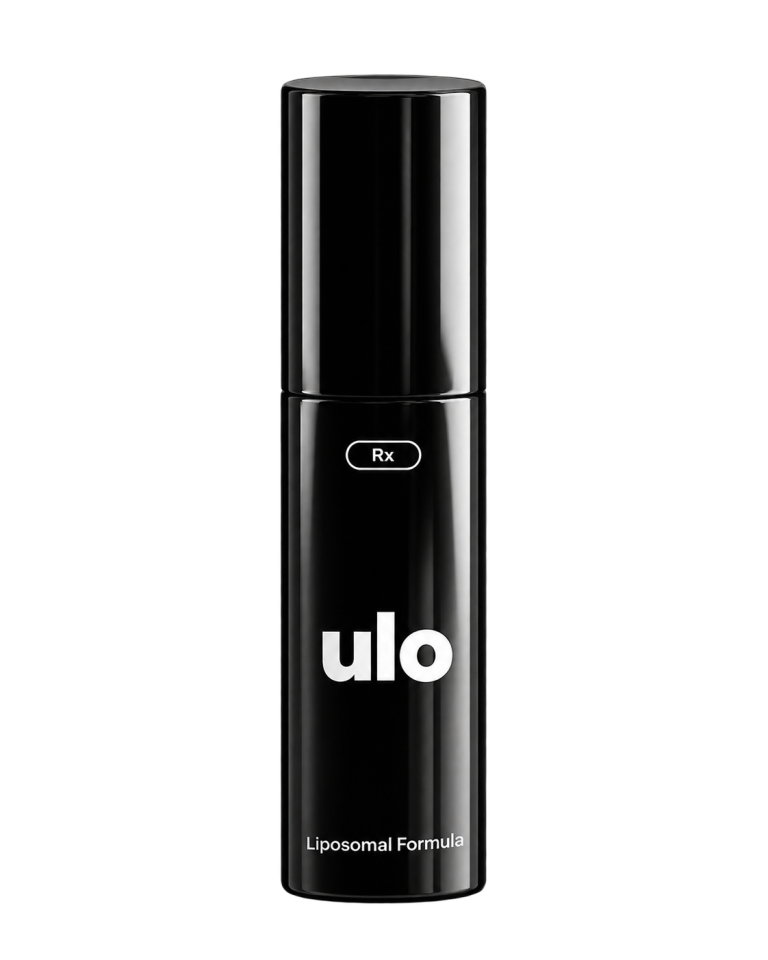
Ulo’s liposomal minoxidil was developed around these same considerations.
More affordable long-term treatment. Hair loss treatment requires consistency, often over many years. Ulo offers 3-, 6-, and 12-month plans that lower the monthly cost, making it easier to maintain treatment without paying month-to-month pricing indefinitely.
More treatment options if you need them. Not everyone responds to minoxidil in the same way. If you eventually want to add another ingredient or explore a different route, Ulo also offers oral and sublingual minoxidil, along with topical and oral DHT inhibitors.
Treatment that can evolve with your progress. A licensed clinician reviews your medical history and treatment request. As your results develop, your regimen can be reassessed, including whether adding another medication or changing your formulation makes sense.
For people who haven’t tolerated conventional minoxidil solutions, or who want to explore a different approach to topical delivery, Ulo’s liposomal minoxidil is an option to strongly consider.
It uses an established hair growth medication in a formulation designed to improve its delivery, without relying on the conventional solvents that can make topical treatment difficult for some users.
Liposomal Minoxidil From our partners at UloGet Personalized Liposomal Minoxidil
Minoxidil encapsulated in liposomes for targeted delivery to the follicle. Prescribed 100% online. Choose a multi-month plan and get up to 30% plus a free gift bundle.
Free full-size gifts with 3-month+ plans Prescribed online, shipped to your door
Liposomal deliveryTargeted to the follicle*Only available in the U.S. Prescription requires an online medical consultation at no extra cost. Off-label products are not endorsed by the FDA. Free gifts included with select multi-month plans while supplies last. Ulo is a partner of Perfect Hair Health; we may earn a commission on purchases.
Frequently Asked Questions
Is liposomal minoxidil better than oral minoxidil?
Not necessarily. The two approaches have different advantages, and the right choice depends on your goals, preferences, and how well you tolerate treatment.
Oral minoxidil is convenient and avoids applying medication to the scalp. But because it’s taken systemically, the entire body is exposed to the drug.
And greater systemic exposure doesn’t automatically mean better hair growth.
In a randomized trial involving 90 men, researchers compared 5 mg oral minoxidil taken daily with 5% topical minoxidil applied twice daily. After 24 weeks, oral minoxidil was not superior to topical minoxidil for the study’s primary outcome.[14]Penha MA, Miot HA, Kasprzak M, Müller Ramos P. Oral minoxidil vs topical minoxidil for male androgenetic alopecia: a randomized clinical trial. JAMA Dermatol. 2024;160(6):600-605.
The potential advantage of liposomal minoxidil is that it aims to improve delivery directly to the scalp, without requiring the same degree of systemic exposure as oral treatment.
What are the benefits of liposomal minoxidil?
Liposomal minoxidil is designed to improve how much medication reaches the hair follicles and how long it remains within the scalp. Laboratory and animal studies suggest that certain liposomal formulations can improve follicular delivery and skin retention.
Another potential benefit is tolerability. Liposomal formulations can be made without alcohol or propylene glycol, two ingredients that contribute to irritation in some users of conventional minoxidil solutions.
Does topical minoxidil get absorbed into the bloodstream?
Yes. Even though topical minoxidil is applied directly to the scalp, a small percentage can enter systemic circulation.
Studies suggest that approximately 1.4% of the applied dose is absorbed through a healthy scalp. Absorption can increase depending on the concentration, application frequency, and condition of the skin barrier.
Laboratory studies have found that certain liposomal formulations retain more minoxidil within the skin while limiting how much passes through it. This suggests a possible advantage for reducing systemic exposure, although the effect depends on the specific formulation.
Can I use liposomal minoxidil with finasteride?
Yes. Minoxidil and finasteride are commonly used together because they target different mechanisms involved in androgenetic alopecia.
Finasteride reduces DHT, the hormone responsible for gradually shrinking genetically susceptible hair follicles. Minoxidil doesn’t reduce DHT. Instead, it acts on the follicle through separate mechanisms that help support hair growth.
And that’s why combining the two can sometimes produce better results than using either medication alone.
Your prescribing clinician can help determine whether a combination makes sense for your hair loss and which formulation or dosing schedule is appropriate.
How long does liposomal minoxidil take to work?
Like conventional minoxidil, liposomal minoxidil requires consistent use before visible improvements can be expected.
In clinical trials of conventional topical minoxidil, researchers have measured increases in hair counts after approximately 16 weeks, with improvements continuing through 48 weeks.
Some people also experience additional shedding during the first several weeks. This can occur as follicles transition between hair growth phases and is often temporary.
One of the most useful things you can do is take baseline photographs before starting treatment, then repeat them every few months under the same lighting and conditions.
This makes it easier to spot gradual improvements in hair density that might otherwise go unnoticed.
Can women use liposomal minoxidil?
Yes. Topical minoxidil is one of the most extensively studied treatments for female pattern hair loss.
In a 48-week randomized trial, both 2% and 5% topical minoxidil solutions significantly improved hair counts compared with placebo in women.[15]Lucky AW, Piacquadio DJ, Ditre CM, et al. A randomized, placebo-controlled trial of 5% and 2% topical minoxidil solutions in the treatment of female pattern hair loss. J Am Acad Dermatol. … Continue reading
One consideration is unwanted facial hair growth, which can occur with minoxidil. Careful application to the scalp and washing your hands afterward can help reduce accidental transfer.
Minoxidil is not recommended during pregnancy or breastfeeding. If either applies to you, discuss treatment with your clinician before using it.
Bottom Line
Minoxidil already works. Decades of clinical research have demonstrated its ability to improve hair growth in people with androgenetic alopecia.
But there’s still room to improve how we deliver it.
Conventional minoxidil solutions rely on solvents like alcohol and propylene glycol, which can cause irritation in some users. And a substantial portion of the medication applied to the scalp may never reach the follicles where it needs to be activated.
Liposomal minoxidil takes a different approach. By using microscopic lipid-based carriers, these formulations aim to improve follicular delivery, increase drug retention in the skin, and reduce reliance on conventional solvents.
Laboratory and animal studies have demonstrated improved follicular uptake and skin retention with certain liposomal formulations. Early human research involving related lipid-based delivery systems also suggests that improved delivery may translate into practical treatment benefits.
That doesn’t mean we’ve established that every liposomal minoxidil formulation is more effective than conventional minoxidil. But it does give us a compelling reason to investigate the delivery vehicle, rather than focusing exclusively on the active ingredient.
For someone who’s struggled with irritation from conventional minoxidil, or who wants a formulation designed around follicular delivery, liposomal minoxidil is a worthwhile option.
And regardless of which formulation you choose, the fundamentals of treatment remain the same: stay consistent, give your treatment enough time to work, ideally evaluating your progress over 6–12 months. Additionally, take photographs so you can compare your results objectively.
Because with minoxidil, the goal isn’t just finding a treatment that can grow hair. It’s finding one you can comfortably use long enough to see what it can do.
References[+]
References ↑1 Olsen EA, Dunlap FE, Funicella T, et al. A randomized clinical trial of 5% topical minoxidil versus 2% topical minoxidil and placebo in the treatment of androgenetic alopecia in men. J Am Acad Dermatol. 2002;47(3):377-385. doi:10.1067/mjd.2002.124088 ↑2, ↑5 Goren A, Castano JA, McCoy J, Bermudez F, Lotti T. Novel enzymatic assay predicts minoxidil response in the treatment of androgenetic alopecia. Dermatol Ther. 2014;27(3):171-173. PMID: 24283387 ↑3 Kumar P, Singh SK, Handa V, Kathuria H. Oleic acid nanovesicles of minoxidil for enhanced follicular delivery. Medicines (Basel). 2018;5(3):103. doi:10.3390/medicines5030103 ↑4, ↑13 Suchonwanit P, Thammarucha S, Leerunyakul K. Minoxidil and its use in hair disorders: a review. Drug Des Devel Ther. 2019;13:2777-2786. doi:10.2147/DDDT.S214907 ↑6 Franz TJ. Percutaneous absorption of minoxidil in man. Arch Dermatol. 1985;121(2):203-206. ↑7 Lieb LM, Ramachandran C, Egbaria K, Weiner N. Topical delivery enhancement with multilamellar liposomes into pilosebaceous units: I. In vitro evaluation using fluorescent techniques with the hamster ear model. J Invest Dermatol. 1992;99(1):108-113. ↑8 Mura S, Pirot F, Manconi M, Falson F, Fadda AM. Liposomes and niosomes as potential carriers for dermal delivery of minoxidil. J Drug Target. 2007;15(2):101-108. doi:10.1080/10611860600991993 ↑9 Shan Y, Xu C, Guo Y, et al. Liposomes enhance the hair follicle delivery of minoxidil sulfate with improved treatment of androgenic alopecia. Int J Pharm. 2025;677:125642. doi:10.1016/j.ijpharm.2025.125642 ↑10 Enhanced follicular delivery of minoxidil to human scalp skin using cetosomal formulation. Colloids Surf B Biointerfaces. 2026. PMID: 42070486 ↑11 Friedman ES, Friedman PM, Cohen DE, Washenik K. Allergic contact dermatitis to topical minoxidil solution: etiology and treatment. J Am Acad Dermatol. 2002;46(2):309-312. doi:10.1067/mjd.2002.119104 ↑12 Olsen EA, Whiting D, Bergfeld W, et al. A multicenter, randomized, placebo-controlled, double-blind clinical trial of a novel formulation of 5% minoxidil topical foam versus placebo in the treatment of androgenetic alopecia in men. J Am Acad Dermatol. 2007;57(5):767-774. ↑14 Penha MA, Miot HA, Kasprzak M, Müller Ramos P. Oral minoxidil vs topical minoxidil for male androgenetic alopecia: a randomized clinical trial. JAMA Dermatol. 2024;160(6):600-605. ↑15 Lucky AW, Piacquadio DJ, Ditre CM, et al. A randomized, placebo-controlled trial of 5% and 2% topical minoxidil solutions in the treatment of female pattern hair loss. J Am Acad Dermatol. 2004;50(4):541-553. Want help with your hair regrowth journey?
Get personalized support, product recommendations, video calls, and more from our researchers, trichologists, and PhD's dedicated to getting you the best possible outcomes.
Learn More
Perfect Hair Health Team
"... Can’t thank @Rob (PHH) and @sanderson17 enough for allowing me to understand a bit what was going on with me and why all these [things were] happening ... "

 — RDB, 35, New York, U.S.A.
"... There is a lot improvement that I am seeing and my scalp feel alive nowadays... Thanks everyone. "

 — Aayush, 20’s, Boston, MA
"... I can say that my hair volume/thickness is about 30% more than it was when I first started."

 — Douglas, 50’s, Montréal, Canada
Want help with your hair regrowth journey?
Get personalized support, product recommendations, video calls, and more from our researchers, trichologists, and PhD's dedicated to getting you the best possible outcomes.
Join Now - Mission Statement