- About
- Mission Statement
Education. Evidence. Regrowth.
- Education.
Prioritize knowledge. Make better choices.
- Evidence.
Sort good studies from the bad.
- Regrowth.
Get bigger hair gains.
Team MembersPhD's, resarchers, & consumer advocates.
- Rob English
Founder, researcher, & consumer advocate
- Research Team
Our team of PhD’s, researchers, & more
Editorial PolicyDiscover how we conduct our research.
ContactHave questions? Contact us.
Before-Afters- Transformation Photos
Our library of before-after photos.
- — Jenna, 31, U.S.A.
I have attached my before and afters of my progress since joining this group...
- — Tom, 30, U.K.
I’m convinced I’ve recovered to probably the hairline I had 3 years ago. Super stoked…
- — Rabih, 30’s, U.S.A.
My friends actually told me, “Your hairline improved. Your hair looks thicker...
- — RDB, 35, New York, U.S.A.
I also feel my hair has a different texture to it now…
- — Aayush, 20’s, Boston, MA
Firstly thank you for your work in this field. I am immensely grateful that...
- — Ben M., U.S.A
I just wanted to thank you for all your research, for introducing me to this method...
- — Raul, 50, Spain
To be honest I am having fun with all this and I still don’t know how much...
- — Lisa, 52, U.S.
I see a massive amount of regrowth that is all less than about 8 cm long...
Client Testimonials150+ member experiences.
 Scroll DownPopular Treatments
- Treatments
Popular treatments. But do they work?
- Finasteride
- Oral
- Topical
- Dutasteride
- Oral
- Topical
- Mesotherapy
- Minoxidil
- Oral
- Topical
- Ketoconazole
- Shampoo
- Topical
- Low-Level Laser Therapy
- Therapy
- Microneedling
- Therapy
- Platelet-Rich Plasma Therapy (PRP)
- Therapy
- Scalp Massages
- Therapy
 More
IngredientsTop-selling ingredients, quantified.
- Saw Palmetto
- Redensyl
- Melatonin
- Caffeine
- Biotin
- Rosemary Oil
- Lilac Stem Cells
- Hydrolyzed Wheat Protein
- Sodium Lauryl Sulfate
 More
ProductsThe truth about hair loss "best sellers".
- Minoxidil Tablets
Xyon Health
- Finasteride
Strut Health
- Hair Growth Supplements
Happy Head
- REVITA Tablets for Hair Growth Support
DS Laboratories
- FoliGROWTH Ultimate Hair Neutraceutical
Advanced Trichology
- Enhance Hair Density Serum
Fully Vital
- Topical Finasteride and Minoxidil
Xyon Health
- HairOmega Foaming Hair Growth Serum
DrFormulas
- Bio-Cleansing Shampoo
Revivogen MD
- more
Key MetricsStandardized rubrics to evaluate all treatments.
- Evidence Quality
Is this treatment well studied?
- Regrowth Potential
How much regrowth can you expect?
- Long-Term Viability
Is this treatment safe & sustainable?
Free Research- Free Resources
Apps, tools, guides, freebies, & more.
- Free CalculatorTopical Finasteride Calculator
- Free Interactive GuideInteractive Guide: What Causes Hair Loss?
- Free ResourceFree Guide: Standardized Scalp Massages
- Free Course7-Day Hair Loss Email Course
- Free DatabaseIngredients Database
- Free Interactive GuideInteractive Guide: Hair Loss Disorders
- Free DatabaseTreatment Guides
- Free Lab TestsProduct Lab Tests: Purity & Potency
- Free Video & Write-upEvidence Quality Masterclass
- Free Interactive GuideDermatology Appointment Guide
- More
Articles100+ free articles.
-
5 Best Shampoos for Low Porosity Hair
-
7 Best Shampoos for Shedding Hair
-
7 Best Shampoos for Hard Water
-
Liposomal Dutasteride: 8 Most Effective Products of 2026
-
Topical Finasteride for Women: Our Top 5 Choices of 2026
-
8 Best Shampoos for Psoriasis in 2026
-
10 Best Peptides for Hair Growth
-
Liposomal Finasteride: The Ultimate Guide
PublicationsOur team’s peer-reviewed studies.
- Microneedling and Its Use in Hair Loss Disorders: A Systematic Review
- Use of Botulinum Toxin for Androgenic Alopecia: A Systematic Review
- Conflicting Reports Regarding the Histopathological Features of Androgenic Alopecia
- Self-Assessments of Standardized Scalp Massages for Androgenic Alopecia: Survey Results
- A Hypothetical Pathogenesis Model For Androgenic Alopecia:Clarifying The Dihydrotestosterone Paradox And Rate-Limiting Recovery Factors
Menu- AboutAbout
- Mission Statement
Education. Evidence. Regrowth.
- Team Members
PhD's, resarchers, & consumer advocates.
- Editorial Policy
Discover how we conduct our research.
- Contact
Have questions? Contact us.
- Before-Afters
Before-Afters- Transformation Photos
Our library of before-after photos.
- Client Testimonials
Read the experiences of members
Before-Afters/ Client Testimonials- Popular Treatments
-
Articles5 Best Shampoos for Low Porosity Hair
First Published Nov 20 2026Last Updated Nov 17 2026IngredientsNatural Remedies Researched & Written By:Perfect Hair Health Team
 Reviewed By:Rob English, Medical Editor
Want help with your hair regrowth journey?
Get personalized support, product recommendations, video calls, and more from our researchers, trichologists, and PhD's dedicated to getting you the best possible outcomes.
Learn MoreArticle Summary
If it seems like your hair takes forever to get wet, and maybe even longer to dry, and then the next day it feels flat and coated with too much product buildup, then you probably have low porosity hair. We’ve reviewed five shampoos for this issue, and found Ulo Thickening Shampoo Plus to be the best one. Our team evaluated each product based on the following criteria: how well it removes residue, what it leaves behind on the hair, the gentleness of its cleansing ingredients, and what it can do for your scalp. We’ll also discuss why the float test isn’t the best way to measure porosity, and which damaging ingredients you should look out for in a shampoo.
Full Article
Most advice about low porosity hair starts with a test involving a glass of water. You’re supposed to drop a clean strand of hair into the water and watch what happens. If the strand sinks, according to the myth, that means your cuticles are “open,” and products will penetrate into your hair; if it floats, your cuticles are “closed” and products can’t get in. While the concept of hair porosity is real, it’s actually measured in a lab using gas sorption equipment, not with a glass on the bathroom counter. [1]Hessefort Y, Holland BT, Cloud RW. True porosity measurement of hair: a new way to study hair damage mechanisms. J Cosmet Sci. 2008;59(4):303-315. https://pubmed.ncbi.nlm.nih.gov/18818850/
The lab work indicates that hair damage has an impact on its porosity. Using nitrogen gas to map the tiny pores inside hair, researchers found that the pore structure of the fiber was altered in different ways when it was exposed to bleaching and UV rays. [2]Hessefort Y, Holland BT, Cloud RW. True porosity measurement of hair: a new way to study hair damage mechanisms. J Cosmet Sci. 2008;59(4):303-315. https://pubmed.ncbi.nlm.nih.gov/18818850/ So “low porosity” mostly refers to hair with an intact outer layer that repels moisture. [3]Gavazzoni Dias MF. Hair cosmetics: an overview. Int J Trichology. 2015;7(1):2-15. https://doi.org/10.4103/0974-7753.153450 That’s just healthy hair. It tends to be slow to wet, slow to dry, and retains a lot of residue buildup on the surface.
That’s why cleaning the hair is the primary function of your shampoo. Perfect Hair Health cofounded Ulo, our top choice, and we applied the same criteria for evidence as we did for the rest of the products listed. We compare five lightweight shampoos that work for low porosity hair based on how clean they rinse away, what they leave behind on the hair, and the effect they have on your scalp.
Ketoconazole Shampoo From our partners at UloBest Shampoo for Low Porosity Hair
Ulo's Thickening+ Shampoo pairs ketoconazole with thickening actives in a sulfate-free, gentle formula. Choose a multi-month plan and get up to 30% plus a free gift bundle.
Free full-size gifts with 3-month+ plans No prescription needed KetoconazoleSupports a healthy scalp
Free gifts included with select multi-month plans while supplies last. Ulo is a partner of Perfect Hair Health; we may earn a commission on purchases. This product is a cosmetic and is not intended to diagnose, treat, cure, or prevent any disease.
Quick Look: 5 Best Shampoos for Low Porosity Hair
Product Key ingredients How to get it Best for Ulo Thickening Shampoo Plus OTC-strength ketoconazole, caffeine, sulfate-free cleansers OTC, online Best overall SheaMoisture Low Porosity Weightless Hydrating Shampoo Sodium lauroyl isethionate, glycerin OTC, retail Curly and coily hair As I Am Curl Clarity Shampoo Sodium lauroyl sarcosinate OTC, retail Budget sulfate-free clarifying Aveeno Apple Cider Vinegar Blend Clarify & Shine Shampoo Olefin sulfonate, apple cider vinegar OTC, retail Easy to find Suave Essentials Daily Clarifying Shampoo Sodium C12-13 pareth sulfate OTC, retail Occasional deep reset What Hair Porosity Actually Means
Imagine that each hair is covered with a protective outer layer. Its coat is a stack of flat, overlapping scales (the cuticle), and its surface is covered with a bound fat called 18-MEA (18-methyleicosanoic acid) that makes healthy hair water-repellant. [4]Gavazzoni Dias MF. Hair cosmetics: an overview. Int J Trichology. 2015;7(1):2-15. https://doi.org/10.4103/0974-7753.153450 Chemically treated hair is more porous than natural hair, and is more likely to absorb water because bleach, relaxers and permanent dye can strip away this fat. [5]Gavazzoni Dias MF. Hair cosmetics: an overview. Int J Trichology. 2015;7(1):2-15. https://doi.org/10.4103/0974-7753.153450
Therefore, if your hair has low porosity, its cuticle and fatty layer are likely to still be intact. The best way to think about it, is that it’s at the “undamaged” end of a range, rather than a disease or defect in your hair, and many people have a combination of different types of fiber on the same head of hair.
The research about hair porosity is sparse. Most studies that have been done on porosity were in a lab using cut fibers, and we found no clinical trials in which people were classified by porosity and then tested to see which shampoo was best for each group.
Why the Float Test Falls Short
The float test and the spray test are basic tests that can be performed at home. At best, they give you a loose idea of how a strand handles water. To our knowledge, there is no published study that has compared either with laboratory measurements of porosity. Basic physics likely explains why these tests aren’t reliable. A clean, water-repellent strand can rest on surface tension for an extended period of time, and remaining conditioner, scalp oil or a trapped air bubble would cause any strand to float or sink.
The total pore volume and size are more accurately measured by lab methods like gas sorption. [6]Hessefort Y, Holland BT, Cloud RW. True porosity measurement of hair: a new way to study hair damage mechanisms. J Cosmet Sci. 2008;59(4):303-315. https://pubmed.ncbi.nlm.nih.gov/18818850/ Pay attention to what happens when you’re in the shower. You may notice that your hair resists getting wet, or that water beads on the surface of it instead, or it takes a very long time to dry. These observations will give you much more accurate information about your hair porosity than whether it floats in a glass of water.
Why Buildup Is the Real Problem
If your hair is water-repellent, then it is also resistant to many conditioning ingredients. Any substance that doesn’t soak into it will just rest on the surface. That’s why the most common complaint people with this type of hair have is the constant buildup.
Oils show the difference between ingredients that soak into the hair and those that simply coat it. In one laboratory study, the protein loss from hair was found to be less from using coconut oil, as compared to mineral oil and sunflower oil. [7]Rele AS, Mohile RB. Effect of mineral oil, sunflower oil, and coconut oil on prevention of hair damage. J Cosmet Sci. 2003;54(2):175-192. https://pubmed.ncbi.nlm.nih.gov/12715094/ This was associated with the small, straight-chain structure of coconut oil which can enter easily into the hair shaft. [8]Rele AS, Mohile RB. Effect of mineral oil, sunflower oil, and coconut oil on prevention of hair damage. J Cosmet Sci. 2003;54(2):175-192. https://pubmed.ncbi.nlm.nih.gov/12715094/ Mineral oil does not attach to hair protein and sunflower oil is bulky, which prevents it from entering the fibre. [9]Rele AS, Mohile RB. Effect of mineral oil, sunflower oil, and coconut oil on prevention of hair damage. J Cosmet Sci. 2003;54(2):175-192. https://pubmed.ncbi.nlm.nih.gov/12715094/ Heavy butters will probably perform like the second group so be careful not to use too much of them.
The other large source of residue is from conditioning polymers. The surface of hair is slightly negatively charged, and these positively charged ingredients stick to the hair. [10]Gavazzoni Dias MF. Hair cosmetics: an overview. Int J Trichology. 2015;7(1):2-15. https://doi.org/10.4103/0974-7753.153450 They can be “so substantive to the hair that they can be difficult to remove,” notes one review, and some will attach to the cleansers in shampoo to create a film that is hard to rinse away. [11]Gavazzoni Dias MF. Hair cosmetics: an overview. Int J Trichology. 2015;7(1):2-15. https://doi.org/10.4103/0974-7753.153450
Hard water is often suspected for causing this problem, but the evidence doesn’t support it. In a small study of 15 volunteers, the strength of their hair didn’t change after soaking it in hard water every other day for 30 days. [12]Srinivasan G, Srinivas CR, Mathew AC, Duraiswami D. Effects of hard water on hair. Int J Trichology. 2013;5(3):137-139. https://doi.org/10.4103/0974-7753.125609 The minerals may affect the appearance or feel of the hair, but not its strength, so they’re not a primary concern.
Which Shampoo Ingredients Help?
Most of the work is done by the cleansers. Anionic (negatively charged) cleansers are good for removing oil and dirt, but are strong and cause hair to have more static, frizz and friction. [13]Gavazzoni Dias MF. Hair cosmetics: an overview. Int J Trichology. 2015;7(1):2-15. https://doi.org/10.4103/0974-7753.153450 Amphoteric cleansers such as cocamidopropyl betaine are much more mild, and most shampoos use a combination of both to maintain enough cleaning power without causing irritation. [14]Gavazzoni Dias MF. Hair cosmetics: an overview. Int J Trichology. 2015;7(1):2-15. https://doi.org/10.4103/0974-7753.153450 [15]Cornwell PA. A review of shampoo surfactant technology: consumer benefits, raw materials and recent developments. Int J Cosmet Sci. 2018;40(1):16-30. https://doi.org/10.1111/ics.12439
The phrase “Sulfate-free” on a label isn’t as important as you think. No studies have been published about the effectiveness of sulfate-free shampoos and how much damage they cause to hair compared to sulfate-based shampoos. [16]Gavazzoni Dias MF. Hair cosmetics: an overview. Int J Trichology. 2015;7(1):2-15. https://doi.org/10.4103/0974-7753.153450 Sulfate-free shampoos will still include a range of other cleansers, so the ingredients list can give you more info than the claim on the front of the bottle. [17]Cornwell PA. A review of shampoo surfactant technology: consumer benefits, raw materials and recent developments. Int J Cosmet Sci. 2018;40(1):16-30. https://doi.org/10.1111/ics.12439
Our team categorized the different types of cleansers in this table, with a rough estimate of how strong each one is.
Cleanser Type Found in Sodium C12-13 pareth sulfate Sulfate, strong Suave Sodium C14-16 olefin sulfonate Non-sulfate anionic, strong Ulo, Aveeno Sodium lauryl sulfoacetate, disodium laureth sulfosuccinate Non-sulfate anionic, milder Ulo Sodium lauroyl sarcosinate Amino acid-based anionic, milder As I Am Sodium lauroyl isethionate Isethionate anionic, mild SheaMoisture Cocamidopropyl betaine Amphoteric, mild All 5 The pH level is also somewhat important. When researchers measured 123 shampoos, the pH ranged from 3.5 to 9.0, and fewer than 4 in 10 (38.21%) had a pH of 5.5 or lower. [18]Gavazzoni Dias MF, de Almeida AM, Cecato PM, Adriano AR, Pichler J. The shampoo pH can affect the hair: myth or reality? Int J Trichology. 2014;6(3):95-99. https://doi.org/10.4103/0974-7753.139078 The researchers claim that the more alkaline shampoos may cause static, friction and damage to the cuticle, but no study has yet determined an ideal range. [19]Gavazzoni Dias MF, de Almeida AM, Cecato PM, Adriano AR, Pichler J. The shampoo pH can affect the hair: myth or reality? Int J Trichology. 2014;6(3):95-99. https://doi.org/10.4103/0974-7753.139078
Best Shampoos for Low Porosity Hair
#1 Best Overall: Ulo Thickening Shampoo Plus
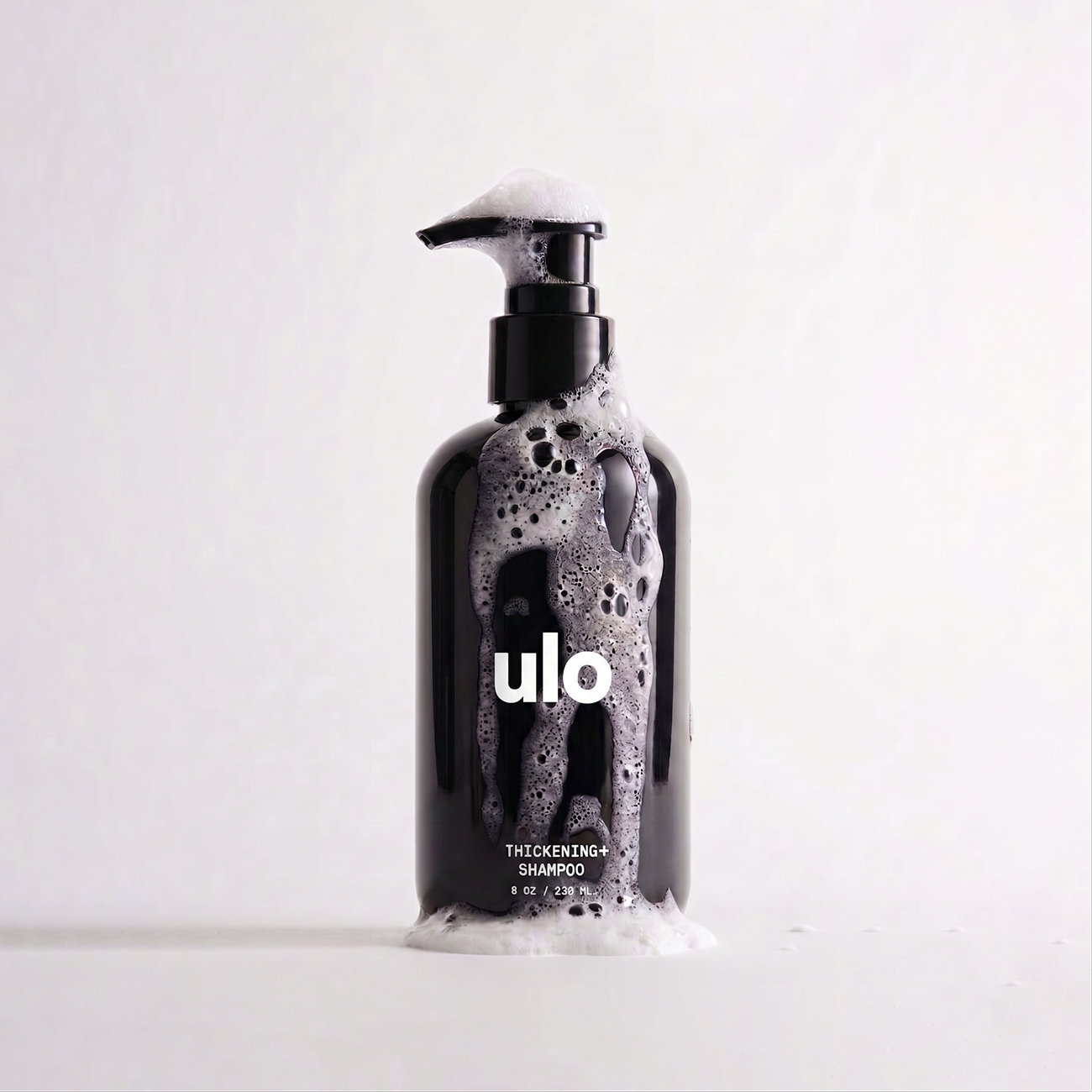
Pros Cons ✓ Sulfate-free blend of sulfoacetate, sulfosuccinate and olefin sulfonate cleansers ✗ Premium pricing ✓ No silicones, cationic polymers or plant butters to build up ✓ OTC-strength ketoconazole for flaking and itch ✓ Caffeine, rosemary and saw palmetto for thinning hair ✓ Water-binding glycerin, panthenol and sodium PCA instead of heavy oils ✓ 365-day money-back guarantee If your hair holds a lot of buildup that keeps flattening your hair, this is a good shampoo to try. It cleans the hair thoroughly and is designed to leave no residue behind. Ulo’s cleansing formula combines a strong non-sulfate cleanser (sodium C14-16 olefin sulfonate) with two milder ones (sodium lauryl sulfoacetate and disodium laureth sulfosuccinate). It also contains cocamidopropyl betaine, which helps lift the oils from the hair without damaging SLS or SLES. Just as important is what’s missing: there are no silicones, no polyquaternium or guar conditioning polymers, and no shea or other butters that could weigh your hair down.
The moisturizing ingredients in this shampoo are glycerin, sodium PCA and panthenol, which attract water into the hair rather than coat the strands. We believe these are better for low porosity hair than the oil-rich formulas of many other “moisturizing” shampoos.
The next reason why we ranked Ulo Thickening Shampoo Plus first is what it does for your scalp. It contains OTC-strength ketoconazole, an antifungal agent that fights the Malassezia yeast, which is associated with dandruff. [20]Trüeb RM. Shampoos: ingredients, efficacy and adverse effects. J Dtsch Dermatol Ges. 2007;5(5):356-365. https://doi.org/10.1111/j.1610-0387.2007.06304.x In a study of 575 people with dandruff or seborrheic dermatitis, 88% had an excellent response after using 2% ketoconazole twice weekly for two to four weeks. [21]Peter RU, Richarz-Barthauer U. Successful treatment and prophylaxis of scalp seborrhoeic dermatitis and dandruff with 2% ketoconazole shampoo: results of a multicentre, double-blind, … Continue reading In the placebo group, 47% saw their symptoms return within six months, compared to only 19% of those who continued to use ketoconazole once a week. [22]Peter RU, Richarz-Barthauer U. Successful treatment and prophylaxis of scalp seborrhoeic dermatitis and dandruff with 2% ketoconazole shampoo: results of a multicentre, double-blind, … Continue reading Ulo’s shampoo uses a lower dose of ketoconazole which is suited for regular and even daily use.
If your hair is also thinning, a small study showed that 2% ketoconazole shampoo was effective in increasing hair density about as well as 2% minoxidil. [23]Piérard-Franchimont C, De Doncker P, Cauwenbergh G, Piérard GE. Ketoconazole shampoo: effect of long-term use in androgenic alopecia. Dermatology. 1998;196(4):474-477. … Continue reading Some early research has been done on caffeine, rosemary and saw palmetto, and we found no trial of saw palmetto in a shampoo. Caffeine was able to offset the growth-inhibiting effect of testosterone on follicles in a dish, using tissue from 14 men rather than a trial on people; and rosemary oil was as effective as 2% minoxidil after six months in a trial of 100 people with no placebo group. [24]Fischer TW, Hipler UC, Elsner P. Effect of caffeine and testosterone on the proliferation of human hair follicles in vitro. Int J Dermatol. 2007;46(1):27-35. … Continue reading [25]Panahi Y, Taghizadeh M, Marzony ET, Sahebkar A. Rosemary oil vs minoxidil 2% for the treatment of androgenetic alopecia: a randomized comparative trial. Skinmed. 2015;13(1):15-21. … Continue reading Read our ketoconazole treatment page for more information.
Work the shampoo through the hair and leave it on for one to three minutes before rinsing. The cost is $35 per month, which can be lowered to $25 on a 12-month plan. Ulo also offers a 365-day money-back guarantee.
Bottom Line: Ulo Thickening Shampoo Plus will clean your low porosity hair without leaving behind any silicones, polymers or butters; its powerful ingredients like ketoconazole and nourishing herbs add real benefits for the scalp as well.
#2 SheaMoisture Low Porosity Weightless Hydrating Shampoo
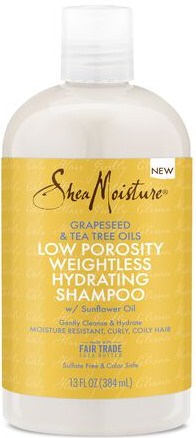
Pros Cons ✓ Made and labeled for low porosity curls and coils ✗ Contains shea butter plus grapeseed and sunflower oils ✓ Mild sodium lauroyl isethionate cleanser ✗ 2 cationic conditioning polymers can build up ✓ Protein-free formula ✗ Menthol and tea tree oil may sting a sensitive scalp This shampoo is designed for you if you have low porosity curls or coils and protein causes your curls to become stiff. SheaMoisture markets it as a clarifying, lightweight shampoo for low porosity, protein-sensitive curls that is free of sulfates. It cleanses the hair using cocamidopropyl betaine and mild sodium lauroyl isethionate, and has a high amount of glycerin to attract water, and no hydrolyzed proteins.
It’s not as “weightless” as the name implies. The formula includes shea butter, grapeseed oil and sunflower oil as well as two conditioning polymers that adhere to the hair (polyquaternium-10 and guar hydroxypropyltrimonium chloride). [26]Gavazzoni Dias MF. Hair cosmetics: an overview. Int J Trichology. 2015;7(1):2-15. https://doi.org/10.4103/0974-7753.153450 That formula fits thick, coily hair that needs more slip. If the hair is fine and straight, this one might cause that coated feel that you want to avoid.
The cost for this one is about $14.00 for 13 ounces at Target.
Bottom Line: This is a sensible choice if you have low porosity curls and coils that need extra moisture from a protein-free wash. If your hair is fine or straight and tends to get flat, you’ll want to choose a formula without butters or polymers.
#3 As I Am Curl Clarity Shampoo
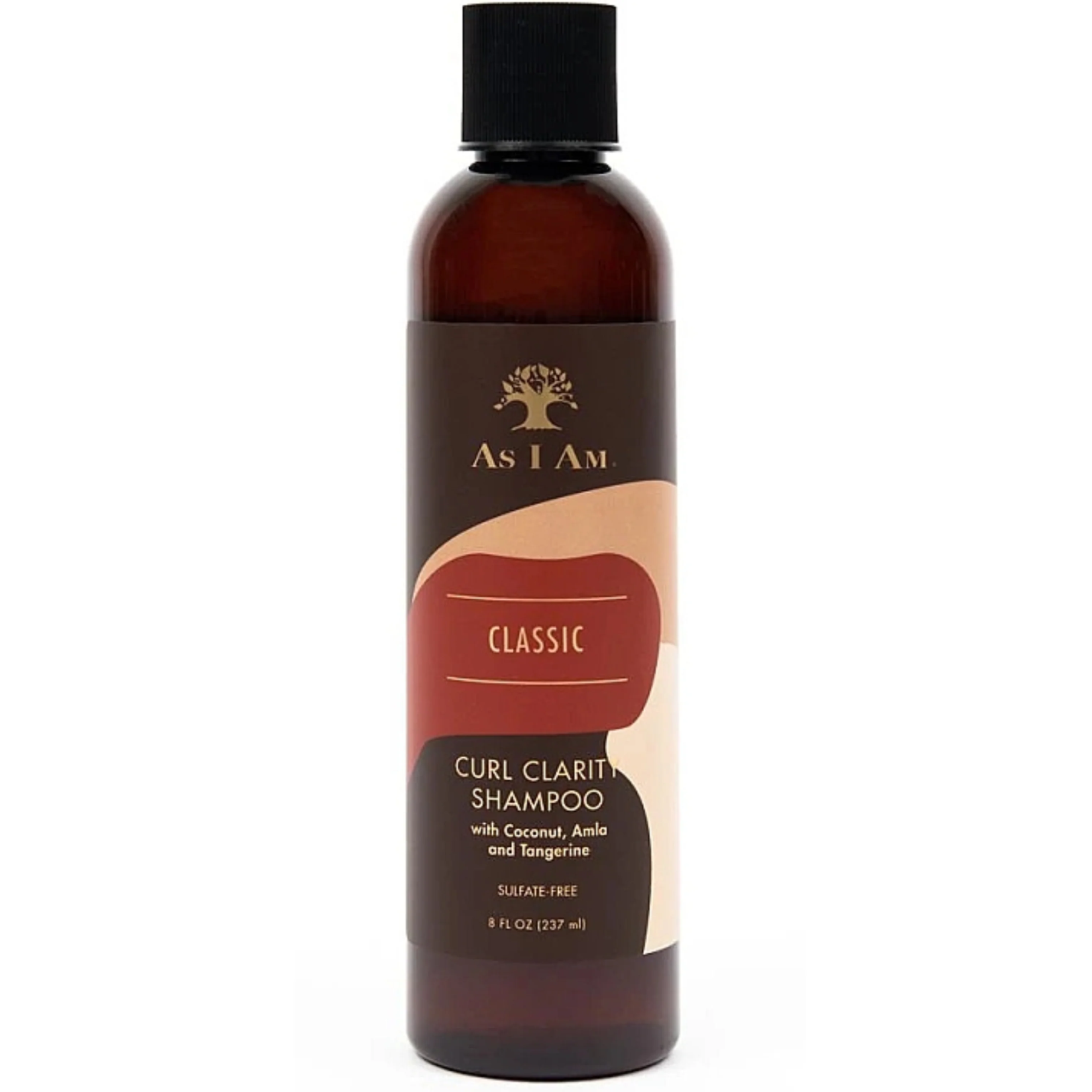
Pros Cons ✓ Short ingredient list with no oils, butters or polymers ✗ Contains fragrance and limonene ✓ Sulfate-free sarcosinate cleanser ✗ No scalp-focused ingredients ✓ Low price per bottle ✗ Small 8 fl oz bottle This one is one of the cleanest labelled clarifiers on our list, and is very simple yet not too expensive. The cleansers include sodium lauroyl sarcosinate and cocamidopropyl betaine, followed by a cellulose thickener, coconut, amla and tangerine extracts, fragrance and preservatives. It’s sulfate-free, silicone-free, and is designed to remove oil and buildup for curly hair. There’s nothing in this formula that will cause buildup on your hair.
The only limit to this one is its scope. It doesn’t include any antifungal or scalp-care ingredients, so it won’t help with flaking. It also contains fragrance and limonene, which can be a problem if you have allergies or sensitive skin. The brand states that it takes 62% less force to comb through your hair after using this shampoo, but there’s no reference for how this was determined, so it’s hard to believe this claim.
The price for this shampoo is around $9 for 8 ounces at major drugstores.
Bottom Line: If you have low porosity curly or wavy hair, then this can be good value overall for a sulfate-free clarifier. If you’re dealing with flaking or an itchy scalp, you’ll need a shampoo with a proven scalp ingredient.
#4 Aveeno Apple Cider Vinegar Blend Clarify & Shine Shampoo
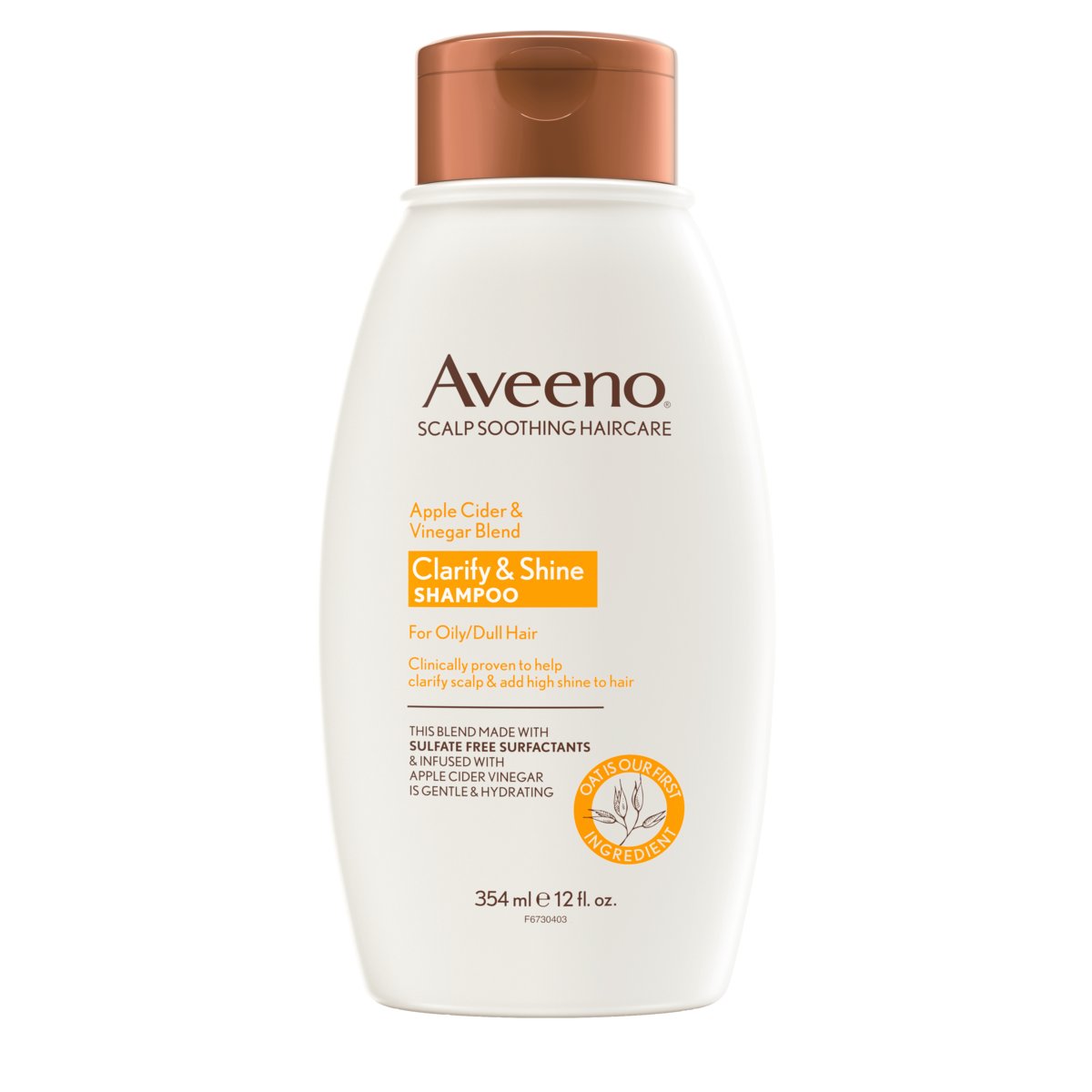
Pros Cons ✓ Sulfate-free, paraben-free and dye-free ✗ Contains an amino silicone and several cationic conditioners ✓ Strong olefin sulfonate cleanser removes styling residue ✗ No published data showing the vinegar improves cleansing ✓ Low price and stocked by major US retailers ✗ Contains fragrance If you want to grab some shampoo on your next grocery run, Aveeno is the easiest to find on this list. It’s sold as a sulfate-free clarifier for oily, dull hair, and has a light gel texture. Its main cleanser is sodium C14-16 olefin sulfonate, a strong non-sulfate cleanser, combined with cocamidopropyl betaine. Colloidal oatmeal extract is the first ingredient on the list, followed by vinegar, but we couldn’t find a study that demonstrated that vinegar clears up more residue than the cleansers do.
The bigger issue for low porosity hair sits further down the label. This shampoo contains the ingredients: polyquaternium-22, polyquaternium-39, linoleamidopropyl PG-dimonium chloride phosphate and PEG-7 amodimethicone. These are all a type of substance that sticks to hair and resists washing, known as conditioning polymers and silicone. [27]Gavazzoni Dias MF. Hair cosmetics: an overview. Int J Trichology. 2015;7(1):2-15. https://doi.org/10.4103/0974-7753.153450 In our view, that’s an odd mix for a product that is promoted as a clarifier.
This is an inexpensive product, priced at $8.19 for 12 ounces at Target, and it’s also sold at Walmart and grocery chains.
Bottom Line: Aveeno is an easy-to-find, dye-free option if you’re looking for a fresh cleanse that leaves a bit of slip to your hair. If your goal is to strip away buildup, opt for a formula with no silicones or polymers.
#5 Suave Essentials Daily Clarifying Shampoo
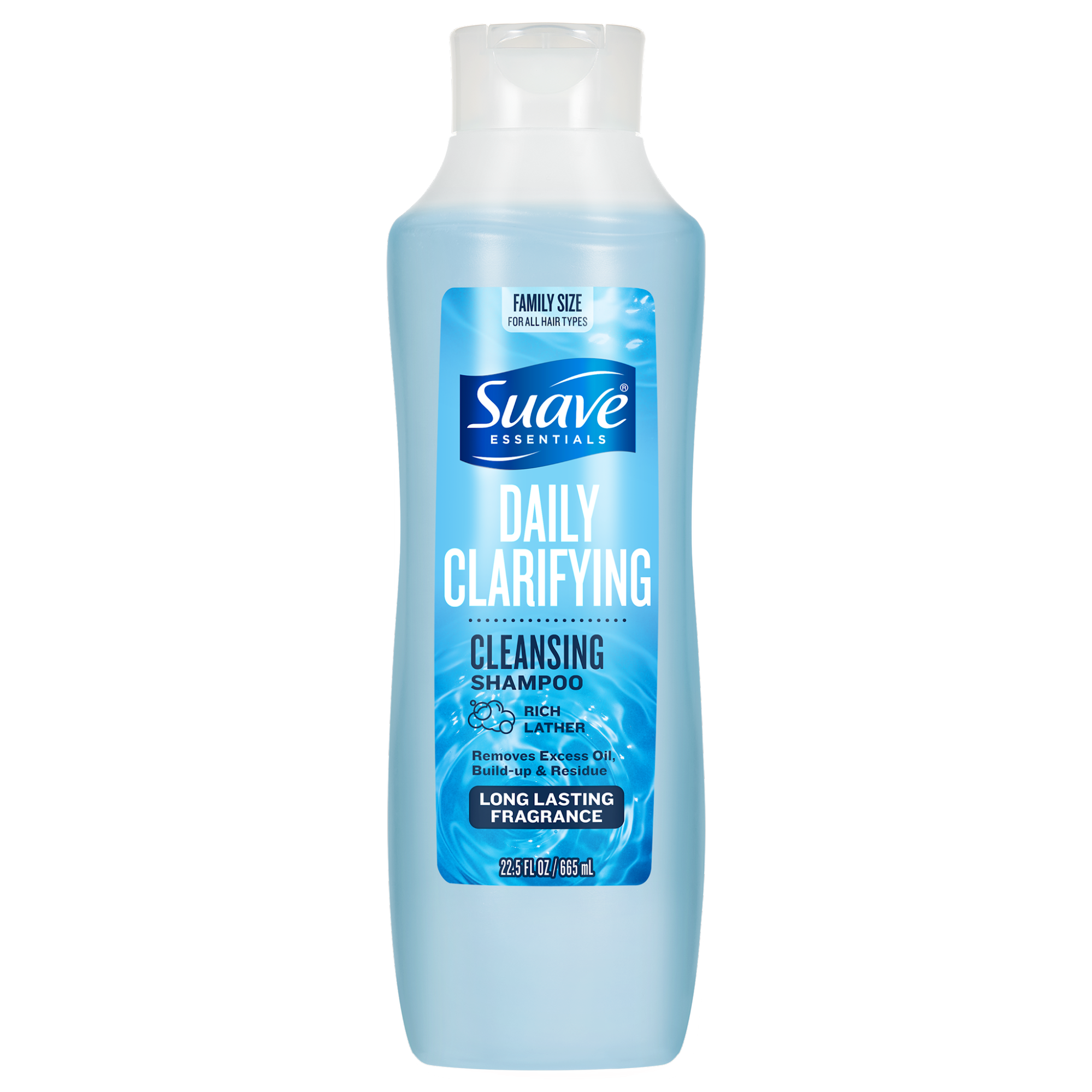
Pros Cons ✓ Lowest price in this list, in a large bottle ✗ Sulfate cleanser is the harshest in this list ✓ Strips residue quickly ✗ Contains dyes and fragrance allergens ✓ Includes disodium EDTA, a chelating agent ✗ No scalp or conditioning benefits Suave is a good choice for a reset if your hair feels heavy and coated after weeks of styling with various products. The main cleansing ingredient is sodium C12-13 pareth sulfate, and it also includes cocamidopropyl betaine and disodium EDTA, which binds calcium and magnesium. No silicones or conditioning polymers are used in this formula, so it strips residue from the hair, leaving nothing behind.
The strength of this shampoo cuts both ways, however. Stronger cleansers can leave the hair with too much static and friction, so if you do use it every day, as the brand recommends, it might be too much for low porosity hair. [28]Gavazzoni Dias MF. Hair cosmetics: an overview. Int J Trichology. 2015;7(1):2-15. https://doi.org/10.4103/0974-7753.153450 It also contains the dyes Blue 1 and Red 33, as well as the fragrances hexyl cinnamal and linalool, which could trigger an allergy.
This is the least expensive shampoo on the list, at $1.94 for 22.5 ounces on Suave’s website.
Bottom Line: Suave’s Daily Clarifying Shampoo is a cheap way to reset your hair, but you should alternate it with other shampoos rather than using it daily. If you have a sensitive scalp and wash often, you should try one of the gentler shampoos above.
How Often to Wash and Clarify
There is no trial that has established a washing schedule for low porosity hair. An anti-residue shampoo is recommended every ten washes or more frequently if necessary. [29]Gavazzoni Dias MF. Hair cosmetics: an overview. Int J Trichology. 2015;7(1):2-15. https://doi.org/10.4103/0974-7753.153450 We believe that a mild, residue-free shampoo two to four times a week is adequate for most people, and you should use a good clarifier, such as Suave, every few weeks if you use heavy products.
Here are a few habits you can work in to help your shampoo work best:
- If you have low porosity hair, wet it for a full minute with warm water before applying shampoo.
- Focus the lather on your scalp, and it will cover the hair as you rinse it out.
- For medicated shampoos, look at the instructions to see how long to leave it on. For example, Ulo’s shampoo calls for one to three minutes of contact.
- If you use a light conditioner, focus only on the ends of your hair.
If you’re switching from a moisture-rich haircare routine, your hair may feel less soft for the first few washes as you remove the buildup. Give it a few weeks before you evaluate the results.
Safety and Side Effects
Shampoos usually pose low risk, but are not risk-free. An itchy scalp or an allergy may be caused by cleansers, fragrance and preservatives. [30]Trüeb RM. Shampoos: ingredients, efficacy and adverse effects. J Dtsch Dermatol Ges. 2007;5(5):356-365. https://doi.org/10.1111/j.1610-0387.2007.06304.x All 5 shampoos here contain cocamidopropyl betaine, which is a mild cleanser, but was named Contact Allergen of the Year in 2004; a large portion of this allergy can be attributed to impurities that remain from the manufacturing process. [31]Jacob SE, Amini S. Cocamidopropyl betaine. Dermatitis. 2008;19(3):157-160. https://doi.org/10.2310/6620.2008.06043
Ketoconazole shampoo causes few side effects, as shown in a trial of 575 people who were treated with it for six months without any major side effects. [32]Peter RU, Richarz-Barthauer U. Successful treatment and prophylaxis of scalp seborrhoeic dermatitis and dandruff with 2% ketoconazole shampoo: results of a multicentre, double-blind, … Continue reading Some people notice more shedding shortly after starting the treatment, which we cover in why you may shed after starting ketoconazole.
Essential oils can be a concerning factor for some people. Peppermint, tea tree, menthol and rosemary can irritate sensitive skin or cause a tingling sensation; both groups of the rosemary trial saw an increased rate of scalp itching. [33]Panahi Y, Taghizadeh M, Marzony ET, Sahebkar A. Rosemary oil vs minoxidil 2% for the treatment of androgenetic alopecia: a randomized comparative trial. Skinmed. 2015;13(1):15-21. … Continue reading Don’t use the new shampoo if it irritates your skin and causes a rash. If redness, scaling or itch persists after you stop using it for more than a couple of weeks, see a dermatologist.
Ketoconazole Shampoo From our partners at UloBest Shampoo for Low Porosity Hair
Ulo's Thickening+ Shampoo pairs ketoconazole with thickening actives in a sulfate-free, gentle formula. Choose a multi-month plan and get up to 30% plus a free gift bundle.
Free full-size gifts with 3-month+ plans No prescription needed
KetoconazoleSupports a healthy scalpFree gifts included with select multi-month plans while supplies last. Ulo is a partner of Perfect Hair Health; we may earn a commission on purchases. This product is a cosmetic and is not intended to diagnose, treat, cure, or prevent any disease.
FAQs
Is the float test accurate for hair porosity?
Not reliably. We couldn’t find any study to validate it, and too many variables like residue, oil or air bubbles can affect whether a strand floats or not.
Should people with low porosity hair avoid protein?
There’s no clinical evidence that they must. Most of the concept of protein sensitivity is based on user reports. If a rinse-off shampoo contains protein, it’s a small dose, and you can determine its effects by observing how your hair responds to a few applications.
Is sulfate-free shampoo better for low porosity hair?
Not necessarily. There is no published study that has compared sulfate free and sulfate shampoos in terms of cleaning power or fiber damage. [34]Gavazzoni Dias MF. Hair cosmetics: an overview. Int J Trichology. 2015;7(1):2-15. https://doi.org/10.4103/0974-7753.153450 A mix of gentler cleansers is more suitable for using every day, and now and then a sulfate clarifier isn’t too bad.
Can low porosity hair become high porosity?
Yes. Bleaching and chemical straightening do increase the hair’s porosity, and UV exposure over the years can alter the pore structure. [35]Hessefort Y, Holland BT, Cloud RW. True porosity measurement of hair: a new way to study hair damage mechanisms. J Cosmet Sci. 2008;59(4):303-315. https://pubmed.ncbi.nlm.nih.gov/18818850/ [36]Gavazzoni Dias MF. Hair cosmetics: an overview. Int J Trichology. 2015;7(1):2-15. https://doi.org/10.4103/0974-7753.153450
Does hard water make low porosity hair worse?
Not quite as much as you might think. A 30-day study found that there was no change in hair strength or elasticity from using hard water. [37]Srinivasan G, Srinivas CR, Mathew AC, Duraiswami D. Effects of hard water on hair. Int J Trichology. 2013;5(3):137-139. https://doi.org/10.4103/0974-7753.125609
Do I need a clarifying shampoo every wash?
No. A gentle, residue-free shampoo is enough for most washes, with a strong clarifier every few weeks if you use a lot of heavy styling products. [38]Gavazzoni Dias MF. Hair cosmetics: an overview. Int J Trichology. 2015;7(1):2-15. https://doi.org/10.4103/0974-7753.153450
Final Verdict
The main problem with low porosity hair is that residue tends to sit on the surface of an intact outer layer; otherwise, the hair is healthy beneath it. [39]Hessefort Y, Holland BT, Cloud RW. True porosity measurement of hair: a new way to study hair damage mechanisms. J Cosmet Sci. 2008;59(4):303-315. https://pubmed.ncbi.nlm.nih.gov/18818850/ [40]Gavazzoni Dias MF. Hair cosmetics: an overview. Int J Trichology. 2015;7(1):2-15. https://doi.org/10.4103/0974-7753.153450 The best shampoo for it is one that cleans well, yet doesn’t leave any residue behind. Ulo Thickening Shampoo Plus is our top choice because it does both; it uses a gentle sulfate-free cleansing blend, doesn’t contain silicones, polymers or butters, and also contains an OTC-strength ketoconazole, which is backed by strong research to help with flaking and scalp itch. [41]Peter RU, Richarz-Barthauer U. Successful treatment and prophylaxis of scalp seborrhoeic dermatitis and dandruff with 2% ketoconazole shampoo: results of a multicentre, double-blind, … Continue reading
SheaMoisture is the one for you if you have protein-sensitive curls or coils that need detangling. As I Am is a legitimate low-cost sulfate-free clarifier, Aveeno is the most widely available option, and Suave works as an inexpensive clarifier if you need an occasional reset. If you’re looking for more medicated options, check out our list of the best ketoconazole shampoos.
References[+]
References ↑1, ↑2, ↑6, ↑35, ↑39 Hessefort Y, Holland BT, Cloud RW. True porosity measurement of hair: a new way to study hair damage mechanisms. J Cosmet Sci. 2008;59(4):303-315. https://pubmed.ncbi.nlm.nih.gov/18818850/ ↑3, ↑4, ↑5, ↑10, ↑11, ↑13, ↑14, ↑16, ↑26, ↑27, ↑28, ↑29, ↑34, ↑36, ↑38, ↑40 Gavazzoni Dias MF. Hair cosmetics: an overview. Int J Trichology. 2015;7(1):2-15. https://doi.org/10.4103/0974-7753.153450 ↑7, ↑8, ↑9 Rele AS, Mohile RB. Effect of mineral oil, sunflower oil, and coconut oil on prevention of hair damage. J Cosmet Sci. 2003;54(2):175-192. https://pubmed.ncbi.nlm.nih.gov/12715094/ ↑12, ↑37 Srinivasan G, Srinivas CR, Mathew AC, Duraiswami D. Effects of hard water on hair. Int J Trichology. 2013;5(3):137-139. https://doi.org/10.4103/0974-7753.125609 ↑15, ↑17 Cornwell PA. A review of shampoo surfactant technology: consumer benefits, raw materials and recent developments. Int J Cosmet Sci. 2018;40(1):16-30. https://doi.org/10.1111/ics.12439 ↑18, ↑19 Gavazzoni Dias MF, de Almeida AM, Cecato PM, Adriano AR, Pichler J. The shampoo pH can affect the hair: myth or reality? Int J Trichology. 2014;6(3):95-99. https://doi.org/10.4103/0974-7753.139078 ↑20, ↑30 Trüeb RM. Shampoos: ingredients, efficacy and adverse effects. J Dtsch Dermatol Ges. 2007;5(5):356-365. https://doi.org/10.1111/j.1610-0387.2007.06304.x ↑21, ↑22, ↑32, ↑41 Peter RU, Richarz-Barthauer U. Successful treatment and prophylaxis of scalp seborrhoeic dermatitis and dandruff with 2% ketoconazole shampoo: results of a multicentre, double-blind, placebo-controlled trial. Br J Dermatol. 1995;132(3):441-445. https://doi.org/10.1111/j.1365-2133.1995.tb08680.x ↑23 Piérard-Franchimont C, De Doncker P, Cauwenbergh G, Piérard GE. Ketoconazole shampoo: effect of long-term use in androgenic alopecia. Dermatology. 1998;196(4):474-477. https://doi.org/10.1159/000017954 ↑24 Fischer TW, Hipler UC, Elsner P. Effect of caffeine and testosterone on the proliferation of human hair follicles in vitro. Int J Dermatol. 2007;46(1):27-35. https://doi.org/10.1111/j.1365-4632.2007.03119.x ↑25, ↑33 Panahi Y, Taghizadeh M, Marzony ET, Sahebkar A. Rosemary oil vs minoxidil 2% for the treatment of androgenetic alopecia: a randomized comparative trial. Skinmed. 2015;13(1):15-21. https://pubmed.ncbi.nlm.nih.gov/25842469/ ↑31 Jacob SE, Amini S. Cocamidopropyl betaine. Dermatitis. 2008;19(3):157-160. https://doi.org/10.2310/6620.2008.06043 Want help with your hair regrowth journey?
Get personalized support, product recommendations, video calls, and more from our researchers, trichologists, and PhD's dedicated to getting you the best possible outcomes.
Learn More
Perfect Hair Health Team
"... Can’t thank @Rob (PHH) and @sanderson17 enough for allowing me to understand a bit what was going on with me and why all these [things were] happening ... "

 — RDB, 35, New York, U.S.A.
"... There is a lot improvement that I am seeing and my scalp feel alive nowadays... Thanks everyone. "

 — Aayush, 20’s, Boston, MA
"... I can say that my hair volume/thickness is about 30% more than it was when I first started."

 — Douglas, 50’s, Montréal, Canada
Want help with your hair regrowth journey?
Get personalized support, product recommendations, video calls, and more from our researchers, trichologists, and PhD's dedicated to getting you the best possible outcomes.
Join Now - Mission Statement