- About
- Mission Statement
Education. Evidence. Regrowth.
- Education.
Prioritize knowledge. Make better choices.
- Evidence.
Sort good studies from the bad.
- Regrowth.
Get bigger hair gains.
Team MembersPhD's, resarchers, & consumer advocates.
- Rob English
Founder, researcher, & consumer advocate
- Research Team
Our team of PhD’s, researchers, & more
Editorial PolicyDiscover how we conduct our research.
ContactHave questions? Contact us.
Before-Afters- Transformation Photos
Our library of before-after photos.
- — Jenna, 31, U.S.A.
I have attached my before and afters of my progress since joining this group...
- — Tom, 30, U.K.
I’m convinced I’ve recovered to probably the hairline I had 3 years ago. Super stoked…
- — Rabih, 30’s, U.S.A.
My friends actually told me, “Your hairline improved. Your hair looks thicker...
- — RDB, 35, New York, U.S.A.
I also feel my hair has a different texture to it now…
- — Aayush, 20’s, Boston, MA
Firstly thank you for your work in this field. I am immensely grateful that...
- — Ben M., U.S.A
I just wanted to thank you for all your research, for introducing me to this method...
- — Raul, 50, Spain
To be honest I am having fun with all this and I still don’t know how much...
- — Lisa, 52, U.S.
I see a massive amount of regrowth that is all less than about 8 cm long...
Client Testimonials150+ member experiences.
 Scroll DownPopular Treatments
- Treatments
Popular treatments. But do they work?
- Finasteride
- Oral
- Topical
- Dutasteride
- Oral
- Topical
- Mesotherapy
- Minoxidil
- Oral
- Topical
- Ketoconazole
- Shampoo
- Topical
- Low-Level Laser Therapy
- Therapy
- Microneedling
- Therapy
- Platelet-Rich Plasma Therapy (PRP)
- Therapy
- Scalp Massages
- Therapy
 More
IngredientsTop-selling ingredients, quantified.
- Saw Palmetto
- Redensyl
- Melatonin
- Caffeine
- Biotin
- Rosemary Oil
- Lilac Stem Cells
- Hydrolyzed Wheat Protein
- Sodium Lauryl Sulfate
 More
ProductsThe truth about hair loss "best sellers".
- Minoxidil Tablets
Xyon Health
- Finasteride
Strut Health
- Hair Growth Supplements
Happy Head
- REVITA Tablets for Hair Growth Support
DS Laboratories
- FoliGROWTH Ultimate Hair Neutraceutical
Advanced Trichology
- Enhance Hair Density Serum
Fully Vital
- Topical Finasteride and Minoxidil
Xyon Health
- HairOmega Foaming Hair Growth Serum
DrFormulas
- Bio-Cleansing Shampoo
Revivogen MD
- more
Key MetricsStandardized rubrics to evaluate all treatments.
- Evidence Quality
Is this treatment well studied?
- Regrowth Potential
How much regrowth can you expect?
- Long-Term Viability
Is this treatment safe & sustainable?
Free Research- Free Resources
Apps, tools, guides, freebies, & more.
- Free CalculatorTopical Finasteride Calculator
- Free Interactive GuideInteractive Guide: What Causes Hair Loss?
- Free ResourceFree Guide: Standardized Scalp Massages
- Free Course7-Day Hair Loss Email Course
- Free DatabaseIngredients Database
- Free Interactive GuideInteractive Guide: Hair Loss Disorders
- Free DatabaseTreatment Guides
- Free Lab TestsProduct Lab Tests: Purity & Potency
- Free Video & Write-upEvidence Quality Masterclass
- Free Interactive GuideDermatology Appointment Guide
- More
Articles100+ free articles.
-
Liposomal Finasteride: The Ultimate Guide
-
GHK-Cu for Hair Growth: Does It Actually Work?
-
Saw Palmetto Shampoo: Is It Effective for Hair Loss?
-
Minoxidil Before and After Photos [2026] | Does It Work?
-
Musely Reviews for Hair Loss: Are They Trustworthy?
-
Oral Finasteride Before and After: Real Case Studies
-
Why Am I Shedding After Starting Ketoconazole?
-
Diffuse Thinning: Causes, Implications, And Steps For Regrowth (See Photos)
PublicationsOur team’s peer-reviewed studies.
- Microneedling and Its Use in Hair Loss Disorders: A Systematic Review
- Use of Botulinum Toxin for Androgenic Alopecia: A Systematic Review
- Conflicting Reports Regarding the Histopathological Features of Androgenic Alopecia
- Self-Assessments of Standardized Scalp Massages for Androgenic Alopecia: Survey Results
- A Hypothetical Pathogenesis Model For Androgenic Alopecia:Clarifying The Dihydrotestosterone Paradox And Rate-Limiting Recovery Factors
Menu- AboutAbout
- Mission Statement
Education. Evidence. Regrowth.
- Team Members
PhD's, resarchers, & consumer advocates.
- Editorial Policy
Discover how we conduct our research.
- Contact
Have questions? Contact us.
- Before-Afters
Before-Afters- Transformation Photos
Our library of before-after photos.
- Client Testimonials
Read the experiences of members
Before-Afters/ Client Testimonials- Popular Treatments
-
ArticlesLiposomal Finasteride: The Ultimate Guide
First Published Nov 3 2026Last Updated Nov 3 2026Pharmaceutical Researched & Written By:Dr. Michael Williams
 Reviewed By:Ben Fletcher, PhD
Want help with your hair regrowth journey?
Get personalized support, product recommendations, video calls, and more from our researchers, trichologists, and PhD's dedicated to getting you the best possible outcomes.
Learn MoreArticle Summary
Finasteride is one of the most effective treatments for pattern hair loss, but concerns about side effects have led to growing interest in topical alternatives. In a large clinical trial, researchers found that topical finasteride produced hair growth comparable to oral finasteride, with blood concentrations more than 100 times lower. Liposomal finasteride aims to improve on this by delivering more of the medication directly to hair follicles while minimizing systemic absorption. Laboratory and animal studies support this approach, and preliminary human findings are encouraging. In this article, we’ll explore how liposomal finasteride works, what the research shows, and whether it offers advantages over conventional topical finasteride.
Full Article
Finasteride is one of the most effective treatments available for pattern hair loss. At 1 mg, oral finasteride is one of the only FDA-approved drugs for treating thinning hair and has decades of clinical research to back its use.
But despite the robust clinical evidence, many men are hesitant to use finasteride. Online forums are full of users questioning whether finasteride’s benefits for hair loss are worth the risk of side effects.
Finasteride reduces dihydrotestosterone (DHT), the male hormone implicated in male pattern baldness. Men who experience patterned hair thinning have hair follicles that are genetically more sensitive to this hormone and, as a result, experience hair loss caused by DHT.
Because DHT is involved in overall male biology, lowering DHT levels with drugs like finasteride is believed to have an impact, especially on sexual function. But in reality, the risk of side effects with oral finasteride is rare.[1]Propecia (Finasteride) Tablets 1 mg: Prescribing Information, Clinical Studies in Men With Male Pattern Hair Loss. U.S. Food and Drug Administration Label. … Continue reading
In men who do experience side effects, lowered levels of DHT throughout the body are suspected to be the culprit, along with reduced levels of related hormones in the brain called neurosteroids. The exact mechanisms are still being studied. [2]Traish, A.M., Melcangi, R.C., Bortolato, M., Garcia-Segura, L.M., Zitzmann, M., et al. (2015). Adverse Effects Of 5α-Reductase Inhibitors: What Do We Know, Don’t Know, And Need To Know? … Continue reading
So in an effort to minimize the negative side effects of finasteride, researchers have endeavored to formulate topical finasteride products that:
- result in less finasteride absorption,
- reduce DHT at the follicle level (where it really matters), and
- minimize systemic (blood) reductions of DHT.
And many have been successful. In one 2022 study, a once-daily 0.25% finasteride spray grew nearly as much hair as the finasteride pill, but with more than 100x lower blood levels of finasteride. [3]Piraccini, B.M., Blume-Peytavi, U., Scarci, F., Jansat, J.M., Falqués, M., Otero, R., Tamarit, M.L., Galván, J., Tebbs, V., Massana, E. (2022). Efficacy And Safety Of Topical Finasteride Spray … Continue reading
The question is not necessarily if topical finasteride works (studies show it does), but what the ideal formulation of topical finasteride is to both 1) minimize systemic absorption and 2) maximize the availability of finasteride to hair follicles.
While there are plenty of formulations for topical finasteride, there’s one formula that stands out for achieving these objectives: liposomal finasteride.
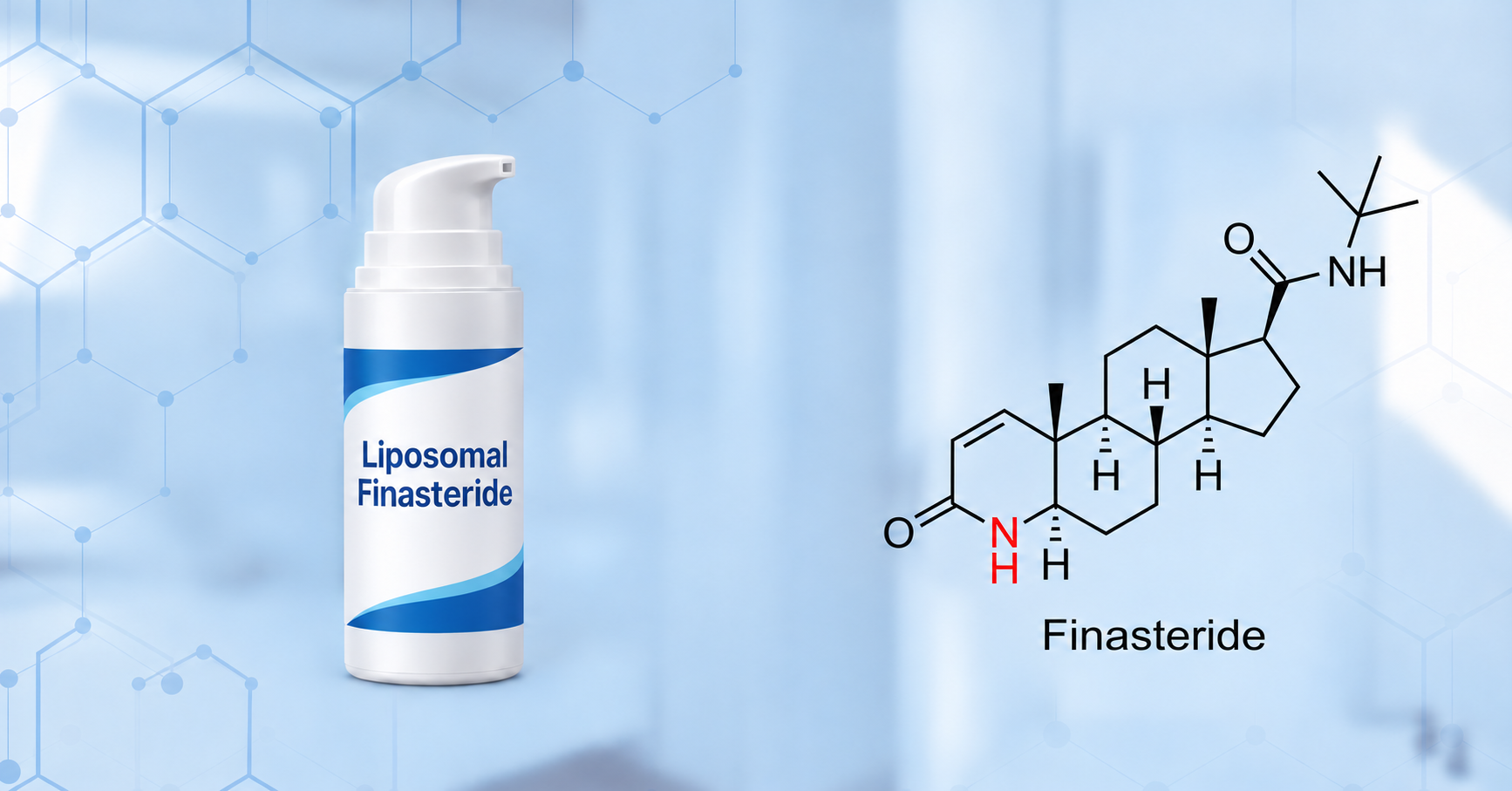
Liposomal finasteride is finasteride delivered in a liposomal gel or cream, a unique delivery vehicle that minimizes systemic absorption and maximizes delivery to hair follicles.
But is there research showing liposomal finasteride works, or that it’s better than the alternatives?
In this article, we’ll unpack the evidence about liposomal finasteride, whether it works, why it might be an ideal delivery system, and who it might not be well suited to.
Liposomal Finasteride From our partners at UloGet Personalized Liposomal Finasteride
Finasteride encapsulated in liposomes for targeted delivery to the follicle. Prescribed 100% online. Choose a multi-month plan and get up to 30% plus a free gift bundle.
Free full-size gifts with 3-month+ plans Prescribed online, shipped to your door Liposomal deliveryTargeted to the follicle
*Only available in the U.S. Prescription requires an online medical consultation at no extra cost. Off-label products are not endorsed by the FDA. Free gifts included with select multi-month plans while supplies last. Ulo is a partner of Perfect Hair Health; we may earn a commission on purchases.
What Is Liposomal Finasteride?
Liposomal finasteride is a topical form of finasteride that uses microscopic structures called liposomes to help deliver the medication into the scalp.
Liposomes are made from phospholipids, the same type of fat molecules that make up the membranes surrounding our cells.
Each phospholipid has two distinct parts: a water-loving head and a fat-loving tail. When placed in water, these molecules naturally arrange themselves into a double layer, forming tiny spherical structures that can carry active ingredients either within their membranes or inside their hollow centers.
These physical characteristics make liposomes an ideal candidate for topical drug delivery.
The skin’s outermost layer, called the stratum corneum, is held together by a protective network of lipids (fats). This barrier makes it difficult for many medications to penetrate.
Because liposomes are also made from lipids, they are compatible with the skin barrier, allowing their contents to be transferred into the skin more effectively. Depending on their composition, liposomes may also accumulate within hair follicle openings, where they can release medication close to the structures we’re trying to target.
This means liposomes can potentially do more than simply increase how much medication penetrates the skin. They can also influence where the medication accumulates, how much remains within the skin, and how quickly it’s released.
And for finasteride, these characteristics could offer an important advantage: concentrating more of the medication around hair follicles while limiting how much passes through the skin and enters the bloodstream.
And for finasteride, this could offer an important advantage.
How Does Liposomal Finasteride Work?
To understand why liposomal delivery might be beneficial, we first need to understand how finasteride works.
Finasteride inhibits 5-alpha-reductase, the enzyme responsible for converting testosterone into dihydrotestosterone (DHT).
DHT is the hormone primarily responsible for pattern hair loss. In genetically susceptible individuals, it binds to receptors in hair follicles and triggers a gradual process called follicle miniaturization, where the follicles shrink and produce progressively thinner hairs.
By inhibiting 5-alpha-reductase, finasteride reduces DHT levels and, as a result, dramatically reduces the amount of DHT hair follicles and the surrounding scalp skin are exposed to. In turn, finasteride is believed to help slow, stop, prevent, and possibly even reverse this process of miniaturization.
And it’s proven effective very effective at doing so.
In a 1999 study, researchers found that taking 1 mg of oral finasteride daily reduced DHT levels in the scalp by approximately 64% after 42 days. However, the medication also reduced circulating DHT levels by approximately 71%. [4]Drake, L., Hordinsky, M., Fiedler, V., Swinehart, J., Unger, W.P., Cotterill, P.C., Thiboutot, D.M., Lowe, N., Jacobson, C., Whiting, D., Stieglitz, S., Kraus, S.J., Griffin, E.I., Weiss, D., … Continue reading
When finasteride is taken orally, it enters the bloodstream and inhibits 5-alpha-reductase throughout the body, not just in the scalp. But for treating pattern hair loss, our primary goal is to reduce DHT activity around the hair follicles. Systemic DHT inhibition still achieves this objective, but isn’t required so long as scalp DHT is effectively reduced.
By applying the medication directly to the scalp, we can deliver finasteride closer to where it’s needed while reducing how much circulates throughout the body. And clinical research suggests that this approach works.
In a large Phase III trial published in 2022, topical finasteride reduced circulating DHT by approximately 35%, compared with 56% for oral finasteride. [5]Piraccini, B.M., Blume-Peytavi, U., Scarci, F., Jansat, J.M., Falqués, M., Otero, R., Tamarit, M.L., Galván, J., Tebbs, V., Massana, E. (2022). Efficacy And Safety Of Topical Finasteride Spray … Continue reading
In other words, topical finasteride still affected DHT levels throughout the body, but to a substantially lesser extent than the oral medication.
So, could we reduce systemic absorption even further?
One factor that may influence this is the vehicle, or the formulation used to deliver finasteride into the skin.
Most conventional topical finasteride solutions rely on alcohol, propylene glycol, or a combination of the two. These ingredients help dissolve finasteride and facilitate its penetration into the skin. However, they aren’t specifically designed to concentrate the medication within hair follicles.
This is where liposomes come in.
Rather than simply helping finasteride penetrate the skin, liposomes may allow more of the medication to accumulate around hair follicles while limiting how much passes through the skin into circulation. This means more finasteride concentrated to the follicle and even less finasteride being absorbed into the blodstream.
In other words, greater local delivery of finasteride with less systemic exposure.
And while this hasn’t yet been demonstrated conclusively in humans, several decades of research into liposomal drug delivery provide good reasons to investigate the approach.
Let’s look at what the studies have found.
Does Liposomal Finasteride Work?
Researchers have been investigating liposomes as a way to deliver ingredients directly to hair follicles for more than 30 years. And the findings suggest that liposomes may offer a significant advantage over conventional topical formulations.
One of the earliest studies was published in 1992. Researchers compared how effectively liposomes delivered a fluorescent marker into the hair follicle. The fluorescent marker allows researchers to easily detect how much of the applied substance is localized to the hair follicles.
Using hamster ear skin, they found that liposomes deposited more of the marker into these structures than conventional vehicles, including water, alcohol, and propylene glycol solutions. [6]Lieb, L.M., Ramachandran, C., Egbaria, K., Weiner, N. (1992). Topical Delivery Enhancement With Multilamellar Liposomes Into Pilosebaceous Units: I. In Vitro Evaluation Using Fluorescent Techniques … Continue reading
In other words, liposomes were better at delivering their encapsulated materials than other solutions made with water, alcohol, or propylene glycol.
And this wasn’t an isolated finding. Subsequent studies successfully demonstrated the delivery of very different substances into hair follicles using liposomes, including melanin (the pigment responsible for hair and skin color) in cultured skin and even genetic material in mice. [7]Li, L., Lishko, V., Hoffman, R.M. (1993). Liposomes Can Specifically Target Entrapped Melanin To Hair Follicles In Histocultured Skin. In Vitro Cellular & Developmental Biology. 29A. 192-194. [8]Li, L., Hoffman, R.M. (1995). The Feasibility Of Targeted Selective Gene Therapy Of The Hair Follicle. Nature Medicine. 1. 705-706. https://doi.org/10.1038/nm0795-705
Together, these experiments demonstrated that liposomes could successfully target hair follicles with a range of substances, supporting their potential as a delivery system for topical treatments.
More importantly for hair loss treatment, researchers have also investigated whether liposomes can improve the delivery of finasteride. In their research, they found that liposomal finasteride was better at delivering finasteride to hair follicles and decreasing systemic absorption.
In an investigative study, researchers compared liposomal formulations with a conventional water-alcohol solution using hamster skin. Over 24 hours, approximately 24% of the finasteride in the conventional solution passed through the skin, compared with just 5.5–13% from the vesicle formulations. Liposomes also produced the greatest retention of finasteride within the deeper layers of the skin. [9]Daneshamouz, S., Tabbakhian, M., Tavakoli, N., Jaafari, M.R. (2005). Influence Of Liposomes And Niosomes On The In Vitro Permeation And Skin Retention Of Finasteride. Iranian Journal of … Continue reading
Together, the findings of these studies suggest that appropriately formulated liposomes can deliver more finasteride into hair follicles while reducing how much passes through the skin into the bloodstream. Although these findings come from animal models, they provide a compelling rationale for liposomal finasteride as a way to improve targeted delivery and potentially limit systemic exposure.
And if we can maintain sufficient finasteride activity in the scalp while reducing its effects elsewhere in the body, we may be able to preserve its hair growth benefits while lowering the risk of systemic side effects.
But how much evidence do we actually have that this approach works? Let’s look at the research.
Liposomal Finasteride: The Human Studies
Unfortunately, there haven’t been any peer-reviewed studies on liposomal finasteride formally published in scientific journals. However, there have been some informal studies published as part of patents.
In a study described in a European patent, seven men applied a 2.5% liposomal finasteride gel to their scalps daily for three weeks.
Researchers measured finasteride and DHT levels in their blood and found that circulating DHT decreased by an average of 31%. That’s about half of the 60–70% reduction typically associated with oral finasteride, despite a far higher daily dose (1 ml of 2.5% finasteride provides about 25 mg of finasteride, or 25 times the standard 1 mg oral dose). [10]Hasson, V., Castiglione, M. (2021). Topical Formulations For Treating Dermatological Disorders Including Male Pattern Baldness. European Patent EP3700506B1. Example 4. … Continue reading
For reference, a 0.25% topical finasteride spray reduced systemic DHT levels by about the same (35%) despite a 10x higher concentration.
The same patent also investigated whether the liposomal finasteride could regrow hair in men.
Of the nine men included in the small study, all nine reportedly experienced improvements in hair density and new growth after using the 2.5% liposomal gel. No side effects were reported.
These findings are encouraging, particularly because they suggest that a liposomal formulation may be capable of delivering enough finasteride to produce visible improvements in hair growth.
However, there are some important limitations. The study was small, lacked a described randomized placebo comparison, and was reported in a patent rather than a peer-reviewed scientific journal. [11]Hasson, V., Castiglione, M. (2021). Topical Formulations For Treating Dermatological Disorders Including Male Pattern Baldness. European Patent EP3700506B1. Example 8. … Continue reading
So, what can we take away from all of this?
There is substantial experimental evidence supporting liposomes and related vesicles as delivery systems for finasteride, along with preliminary human findings suggesting that liposomal formulations can support hair growth.
Does Liposomal Finasteride Reduce Side Effects?
One of the main reasons people choose topical finasteride over oral finasteride is to reduce the risk of side effects, particularly sexual side effects like erectile dysfunction and reduced libido.
But how common are these side effects in the first place?
In a systematic review of 12 randomized trials involving 3,927 men, researchers found that oral finasteride approximately doubled the relative risk of erectile dysfunction compared with placebo.
While that might sound concerning, the absolute increase was relatively small: approximately one additional case of erectile dysfunction for every 82 men treated. The researchers also found that men taking finasteride were no more likely than those taking placebo to discontinue treatment because of sexual side effects. [12]Mella, J.M., Perret, M.C., Manzotti, M., Catalano, H.N., Guyatt, G. (2010). Efficacy And Safety Of Finasteride Therapy For Androgenetic Alopecia: A Systematic Review. Archives of Dermatology. … Continue reading
That said, side effects remain a legitimate concern. Some men have also reported sexual dysfunction that persisted after stopping finasteride, prompting the FDA to update the drug’s labeling in 2012, and the continued interest in topical finasteride.
As we’ve discussed, clinical trials have shown that topical finasteride can produce similar improvements in hair growth to oral finasteride while resulting in substantially lower concentrations of the medication in the bloodstream. Some trials have also reported fewer sexual side effects with topical treatment.[13]Piraccini, B.M., Blume-Peytavi, U., Scarci, F., Jansat, J.M., Falqués, M., Otero, R., Tamarit, M.L., Galván, J., Tebbs, V., Massana, E. (2022). Efficacy And Safety Of Topical Finasteride Spray … Continue reading
The goal of liposomal finasteride is to achieve this, but to an even greater degree than standard topical finasteride. If liposomal finasteride achieves this, we might also be able to further reduce the risk of systemic side effects.
But does the research support this possibility?
We don’t yet have controlled human trials comparing the side effects of liposomal finasteride with conventional topical formulations. However, we do know that 1) the physical characteristics of liposomes very likely lead to accumulation within the skin, reducing the amount absorbed into the blood and 2) animal research studies suggest liposomal medications, including liposomal finasteride, likely behave in this way.
Moreover, some studies have investigated whether liposomal application of drugs results in less systemic side effects.
In one study, researchers investigated whether liposomes could improve the delivery of topical cyclosporine, an immunosuppressant used to treat conditions like psoriasis.
Cyclosporine is effective when taken orally, but its use can be limited by systemic side effects, including high blood pressure and kidney problems. Researchers have also struggled to develop effective topical formulations because the medication doesn’t penetrate the skin easily.
After 14 weeks of treatment with the liposomal cyclosporine, 41% of psoriasis lesions treated had completely cleared, compared with none treated with conventional cyclosporine cream or placebo.
Importantly, researchers also monitored systemic absorption and safety. They found no evidence of cyclosporine accumulating in the bloodstream following repeated application, while blood pressure, kidney function, and liver function remained within normal limits. [14]Kumar, R., Dogra, S., Amarji, B., Singh, B., Sharma, S.K., Vinay, K., Mahajan, R., Katare, O.P. (2016). Efficacy Of Novel Topical Liposomal Formulation Of Cyclosporine In Mild To Moderate Stable … Continue reading
These findings tell us that liposomal delivery can improve the effectiveness of a topical medication in humans while maintaining low systemic exposure.
Of course, cyclosporine and finasteride are different medications, and this study doesn’t establish that liposomal finasteride causes fewer side effects than conventional formulations.
However, it provides encouraging clinical evidence for the principle behind liposomal finasteride: delivering enough medication into the skin to produce a therapeutic effect and minimizing related side effects.
For finasteride, this could mean maintaining its effects around hair follicles while reducing exposure elsewhere in the body. But more research is needed to determine the true impact of a liposomal formulation on side effects.
Is Liposomal Finasteride Better Than Other Topical Finasteride?
At this point, we have good evidence that topical finasteride works. What we don’t yet know is whether delivering it as liposomal finasteride makes it more effective, or reduces its risk of side effects even further.
That being said, liposomes have been used in medicine for decades, including in FDA-approved treatments. Their ability to carry medications and influence how those medications are distributed throughout the body is well established.
And when we look specifically at topical drug delivery, the findings are encouraging.
As we covered earlier, researchers have repeatedly demonstrated that liposomes can deliver different substances into hair follicles. In finasteride studies, certain liposomal formulations retained more medication within the skin, slowed its passage through the skin, and delivered approximately three times more finasteride into hair follicles than a conventional solution.
This is significant because the goal of topical finasteride is to inhibit DHT activity around hair follicles while limiting how much of the medication enters the bloodstream.
In theory, a delivery system that concentrates more finasteride around the follicle, while simultaneously decreasing systemic absorption would have a significant advantage over regular topical finasteride.
Put simply: liposomal finasteride is theoretically better than regular finasteride. But, it hasn’t yet been proven.
With the current state of the evidence, it’s reasonable to say that liposomal finasteride is a potentially better option worth exploring. But whether it’s better for you is entirely dependent on your treatment preferences.
If your primary concern is maximizing the benefits of finasteride while also minimizing the side effects of finasteride, a liposomal finasteride is an option to seriously consider. It offers the best technical advantage, even if it hasn’t been proven. However, if your primary goal is to use a clinically-studied topical finasteride, you might be better suited to a standard topical finasteride solution.
There are also some practical considerations.
Conventional topical finasteride is often formulated with alcohol, propylene glycol, or both, producing relatively lightweight solutions that dry quickly on the scalp. You can apply your medication any time of day, let it dry, and style your hair as usual.
Some liposomal formulations, particularly gels and creams, can feel heavier or leave more residue in the hair. Depending on the formula, this may mean washing your hair more frequently or finding it harder to style after application.
If that’s a concern, applying the product in the evening may be preferable.
Similarly, if you prefer a formulation without alcohol or propylene glycol or have an extremely sensitive scalp, a liposomal formula, often formulated without these ingredients, may be preferred. Additionally, liposomal finasteride is typically made with lipids that soothe and repair the skin, making it a suitable fit for senstive skin types.
Ultimately, the best formulation is one that delivers an effective amount of finasteride to the scalp, minimizes unwanted systemic exposure, and fits your preferences enough to use consistently.
What to Look for in a Liposomal Finasteride
Because there’s no clinical trial to point to, choosing a liposomal finasteride comes down to how well it fits your routine. A few factors matter most:
- Pricing built for long-term use. Finasteride takes several months to produce visible results, and maintaining those results requires continued treatment. Ulo offers multi-month plans that reduce the monthly cost, making long-term treatment more affordable.
- More treatment options if you need them. While finasteride is effective for most men, some may benefit from a different approach. Ulo also offers topical dutasteride and oral hair loss medications, allowing you to explore alternative treatments without switching providers.
- Treatment that adapts to your progress. Finasteride is often combined with minoxidil to target hair loss through different mechanisms. Ulo offers combination formulas and ongoing clinician support, so your treatment can be adjusted based on your response and individual needs.
Our Pick: Ulo’s Liposomal Topical Finasteride
Ulo’s liposomal topical finasteride checks each of these boxes.
More affordable long-term treatment. Hair loss treatment requires consistency, often for years. Ulo offers 3-, 6-, and 12-month plans that reduce the monthly cost, making it easier to maintain treatment over the long term.
More treatment options if you need them. Not everyone responds to finasteride equally. For those who need a different approach, Ulo also offers topical dutasteride and oral hair loss medications, allowing patients to explore other options without switching providers.
Treatment that can evolve with your progress. Ulo offers combination formulas that pair DHT blockers with other hair growth ingredients like minoxidil. A licensed clinician reviews your medical history and can adjust your regimen based on your response to treatment.
For men who are interested in finasteride but concerned about systemic side effects, or those who have used oral finasteride and want to explore a topical alternative, Ulo’s liposomal formulation is a reasonable option to explore for hair loss treatment.
Liposomal Finasteride From our partners at UloGet Personalized Liposomal Finasteride
Finasteride encapsulated in liposomes for targeted delivery to the follicle. Prescribed 100% online. Choose a multi-month plan and get up to 30% plus a free gift bundle.
Free full-size gifts with 3-month+ plans Prescribed online, shipped to your door
Liposomal deliveryTargeted to the follicle*Only available in the U.S. Prescription requires an online medical consultation at no extra cost. Off-label products are not endorsed by the FDA. Free gifts included with select multi-month plans while supplies last. Ulo is a partner of Perfect Hair Health; we may earn a commission on purchases.
Frequently Asked Questions
Is liposomal finasteride better than oral finasteride?
It depends on what you’re looking to achieve. Oral finasteride has decades of clinical evidence supporting its effectiveness for hair loss. Liposomal finasteride, on the other hand, hasn’t been studied nearly as extensively.
However, clinical trials of conventional topical finasteride have shown improvements in hair growth comparable to oral finasteride, with far less systemic exposure.
Liposomal formulations may improve on this by delivering more finasteride directly to hair follicles while limiting systemic absorption. Whether this translates into better results or fewer side effects than oral finasteride still needs to be established.
Is liposomal finasteride better than regular topical finasteride?
Potentially. Laboratory and animal studies suggest that liposomes can improve the accumulation of finasteride in hair follicles while reducing how much passes through the skin.
These findings are encouraging, particularly for people concerned about systemic exposure. However, we don’t yet have controlled human trials comparing liposomal finasteride with conventional topical formulations, so any clinical advantage is still theoretical.
Does topical finasteride still lower DHT in the blood?
Yes. Although topical finasteride generally produces lower systemic exposure than oral finasteride, some of the medication can still enter the bloodstream and reduce circulating DHT.
In a Phase III clinical trial, a 0.25% topical finasteride spray reduced circulating DHT by approximately 35%, compared with 56% for oral finasteride. In a patent study, 2.5% liposomal finasteride reduced circulating DHT by about the same, despite a 10x a higher dose of finasteride. However, this study wasn’t peer-reviewed or published in a scientific journal.
This suggest liposomal delivery may help limit systemic absorption further, but we don’t yet have enough human evidence to determine how much of a difference it makes.
Can I use liposomal finasteride with minoxidil?
Yes. Finasteride and minoxidil work through different mechanisms, which is why they’re frequently prescribed together.
Finasteride reduces DHT, the hormone responsible for gradually shrinking susceptible hair follicles. Minoxidil works through different pathways to support hair growth and help follicles remain in their growth phase longer.
Because they target different aspects of hair loss, combining them can be more effective than using either treatment alone. Your clinician can help determine the appropriate formulation and treatment schedule.
How long does liposomal finasteride take to work?
Like other hair loss treatments, liposomal finasteride requires consistent use before visible improvements can be expected.
In clinical trials of conventional topical finasteride, researchers observed measurable improvements in hair count after 24 weeks, or approximately six months.
However, hair growth varies from person to person, and it can take 6–12 months to properly evaluate a treatment’s effectiveness. In particular, DHT reducers like finasteride can continue to produce results after the 12 month mark.
We recommend taking baseline photographs before starting treatment and repeating them under consistent lighting every few months. This makes it much easier to evaluate changes in hair density over time.
Can women use liposomal finasteride?
Finasteride is sometimes prescribed off-label to women with pattern hair loss after menopause.
However, any form finasteride, including liposomal finasteride, must not be used during pregnancy or by women who may become pregnant because of the risk of harm to a developing male fetus.
Bottom Line
Liposomal finasteride represents a promising advancement in how we approach hair loss treatment: delivering more finasteride to the hair follicles while minimizing how much of the medication reaches the rest of the body.
And the research gives us good reason to be optimistic.
Large clinical trials have already demonstrated that conventional topical finasteride can produce hair growth comparable to oral finasteride, but with substantially lower concentrations of the medication in the bloodstream. Meanwhile, laboratory and animal studies suggest that liposomal delivery can improve how much finasteride accumulates around hair follicles while further reducing its absorption into the bloodstream.
Taken together, these findings suggest that liposomal finasteride could offer the benefits of conventional finasteride with even less systemic exposure.
Of course, we still need controlled human trials to determine whether these improvements in drug delivery translate into better hair growth or fewer side effects. But the underlying science is encouraging, and liposomal finasteride offers a compelling approach to improving an already effective treatment.
For men who are concerned about the potential side effects of oral finasteride, or who simply prefer a more targeted approach to treatment, liposomal finasteride is certainly worth discussing with a clinician.
As with any hair loss treatment, consistency is important. Give your treatment at least 6–12 months, document your progress with photographs, and remember that improvements can continue well beyond the first year.
References[+]
References ↑1 Propecia (Finasteride) Tablets 1 mg: Prescribing Information, Clinical Studies in Men With Male Pattern Hair Loss. U.S. Food and Drug Administration Label. https://drugcentral.org/label/9acbe693-8448-b443-9f78-1f9972520798/view ↑2 Traish, A.M., Melcangi, R.C., Bortolato, M., Garcia-Segura, L.M., Zitzmann, M., et al. (2015). Adverse Effects Of 5α-Reductase Inhibitors: What Do We Know, Don’t Know, And Need To Know? Reviews in Endocrine and Metabolic Disorders. 16(3). 177-198. https://doi.org/10.1007/s11154-015-9319-y ↑3 Piraccini, B.M., Blume-Peytavi, U., Scarci, F., Jansat, J.M., Falqués, M., Otero, R., Tamarit, M.L., Galván, J., Tebbs, V., Massana, E. (2022). Efficacy And Safety Of Topical Finasteride Spray Solution For Male Androgenetic Alopecia: A Phase III, Randomized, Controlled Clinical Trial. Journal of the European Academy of Dermatology and Venereology. 36(2). 286-294. https://doi.org/10.1111/jdv.17738 ↑4 Drake, L., Hordinsky, M., Fiedler, V., Swinehart, J., Unger, W.P., Cotterill, P.C., Thiboutot, D.M., Lowe, N., Jacobson, C., Whiting, D., Stieglitz, S., Kraus, S.J., Griffin, E.I., Weiss, D., Carrington, P., Gencheff, C., Cole, G.W., Pariser, D.M., Epstein, E.S., Tanaka, W., Dallob, A., Vandormael, K., Geissler, L., Waldstreicher, J. (1999). The Effects Of Finasteride On Scalp Skin And Serum Androgen Levels In Men With Androgenetic Alopecia. Journal of the American Academy of Dermatology. 41(4). 550-554. https://doi.org/10.1016/S0190-9622(99)80051-6 ↑5 Piraccini, B.M., Blume-Peytavi, U., Scarci, F., Jansat, J.M., Falqués, M., Otero, R., Tamarit, M.L., Galván, J., Tebbs, V., Massana, E. (2022). Efficacy And Safety Of Topical Finasteride Spray Solution For Male Androgenetic Alopecia: A Phase III, Randomized, Controlled Clinical Trial. Journal of the European Academy of Dermatology and Venereology. 36(2). 286-294. https://doi.org/10.1111/jdv.17738 ↑6 Lieb, L.M., Ramachandran, C., Egbaria, K., Weiner, N. (1992). Topical Delivery Enhancement With Multilamellar Liposomes Into Pilosebaceous Units: I. In Vitro Evaluation Using Fluorescent Techniques With The Hamster Ear Model. Journal of Investigative Dermatology. 99(1). 108-113. ↑7 Li, L., Lishko, V., Hoffman, R.M. (1993). Liposomes Can Specifically Target Entrapped Melanin To Hair Follicles In Histocultured Skin. In Vitro Cellular & Developmental Biology. 29A. 192-194. ↑8 Li, L., Hoffman, R.M. (1995). The Feasibility Of Targeted Selective Gene Therapy Of The Hair Follicle. Nature Medicine. 1. 705-706. https://doi.org/10.1038/nm0795-705 ↑9 Daneshamouz, S., Tabbakhian, M., Tavakoli, N., Jaafari, M.R. (2005). Influence Of Liposomes And Niosomes On The In Vitro Permeation And Skin Retention Of Finasteride. Iranian Journal of Pharmaceutical Sciences. 1(3). 119-130. https://doi.org/10.22037/ijps.v1.39486 ↑10 Hasson, V., Castiglione, M. (2021). Topical Formulations For Treating Dermatological Disorders Including Male Pattern Baldness. European Patent EP3700506B1. Example 4. https://patents.google.com/patent/EP3700506B1/en ↑11 Hasson, V., Castiglione, M. (2021). Topical Formulations For Treating Dermatological Disorders Including Male Pattern Baldness. European Patent EP3700506B1. Example 8. https://patents.google.com/patent/EP3700506B1/en ↑12 Mella, J.M., Perret, M.C., Manzotti, M., Catalano, H.N., Guyatt, G. (2010). Efficacy And Safety Of Finasteride Therapy For Androgenetic Alopecia: A Systematic Review. Archives of Dermatology. 146(10). 1141-1150. https://doi.org/10.1001/archdermatol.2010.256 ↑13 Piraccini, B.M., Blume-Peytavi, U., Scarci, F., Jansat, J.M., Falqués, M., Otero, R., Tamarit, M.L., Galván, J., Tebbs, V., Massana, E. (2022). Efficacy And Safety Of Topical Finasteride Spray Solution For Male Androgenetic Alopecia: A Phase III, Randomized, Controlled Clinical Trial. Journal Of The European Academy Of Dermatology And Venereology. 36(2). 286-294. https://doi.org/10.1111/jdv.17738 ↑14 Kumar, R., Dogra, S., Amarji, B., Singh, B., Sharma, S.K., Vinay, K., Mahajan, R., Katare, O.P. (2016). Efficacy Of Novel Topical Liposomal Formulation Of Cyclosporine In Mild To Moderate Stable Plaque Psoriasis: A Randomized Clinical Trial. JAMA Dermatology. 152(7). 807-815. https://doi.org/10.1001/jamadermatol.2016.0859 Want help with your hair regrowth journey?
Get personalized support, product recommendations, video calls, and more from our researchers, trichologists, and PhD's dedicated to getting you the best possible outcomes.
Learn More
Dr. Michael Williams
Michael is a researcher and writer who holds a BSc in Bioscience, an MSc in Regenerative Medicine, and a PhD in Translational Biomedicine. He undertook his PhD research at Houston Methodist Research Institute, Texas, focusing on cell signaling in the ovarian cancer tumor microenvironment. He conducted postdoctoral research at Barts Cancer Institute in London, exploring cellular metabolism in acute myeloid leukemia. He has published work in a range of fields, including oncology, nanomedicine, and cell-based therapeutics.
"... Can’t thank @Rob (PHH) and @sanderson17 enough for allowing me to understand a bit what was going on with me and why all these [things were] happening ... "

 — RDB, 35, New York, U.S.A.
"... There is a lot improvement that I am seeing and my scalp feel alive nowadays... Thanks everyone. "

 — Aayush, 20’s, Boston, MA
"... I can say that my hair volume/thickness is about 30% more than it was when I first started."

 — Douglas, 50’s, Montréal, Canada
Want help with your hair regrowth journey?
Get personalized support, product recommendations, video calls, and more from our researchers, trichologists, and PhD's dedicated to getting you the best possible outcomes.
Join Now - Mission Statement