- About
- Mission Statement
Education. Evidence. Regrowth.
- Education.
Prioritize knowledge. Make better choices.
- Evidence.
Sort good studies from the bad.
- Regrowth.
Get bigger hair gains.
Team MembersPhD's, resarchers, & consumer advocates.
- Rob English
Founder, researcher, & consumer advocate
- Research Team
Our team of PhD’s, researchers, & more
Editorial PolicyDiscover how we conduct our research.
ContactHave questions? Contact us.
Before-Afters- Transformation Photos
Our library of before-after photos.
- — Jenna, 31, U.S.A.
I have attached my before and afters of my progress since joining this group...
- — Tom, 30, U.K.
I’m convinced I’ve recovered to probably the hairline I had 3 years ago. Super stoked…
- — Rabih, 30’s, U.S.A.
My friends actually told me, “Your hairline improved. Your hair looks thicker...
- — RDB, 35, New York, U.S.A.
I also feel my hair has a different texture to it now…
- — Aayush, 20’s, Boston, MA
Firstly thank you for your work in this field. I am immensely grateful that...
- — Ben M., U.S.A
I just wanted to thank you for all your research, for introducing me to this method...
- — Raul, 50, Spain
To be honest I am having fun with all this and I still don’t know how much...
- — Lisa, 52, U.S.
I see a massive amount of regrowth that is all less than about 8 cm long...
Client Testimonials150+ member experiences.
 Scroll DownPopular Treatments
- Treatments
Popular treatments. But do they work?
- Finasteride
- Oral
- Topical
- Dutasteride
- Oral
- Topical
- Mesotherapy
- Minoxidil
- Oral
- Topical
- Ketoconazole
- Shampoo
- Topical
- Low-Level Laser Therapy
- Therapy
- Microneedling
- Therapy
- Platelet-Rich Plasma Therapy (PRP)
- Therapy
- Scalp Massages
- Therapy
 More
More
IngredientsTop-selling ingredients, quantified.
- Saw Palmetto
- Redensyl
- Melatonin
- Caffeine
- Biotin
- Rosemary Oil
- Lilac Stem Cells
- Hydrolyzed Wheat Protein
- Sodium Lauryl Sulfate
 More
More
ProductsThe truth about hair loss "best sellers".
- Minoxidil Tablets
Xyon Health
- Finasteride
Strut Health
- Hair Growth Supplements
Happy Head
- REVITA Tablets for Hair Growth Support
DS Laboratories
- FoliGROWTH Ultimate Hair Neutraceutical
Advanced Trichology
- Enhance Hair Density Serum
Fully Vital
- Topical Finasteride and Minoxidil
Xyon Health
- HairOmega Foaming Hair Growth Serum
DrFormulas
- Bio-Cleansing Shampoo
Revivogen MD
- more
Key MetricsStandardized rubrics to evaluate all treatments.
- Evidence Quality
Is this treatment well studied?
- Regrowth Potential
How much regrowth can you expect?
- Long-Term Viability
Is this treatment safe & sustainable?
Free Research- Free Resources
Apps, tools, guides, freebies, & more.
- Free CalculatorTopical Finasteride Calculator
- Free Interactive GuideInteractive Guide: What Causes Hair Loss?
- Free ResourceFree Guide: Standardized Scalp Massages
- Free Course7-Day Hair Loss Email Course
- Free DatabaseIngredients Database
- Free Interactive GuideInteractive Guide: Hair Loss Disorders
- Free DatabaseTreatment Guides
- Free Lab TestsProduct Lab Tests: Purity & Potency
- Free Video & Write-upEvidence Quality Masterclass
- Free Interactive GuideDermatology Appointment Guide
- More
Articles100+ free articles.
-
ABS-201: Can Blocking the Prolactin Receptor Regrow Hair?
-
2.5mg Dutasteride: Before and After Photos [2026]
-
Best Minoxidil for Women: Top 7 Brands of 2026
-
Pumpkin Seed Oil for Hair Growth: Before and After Photos
-
Best Minoxidil for Men: Top Picks for 2026
-
Oral Minoxidil: Before and After Photos [2026]
-
Minoxidil Before and After Photos [2026] | Does It Work?
-
10 Best Ketoconazole Shampoos in 2026
PublicationsOur team’s peer-reviewed studies.
- Microneedling and Its Use in Hair Loss Disorders: A Systematic Review
- Use of Botulinum Toxin for Androgenic Alopecia: A Systematic Review
- Conflicting Reports Regarding the Histopathological Features of Androgenic Alopecia
- Self-Assessments of Standardized Scalp Massages for Androgenic Alopecia: Survey Results
- A Hypothetical Pathogenesis Model For Androgenic Alopecia:Clarifying The Dihydrotestosterone Paradox And Rate-Limiting Recovery Factors
Menu- AboutAbout
- Mission Statement
Education. Evidence. Regrowth.
- Team Members
PhD's, resarchers, & consumer advocates.
- Editorial Policy
Discover how we conduct our research.
- Contact
Have questions? Contact us.
- Before-Afters
Before-Afters- Transformation Photos
Our library of before-after photos.
- Client Testimonials
Read the experiences of members
Before-Afters/ Client Testimonials- Popular Treatments
-
ArticlesABS-201: Can Blocking the Prolactin Receptor Regrow Hair?
First Published Oct 5 2026Last Updated Oct 2 2026Pharmaceutical Researched & Written By:Sarah King, PhD
 Reviewed By:Rob English, Medical Editor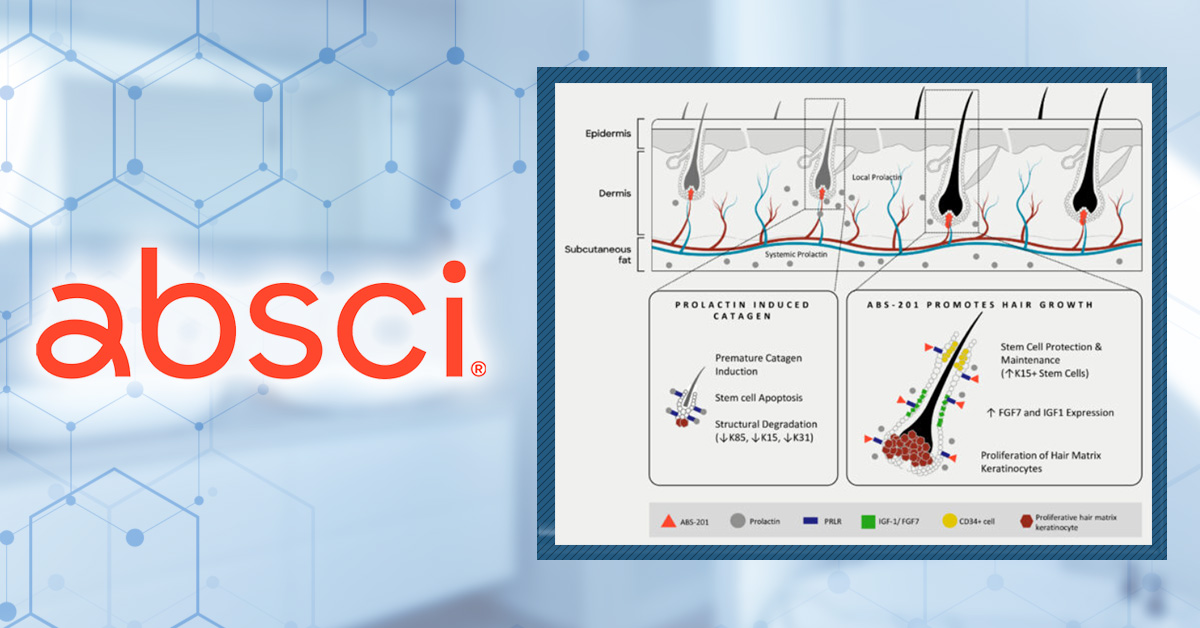
Want help with your hair regrowth journey?
Get personalized support, product recommendations, video calls, and more from our researchers, trichologists, and PhD's dedicated to getting you the best possible outcomes.
Learn MoreArticle Summary
ABS-201 is an investigational antibody designed to block the prolactin receptor rather than target DHT directly. In our interview with Absci, the company outlined why it believes sustained receptor blockade could support hair growth. We examine that hypothesis, the early laboratory and animal findings, and what the ongoing human trial must show before ABS-201 can be considered an effective treatment for pattern hair loss.
Full Article
For decades, the medical treatment of androgenic alopecia (AGA), or male and female pattern hair loss, has largely centered on two strategies:
- Stimulating follicles with minoxidil
- Reducing the activity of dihydrotestosterone (DHT) with drugs such as finasteride
Those approaches can help many people, but neither works for everyone. It’s also clear that some miniaturized follicles stop producing cosmetically meaningful hairs, even when androgen signaling is reduced. This has created demand for treatments that target other aspects of the hair-loss process: inflammation, fibrosis, growth-factor signaling, stem-cell activity, and hair-cycle regulation.
ABS-201 represents one of the more unusual attempts. Rather than targeting DHT, 5-alpha-reductase, or the androgen receptor directly, ABS-201 is designed to block the prolactin receptor (PRLR). ABS-201 is a monoclonal antibody. It is a laboratory-made protein designed to bind to a specific target (in this case, the prolactin receptor). By binding to that receptor, ABS-201 aims to prevent prolactin from activating it.
That target may initially sound surprising. Prolactin is best known for its role in lactation, but it is also active in the skin and hair follicles. Laboratory research suggests that prolactin signaling can promote the transition of follicles into catagen, the regressive phase of the hair cycle, and can inhibit hair shaft growth under experimental conditions.[1]Jin, S-E., Kim, J., Sung, J-H. (2024). Recent approaches of antibody therapeutics in androgenetic alopecia. Frontiers in Pharmacology. 15(1434961). Available at: … Continue reading
The question is whether blocking this pathway can meaningfully reverse hair follicle miniaturization in humans with AGA. At present, the answer is not known. ABS-201 is in an early Phase 1/2a trial, and the publicly available human data so far are primarily preliminary safety and pharmacokinetic data rather than proof of hair regrowth.[2]absci. (no date). Absci Announces Positive Interim Phase 1 Data from the HEADLINE™ Trial of ABS-201, a Novel Antibody Targeting the Prolactin Receptor (PRLR). Absci. Available at: … Continue reading
To understand the rationale and its limitations, we interviewed Absci’s founder (we made a video you can watch here). He shared the company’s interpretation of earlier anti-PRLR research, preliminary experiments using human scalp tissue, and its expectations for the ongoing ABS-201 trial. In this article, we examine those claims alongside the published evidence and the questions that remain unanswered.
The basic idea: block the receptor, not the hormone
Hormones and signaling proteins influence cells by binding to receptors, molecular “docking stations”, on or within cells. When prolactin binds the prolactin receptor, it activates downstream signaling pathways that can alter cell behavior.
ABS-201 is a monoclonal antibody designed to bind the prolactin receptor (PRLR). In principle, an antibody that occupies the receptor and prevents productive prolactin signaling could dampen prolactin-related activity in tissues that express PRLR, including the hair follicle. Human scalp follicles have been shown to express both prolactin and PRLR, supporting the idea that local prolactin signaling may influence follicle biology.[3]Foitzik, K., Krause, K., Conrad, F., Nakamura, M., Funk, W., Paus, R. (2006). Human Scalp Hair Follicles Are Both a Target and a Source of Prolactin, which Serves as an Autocrine and/or Paracrine … Continue reading
ABS-201 is not designed to lower circulating prolactin concentrations in the way dopamine agonists can be used to treat certain forms of hyperprolactinemia. Instead, it is intended to interfere with signaling at the prolactin receptor itself.
That makes the proposed hair-loss mechanism distinct from that of finasteride or dutasteride. Those drugs reduce conversion of testosterone to DHT, thereby addressing an established driver of follicular miniaturization in genetically susceptible scalp regions. ABS-201 instead aims to alter a separate signaling pathway that may affect hair-cycle regulation. In cultured human scalp follicles, prolactin exposure has been associated with reduced hair shaft elongation, reduced keratinocyte proliferation, increased apoptosis, and earlier entry into catagen, the regressive phase of the hair cycle.[4]Foitzik, K., Krause, K., Conrad, F., Nakamura, M., Funk, W., Paus, R. (2006). Human Scalp Hair Follicles Are Both a Target and a Source of Prolactin, which Serves as an Autocrine and/or Paracrine … Continue reading,[5]Grymowicz, M., Rudnicka, E., Podfigurna, A., Napierala, P., Smolarczyk, R., Smolarczyk, K., Meczekalski, B. (2020). Hormonal Effects on Hair Follicles. International Journal of Molecular Sciences. … Continue reading
It is important not to overstate this distinction. AGA remains, by definition and by extensive evidence, an androgen-responsive condition. A prolactin-receptor antibody should not yet be framed as proving that prolactin is “upstream of DHT”, or as replacing the central role of androgen signaling in pattern hair loss. That proposed hierarchy remains a hypothesis, not a settled conclusion.
Absci’s founder did not reject the role of androgens when we spoke. Instead, he proposed that prolactin might interact with androgen signaling in the hair follicle.
“Androgens are a part of it, but from what we’re seeing, prolactin actually sits potentially upstream of the androgen receptor.”
In other words, Absci thinks prolactin may influence how hair follicles respond to androgens. The company says its laboratory findings support that possibility, but it has not been shown that prolactin drives androgen signaling in people with AGA, or that blocking prolactin could replace the need to target DHT.
Why prolactin is relevant to hair follicles
The case for studying PRLR in hair loss did not begin with ABS-201. Human scalp follicles can both express prolactin and respond to it, meaning that the follicle may be both a source and a target of local prolactin signaling. In organ-culture experiments, prolactin and its receptor were more strongly expressed during catagen, the phase in which a follicle regresses after active growth.[6]Jin, S-E., Kim, J., Sung, J-H. (2024). Recent approaches of antibody therapeutics in androgenetic alopecia. Frontiers in Pharmacology. 15(1434961). Available at: … Continue reading
In the same line of research, exposure of isolated human scalp follicles to relatively high concentrations of prolactin reduced hair-shaft elongation, reduced proliferation of hair-matrix keratinocytes, increased markers of apoptosis (programmed cell death), and promoted premature entry into catagen.[7]Foitzik, K., Krause, K., Conrad, F., Nakamura, M., Funk, W., Paus, R. (2006). Human scalp hair follicles are both a target and a source of prolactin, which serves as an autocrine and/or paracrine … Continue reading
That does not mean that every person with AGA has elevated serum prolactin, nor does it establish that prolactin is the dominant cause of pattern hair loss. In fact, clinical literature on hyperprolactinemia and diffuse hair loss is mixed; moderately elevated circulating prolactin does not appear to be a universal explanation for hair shedding.[8]Lutz, G. (2012). Hair loss and hyperprolactinemia in women. Dermato Endocrinology. 4(1). 65-71. Available at: https://doi.org/10.4161/derm.19472
One argument for investigating PRLR in AGA concerns local rather than systemic signaling. A person may not need dramatically abnormal blood prolactin for local PRLR signaling to influence hair follicle biology.
In our interview, Absci’s founder emphasized the distinction between prolactin circulating in the blood and prolactin produced locally in tissues. As he put it:
“You could have normal systemic levels of prolactin that come from the pituitary, but an increased level of prolactin within the scalp”
This could help explain why a normal blood test would not necessarily rule out local PRLR signaling. It does not, however, demonstrate that excess local prolactin causes AGA or identify which patients might benefit from blocking its receptor.
In a small ex vivo study using scalp tissue from two healthy women, estrogen increased prolactin and prolactin receptor expression in selected regions of the skin and hair follicles. The researchers also found increased expression of both genes in cultured outer root sheath cells. But the study did not test whether these changes affected hair growth or whether blocking PRLR would alter estrogen’s effects. It therefore complicates a simple “more PRLR means more hair loss” explanation without telling us whether a PRLR-blocking antibody would help or harm people with AGA.[9]Langan, E.A., Ramot, Y., Hanning, A., et al. (2010). Thyrotropin-releasing hormone and oestrogen differentially regulate prolactin and prolactin receptor expression in female human skin and hair … Continue reading
The animal data that sparked interest
Much of the excitement around prolactin-receptor blockade in hair loss stems from preclinical work on a related anti-PRLR antibody, originally developed within Bayer’s research program and subsequently licensed for development as HMI-115. The treatment has been reported to produce unusually striking regrowth in stump-tailed macaques, a primate species often used in AGA research because some animals develop patterned scalp hair loss that resembles aspects of human male- and female-pattern hair loss.[10]Ekkehard, M., Joachim, S., Jorn, K., Christiane, O. (2017). Prolactin receptor antibody for male and female pattern hair loss. World Intellectual Property Organization. Available at: … Continue reading Reports describe an increase in terminal hair growth and persistent changes after treatment withdrawal.
The macaque findings are genuinely intriguing for two reasons. First, primate data are more relevant to human hair biology than standard mouse studies. Mouse hair follicles cycle in synchronized waves across large areas of skin; human scalp follicles cycle asynchronously. A drug that generates a dramatic result in mice can therefore fail to translate to human pattern hair loss.
Second, the reported durability of the macaque response, if confirmed in fully published data, would be particularly notable. AGA is chronic and progressive, and most established treatments require continued use to preserve their benefits. A therapy that triggered durable restoration of follicular growth capacity after dosing stopped would challenge the usual treatment model.
However, animal findings, no matter how dramatic, are not clinical proof. Differences in species, dosing, disease biology, hair-cycle timing, study design, and measurement methods can all affect translation. Until robust human trial data are available, the primate studies should be treated as a reason for cautious interest, not a prediction of equivalent results in people.
From HMI-115 to ABS-201
HMI-115 is another anti-PRLR monoclonal antibody currently being developed by Hope Medicine. In a small open-label Phase 1b study, the company reported that 12 male participants experienced a mean increase of 14 non-vellus hairs per cm2 after 24 weeks of treatment.[11]Hope Medicine. (2024). Positive Outcome from a Phase Ib Study in Australia Treating Patients with Androgenic Alopecia. Hope Medicine. Available at: https://www.hopemedinc.com/company-release-37 … Continue reading
The result was encouraging enough to justify further research, but it cannot establish efficacy on its own. The study was small, open-label, and lacked a placebo control. Hair counts can be affected by photography, hair-clipping technique, image analysis, the definition of “non-vellus” hair, natural cycling variation, and regression toward the mean. Without randomization and a placebo comparison, it is impossible to know how much of the observed change was due to the drug.
HMI-115 nonetheless helped validate PRLR as a clinically testable hair-loss target and advanced to a larger randomized Phase 2 evaluation.
ABS-201 targets the same receptor, but is a different antibody developed by Absci, not a new name for HMI-115. The company says it used generative AI and experimental validation to engineer ABS-201 with properties intended to support infrequent dosing. In its interim Phase 1 update, Absci estimated a half-life of at least 65 days following a single intravenous dose, suggesting the possibility of two or three injections over six months if future studies confirm the pharmacology and clinical benefit.[12]Absci. (2026). Absci Announces Positive Interim Phase 1 Data from the HEADLINE™ Trial of ABS-201, a Novel Antibody Targeting the Prolactin Receptor (PRLR). Absci. Available at: … Continue reading
That is a potentially attractive practical profile. Pattern hair loss treatments often struggle with adherence: topical therapies can be burdensome, and daily tablets may be unacceptable to some patients. An intermittently administered antibody could be convenient, but convenience only matters if the therapy ultimately proves safe, effective, and appropriately priced.
Absci’s central argument is pharmacological rather than simply practical. Its founder told us the company modeled receptor occupancy (the proportion of prolactin receptors bound by the drug at a given dose and time point) using publicly disclosed pharmacokinetic data for HMI-115 and estimated that occupancy in the earlier human study rose to roughly 70-73% before fluctuating.
Absci contrasts this with its prediction that ABS-201 can maintain PRLR occupancy above 90% for approximately six months. It proposes that insufficiently sustained blockage could help explain why HMI-115’s early human hair-count findings were more modest than the macaque results. These are company-generated estimates and an explanation to be tested, not proof that HMI-115 participants were underdosed.
Why receptor occupancy may matter
A central part of Absci’s rationale for ABS-201 is receptor occupancy.
In our interview, Absci described a hypothesis that anti-PRLR treatment may need to maintain very high receptor occupancy, reportedly above 90%, to reduce prolactin signaling sufficiently to produce meaningful hair-growth effects. The company has publicly described its ABS-201 dose selection as targeting predicted PRLR occupancy above 90% and has contrasted this with the lower estimated occupancy for HMI-115.[13]Absci. (no date). ABS-201™ for Androgenetic Alopecia. Absci. Available at: https://www.absci.com/abs-201-case-study/ (Accessed: September 2026) The founder’s concern is that partial blockade might leave substantial signaling intact.
“Even if you’re at 60, 70, even 80% receptor occupancy, you could still have full activity of the actual pathway until you block it substantially.”
Whether this degree of signaling reserve operates in human AGA-affected follicles, and whether 90% is the relevant threshold, remains to be established.
The general pharmacology is plausible. Drug binding and biological effect do not always move in a simple, one-to-one fashion. Some biological systems have what pharmacologists call receptor reserve or signaling reserve, meaning that activating a fraction of the available receptors can still generate a substantial downstream response because cellular signaling pathways amplify the original signal.[14]Berg, K.A., Clarke, W.P. (2018). Making Sense of Pharmacology: Inverse Agonism and Functional Selectivity. International Journal of Neuropsychopharmacology. 21(10). 962-977. Available at: … Continue reading In such a system, partially blocking a receptor may reduce signaling without being sufficient to produce a clinically visible effect.
Think of it like a faucet rather than a light switch. Turning the tap halfway off reduces water flow, but it may still leave enough water running to fill a container. If prolactin-receptor signaling in a miniaturizing follicle has a similar degree of biological reserve, a treatment may need to block a large number of receptors before downstream signals involved in follicle regression are meaningfully reduced.
However, the key uncertainty is the number itself. Public academic literature does not currently establish that human scalp follicles require 90% PRLR occupancy for hair regrowth, nor does it establish that 60-70% occupancy is inadequate. The proposed threshold appears to be a company-specific, model-informed development assumption rather than a clinically validated cutoff for AGA.
This also means the suggestion that earlier HMI-115 studies were “underdosed” should be treated with caution. It is one possible explanation for the modest, uncontrolled Phase 1b signal reported with HMI-115, but it is not a proven conclusion. Small sample size, absence of a placebo group, dose exposure, treatment duration, participant selection, hair-counting methodology, and intrinsic differences between antibodies could all contribute to the results.
For ABS-201, the most informative future analysis would connect four pieces of evidence:
- Drug exposure over time
- Estimated or measured PRLR engagement
- Evidence that downstream PRLR signaling is being altered
- Placebo-adjusted changes in hair count, width, and standardized photography
The stem cell link
If high and sustained PRLR blockade does matter, the next question is which biological process it might alter within the follicle. Absci’s leading explanation centers on follicular stem and progenitor cells.
Hair follicles contain epithelial stem-cell populations, including cells in the bulge region. During normal cycling, stem cells and their progeny participate in rebuilding the lower follicle and initiating a new anagen (growth) phase. In AGA, researchers have suggested that stem cells may be retained while their conversion into downstream progenitor populations becomes impaired. In other words, the follicle may retain some regenerative “hardware” but struggle to activate it effectively.
This concept has scientific support. Experimental studies have linked androgen signaling and altered Wnt/beta catenin signaling to impaired hair-follicle stem cell differentiation in AGA.[15]Kretzschmar, K., Cottle, D.L., Schweiger, P.J., Watt, F.M. (2015). The Androgen Receptor Antagonizes Wnt/β-Catenin Signaling in Epidermal Stem Cells. Journal of Investigative Dermatology. 135(11). … Continue reading
Absci’s proposed model is that PRLR blockade may help sustain anagen, reduce catagen-associated signaling, and restore a more growth-permissive environment for follicular stem and progenitor cells. In our interview, Absci presented preliminary experiments using cultured human scalp tissue. In samples from three men with AGA, the company compared untreated tissue with tissue exposed to prolactin, ABS-201, or both. It reported greater hair-shaft growth and more follicles remaining in the growth phase after exposure to ABS-201 over a three-day period. Added prolactin had the opposite effect, while the combined treatment appeared to counteract it.
Absci also described ex vivo findings involving K15-positive stem-cell markers, CD34-positive progenitor-cell markers, and collagen XVII. The company interprets these observations as suggesting that PRLR blockade could protect or improve the follicular stem cell environment. But marker changes over several days cannot establish that an injection restores that environment, reverses miniaturization, or produces durable regrowth in a patient.
We asked whether Absci had tested non-balding scalp tissue alongside the AGA-affected samples. Its founder confirmed that it had not.
Without that comparator, these experiments cannot tell us whether the response is distinctive to balding follicles.
Terms such as “stem-cell activation,” “follicle regeneration,” and “reversal of miniaturization” can sound more definitive than the current evidence warrants. Ex vivo human scalp experiments are useful because they use human tissue, but they do not replicate the full biology of chronic pattern hair loss in a living person. They cannot, on their own, establish that a treatment will produce durable cosmetic improvement in a large, diverse patient population.
What the ABS-201 trial is testing
The ongoing HEADLINE study, registered as NCT07317544, is a randomized, double-blind, placebo-controlled Phase 1/2a trial of ABS-201 in healthy adults with and without AGA. The study is designed to enroll up to 227 participants across single- and multiple-ascending-dose cohorts.[16]National Library of Medicine. (2026). Study of ABS-201 Evaluating Single and Multiple Ascending Doses in Adults With and Without Androgenetic Alopecia. National Library of Medicine. Available at: … Continue reading
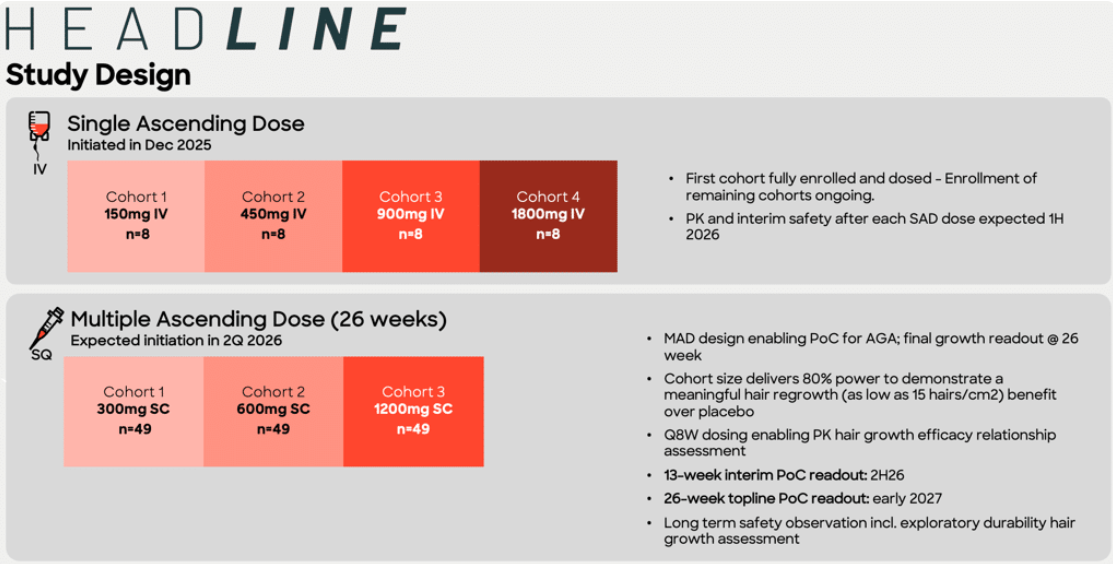
Absci’s study design.[17]Absci. (no date). Absci’s HEADLINE Study Design. Absci. Available at: https://www.absci.com/abs-201-case-study/ (Accessed: September 2026)
The early single-ascending-dose portion tested intravenous doses of 150 mg, 450 mg, 900 mg, and 1,800 mg. In Absci’s June 2026 update, 32 healthy adults had been enrolled across four cohorts. The company reported no serious adverse events at the data cutoff. Treatment-related adverse events were described as mild, with headache the most commonly reported event overall.
These findings are preliminary and blinded, which means they cannot yet tell us whether ABS-201 is more effective than, or even meaningfully different from, placebo for hair regrowth.
The multiple-ascending dose component is evaluating subcutaneous doses of 300 mg, 600 mg, and 1,200 mg in participants with AGA. The trial includes the following objective endpoints:
- Target area hair count
- Target area hair width
- Hair darkness or pigmentation assessed with central image analysis
- Participant self-assessment
- Investigator global assessment
- Pharmacokinetic, pharmacodynamic, and immunogenicity measures
These measures matter because hair count alone does not tell the complete cosmetic story. A person may grow more hair, but if that hair remains very thin or lightly pigmented, the visual benefit may be limited. Conversely, increases in shaft diameter and pigmentation can materially contribute to perceived density.
Absci plans to report an exploratory 13-week readout in December 2026. In our recent interview, its founder described this as a “directional” assessment rather than a definitive efficacy test. He said the company had not set a firm hair-count target for that readout, but hoped it would show a path toward an increase of more than 30 hairs/cm2 at 26 weeks. Participants will also be followed for a year after treatment to assess how any changes evolve over time.
Trial-design questions worth watching
The presence of placebo control, blinding, objective imaging, and multiple hair endpoints makes the HEADLINE trial substantially more informative than an uncontrolled before-and-after study. Still, early trials can be difficult to interpret, especially in the context of hair loss.
One issue is prior treatment washout. The trial excludes topical minoxidil use within 3 months of screening; oral minoxidil and other stimulators within 6 months; finasteride within 6 months; and dutasteride within 12 months.
These washout periods are not inherently inappropriate. They are common attempts to reduce confounding. But they leave interpretive questions. People who discontinue minoxidil may experience delayed shedding and subsequent changes in the hair cycle. People stopping anti-androgen therapy may also continue to change for months after discontinuation. If these dynamics are unevenly distributed between the treatment and placebo groups, particularly in a modestly sized trial, they can complicate hair-count results.
A second issue is the definition of hairs counted by imaging systems. In AGA trials, the threshold chosen to classify a hair as non-vellus or terminal can materially influence apparent efficacy. Readers should look not only for the headline change in hairs/cm2 but also for the pre-specified diameter threshold, baseline hair characteristics, changes in width, standardized photography methods, and placebo-adjusted results.
A third issue is the ascertainment of safety. PRLR is not a scalp-exclusive target, and systematic anti-PRLR therapy may affect tissues beyond the hair follicle. A credible program needs more than a low count of voluntarily reported adverse events. It should transparently describe how adverse events were elicited, categorized, adjudicated, and followed up, as well as how laboratory and hormonal parameters were monitored and how pregnancy-related risks were managed.
During our interview, we asked specifically how adverse events would be elicited and whether outcomes relevant to reproductive health would be actively assessed. The founder discussed the rigor of the clinical team and the blinded, placebo-controlled design, but did not provide details on adverse-event collection methods or a list of reproductive endpoints in his answer. That does not imply that the trial lacks appropriate monitoring, but it does mean that we should be on the lookout for them in the protocol and, when available, in the results.
We also asked how Absci intends to present its interim results, given how difficult hair-loss trial announcements can be to interpret when they emphasize selective subgroups or changes from baseline without a clear placebo comparison. The founder responded:
“I can promise you that we will have a non-controversial data cut. It’s going to be clear-cut data that will be easy to interpret.”
That is a useful commitment, but its value will depend on the actual release of interpretable treatment-versus-placebo results, endpoint definitions, sample sizes, missing-data information, and safety findings.
What could success look like for Absci?
The best outcome for ABS-201 would not simply be “more hairs than baseline”. A convincing Phase 2 signal would include several converging features:
- A clear placebo-adjusted improvement in target area hair count
- Supporting improvements in hair width and clinically meaningful photography
- Consistent benefit across relevant subgroups, including male and female participants where adequately powered
- A plausible dose-response relationship
- Evidence of durable benefit even after stopping
- A safety profile that remains acceptable at doses needed to produce efficacy
- Reporting of missing data, withdrawals, prior-treatment exposure, adverse events, and predefined analysis methods.
Final Thoughts
ABS-201 is one of the more scientifically interesting drugs in the current AGA pipeline because it targets a pathway outside the conventional DHT/minoxidil framework. Research in human hair follicles, mice, and primates supports the idea that PRLR signaling can influence hair cycling and regression.
But plausibility is not the same as proof. The early ABS-201 safety data are reassuring, in a limited sense, in that a small, blinded, single-dose study had not identified any serious safety signals as of the company’s June 2026 update. However, they do not yet demonstrate that the drug regrows hair.
Our interview made Absci’s hypothesis more specific: the company believes that sustained, high-level PRLR blockade could affect hair cycling and the follicular stem-cell environment in ways earlier anti-PRLR treatment may not have achieved. It also clarified what we still cannot know, from the absence of non-balding comparator tissue in the ex vivo experiments to the unvalidated human receptor-occupancy threshold. The placebo-controlled ABS-201 results will be far more informative than either a compelling mechanism or striking macaque photographs. Until then, ABS-201 remains a promising research question, not a proven hair-loss treatment.
References[+]
References ↑1, ↑6 Jin, S-E., Kim, J., Sung, J-H. (2024). Recent approaches of antibody therapeutics in androgenetic alopecia. Frontiers in Pharmacology. 15(1434961). Available at: https://doi.org/10.3389/fphar.2024.1434961 ↑2 absci. (no date). Absci Announces Positive Interim Phase 1 Data from the HEADLINE™ Trial of ABS-201, a Novel Antibody Targeting the Prolactin Receptor (PRLR). Absci. Available at: https://investors.absci.com/news-releases/news-release-details/absci-announces-positive-interim-phase-1-data-headlinetm-trial ↑3, ↑4 Foitzik, K., Krause, K., Conrad, F., Nakamura, M., Funk, W., Paus, R. (2006). Human Scalp Hair Follicles Are Both a Target and a Source of Prolactin, which Serves as an Autocrine and/or Paracrine Promoter of Apoptosis-Driven Hair Follicle Regression. The American Journal of Pathology. 168(3). 748-756. Available at: https://doi.org/10.2353/ajpath.2006.050468 ↑5 Grymowicz, M., Rudnicka, E., Podfigurna, A., Napierala, P., Smolarczyk, R., Smolarczyk, K., Meczekalski, B. (2020). Hormonal Effects on Hair Follicles. International Journal of Molecular Sciences. 21(15). 5342. Available at: https://doi.org/10.3390/ijms21155342 ↑7 Foitzik, K., Krause, K., Conrad, F., Nakamura, M., Funk, W., Paus, R. (2006). Human scalp hair follicles are both a target and a source of prolactin, which serves as an autocrine and/or paracrine promoter of apoptosis-driven hair follicle regression. American Journal of Pathology. 168(3). 748–756. Available at: https://doi.org/10.2353/ajpath.2006.050468 ↑8 Lutz, G. (2012). Hair loss and hyperprolactinemia in women. Dermato Endocrinology. 4(1). 65-71. Available at: https://doi.org/10.4161/derm.19472 ↑9 Langan, E.A., Ramot, Y., Hanning, A., et al. (2010). Thyrotropin-releasing hormone and oestrogen differentially regulate prolactin and prolactin receptor expression in female human skin and hair follicles in vitro. British Journal of Dermatology. 162(5), 1127–1131. Available at: https://doi.org/10.1111/j.1365-2133.2010.09676.x ↑10 Ekkehard, M., Joachim, S., Jorn, K., Christiane, O. (2017). Prolactin receptor antibody for male and female pattern hair loss. World Intellectual Property Organization. Available at: https://patentimages.storage.googleapis.com/56/cc/a3/7d3ac32f1537b2/WO2019011719A1.pdf (Accessed: 23 April 2023) ↑11 Hope Medicine. (2024). Positive Outcome from a Phase Ib Study in Australia Treating Patients with Androgenic Alopecia. Hope Medicine. Available at: https://www.hopemedinc.com/company-release-37 (Accessed: September 2026) ↑12 Absci. (2026). Absci Announces Positive Interim Phase 1 Data from the HEADLINE™ Trial of ABS-201, a Novel Antibody Targeting the Prolactin Receptor (PRLR). Absci. Available at: https://investors.absci.com/news-releases/news-release-details/absci-announces-positive-interim-phase-1-data-headlinetm-trial (Accessed: September 2026) ↑13 Absci. (no date). ABS-201™ for Androgenetic Alopecia. Absci. Available at: https://www.absci.com/abs-201-case-study/ (Accessed: September 2026) ↑14 Berg, K.A., Clarke, W.P. (2018). Making Sense of Pharmacology: Inverse Agonism and Functional Selectivity. International Journal of Neuropsychopharmacology. 21(10). 962-977. Available at: https://doi.org/10.1093/ijnp/pyy071 ↑15 Kretzschmar, K., Cottle, D.L., Schweiger, P.J., Watt, F.M. (2015). The Androgen Receptor Antagonizes Wnt/β-Catenin Signaling in Epidermal Stem Cells. Journal of Investigative Dermatology. 135(11). 2753-2763. Available at: https://doi.org/10.1038/jid.2015.242 ↑16 National Library of Medicine. (2026). Study of ABS-201 Evaluating Single and Multiple Ascending Doses in Adults With and Without Androgenetic Alopecia. National Library of Medicine. Available at: https://clinicaltrials.gov/study/NCT07317544 (Accessed: September 2026) ↑17 Absci. (no date). Absci’s HEADLINE Study Design. Absci. Available at: https://www.absci.com/abs-201-case-study/ (Accessed: September 2026) Want help with your hair regrowth journey?
Get personalized support, product recommendations, video calls, and more from our researchers, trichologists, and PhD's dedicated to getting you the best possible outcomes.
Learn More
Sarah King, PhD
Dr. Sarah King is a researcher & writer who holds a BSc in Medical Biology, an MSc in Forensic Biology, and a Ph.D. in Molecular and Cellular Biology. While at university, Dr. King’s research focused on cellular aging and senescence through NAD-dependent signaling – along with research into prostaglandins and their role in hair loss. She is a co-author on several upcoming manuscripts with the Perfect Hair Health team.
"... Can’t thank @Rob (PHH) and @sanderson17 enough for allowing me to understand a bit what was going on with me and why all these [things were] happening ... "

 — RDB, 35, New York, U.S.A.
"... There is a lot improvement that I am seeing and my scalp feel alive nowadays... Thanks everyone. "

 — Aayush, 20’s, Boston, MA
"... I can say that my hair volume/thickness is about 30% more than it was when I first started."

 — Douglas, 50’s, Montréal, Canada
Want help with your hair regrowth journey?
Get personalized support, product recommendations, video calls, and more from our researchers, trichologists, and PhD's dedicated to getting you the best possible outcomes.
Join Now - Mission Statement