- About
- Mission Statement
Education. Evidence. Regrowth.
- Education.
Prioritize knowledge. Make better choices.
- Evidence.
Sort good studies from the bad.
- Regrowth.
Get bigger hair gains.
Team MembersPhD's, resarchers, & consumer advocates.
- Rob English
Founder, researcher, & consumer advocate
- Research Team
Our team of PhD’s, researchers, & more
Editorial PolicyDiscover how we conduct our research.
ContactHave questions? Contact us.
Before-Afters- Transformation Photos
Our library of before-after photos.
- — Jenna, 31, U.S.A.
I have attached my before and afters of my progress since joining this group...
- — Tom, 30, U.K.
I’m convinced I’ve recovered to probably the hairline I had 3 years ago. Super stoked…
- — Rabih, 30’s, U.S.A.
My friends actually told me, “Your hairline improved. Your hair looks thicker...
- — RDB, 35, New York, U.S.A.
I also feel my hair has a different texture to it now…
- — Aayush, 20’s, Boston, MA
Firstly thank you for your work in this field. I am immensely grateful that...
- — Ben M., U.S.A
I just wanted to thank you for all your research, for introducing me to this method...
- — Raul, 50, Spain
To be honest I am having fun with all this and I still don’t know how much...
- — Lisa, 52, U.S.
I see a massive amount of regrowth that is all less than about 8 cm long...
Client Testimonials150+ member experiences.
 Scroll DownPopular Treatments
- Treatments
Popular treatments. But do they work?
- Finasteride
- Oral
- Topical
- Dutasteride
- Oral
- Topical
- Mesotherapy
- Minoxidil
- Oral
- Topical
- Ketoconazole
- Shampoo
- Topical
- Low-Level Laser Therapy
- Therapy
- Microneedling
- Therapy
- Platelet-Rich Plasma Therapy (PRP)
- Therapy
- Scalp Massages
- Therapy
 More
IngredientsTop-selling ingredients, quantified.
- Saw Palmetto
- Redensyl
- Melatonin
- Caffeine
- Biotin
- Rosemary Oil
- Lilac Stem Cells
- Hydrolyzed Wheat Protein
- Sodium Lauryl Sulfate
 More
ProductsThe truth about hair loss "best sellers".
- Minoxidil Tablets
Xyon Health
- Finasteride
Strut Health
- Hair Growth Supplements
Happy Head
- REVITA Tablets for Hair Growth Support
DS Laboratories
- FoliGROWTH Ultimate Hair Neutraceutical
Advanced Trichology
- Enhance Hair Density Serum
Fully Vital
- Topical Finasteride and Minoxidil
Xyon Health
- HairOmega Foaming Hair Growth Serum
DrFormulas
- Bio-Cleansing Shampoo
Revivogen MD
- more
Key MetricsStandardized rubrics to evaluate all treatments.
- Evidence Quality
Is this treatment well studied?
- Regrowth Potential
How much regrowth can you expect?
- Long-Term Viability
Is this treatment safe & sustainable?
Free Research- Free Resources
Apps, tools, guides, freebies, & more.
- Free CalculatorTopical Finasteride Calculator
- Free Interactive GuideInteractive Guide: What Causes Hair Loss?
- Free ResourceFree Guide: Standardized Scalp Massages
- Free Course7-Day Hair Loss Email Course
- Free DatabaseIngredients Database
- Free Interactive GuideInteractive Guide: Hair Loss Disorders
- Free DatabaseTreatment Guides
- Free Lab TestsProduct Lab Tests: Purity & Potency
- Free Video & Write-upEvidence Quality Masterclass
- Free Interactive GuideDermatology Appointment Guide
- More
Articles100+ free articles.
-
GHK-Cu for Hair Growth: Does It Actually Work?
-
Hims Hair Growth Reviews: The Pros, Cons, and Real Results
-
Keeps Review: The Truth About Their Hair Loss Treatments?
-
10 Best DHT-Blocking Shampoos
-
Topical Finasteride: The Best Dosage for Maximizing Regrowth and Minimizing Side Effects
-
Microneedling For Hair Loss: What’s The Best Needle Size?
-
Natural vs. Pharmaceutical DHT Blockers: Ranked
-
Redensyl, Capixyl, & Procapil (RCP) For Natural Hair Regrowth? (Scientific Review)
PublicationsOur team’s peer-reviewed studies.
- Microneedling and Its Use in Hair Loss Disorders: A Systematic Review
- Use of Botulinum Toxin for Androgenic Alopecia: A Systematic Review
- Conflicting Reports Regarding the Histopathological Features of Androgenic Alopecia
- Self-Assessments of Standardized Scalp Massages for Androgenic Alopecia: Survey Results
- A Hypothetical Pathogenesis Model For Androgenic Alopecia:Clarifying The Dihydrotestosterone Paradox And Rate-Limiting Recovery Factors
Menu- AboutAbout
- Mission Statement
Education. Evidence. Regrowth.
- Team Members
PhD's, resarchers, & consumer advocates.
- Editorial Policy
Discover how we conduct our research.
- Contact
Have questions? Contact us.
- Before-Afters
Before-Afters- Transformation Photos
Our library of before-after photos.
- Client Testimonials
Read the experiences of members
Before-Afters/ Client Testimonials- Popular Treatments
-
ArticlesGHK-Cu for Hair Growth: Does It Actually Work?
First Published Oct 29 2026Last Updated Oct 29 2026Natural Remedies Researched & Written By:Dr. Michael Williams
 Reviewed By:Cassie Hopton, PhD
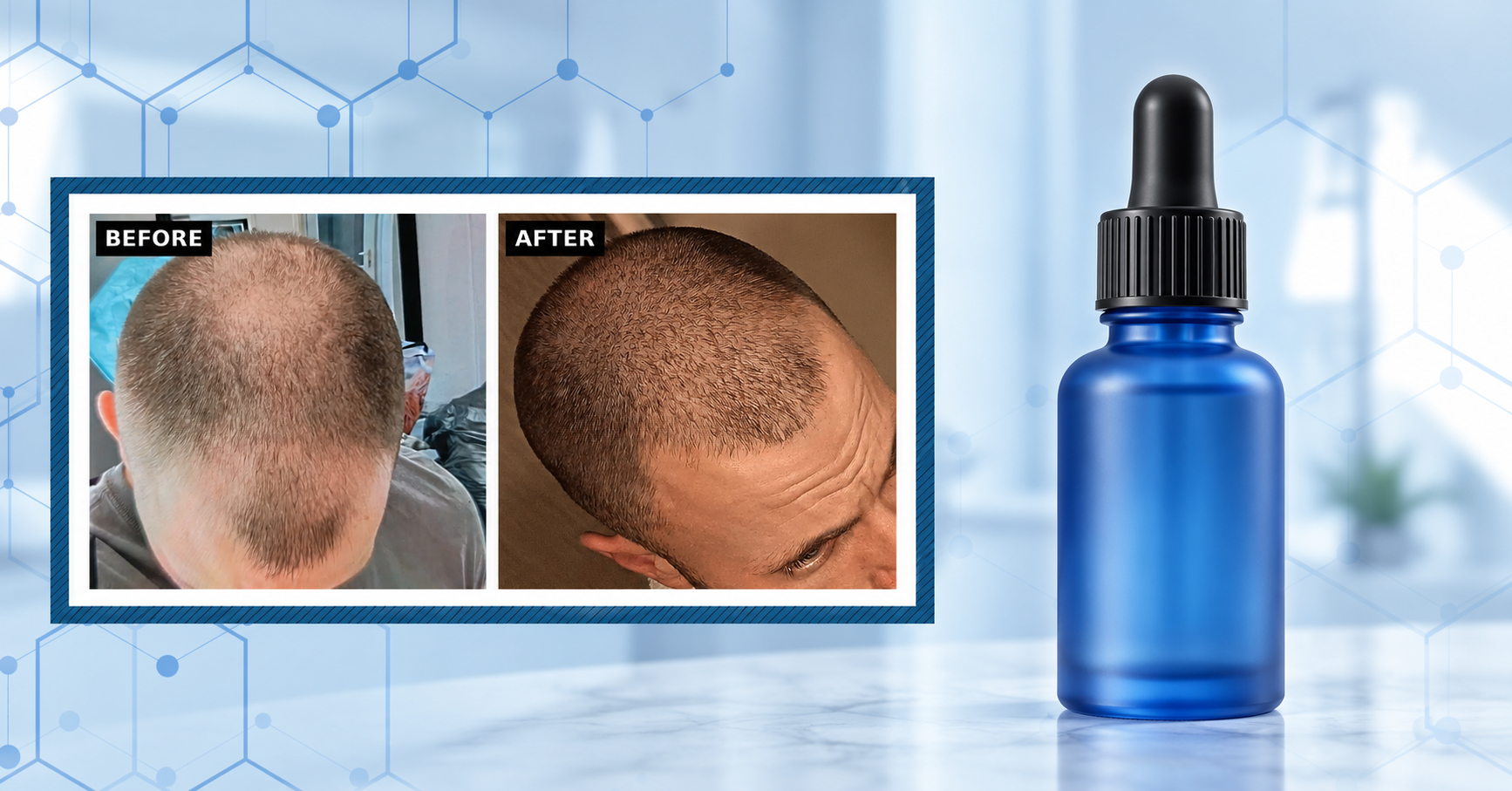
Want help with your hair regrowth journey?
Get personalized support, product recommendations, video calls, and more from our researchers, trichologists, and PhD's dedicated to getting you the best possible outcomes.
Learn MoreArticle Summary
GHK-Cu has become a popular addition to hair loss routines. Across the internet, people report less shedding, thicker hair, and regrowth after implementing copper peptide serums. While some of these anecdotal reports are compelling, the clinical evidence is much narrower than the online discussion suggests: no published trial has tested GHK-Cu alone for pattern hair loss in humans. So, why are people getting noticeable results? There are some notable mechanisms underpinning the observed benefits: tissue repair, oxidative stress, and inflammatory signaling, three processes that may impact follicle health and growth. The question is: do copper peptides produce a biological effect? Here’s what we know, what remains theoretical, and how to evaluate a GHK-Cu product without confusing plausible mechanisms with proven results.
Full Article
Copper peptides are a skincare staple. In recent years, they’ve emerged into the hair loss sphere. On Reddit, peptide forums, and social media, people describe fuller-looking hair, less shedding, and improvements at the hairline. You can find before-and-after photos, elaborate protocols, and plenty of confident claims.
Before and after shared by u/cslanghor on r/tressless.
But is GHK-Cu for hair growth really backed by research?
GHK-Cu has been studied for decades. Researchers have investigated its effects on collagen, tissue repair, antioxidant activity, and inflammation. But when the question becomes “Does topical GHK-Cu regrow hair?”, the evidence becomes less clear.
There aren’t any published human trials that answer that exact question. But, the absence of evidence doesn’t necessarily equal the evidence of absence. To explain why copper peptides seem to support hair growth in some individuals anecdotally, we need to explore the mechanisms of GHK-Cu, its activities in the body, and how this impacts hair health and growth.
To understand why the ingredient is still interesting, we need to examine the biology of follicle miniaturization, especially the roles of oxidative stress and inflammation, and then see where GHK-Cu might fit.
GHK-Cu Serum From our partners at UloInterested in 3% GHK-Cu Serum?
Rx-strength 3% copper peptide, compounded without alcohol or propylene glycol. Prescribed 100% online. Choose a multi-month plan and get up to 30% plus a free gift bundle.
Free full-size gifts with 3-month+ plans Prescribed online, shipped to your door 3% GHK-CuAlcohol and PG free
*Only available in the U.S. Prescription requires an online medical consultation at no extra cost. Off-label products are not endorsed by the FDA. Free gifts included with select multi-month plans while supplies last. Ulo is a partner of Perfect Hair Health; we may earn a commission on purchases.
Is There Clinical Evidence That GHK-Cu Regrows Hair?
A combination human study. In 2025, researchers reported results from seven men with pattern hair loss who hadn’t responded to at least a year of standard treatment. Each had five monthly sessions in which a solution of minoxidil, dutasteride, and copper peptides was delivered into the top of the scalp with a tattoo machine. Blinded evaluators measured a median 26.5% regrowth across the top of the scalp, and five of the seven men passed 10%. However, researchers did not compare the combination treatment to a solution without copper peptides, so we can’t properly determine how much copper peptides contributed to the growth. [1]Kuceki, G., Coppinger, A.J., Ragi, S.D., Johnson, L.S., Goren, A., Kalil, L.L., Cirino, P., Wambier, C.G. (2025). Enhanced Hair Regrowth With Five Monthly Sessions Of Minoxidil-Dutasteride-Copper … Continue reading
The laboratory evidence. An animal experiment found that a GHK-based copper complex increased the proportion of actively growing hair follicles and simultaneously increased the size of hair follicles. Researchers reported the improvements to be comparable to 5% minoxidil. [2]Uno, H., Kurata, S. (1993). Chemical Agents And Peptides Affect Hair Growth. Journal of Investigative Dermatology. 101(1 Suppl). 143S-147S. https://doi.org/10.1016/0022-202X(93)90516-K
Overall, direct evidence supporting copper peptide’s effects on hair growth are minimal. Still, copper peptides seem to have a supportive effect on hair growth anecdotally. If copper peptides are responsible for these effects, what could be behind them? Let’s explore the evidence.
What Is GHK-Cu?
GHK-Cu is a small copper-binding peptide. The GHK stands for its three amino acids: glycine, histidine, and lysine, while the “Cu” refers to the copper ion bound to the peptide. GHK occurs naturally in the body, including in blood plasma, saliva, and urine.
Early research on GHK-Cu suggested that circulating GHK levels decline with age, from around 200 ng/mL in young adulthood to approximately 80 ng/mL by age 60, suggesting it may be related to the natural aging process.
What does GHK-Cu do in the body?
GHK-Cu has a diverse number of activities in the body, but ultimately serves to deliver copper inside the cell. This increases the bioavailability of copper to cells for important functions like:
- Collagen and elastin strength: lysyl oxidase, a copper-dependent enzyme, cross-links collagen and elastin fibers
- Antioxidant defense: superoxide dismutase, an antioxidant enzyme, requires copper to clear the powerful free radical superoxide
- Cellular energy: cytochrome c oxidase, the last step of energy production in mitochondria, runs on copper
- Hair and skin pigment: tyrosinase, the enzyme that makes melanin, is copper-dependent
GHK itself also has some benefits:
- Binds toxic oxidation by-products: GHK traps 4-hydroxynonenal and acrolein, two reactive aldehydes formed when fats oxidize. Its lysine and histidine groups bond to these molecules so they can no longer damage proteins and cells. [3]Beretta, G., Artali, R., Regazzoni, L., Panigati, M., Facino, R.M. (2007). Glycyl-Histidyl-Lysine (GHK) Is A Quencher Of Alpha,Beta-4-Hydroxy-Trans-2-Nonenal: A Comparison With Carnosine. Chemical … Continue reading[4]Beretta, G., Arlandini, E., Artali, R., Anton, J.M., Maffei Facino, R. (2008). Acrolein Sequestering Ability Of The Endogenous Tripeptide Glycyl-Histidyl-Lysine (GHK): Characterization Of Conjugation … Continue reading
- Acts as a tissue injury signal: In the body, the GHK sequence is tucked inside larger proteins, including collagen and SPARC. When tissue is damaged, enzymes break those proteins down and release GHK at the injury site, where it can pick up copper. [5]Pickart, L., Vasquez-Soltero, J.M., Margolina, A. (2015). GHK Peptide As A Natural Modulator Of Multiple Cellular Pathways In Skin Regeneration. BioMed Research International. 2015. 648108. … Continue reading[6]Lane, T.F., Iruela-Arispe, M.L., Johnson, R.S., Sage, E.H. (1994). SPARC Is A Source Of Copper-Binding Peptides That Stimulate Angiogenesis. Journal of Cell Biology. 125(4). 929-943. … Continue reading So, the application of GHK seems to trick the body into thinking an injury has occured, responding to GHK-Cu as if there was an injury present. They clear out damaged matrix by adjusting the enzymes that break it down [7]Siméon, A., Monier, F., Emonard, H., Gillery, P., Birembaut, P., Hornebeck, W., Maquart, F.X. (1999). Expression And Activation Of Matrix Metalloproteinases In Wounds: Modulation By The … Continue reading, build new collagen [8]Maquart, F.X., Pickart, L., Laurent, M., Gillery, P., Monboisse, J.C., Borel, J.P. (1988). Stimulation Of Collagen Synthesis In Fibroblast Cultures By The Tripeptide-Copper Complex … Continue reading, release growth factors like VEGF and bFGF [9]Pollard, J.D., Quan, S., Kang, T., Koch, R.J. (2005). Effects Of Copper Tripeptide On The Growth And Expression Of Growth Factors By Normal And Irradiated Fibroblasts. Archives of Facial Plastic … Continue reading, and grow new blood vessels to supply the area. [10]Lane, T.F., Iruela-Arispe, M.L., Johnson, R.S., Sage, E.H. (1994). SPARC Is A Source Of Copper-Binding Peptides That Stimulate Angiogenesis. Journal of Cell Biology. 125(4). 929-943. … Continue reading This is similar to what occurs with microneedling.
How Do the Effects of Copper Peptides Impact Hair Growth?
We’ve covered what GHK-Cu does in the body: influence tissue repair, antioxidant activity, and signals involved in inflammation.
But how does any of that relate to hair loss?
To answer that, we need to look at what happens inside the hair follicle during hair loss.
The hair cycle: a primer
Hair doesn’t grow continuously. Each follicle moves through a cycle made up of 5 phases: anagen, catagen, telogen, exogen, and kenogen:
- Anagen is the growth phase, where the hair shaft grows and gets longer.
- Catagen is a brief phase in the hair cycle where follicle activity starts to wind down. Hair grows slower and eventually stops.
- Telogen is a resting phase before the old hair sheds and a new cycle begins.
- Exogen is the phase when a new growing anagen hair pushes out the resting telogen hair.
- Kenogen is when the telogen hair sheds, but a new anagen hair has not grown underneath it, leaving an empty follicle.
On a healthy scalp, anagen can last for years. With pattern hair loss, that growth phase gradually becomes shorter. And in regular hair shedding, anagen is disrupted across the scalp, leading to excessive hair shedding. This early termination of anagen is, in part, what drives all forms of hair loss.
So, what causes the disruptions to the hair cycle? And how does this relate to GHK-Cu?
Let’s start by exploring one well-known signal of hair cycle disruption: TGF-beta-1.
TGF-beta-1: a signal that drives hair cycle changes and hair loss
One of the signals involved in shutting down hair growth is TGF-beta-1, short for transforming growth factor beta-1. It plays a key role in initiating collagen production and, in excess, contributes to excessive collagen production that drives a condition called fibrosis, or excessive scarring.
Despite its name, TGF-beta-1 isn’t a growth promoter. In hair follicles, it initiates catagen, the phase of the hair cycle when the follicle stops growing.
Researchers have studied this in dermal papilla cells, a small group of cells at the base of each follicle that helps control the hair growth cycle. When cells from a scalp with male pattern baldness were exposed to male hormones, they released more TGF-beta-1. That increase reduced the growth of nearby hair-producing cells, called keratinocytes, by roughly half. When the researchers blocked TGF-beta-1, keratinocyte growth recovered. [11]Inui, S., Fukuzato, Y., Nakajima, T., Yoshikawa, K., Itami, S. (2003). Identification Of Androgen-Inducible TGF-β1 Derived From Dermal Papilla Cells As A Key Mediator In Androgenetic Alopecia. … Continue reading
Put simply, an increase in male hormone activity can increase TGF-beta-1, and TGF-beta-1 can tell hair-producing cells to slow down. Researchers believe this is one component of the balding process in androgenetic alopecia (AGA), the most common form of hair loss in men.
As mentioned, TGF-beta-1 also plays a role in fibrosis, a process by which excessive, disorganized collagen bundles are deposited into tissue. It does so by telling fibroblasts, specialized cells in the skin that make collagen, to produce collagen. When TGF-beta-1 levels are excessively high, this leads to excessive collage production that drives scarring and fibrosis.
And interestingly, fibrosis plays a critical role in AGA.[12]Li, L., Chen, Y., Lin, M., Chen, T., Xi, Y., Fan, Y., & Ding, X. (2025). The Role of Fibrosis in Androgenetic Alopecia: Mechanisms and Implications. Skin appendage disorders, 12(3), 216–222. … Continue reading
Researchers believe fibrosis around the hair follicle, called perifollicular fibrosis, plays a key role in miniaturization. Miniaturization, or the gradual shrinking of the hair follicle size, is a key driver of pattern baldness. In miniaturization, hairs in balding regions (like the temple and crown) progressively shrink until they are no longer cosmetically visible, contributing to the appearance of balding. Perifollicular fibrosis, driven by excessive TGF-beta-1, is believed to contribute to this by gradually encroaching on the diameter of the hair follicle.[13]Yoo, Hyeon Gyeong et al. “Perifollicular fibrosis: pathogenetic role in androgenetic alopecia.” Biological & pharmaceutical bulletin vol. 29,6 (2006): 1246-50. doi:10.1248/bpb.29.1246
Altogether, this puts TGF-beta-1 at the center of different aspects of AGA: changes to healthy hair cycling and collagen around the hair follicle.
Beyond AGA, TGF-beta-1 also seems to play a role in a different type of hair loss, called telogen effluvium. This is a type of hair loss characterized by excessive but temporary shedding across the scalp that leads to decreased hair density. In one study, women with telogen effluvium had higher levels of TGF-beta-1 in their scalp, suggesting that it also plays a role in hair shedding unrelated to pattern hair loss. [14]Kubanov A. A, Gallyamova Y. A, Korableva O. A, Kalinina P. A.The Role of the VEGF, KGF, EGF, and TGF-Β1Growth factors in the Pathogenesis of Telogen Effluvium in Women. Biomed Pharmacol J 2017;10(1).
So what does this have to do with GHK-Cu?
GHK-Cu and its effect on TGF-beta-1
As we already discussed, TGF-beta-1 is closely linked with collagen production, one of the major pathways acted on by GHK-Cu. So it comes as no surprise that, in various studies, GHK-Cu has been shown to influence TGF-beta-1 signaling.
For example, in one study on keloid scarring, a type of scarring characterized by excess collagen deposition, researchers found that the addition of GHK-Cu reduced the expression of TGF-beta-1, “suggesting a possible clinical use for decreasing excessive scar formation.”[15]McCormack, M.C., Nowak, K.C., Koch, R.J. (2001). The Effect Of Copper Tripeptide And Tretinoin On Growth Factor Production In A Serum-Free Fibroblast Model. Archives of Facial Plastic Surgery. 3(1). … Continue reading
Similarly, another study found that GHK-Cu, copper ions, and GHK alone all lowered TGF-beta signaling.[16]Gruchlik, A., Chodurek, E., & Dzierzewicz, Z. (2014). Effect of GLY-HIS-LYS and its copper complex on TGF-β secretion in normal human dermal fibroblasts. Acta poloniae pharmaceutica, 71(6), … Continue reading
And in animal models of actual fibrosis, not just cells in petri dishes, the addition of GHK-Cu was found to suppress the progression of fibrosis while also support existing collagen remodeling. Researchers noted an improvement of tissue histology, suggesting that GHK-Cu helped to address some of the existing fibrosis.[17]Ma, W. H., Li, M., Ma, H. F., Li, W., Liu, L., Yin, Y., Zhou, X. M., & Hou, G. (2020). Protective effects of GHK-Cu in bleomycin-induced pulmonary fibrosis via anti-oxidative stress and … Continue reading
In short, while copper peptides support collagen production, they don’t seem to be a universal promoter of collagen production. Instead, they’re a modulator, increasing collagen production when its low, but also lowering collagen production when it’s excessive. It does so by lowering TGF-beta-1, a signaling molecule that drives perifollicular fibrosis in AGA as well as hair cycle changes that underlie both AGA and telogen effluvium.
As we touched on briefly, GHK-Cu also demonstrates significant antioxidant properties. Its antioxidant effects are mainly driven by their ability to sequester free radical, oxidative molecules:
- GHK-Cu supplies copper, a necessary ion for the activity of superoxide dismutase (SOD). SOD is a cellular antioxidant that neutralizes the powerful free radical superoxide. In a mouse model of inflammatory injury, GHK-Cu was associated with restoration of SOD activity. [18]Pickart, L., Margolina, A. (2018). Regenerative And Protective Actions Of The GHK-Cu Peptide In The Light Of The New Gene Data. International Journal of Molecular Sciences. 19(7). 1987. … Continue reading[19]Park, J.R., Lee, H., Kim, S.I., Yang, S.R. (2016). The Tri-Peptide GHK-Cu Complex Ameliorates Lipopolysaccharide-Induced Acute Lung Injury In Mice. Oncotarget. 7(36). 58405-58417. … Continue reading
- GHK has been shown in laboratory chemistry experiments to bind acrolein and 4-hydroxynonenal, two harmful, oxidative byproducts, potentially making them less reactive. [20]Beretta, G., Artali, R., Regazzoni, L., Panigati, M., Facino, R.M. (2007). Glycyl-Histidyl-Lysine (GHK) Is A Quencher Of Alpha,Beta-4-Hydroxy-Trans-2-Nonenal: A Comparison With Carnosine. Chemical … Continue reading[21]Beretta, G., Arlandini, E., Artali, R., Anton, J.M., Maffei Facino, R. (2008). Acrolein Sequestering Ability Of The Endogenous Tripeptide Glycyl-Histidyl-Lysine (GHK): Characterization Of Conjugation … Continue reading
Interestingly, superoxide, acrolein, and 4-hydroxynonenal have all been shown to increase TGF-beta-1. By reducing these oxidative molecules, this may represent another way by which GHK-Cu lowers TGF-beta-1 signaling and, as a result, support healthy hair growth.[22]Qi, S., den Hartog, G. J. M., & Bast, A. (2009). Superoxide radicals increase transforming growth factor-β1 and collagen release from human lung fibroblasts via cellular influx through chloride … Continue reading[23]Schiffers, C., van de Wetering, C., Bauer, R. A., Habibovic, A., Hristova, M., Dustin, C. M., Lambrichts, S., Vacek, P. M., Wouters, E. F. M., Reynaert, N. L., & van der Vliet, A. (2021). … Continue reading[24]Chiarpotto, E., Castello, L., Leonarduzzi, G., Biasi, F., & Poli, G. (2005). Role of 4-hydroxy-2,3-nonenal in the pathogenesis of fibrosis. BioFactors, 24(1–4), 229–236. … Continue reading
Altogether, this suggests that some of the observed effects of collagen peptides in anecdotal reports may be related to GHK-Cu’s impact on TGF-beta-1 and the resultant effects on collagen synthesis, for both telogen effluvium and AGA.
But, are there other ways GHK-Cu might impact hair follicles and, as a result, shedding?
Let’s unpack additional properties that might benefit hair follicles.
GHK-Cu’s effect on tissue repair, growth factors, and follicle support
Hair follicles don’t grow in isolation. They sit inside living skin, surrounded by connective tissue and supplied by tiny blood vessels. To make a new hair, a follicle depends on signals from that surrounding tissue.
In laboratory studies, GHK-Cu has influenced processes involved in tissue remodeling. That’s the body’s way of breaking down damaged structural material and rebuilding it. Researchers have observed changes in enzymes that remodel the surrounding matrix, increased collagen production, and greater production of growth factors such as VEGF and bFGF in certain cell models. [25]Maquart, F.X., Pickart, L., Laurent, M., Gillery, P., Monboisse, J.C., Borel, J.P. (1988). Stimulation Of Collagen Synthesis In Fibroblast Cultures By The Tripeptide-Copper Complex … Continue reading[26]Pollard, J.D., Quan, S., Kang, T., Koch, R.J. (2005). Effects Of Copper Tripeptide On The Growth And Expression Of Growth Factors By Normal And Irradiated Fibroblasts. Archives of Facial Plastic … Continue reading[27]Siméon, A., Monier, F., Emonard, H., Gillery, P., Birembaut, P., Hornebeck, W., Maquart, F.X. (1999). Expression And Activation Of Matrix Metalloproteinases In Wounds: Modulation By The … Continue reading[28]Lane, T.F., Iruela-Arispe, M.L., Johnson, R.S., Sage, E.H. (1994). SPARC Is A Source Of Copper-Binding Peptides That Stimulate Angiogenesis. Journal of Cell Biology. 125(4). 929-943. … Continue reading
Those names sound technical, but the ideas are fairly straightforward. Collagen helps form the structure around cells. Growth factors are messages that tell cells when to grow, move, or repair tissue. And VEGF, short for vascular endothelial growth factor, helps stimulate the formation of blood vessels.
VEGF is particularly relevant to hair because growing follicles need a blood supply, and VEGF signaling is involved in follicle biology.
So GHK-Cu may influence some of the same supporting processes that an actively growing follicle depends on.
So does GHK-Cu actually work?
We don’t really know.
There haven’t been enough studies conducted on GHK-Cu for us to be absolutely sure that GHK-Cu has a positive effect on hair growth. Nonetheless, there are positive anecdotes online. And looking at how GHK-Cu functions in the skin, there is plenty of positive mechanistic evidence to suggest that GHK-Cu could influence some of the underlying mechanisms of hair loss.
However, there’s something important to consider. As with any product for hair loss, it’s not just about the compound, it’s also about whether it can be absorbed and, if so, how its delivered. After all, if something can do good in the hair follicle, but it’s never absorbed, it can never actually have a positive effect.
Can GHK-Cu actually get through the skin?
Your skin is designed to keep things out. The outermost layer, the stratum corneum, is made of flattened cells packed together with fats between them. Think of it as a barrier with very few easy routes through.
GHK-Cu faces two challenges here. It’s hydrophilic (water-soluble), and it carries an electrical charge under normal skin conditions. Both properties can make it harder to move through the fatty outer barrier. [29]Mortazavi, S.M., Mohammadi Vadoud, S.A., Moghimi, H.R. (2025). Topically Applied GHK As An Anti-Wrinkle Peptide: Advantages, Problems And Prospective. BioImpacts. 15. 30071. … Continue reading
What do the experiments show?
In one laboratory study, researchers applied a concentrated copper peptide solution to human skin samples and measured copper moving into and through the skin over 48 hours. In another study, a lower concentration application produced no measurable passage of the peptide or its copper through intact skin over nine hours. When researchers used microneedles to create pathways through the surface, penetration increased. [30]Hostynek, J.J., Dreher, F., Maibach, H.I. (2011). Human Skin Penetration Of A Copper Tripeptide In Vitro As A Function Of Skin Layer. Inflammation Research. 60(1). 79-86. … Continue reading[31]Li, H., Low, Y.S., Chong, H.P., Zin, M.T., Lee, C.Y., Li, B. (2015). Microneedle-Mediated Delivery Of Copper Peptide Through Skin. Pharmaceutical Research. 32(8). 2678-2689. … Continue reading
This is why GHK-Cu formulation matters
A peptide needs to be delivered at high enough concentrations and remain intact long enough to do anything useful.
Because copper peptides are water-soluble, lower concentrations are unlikely to deliver significant levels of the peptide to produce an effect on the hair follicle. For this reason, we generally favor higher concentration copper peptides, ideally over 1%.
Copper peptide serums must also be properly formulated to remain intact in a topical solution. The pH of the formula has to be 5.5 or above to avoid denaturing the peptide, and ideally formulated without the inclusion of strong solvents like alcohol which can denature proteins.[32]Hirota-Nakaoka, N., & Goto, Y. (1999). Alcohol-induced denaturation of beta-lactoglobulin: a close correlation to the alcohol-induced alpha-helix formation of melittin. Bioorganic & medicinal … Continue reading
So, not all GHK-Cu formulas are created equal, hence why there can be so much variation of experience amongst anecdotal reports.
Our Pick: Ulo’s 3% GHK-Cu
Based on these parameters, an ideal formulation is an alcohol-free, high concentration GHK-Cu topical serum.
That’s why we chose Ulo’s GHK-Cu as our top pick.
It contains GHK-Cu at 3%, one of the highest concentrations of topical GHK-Cu available. Similarly, it’s formulated with a pH above 5.5 and without alcohol. This makes it an ideal option for an optimally-formulated topical GHK-Cu serum for hair growth.
GHK-Cu Serum From our partners at UloInterested in 3% GHK-Cu Serum?
Rx-strength 3% copper peptide, compounded without alcohol or propylene glycol. Prescribed 100% online. Choose a multi-month plan and get up to 30% plus a free gift bundle.
Free full-size gifts with 3-month+ plans Prescribed online, shipped to your door
3% GHK-CuAlcohol and PG free*Only available in the U.S. Prescription requires an online medical consultation at no extra cost. Off-label products are not endorsed by the FDA. Free gifts included with select multi-month plans while supplies last. Ulo is a partner of Perfect Hair Health; we may earn a commission on purchases.
Is GHK-Cu Safe?
GHK-Cu has been used in topical skin research for decades, and a Cosmetic Ingredient Review expert panel concluded that copper-containing cosmetic peptides are safe under their reported conditions of use. [33]Johnson, W., Bergfeld, W.F., Belsito, D.V., Hill, R.A., Klaassen, C.D., Liebler, D.C., Marks, J.G., Shank, R.C., Slaga, T.J., Snyder, P.W., Gill, L.J., Heldreth, B. (2018). Safety Assessment Of … Continue reading
As with any leave-on scalp treatment, watch for redness, itching, or persistent irritation. If those develop, stop using it and speak with your clinician.
Bottom Line
So, does GHK-Cu work for hair loss?
There are good reasons to investigate it. We know the peptide has biological activity in laboratory studies. Some of those effects, on oxidative stress, inflammation, TGF-beta-1, and tissue repair, overlap with processes involved in follicular miniaturization.
But there’s a gap between those observations and saying that whether GHK-Cu can be used for hair growth. Nobody has yet published a controlled human trial showing that a GHK-Cu topical reliably increases hair count. Nonetheless, it remains a viable option to pursue given its mechanistic benefits for the underlying pathology of hair loss.
If your main concern is stopping pattern hair loss, start with treatments that have demonstrated benefits in people. If you’re already doing that and want to try GHK-Cu as an additional step, keep your regimen consistent and document what happens. Trial and error provides ample insight into the viability of an approach for you as an individual.
References[+]
References ↑1 Kuceki, G., Coppinger, A.J., Ragi, S.D., Johnson, L.S., Goren, A., Kalil, L.L., Cirino, P., Wambier, C.G. (2025). Enhanced Hair Regrowth With Five Monthly Sessions Of Minoxidil-Dutasteride-Copper Peptides Tattooing For Androgenetic Alopecia Assessed By Artificial Intelligence And Blinded Evaluators. JAAD International. https://pmc.ncbi.nlm.nih.gov/articles/PMC11992372/ ↑2 Uno, H., Kurata, S. (1993). Chemical Agents And Peptides Affect Hair Growth. Journal of Investigative Dermatology. 101(1 Suppl). 143S-147S. https://doi.org/10.1016/0022-202X(93)90516-K ↑3, ↑20 Beretta, G., Artali, R., Regazzoni, L., Panigati, M., Facino, R.M. (2007). Glycyl-Histidyl-Lysine (GHK) Is A Quencher Of Alpha,Beta-4-Hydroxy-Trans-2-Nonenal: A Comparison With Carnosine. Chemical Research in Toxicology. 20. 1309-1314. https://doi.org/10.1021/tx700185s ↑4, ↑21 Beretta, G., Arlandini, E., Artali, R., Anton, J.M., Maffei Facino, R. (2008). Acrolein Sequestering Ability Of The Endogenous Tripeptide Glycyl-Histidyl-Lysine (GHK): Characterization Of Conjugation Products By ESI-MSn And Theoretical Calculations. Journal of Pharmaceutical and Biomedical Analysis. 47. 596-602. https://doi.org/10.1016/j.jpba.2008.02.012 ↑5 Pickart, L., Vasquez-Soltero, J.M., Margolina, A. (2015). GHK Peptide As A Natural Modulator Of Multiple Cellular Pathways In Skin Regeneration. BioMed Research International. 2015. 648108. https://doi.org/10.1155/2015/648108 ↑6, ↑10, ↑28 Lane, T.F., Iruela-Arispe, M.L., Johnson, R.S., Sage, E.H. (1994). SPARC Is A Source Of Copper-Binding Peptides That Stimulate Angiogenesis. Journal of Cell Biology. 125(4). 929-943. https://doi.org/10.1083/jcb.125.4.929 ↑7, ↑27 Siméon, A., Monier, F., Emonard, H., Gillery, P., Birembaut, P., Hornebeck, W., Maquart, F.X. (1999). Expression And Activation Of Matrix Metalloproteinases In Wounds: Modulation By The Tripeptide-Copper Complex Glycyl-L-Histidyl-L-Lysine-Cu2+. Journal of Investigative Dermatology. 112(6). 957-964. https://doi.org/10.1046/j.1523-1747.1999.00606.x ↑8, ↑25 Maquart, F.X., Pickart, L., Laurent, M., Gillery, P., Monboisse, J.C., Borel, J.P. (1988). Stimulation Of Collagen Synthesis In Fibroblast Cultures By The Tripeptide-Copper Complex Glycyl-L-Histidyl-L-Lysine-Cu2+. FEBS Letters. 238(2). 343-346. ↑9, ↑26 Pollard, J.D., Quan, S., Kang, T., Koch, R.J. (2005). Effects Of Copper Tripeptide On The Growth And Expression Of Growth Factors By Normal And Irradiated Fibroblasts. Archives of Facial Plastic Surgery. 7(1). 27-31. ↑11 Inui, S., Fukuzato, Y., Nakajima, T., Yoshikawa, K., Itami, S. (2003). Identification Of Androgen-Inducible TGF-β1 Derived From Dermal Papilla Cells As A Key Mediator In Androgenetic Alopecia. Journal of Investigative Dermatology Symposium Proceedings. 8(1). 69-71. https://doi.org/10.1046/j.1523-1747.2003.12174.x ↑12 Li, L., Chen, Y., Lin, M., Chen, T., Xi, Y., Fan, Y., & Ding, X. (2025). The Role of Fibrosis in Androgenetic Alopecia: Mechanisms and Implications. Skin appendage disorders, 12(3), 216–222. Advance online publication. https://doi.org/10.1159/000549748 ↑13 Yoo, Hyeon Gyeong et al. “Perifollicular fibrosis: pathogenetic role in androgenetic alopecia.” Biological & pharmaceutical bulletin vol. 29,6 (2006): 1246-50. doi:10.1248/bpb.29.1246 ↑14 Kubanov A. A, Gallyamova Y. A, Korableva O. A, Kalinina P. A.The Role of the VEGF, KGF, EGF, and TGF-Β1Growth factors in the Pathogenesis of Telogen Effluvium in Women. Biomed Pharmacol J 2017;10(1). ↑15 McCormack, M.C., Nowak, K.C., Koch, R.J. (2001). The Effect Of Copper Tripeptide And Tretinoin On Growth Factor Production In A Serum-Free Fibroblast Model. Archives of Facial Plastic Surgery. 3(1). 28-32. ↑16 Gruchlik, A., Chodurek, E., & Dzierzewicz, Z. (2014). Effect of GLY-HIS-LYS and its copper complex on TGF-β secretion in normal human dermal fibroblasts. Acta poloniae pharmaceutica, 71(6), 954–958. ↑17 Ma, W. H., Li, M., Ma, H. F., Li, W., Liu, L., Yin, Y., Zhou, X. M., & Hou, G. (2020). Protective effects of GHK-Cu in bleomycin-induced pulmonary fibrosis via anti-oxidative stress and anti-inflammation pathways. Life sciences, 241, 117139. https://doi.org/10.1016/j.lfs.2019.117139 ↑18 Pickart, L., Margolina, A. (2018). Regenerative And Protective Actions Of The GHK-Cu Peptide In The Light Of The New Gene Data. International Journal of Molecular Sciences. 19(7). 1987. https://doi.org/10.3390/ijms19071987 ↑19 Park, J.R., Lee, H., Kim, S.I., Yang, S.R. (2016). The Tri-Peptide GHK-Cu Complex Ameliorates Lipopolysaccharide-Induced Acute Lung Injury In Mice. Oncotarget. 7(36). 58405-58417. https://doi.org/10.18632/oncotarget.11168 ↑22 Qi, S., den Hartog, G. J. M., & Bast, A. (2009). Superoxide radicals increase transforming growth factor-β1 and collagen release from human lung fibroblasts via cellular influx through chloride channels. Toxicology and Applied Pharmacology, 237(1), 111–118. https://doi.org/10.1016/j.taap.2009.02.019 ↑23 Schiffers, C., van de Wetering, C., Bauer, R. A., Habibovic, A., Hristova, M., Dustin, C. M., Lambrichts, S., Vacek, P. M., Wouters, E. F. M., Reynaert, N. L., & van der Vliet, A. (2021). Downregulation of epithelial DUOX1 in chronic obstructive pulmonary disease. JCI Insight, 6(2), e142189. https://doi.org/10.1172/jci.insight.142189 ↑24 Chiarpotto, E., Castello, L., Leonarduzzi, G., Biasi, F., & Poli, G. (2005). Role of 4-hydroxy-2,3-nonenal in the pathogenesis of fibrosis. BioFactors, 24(1–4), 229–236. https://doi.org/10.1002/biof.5520240127 ↑29 Mortazavi, S.M., Mohammadi Vadoud, S.A., Moghimi, H.R. (2025). Topically Applied GHK As An Anti-Wrinkle Peptide: Advantages, Problems And Prospective. BioImpacts. 15. 30071. https://doi.org/10.34172/bi.30071 ↑30 Hostynek, J.J., Dreher, F., Maibach, H.I. (2011). Human Skin Penetration Of A Copper Tripeptide In Vitro As A Function Of Skin Layer. Inflammation Research. 60(1). 79-86. https://doi.org/10.1007/s00011-010-0238-9 ↑31 Li, H., Low, Y.S., Chong, H.P., Zin, M.T., Lee, C.Y., Li, B. (2015). Microneedle-Mediated Delivery Of Copper Peptide Through Skin. Pharmaceutical Research. 32(8). 2678-2689. https://doi.org/10.1007/s11095-015-1652-z ↑32 Hirota-Nakaoka, N., & Goto, Y. (1999). Alcohol-induced denaturation of beta-lactoglobulin: a close correlation to the alcohol-induced alpha-helix formation of melittin. Bioorganic & medicinal chemistry, 7(1), 67–73. https://doi.org/10.1016/s0968-0896(98)00219-3 ↑33 Johnson, W., Bergfeld, W.F., Belsito, D.V., Hill, R.A., Klaassen, C.D., Liebler, D.C., Marks, J.G., Shank, R.C., Slaga, T.J., Snyder, P.W., Gill, L.J., Heldreth, B. (2018). Safety Assessment Of Tripeptide-1, Hexapeptide-12, Their Metal Salts And Fatty Acyl Derivatives, And Palmitoyl Tetrapeptide-7 As Used In Cosmetics. International Journal of Toxicology. 37(3_suppl). 90S-102S. https://doi.org/10.1177/1091581818807863 Want help with your hair regrowth journey?
Get personalized support, product recommendations, video calls, and more from our researchers, trichologists, and PhD's dedicated to getting you the best possible outcomes.
Learn More
Dr. Michael Williams
Michael is a researcher and writer who holds a BSc in Bioscience, an MSc in Regenerative Medicine, and a PhD in Translational Biomedicine. He undertook his PhD research at Houston Methodist Research Institute, Texas, focusing on cell signaling in the ovarian cancer tumor microenvironment. He conducted postdoctoral research at Barts Cancer Institute in London, exploring cellular metabolism in acute myeloid leukemia. He has published work in a range of fields, including oncology, nanomedicine, and cell-based therapeutics.
"... Can’t thank @Rob (PHH) and @sanderson17 enough for allowing me to understand a bit what was going on with me and why all these [things were] happening ... "

 — RDB, 35, New York, U.S.A.
"... There is a lot improvement that I am seeing and my scalp feel alive nowadays... Thanks everyone. "

 — Aayush, 20’s, Boston, MA
"... I can say that my hair volume/thickness is about 30% more than it was when I first started."

 — Douglas, 50’s, Montréal, Canada
Want help with your hair regrowth journey?
Get personalized support, product recommendations, video calls, and more from our researchers, trichologists, and PhD's dedicated to getting you the best possible outcomes.
Join Now - Mission Statement